← United Nations Climate Change Conference
Compare versions
Version 4 → Version 6 (current). Removed · Added. This shows the entry's text as it is written, including its formatting marks.
Version 4 · Version 6 (current) · Version history
Side by side · Together
Version 4Version 6 (current)
4 unchanged paragraphs
The United Nations Climate Change Conference, usually called the COP (Conference of the Parties), is the yearly meeting of the countries that have joined the United Nations Framework Convention on Climate Change, held to review progress and negotiate a shared response to climate change.
The United Nations Climate Change Conference, usually called the COP (Conference of the Parties), is the yearly meeting of the countries that have joined the United Nations Framework Convention on Climate Change, held to review progress and negotiate a shared response to climate change.
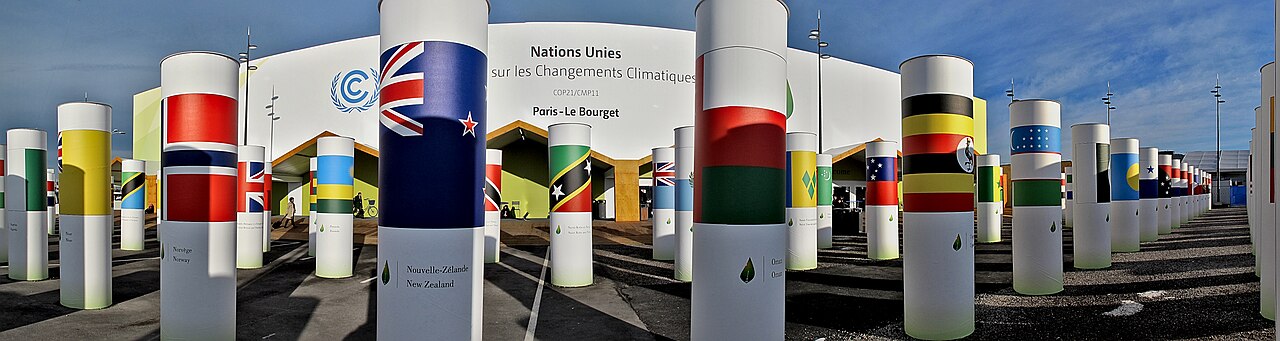

*Via Wikimedia Commons: [COP21 2015 Paris Le Bourget - Conference Center - United nations confe](https://commons.wikimedia.org/wiki/File:COP21_2015_Paris_Le_Bourget_-_Conference_Center_-_United_nations_conference_on_climate_change.jpg) by Jmdigne, [CC BY-SA 4.0](https://creativecommons.org/licenses/by-sa/4.0).*
*Via Wikimedia Commons: [COP21 2015 Paris Le Bourget - Conference Center - United nations confe](https://commons.wikimedia.org/wiki/File:COP21_2015_Paris_Le_Bourget_-_Conference_Center_-_United_nations_conference_on_climate_change.jpg) by Jmdigne, [CC BY-SA 4.0](https://creativecommons.org/licenses/by-sa/4.0).*
## What it is
## What it is
The Conference of the Parties was created by the 1992 treaty itself. Article 7 of the [United Nations Framework Convention on Climate Change](https://unfccc.int/resource/docs/convkp/conveng.pdf) (UNFCCC) establishes it as "the supreme body of this Convention", charged with keeping the treaty's implementation under regular review and making the decisions needed to carry it out. The same article provides that, after a first session within a year of the treaty taking effect, ordinary sessions are held every year unless the Conference decides otherwise. The meetings are numbered in order, so "COP31" is the thirty-first.
The Conference of the Parties was created by the 1992 treaty itself. Article 7 of the [United Nations Framework Convention on Climate Change](https://unfccc.int/resource/docs/convkp/conveng.pdf) (UNFCCC) establishes it as "the supreme body of this Convention", charged with keeping the treaty's implementation under regular review and making the decisions needed to carry it out.[1] The same article provides that, after a first session within a year of the treaty taking effect, ordinary sessions are held every year unless the Conference decides otherwise.[1] The meetings are numbered in order, so "COP31" is the thirty-first.
The United Nations describes the conferences as the occasion on which the treaty's members [meet to measure progress and negotiate multilateral responses to climate change](https://www.un.org/en/climatechange/un-climate-conferences). As of November 2026 the UN gives the number of Parties to the Convention as 198. A "Party" is a state, or a regional organisation such as the European Union, that has formally joined the treaty; according to the [UNFCCC secretariat](https://unfccc.int/process-and-meetings/what-is-the-united-nations-framework-convention-on-climate-change), the 198 are 197 states and one regional economic integration organisation.
The United Nations describes the conferences as the occasion on which the treaty's members [meet to measure progress and negotiate multilateral responses to climate change](https://www.un.org/en/climatechange/un-climate-conferences).[6] As of November 2026 the UN gives the number of Parties to the Convention as 198.[6] A "Party" is a state, or a regional organisation such as the European Union, that has formally joined the treaty; according to the [UNFCCC secretariat](https://unfccc.int/process-and-meetings/what-is-the-united-nations-framework-convention-on-climate-change), the 198 are 197 states and one regional economic integration organisation.
## The treaty behind it
## The treaty behind it
The Convention was adopted at United Nations Headquarters in New York on 9 May 1992 and opened for signature at the UN Conference on Environment and Development in Rio de Janeiro in June 1992, [according to the UNFCCC secretariat](https://unfccc.int/process-and-meetings/what-is-the-united-nations-framework-convention-on-climate-change). It entered into force on 21 March 1994, after the fiftieth ratification. The UN notes that it was adopted [shortly after the first assessment report by the Intergovernmental Panel on Climate Change](https://www.un.org/en/climatechange/un-climate-conferences) (IPCC) in 1990.
The Convention was adopted at United Nations Headquarters in New York on 9 May 1992 and opened for signature at the UN Conference on Environment and Development in Rio de Janeiro in June 1992, [according to the UNFCCC secretariat](https://unfccc.int/process-and-meetings/what-is-the-united-nations-framework-convention-on-climate-change). It entered into force on 21 March 1994, after the fiftieth ratification. The UN notes that it was adopted [shortly after the first assessment report by the Intergovernmental Panel on Climate Change](https://www.un.org/en/climatechange/un-climate-conferences) (IPCC) in 1990.[6]
Its stated ultimate objective is to stabilise greenhouse gas concentrations ["at a level that would prevent dangerous anthropogenic (human induced) interference with the climate system"](https://unfccc.int/process-and-meetings/what-is-the-united-nations-framework-convention-on-climate-change). The treaty commits all Parties to act according to their ["common but differentiated responsibilities"](https://unfccc.int/resource/docs/convkp/conveng.pdf) and capabilities. It divides countries into groups: industrialised countries, listed in its Annex I, were expected to lead, and the secretariat explains that they were [expected by the year 2000 to reduce emissions to 1990 levels](https://unfccc.int/process-and-meetings/what-is-the-united-nations-framework-convention-on-climate-change), report regularly on their policies and submit annual inventories of their emissions, while developing countries report in more general terms.
Its stated ultimate objective is to stabilise greenhouse gas concentrations ["at a level that would prevent dangerous anthropogenic (human induced) interference with the climate system"](https://unfccc.int/process-and-meetings/what-is-the-united-nations-framework-convention-on-climate-change).[6] The treaty commits all Parties to act according to their ["common but differentiated responsibilities"](https://unfccc.int/resource/docs/convkp/conveng.pdf) and capabilities.[1] It divides countries into groups: industrialised countries, listed in its Annex I, were expected to lead, and the secretariat explains that they were [expected by the year 2000 to reduce emissions to 1990 levels](https://unfccc.int/process-and-meetings/what-is-the-united-nations-framework-convention-on-climate-change), report regularly on their policies and submit annual inventories of their emissions, while developing countries report in more general terms.
## How a conference works
## How a conference works
The UN explains that the host country [normally rotates among the five United Nations regional groups](https://www.un.org/en/climatechange/un-climate-conferences): Africa, Asia-Pacific, Eastern Europe, Latin America and the Caribbean, and Western European and Others. Members of the group whose turn it is decide which of them will offer to host. The treaty's permanent secretariat, set up under [Article 8 of the Convention](https://unfccc.int/resource/docs/convkp/conveng.pdf), makes the arrangements for each session.
The UN explains that the host country [normally rotates among the five United Nations regional groups](https://www.un.org/en/climatechange/un-climate-conferences): Africa, Asia-Pacific, Eastern Europe, Latin America and the Caribbean, and Western European and Others.[6] Members of the group whose turn it is decide which of them will offer to host.[6] The treaty's permanent secretariat, set up under [Article 8 of the Convention](https://unfccc.int/resource/docs/convkp/conveng.pdf), makes the arrangements for each session.[1]
Decisions are made by agreement of all. The Convention required the first conference to adopt rules of procedure that could include [specified majorities required for the adoption of particular decisions](https://unfccc.int/resource/docs/convkp/conveng.pdf), and those rules had to be adopted by consensus. In practice, as the Center for Climate and Energy Solutions (C2ES) puts it, [formal decisions under the U.N. climate process are typically taken by consensus](https://www.c2es.org/content/cop-15-copenhagen/), so a small number of objecting countries can stop a text from being adopted.
Decisions are made by agreement of all. The Convention required the first conference to adopt rules of procedure that could include [specified majorities required for the adoption of particular decisions](https://unfccc.int/resource/docs/convkp/conveng.pdf), and those rules had to be adopted by consensus.[1] In practice, as the Center for Climate and Energy Solutions (C2ES) puts it, [formal decisions under the U.N. climate process are typically taken by consensus](https://www.c2es.org/content/cop-15-copenhagen/), so a small number of objecting countries can stop a text from being adopted.
3 unchanged paragraphs
A conference is more than one meeting. The UNFCCC secretariat lists the bodies it serves as the COP itself; the [Conference of the Parties serving as the meeting of the Parties](https://unfccc.int/process/the-convention/history-of-the-convention) to the Kyoto Protocol (CMP); the subsidiary bodies, which advise the COP and CMP; and the COP/CMP Bureau, which deals mainly with procedural and organisational questions.
A conference is more than one meeting. The UNFCCC secretariat lists the bodies it serves as the COP itself; the [Conference of the Parties serving as the meeting of the Parties](https://unfccc.int/process/the-convention/history-of-the-convention) to the Kyoto Protocol (CMP); the subsidiary bodies, which advise the COP and CMP; and the COP/CMP Bureau, which deals mainly with procedural and organisational questions.
## History
## History
### Berlin to Kyoto
### Berlin to Kyoto
The UN records that the [first Conference of the Parties was held in Berlin, Germany, in 1995](https://www.un.org/en/climatechange/un-climate-conferences). Its early work led to the Kyoto Protocol of 1997, which the Council on Foreign Relations (CFR) describes as [the first legally binding climate treaty](https://www.cfr.org/backgrounder/paris-global-climate-change-agreements). It required developed countries to cut their emissions by an average of 5% below 1990 levels and entered into force in 2005. The United States signed it in 1998 but never ratified it, and CFR notes that the treaty [did not compel developing countries, including major carbon emitters China and India, to take action](https://www.cfr.org/backgrounder/paris-global-climate-change-agreements).
The UN records that the [first Conference of the Parties was held in Berlin, Germany, in 1995](https://www.un.org/en/climatechange/un-climate-conferences).[6] Its early work led to the Kyoto Protocol of 1997, which the Council on Foreign Relations (CFR) describes as [the first legally binding climate treaty](https://www.cfr.org/backgrounder/paris-global-climate-change-agreements).[9] It required developed countries to cut their emissions by an average of 5% below 1990 levels and entered into force in 2005.[9] The United States signed it in 1998 but never ratified it, and CFR notes that the treaty [did not compel developing countries, including major carbon emitters China and India, to take action](https://www.cfr.org/backgrounder/paris-global-climate-change-agreements).[9]
6 unchanged paragraphs
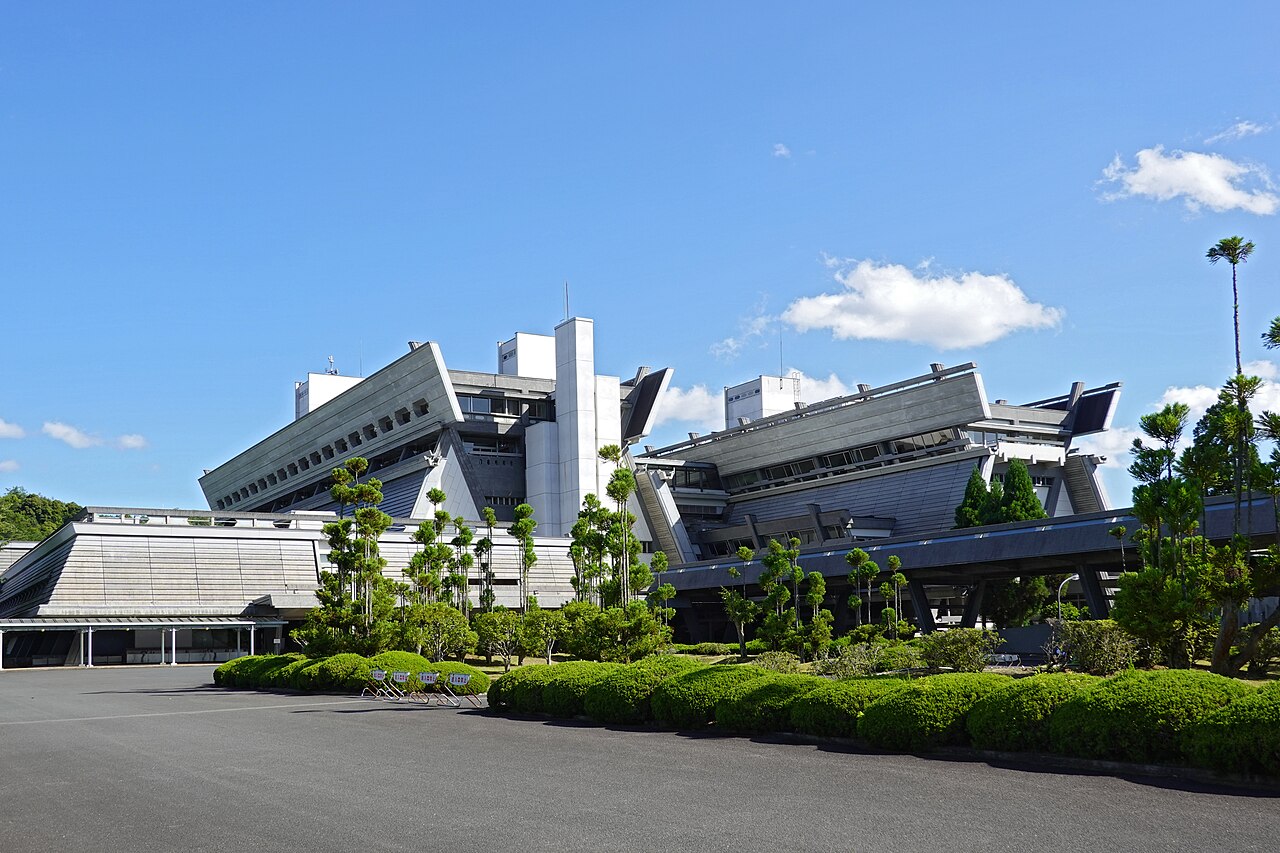

*Via Wikimedia Commons: [230603 Kyoto International Conference Center Kyoto Japan01s3](https://commons.wikimedia.org/wiki/File:230603_Kyoto_International_Conference_Center_Kyoto_Japan01s3.jpg) by 663highland, [CC BY-SA 4.0](https://creativecommons.org/licenses/by-sa/4.0).*
*Via Wikimedia Commons: [230603 Kyoto International Conference Center Kyoto Japan01s3](https://commons.wikimedia.org/wiki/File:230603_Kyoto_International_Conference_Center_Kyoto_Japan01s3.jpg) by 663highland, [CC BY-SA 4.0](https://creativecommons.org/licenses/by-sa/4.0).*
The UNFCCC secretariat's history of the treaty records that by 1995 countries had [launched negotiations to strengthen the global response](https://unfccc.int/process/the-convention/history-of-the-convention) and that two years later they adopted the Kyoto Protocol. It was adopted at the third conference, COP3, on [11 December 1997](https://unfccc.int/process-and-meetings/the-kyoto-protocol), and because of what the secretariat calls a complex ratification process it did not enter into force until 16 February 2005. Its Annex B set binding emission targets for [37 industrialized countries and economies in transition and the European Union](https://unfccc.int/process-and-meetings/the-kyoto-protocol), which together added up to an average cut of 5% against 1990 levels over 2008 to 2012, the "first commitment period". Developing countries had no targets, reflecting the principle of common but differentiated responsibilities. As of November 2026 the secretariat counts 192 Parties to the Protocol.
The UNFCCC secretariat's history of the treaty records that by 1995 countries had [launched negotiations to strengthen the global response](https://unfccc.int/process/the-convention/history-of-the-convention) and that two years later they adopted the Kyoto Protocol. It was adopted at the third conference, COP3, on [11 December 1997](https://unfccc.int/process-and-meetings/the-kyoto-protocol), and because of what the secretariat calls a complex ratification process it did not enter into force until 16 February 2005. Its Annex B set binding emission targets for [37 industrialized countries and economies in transition and the European Union](https://unfccc.int/process-and-meetings/the-kyoto-protocol), which together added up to an average cut of 5% against 1990 levels over 2008 to 2012, the "first commitment period". Developing countries had no targets, reflecting the principle of common but differentiated responsibilities. As of November 2026 the secretariat counts 192 Parties to the Protocol.
The Protocol required countries to meet their targets mainly at home, but it also created [three market-based mechanisms](https://unfccc.int/process-and-meetings/the-kyoto-protocol): international emissions trading, the Clean Development Mechanism (CDM) and joint implementation (JI). In the secretariat's description, they were meant to encourage cuts in emissions where they cost least, for example in the developing world. It set up a system of monitoring, registries that record each trade, and a compliance procedure. An Adaptation Fund was created to pay for adaptation projects in developing countries, financed in the first commitment period [mainly with a share of proceeds from CDM project activities](https://unfccc.int/process-and-meetings/the-kyoto-protocol).
The Protocol required countries to meet their targets mainly at home, but it also created [three market-based mechanisms](https://unfccc.int/process-and-meetings/the-kyoto-protocol): international emissions trading, the Clean Development Mechanism (CDM) and joint implementation (JI). In the secretariat's description, they were meant to encourage cuts in emissions where they cost least, for example in the developing world. It set up a system of monitoring, registries that record each trade, and a compliance procedure. An Adaptation Fund was created to pay for adaptation projects in developing countries, financed in the first commitment period [mainly with a share of proceeds from CDM project activities](https://unfccc.int/process-and-meetings/the-kyoto-protocol).
The detailed rules took several more conferences. At COP7 in 2001 the Parties adopted the Marrakesh Accords, which the secretariat describes as [detailing rules for implementation of Kyoto Protocol](https://unfccc.int/process/the-convention/history-of-the-convention) and setting up new funding and planning instruments for adaptation. When the Protocol took effect, its first meeting of the Parties was held in Montreal in 2005, where negotiations began on what would follow the first commitment period.
The detailed rules took several more conferences. At COP7 in 2001 the Parties adopted the Marrakesh Accords, which the secretariat describes as [detailing rules for implementation of Kyoto Protocol](https://unfccc.int/process/the-convention/history-of-the-convention) and setting up new funding and planning instruments for adaptation. When the Protocol took effect, its first meeting of the Parties was held in Montreal in 2005, where negotiations began on what would follow the first commitment period.
### Bali, 2007
### Bali, 2007
At COP13 in Bali, Indonesia, in December 2007, the Parties adopted the Bali Road Map, a set of decisions meant to lead to a new agreement for the period after 2012. Its centrepiece, the Bali Action Plan, launched a process to enable [the full, effective and sustained implementation of the Convention through long-term cooperative action](https://unfccc.int/process/conferences/the-big-picture/milestones/bali-road-map), conducted by a new subsidiary body, the Ad Hoc Working Group on Long-term Cooperative Action. It grouped the work under five headings: shared vision, mitigation, adaptation, technology and financing. A second track, the working group on further commitments under the Kyoto Protocol set up in Montreal in 2005, ran in parallel. The secretariat itself later judged that the plan [may have been overly optimistic](https://unfccc.int/process/conferences/the-big-picture/milestones/bali-road-map) in its timelines.
At COP13 in Bali, Indonesia, in December 2007, the Parties adopted the Bali Road Map, a set of decisions meant to lead to a new agreement for the period after 2012. Its centrepiece, the Bali Action Plan, launched a process to enable [the full, effective and sustained implementation of the Convention through long-term cooperative action](https://unfccc.int/process/conferences/the-big-picture/milestones/bali-road-map), conducted by a new subsidiary body, the Ad Hoc Working Group on Long-term Cooperative Action.[5] It grouped the work under five headings: shared vision, mitigation, adaptation, technology and financing.[5] A second track, the working group on further commitments under the Kyoto Protocol set up in Montreal in 2005, ran in parallel. The secretariat itself later judged that the plan [may have been overly optimistic](https://unfccc.int/process/conferences/the-big-picture/milestones/bali-road-map) in its timelines.[5]
### Copenhagen, 2009
### Copenhagen, 2009
The fifteenth conference, held in Copenhagen from 7 to 18 December 2009, was meant to produce a successor agreement. Its main product, the Copenhagen Accord, was brokered, in C2ES's account, [directly by President Obama and a handful of key developing country leaders](https://www.c2es.org/content/cop-15-copenhagen/). It set an aspirational goal of limiting warming to 2 degrees Celsius, invited countries to enter emission pledges, and set a goal of mobilising $100 billion a year in public and private finance for developing countries by 2020.
The UNFCCC secretariat adds that it committed developed countries to [$30 billion fast-start financing (in 2010-2012)](https://unfccc.int/process/conferences/the-big-picture/milestones/bali-road-map) for adaptation and mitigation in developing countries, with priority for the least developed countries.
The fifteenth conference, held in Copenhagen from 7 to 18 December 2009, was meant to produce a successor agreement. Its main product, the Copenhagen Accord, was brokered, in C2ES's account, [directly by President Obama and a handful of key developing country leaders](https://www.c2es.org/content/cop-15-copenhagen/).[10] It set an aspirational goal of limiting warming to 2 degrees Celsius, invited countries to enter emission pledges, and set a goal of mobilising $100 billion a year in public and private finance for developing countries by 2020.
The UNFCCC secretariat adds that it committed developed countries to [$30 billion fast-start financing (in 2010-2012)](https://unfccc.int/process/conferences/the-big-picture/milestones/bali-road-map) for adaptation and mitigation in developing countries, with priority for the least developed countries.
The conference could not adopt it. The international lawyer Daniel Bodansky, writing for the American Society of International Law in February 2010, records that a small group of countries led by Sudan, Venezuela, Bolivia and Nicaragua refused to join the consensus, calling the negotiation of the Accord by a smaller group a ["coup d'état" against the United Nations](https://asil.org/insights/volume-14-issue-3/). After an all-night session the conference agreed only to "take note of" the Accord, which gave it some standing in the process but less than formal approval would have.
The conference could not adopt it. The international lawyer Daniel Bodansky, writing for the American Society of International Law in February 2010, records that a small group of countries led by Sudan, Venezuela, Bolivia and Nicaragua refused to join the consensus, calling the negotiation of the Accord by a smaller group a ["coup d'état" against the United Nations](https://asil.org/insights/volume-14-issue-3/).[11] After an all-night session the conference agreed only to "take note of" the Accord, which gave it some standing in the process but less than formal approval would have.
### Cancún to Lima
### Cancún to Lima
The negotiations continued on the foundations laid at Bali and Copenhagen. At COP16 in Cancún, Mexico, in 2010, governments drew up the Cancún Agreements, which the secretariat says brought [agreement on three major areas](https://unfccc.int/process/conferences/the-big-picture/milestones/bali-road-map) of the regime, adaptation, finance and technology; countries also made their emission reduction pledges official. At COP17 in Durban, South Africa, in 2011, the Parties to the Kyoto Protocol agreed to a second commitment period beginning in 2013, and the Parties to the Convention decided that [a new agreement with legal force involving the efforts of all countries](https://unfccc.int/process/conferences/the-big-picture/milestones/bali-road-map) would be finalised by 2015 and enter into force by 2020. That decision, the Durban Platform for Enhanced Action, set the course that led to Paris.
The negotiations continued on the foundations laid at Bali and Copenhagen. At COP16 in Cancún, Mexico, in 2010, governments drew up the Cancún Agreements, which the secretariat says brought [agreement on three major areas](https://unfccc.int/process/conferences/the-big-picture/milestones/bali-road-map) of the regime, adaptation, finance and technology; countries also made their emission reduction pledges official.[5] At COP17 in Durban, South Africa, in 2011, the Parties to the Kyoto Protocol agreed to a second commitment period beginning in 2013, and the Parties to the Convention decided that [a new agreement with legal force involving the efforts of all countries](https://unfccc.int/process/conferences/the-big-picture/milestones/bali-road-map) would be finalised by 2015 and enter into force by 2020.[5] That decision, the Durban Platform for Enhanced Action, set the course that led to Paris.
At COP18 in Doha, Qatar, the Doha Amendment to the Kyoto Protocol was adopted on [8 December 2012](https://unfccc.int/process-and-meetings/the-kyoto-protocol), setting a second commitment period from 2013 to 2020 in which the Parties taking part committed to cut emissions by at least 18% below 1990 levels; the secretariat notes that the countries in the second period were not the same as those in the first. The amendment needed 144 acceptances to take effect; it reached 147 by 28 October 2020 and entered into force on 31 December 2020, the last day of its commitment period. The same conference formally concluded the five years of work under the Bali Action Plan.
At COP18 in Doha, Qatar, the Doha Amendment to the Kyoto Protocol was adopted on [8 December 2012](https://unfccc.int/process-and-meetings/the-kyoto-protocol), setting a second commitment period from 2013 to 2020 in which the Parties taking part committed to cut emissions by at least 18% below 1990 levels; the secretariat notes that the countries in the second period were not the same as those in the first. The amendment needed 144 acceptances to take effect; it reached 147 by 28 October 2020 and entered into force on 31 December 2020, the last day of its commitment period. The same conference formally concluded the five years of work under the Bali Action Plan.[5]
COP19 in Warsaw in 2013 set up the [Warsaw International Mechanism for Loss and Damage](https://unfccc.int/process/the-convention/history-of-the-convention) and took decisions on the Green Climate Fund and on long-term finance. It also asked Parties to submit "intended nationally determined contributions" well before the Paris conference, the origin of the national pledges at the heart of the later agreement. COP20 in Lima in 2014 adopted the Lima Call for Action, which set out key elements of that agreement.
COP19 in Warsaw in 2013 set up the [Warsaw International Mechanism for Loss and Damage](https://unfccc.int/process/the-convention/history-of-the-convention) and took decisions on the Green Climate Fund and on long-term finance. It also asked Parties to submit "intended nationally determined contributions" well before the Paris conference, the origin of the national pledges at the heart of the later agreement. COP20 in Lima in 2014 adopted the Lima Call for Action, which set out key elements of that agreement.
### Paris, 2015
### Paris, 2015
At the twenty-first conference, in Paris, countries reached the Paris Agreement on [12 December 2015](https://www.un.org/en/climatechange/paris-agreement). It aims to hold the rise in global temperature to well below 2°C above pre-industrial levels and to pursue efforts to limit it to 1.5°C. Unlike Kyoto, it asks something of every country: CFR notes that it [requires all countries to set emissions-reduction pledges](https://www.cfr.org/backgrounder/paris-global-climate-change-agreements), known as nationally determined contributions (NDCs). The UN describes it as working on [a five-year cycle](https://www.un.org/en/climatechange/paris-agreement) in which each country is expected to submit an updated plan. The Agreement entered into force on 4 November 2016, and as of November 2026 the UN lists 195 Parties (194 states plus the European Union). Its detailed operating rules, the "Paris Rulebook", were agreed at COP24 in Katowice, Poland, in December 2018 and finalised at COP26 in Glasgow in November 2021.
At the twenty-first conference, in Paris, countries reached the Paris Agreement on [12 December 2015](https://www.un.org/en/climatechange/paris-agreement).[7] It aims to hold the rise in global temperature to well below 2°C above pre-industrial levels and to pursue efforts to limit it to 1.5°C.[7] Unlike Kyoto, it asks something of every country: CFR notes that it [requires all countries to set emissions-reduction pledges](https://www.cfr.org/backgrounder/paris-global-climate-change-agreements), known as nationally determined contributions (NDCs).[9] The UN describes it as working on [a five-year cycle](https://www.un.org/en/climatechange/paris-agreement) in which each country is expected to submit an updated plan.[7] The Agreement entered into force on 4 November 2016, and as of November 2026 the UN lists 195 Parties (194 states plus the European Union).[7] Its detailed operating rules, the "Paris Rulebook", were agreed at COP24 in Katowice, Poland, in December 2018 and finalised at COP26 in Glasgow in November 2021.[7]
### Glasgow to Belém
### Glasgow to Belém
The UN's summaries of recent conferences give their main outcomes:
The UN's summaries of recent conferences give their main outcomes:
- **COP26**, Glasgow, United Kingdom, 2021: about 120 world leaders and more than 40,000 registered participants; nations adopted the [Glasgow Climate Pact](https://www.un.org/en/climatechange/un-climate-conferences).
- **COP27**, Sharm el-Sheikh, Egypt, 2022: the Sharm el-Sheikh Implementation Plan, which [established a dedicated fund for loss and damage](https://www.un.org/en/climatechange/un-climate-conferences).
- **COP28**, Dubai, United Arab Emirates, closing 13 December 2023: the first "global stocktake" of progress under the Paris Agreement, which included [a call on governments to speed up the transition away from fossil fuels](https://www.un.org/en/climatechange/paris-agreement) in their next round of commitments.
- **COP29**, Baku, Azerbaijan, closing 24 November 2024: an agreement calling on developed countries to deliver [at least $300 billion per year to developing countries by 2035](https://www.un.org/en/climatechange/un-climate-conferences).
- **COP30**, Belém, Brazil, closing 22 November 2025: an agreement calling for [a tripling of funding](https://www.un.org/en/climatechange/un-climate-conferences) to help developing nations protect their people from climate impacts.
- **COP26**, Glasgow, United Kingdom, 2021: about 120 world leaders and more than 40,000 registered participants; nations adopted the [Glasgow Climate Pact](https://www.un.org/en/climatechange/un-climate-conferences).[6]
- **COP27**, Sharm el-Sheikh, Egypt, 2022: the Sharm el-Sheikh Implementation Plan, which [established a dedicated fund for loss and damage](https://www.un.org/en/climatechange/un-climate-conferences).[6]
- **COP28**, Dubai, United Arab Emirates, closing 13 December 2023: the first "global stocktake" of progress under the Paris Agreement, which included [a call on governments to speed up the transition away from fossil fuels](https://www.un.org/en/climatechange/paris-agreement) in their next round of commitments.[6][7]
- **COP29**, Baku, Azerbaijan, closing 24 November 2024: an agreement calling on developed countries to deliver [at least $300 billion per year to developing countries by 2035](https://www.un.org/en/climatechange/un-climate-conferences).[6]
- **COP30**, Belém, Brazil, closing 22 November 2025: an agreement calling for [a tripling of funding](https://www.un.org/en/climatechange/un-climate-conferences) to help developing nations protect their people from climate impacts.[6]
## The United States and the process
## The United States and the process
The United States has twice left the Paris Agreement. CFR records that it withdrew in 2017, during President Donald Trump's first term, rejoined under President Joe Biden, and withdrew again on the first day of Trump's second term in 2025, with the withdrawal [taking effect on 27 January 2026](https://www.cfr.org/backgrounder/paris-global-climate-change-agreements). In January 2026 the White House also announced that the United States would leave the Convention itself. Climate Home News reported on 28 January 2026 that the United States had not sent a delegation to COP30 and that, as of that date, it [had yet to formally notify the UN](https://www.climatechangenews.com/2026/01/28/explainer-out-of-paris-but-will-the-us-formally-quit-the-un-climate-regime/) of its withdrawal from the Convention. Under [Article 25 of the Convention](https://unfccc.int/resource/docs/convkp/conveng.pdf), a withdrawal takes effect one year after the treaty's depositary receives written notification. Climate Home News also reported that some experts believe the United States would need the Senate's authorisation to withdraw from the Convention, to whose ratification the Senate gave its advice and consent in 1992.
The United States has twice left the Paris Agreement. CFR records that it withdrew in 2017, during President Donald Trump's first term, rejoined under President Joe Biden, and withdrew again on the first day of Trump's second term in 2025, with the withdrawal [taking effect on 27 January 2026](https://www.cfr.org/backgrounder/paris-global-climate-change-agreements).[9] In January 2026 the White House also announced that the United States would leave the Convention itself.[12] Climate Home News reported on 28 January 2026 that the United States had not sent a delegation to COP30 and that, as of that date, it [had yet to formally notify the UN](https://www.climatechangenews.com/2026/01/28/explainer-out-of-paris-but-will-the-us-formally-quit-the-un-climate-regime/) of its withdrawal from the Convention.[12] Under [Article 25 of the Convention](https://unfccc.int/resource/docs/convkp/conveng.pdf), a withdrawal takes effect one year after the treaty's depositary receives written notification.[1] Climate Home News also reported that some experts believe the United States would need the Senate's authorisation to withdraw from the Convention, to whose ratification the Senate gave its advice and consent in 1992.[12]
## Assessments
## Assessments
Supporters point to the conferences' record of agreements. The UN credits them with [setting standards and advancing action](https://www.un.org/en/climatechange/un-climate-conferences) on emissions, the energy transition and adaptation, and with bringing governments together with business and civil society. After COP30, UN Secretary-General António Guterres said that the conference ["has delivered progress"](https://www.un.org/en/climatechange/un-climate-conferences), while adding that "the gap between where we are and what science demands remains dangerously wide".
Supporters point to the conferences' record of agreements. The UN credits them with [setting standards and advancing action](https://www.un.org/en/climatechange/un-climate-conferences) on emissions, the energy transition and adaptation, and with bringing governments together with business and civil society.[6] After COP30, UN Secretary-General António Guterres said that the conference ["has delivered progress"](https://www.un.org/en/climatechange/un-climate-conferences), while adding that "the gap between where we are and what science demands remains dangerously wide".[6]
Critics have focused on ambition and procedure. CFR reports that [most experts say that countries' pledges are not ambitious enough](https://www.cfr.org/backgrounder/paris-global-climate-change-agreements) to meet the Paris goals. The consensus rule lets a handful of countries block an outcome, as the Copenhagen conference showed, and the objection raised there, as [recorded by Bodansky](https://asil.org/insights/volume-14-issue-3/), was that the key text had been negotiated by a smaller group outside the formal meetings.
Critics have focused on ambition and procedure. CFR reports that [most experts say that countries' pledges are not ambitious enough](https://www.cfr.org/backgrounder/paris-global-climate-change-agreements) to meet the Paris goals.[9] The consensus rule lets a handful of countries block an outcome, as the Copenhagen conference showed, and the objection raised there, as [recorded by Bodansky](https://asil.org/insights/volume-14-issue-3/), was that the key text had been negotiated by a smaller group outside the formal meetings.
## COP31
## COP31
The thirty-first conference is being held in Antalya, Türkiye, from [9 to 20 November 2026](https://www.un.org/en/climatechange/cop31). As of 10 November 2026 it is under way, and its outcome is not yet known.
The thirty-first conference is being held in Antalya, Türkiye, from [9 to 20 November 2026](https://www.un.org/en/climatechange/cop31).[6][8] As of 10 November 2026 it is under way, and its outcome is not yet known.
## Sources
## Sources
- United Nations, *United Nations Framework Convention on Climate Change* (treaty text, 1992), UNFCCC. https://unfccc.int/resource/docs/convkp/conveng.pdf
- UNFCCC secretariat, "What is the United Nations Framework Convention on Climate Change?" (read November 2026). https://unfccc.int/process-and-meetings/what-is-the-united-nations-framework-convention-on-climate-change
- UNFCCC secretariat, "History of the Convention" (read November 2026). https://unfccc.int/process/the-convention/history-of-the-convention
- UNFCCC secretariat, "The Kyoto Protocol" (read November 2026). https://unfccc.int/process-and-meetings/the-kyoto-protocol
- UNFCCC secretariat, "Bali Road Map Intro" (read November 2026). https://unfccc.int/process/conferences/the-big-picture/milestones/bali-road-map
- United Nations, "UN Climate Change Conferences", Climate Action (read November 2026). https://www.un.org/en/climatechange/un-climate-conferences
- United Nations, "The Paris Agreement", Climate Action (read November 2026). https://www.un.org/en/climatechange/paris-agreement
- United Nations, "COP31 to take place 9-20 November 2026 in Antalya, Türkiye", Climate Action (read November 2026). https://www.un.org/en/climatechange/cop31
- L. Maizland and C. Fong, "Paris to Kyoto: The History of UN Climate Agreements", Council on Foreign Relations, 5 December 2023, updated 9 January 2026. https://www.cfr.org/backgrounder/paris-global-climate-change-agreements
- Center for Climate and Energy Solutions, "COP 15 Copenhagen" (read November 2026). https://www.c2es.org/content/cop-15-copenhagen/
- D. Bodansky, "The Copenhagen Climate Change Accord", ASIL Insights 14(3), American Society of International Law, 16 February 2010. https://asil.org/insights/volume-14-issue-3/
- S. Rodriguez, "Explainer: Out of Paris, but will the US formally quit the UN climate regime?", Climate Home News, 28 January 2026. https://www.climatechangenews.com/2026/01/28/explainer-out-of-paris-but-will-the-us-formally-quit-the-un-climate-regime/
