Compare versions
Version 1 → Version 2 (current). Removed · Added. This shows the entry's text as it is written, including its formatting marks.
Version 1 · Version 2 (current) · Version history
Side by side · Together
Version 1Version 2 (current)
Defrutum was a syrup made in ancient Rome by boiling down must, the freshly pressed and unfermented juice of grapes, and used to sweeten and preserve wine, to preserve fruit and to flavour food. A closely related syrup was called sapa.
Defrutum was a syrup made in ancient Rome by boiling down must, the freshly pressed and unfermented juice of grapes, and used to sweeten and preserve wine, to preserve fruit and to flavour food.[1][5] A closely related syrup was called sapa.[1]
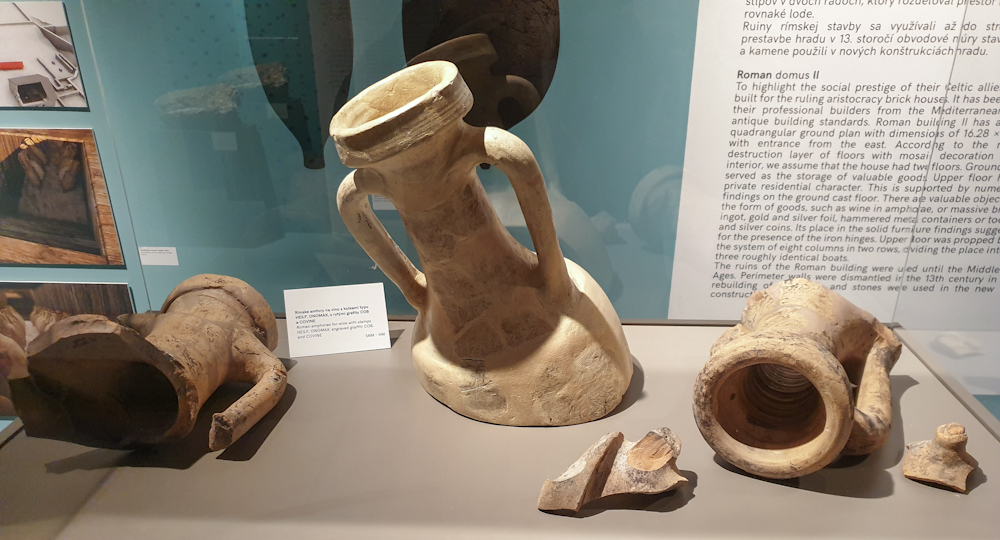

*Via Wikimedia Commons: [Roman amphorae for wine with stamps](https://commons.wikimedia.org/wiki/File:Roman_amphorae_for_wine_with_stamps.jpg) by Own work, [CC0](http://creativecommons.org/publicdomain/zero/1.0/deed.en).*
*Via Wikimedia Commons: [Roman amphorae for wine with stamps](https://commons.wikimedia.org/wiki/File:Roman_amphorae_for_wine_with_stamps.jpg) by Own work, [CC0](http://creativecommons.org/publicdomain/zero/1.0/deed.en).*
Roman farm manuals give detailed recipes for it, and those recipes often call for the must to be boiled in vessels of lead. Because of that, defrutum and sapa have become central to a long-running scholarly argument over how much lead the Romans swallowed, and whether it harmed them.
Roman farm manuals give detailed recipes for it, and those recipes often call for the must to be boiled in vessels of lead.[2][3][5] Because of that, defrutum and sapa have become central to a long-running scholarly argument over how much lead the Romans swallowed, and whether it harmed them.[5]
## Names and definitions
## Names and definitions
Roman writers agree on the method but not on the names. Pliny the Elder writes in his *Natural History* that siraeum, ["by some called hepsema and in our country sapa"](https://www.attalus.org/pliny/hn14b.html), is "a product of art, not of nature, made by boiling down must to a third of its quantity", while "must boiled down to only one-half is called defrutum" (book 14, section 80, in H. Rackham's translation). Columella, the first-century AD author of the farming treatise *De re rustica* (On Agriculture), uses the names the other way round: he writes that whoever [boils the must down to half will make a better sapa](https://www.thelatinlibrary.com/columella/columella.rr12.shtml), and directs that defrutum be boiled until it is reduced to a third (book 12, chapters 19 and 20).
Roman writers agree on the method but not on the names. Pliny the Elder writes in his *Natural History* that siraeum, ["by some called hepsema and in our country sapa"](https://www.attalus.org/pliny/hn14b.html), is "a product of art, not of nature, made by boiling down must to a third of its quantity", while "must boiled down to only one-half is called defrutum" (book 14, section 80, in H. Rackham's translation).[1] Columella, the first-century AD author of the farming treatise *De re rustica* (On Agriculture), uses the names the other way round: he writes that whoever [boils the must down to half will make a better sapa](https://www.thelatinlibrary.com/columella/columella.rr12.shtml), and directs that defrutum be boiled until it is reduced to a third (book 12, chapters 19 and 20).[3][5]
A modern survey of the subject by James Grout in the University of Chicago's *Encyclopaedia Romana* notes that [Isidore of Seville, in the seventh century, says it is sapa that has been reduced by a third, and that Varro reversed Pliny's proportions altogether](https://penelope.uchicago.edu/encyclopaedia_romana/wine/leadpoisoning.html). The historian of medicine Josef Eisinger, writing in *Medical History* in 1982, describes a single preservative syrup that the Romans [variously called sapa, defrutum or caroenum, "the name being sometimes used to denote the degree to which the syrup had been reduced"](https://doi.org/10.1017/S0025727300041508). In practice the words overlap, and the older English translations often render both simply as "boiled must".
A modern survey of the subject by James Grout in the University of Chicago's *Encyclopaedia Romana* notes that [Isidore of Seville, in the seventh century, says it is sapa that has been reduced by a third, and that Varro reversed Pliny's proportions altogether](https://penelope.uchicago.edu/encyclopaedia_romana/wine/leadpoisoning.html).[5] The historian of medicine Josef Eisinger, writing in *Medical History* in 1982, describes a single preservative syrup that the Romans [variously called sapa, defrutum or caroenum, "the name being sometimes used to denote the degree to which the syrup had been reduced"](https://doi.org/10.1017/S0025727300041508). In practice the words overlap, and the older English translations often render both simply as "boiled must".
## How it was made
## How it was made
The oldest surviving instructions come from Cato the Elder's *De agri cultura* (On Agriculture), which Grout describes as [the earliest example of Latin prose, from about 160 BC](https://penelope.uchicago.edu/encyclopaedia_romana/wine/leadpoisoning.html). To prepare a coating for the brims of wine jars, Cato tells the farmer to put [six congii of the best boiled must "in a copper or lead vessel"](https://penelope.uchicago.edu/Thayer/E/Roman/Texts/Cato/De_Agricultura/G%2A.html) with ground iris and melilot, and to boil it over a slow fire of twigs, stirring constantly so that it does not scorch, until half has boiled away (chapter 107). In Cato's Latin the vessel is *aheneum aut plumbeum*, of bronze or copper, or of lead.
The oldest surviving instructions come from Cato the Elder's *De agri cultura* (On Agriculture), which Grout describes as [the earliest example of Latin prose, from about 160 BC](https://penelope.uchicago.edu/encyclopaedia_romana/wine/leadpoisoning.html).[5] To prepare a coating for the brims of wine jars, Cato tells the farmer to put [six congii of the best boiled must "in a copper or lead vessel"](https://penelope.uchicago.edu/Thayer/E/Roman/Texts/Cato/De_Agricultura/G%2A.html) with ground iris and melilot, and to boil it over a slow fire of twigs, stirring constantly so that it does not scorch, until half has boiled away (chapter 107).[2] In Cato's Latin the vessel is *aheneum aut plumbeum*, of bronze or copper, or of lead.
Columella gives the fullest account. In book 12 of *De re rustica* he says that [some people boil away a quarter of the must, others a third, after pouring it into lead vessels](https://www.thelatinlibrary.com/columella/columella.rr12.shtml). The must is to come from the ripest grapes, picked on a dry day under a waning moon; the furnace is lit gently with thin wood; the scum is skimmed off with strainers of rush or esparto grass; and bundles of fennel tied to poles are used to stir up the sediment so that nothing settles that could burn a hole in the lead pan. Quinces or other flavourings may be added. Before the must goes in, the lead vessels should be coated inside with good oil and well rubbed, which, he says, keeps the defrutum from burning (12.19.3–6). He then states plainly that [the vessels in which sapa or defrutum is boiled should be of lead rather than bronze](https://www.thelatinlibrary.com/columella/columella.rr12.shtml), because in the boiling bronze gives off verdigris (copper rust) and spoils the flavour (12.20.1). In his large-scale recipe, a pound each of iris, fenugreek and fragrant rush goes into a boiling vessel holding ninety amphorae of must, and, if the must is thin, once it has been reduced to a third the fire is drawn and the furnace cooled with water (12.20.2).
Columella gives the fullest account. In book 12 of *De re rustica* he says that [some people boil away a quarter of the must, others a third, after pouring it into lead vessels](https://www.thelatinlibrary.com/columella/columella.rr12.shtml).[3] The must is to come from the ripest grapes, picked on a dry day under a waning moon; the furnace is lit gently with thin wood; the scum is skimmed off with strainers of rush or esparto grass; and bundles of fennel tied to poles are used to stir up the sediment so that nothing settles that could burn a hole in the lead pan. Quinces or other flavourings may be added. Before the must goes in, the lead vessels should be coated inside with good oil and well rubbed, which, he says, keeps the defrutum from burning (12.19.3–6).[3] He then states plainly that [the vessels in which sapa or defrutum is boiled should be of lead rather than bronze](https://www.thelatinlibrary.com/columella/columella.rr12.shtml), because in the boiling bronze gives off verdigris (copper rust) and spoils the flavour (12.20.1).[3] In his large-scale recipe, a pound each of iris, fenugreek and fragrant rush goes into a boiling vessel holding ninety amphorae of must, and, if the must is thin, once it has been reduced to a third the fire is drawn and the furnace cooled with water (12.20.2).[3]
Pliny agrees on the metal. Boiled-down must, he writes, should be prepared when there is no moon, and ["leaden and not copper jars should be used"](https://www.attalus.org/pliny/hn14b.html), with walnuts thrown into the liquid because they are said to absorb the smoke (*Natural History* 14.136).
Pliny agrees on the metal. Boiled-down must, he writes, should be prepared when there is no moon, and ["leaden and not copper jars should be used"](https://www.attalus.org/pliny/hn14b.html), with walnuts thrown into the liquid because they are said to absorb the smoke (*Natural History* 14.136).[1]
When Eisinger and a colleague followed these directions, simmering grape juice in a lead-lined pot until it was reduced to a third, they obtained [a dark brown syrup "with the consistency of thin honey and a fragrance resembling that of molasses"](https://doi.org/10.1017/S0025727300041508).
When Eisinger and a colleague followed these directions, simmering grape juice in a lead-lined pot until it was reduced to a third, they obtained [a dark brown syrup "with the consistency of thin honey and a fragrance resembling that of molasses"](https://doi.org/10.1017/S0025727300041508).
## Uses
## Uses
**In wine.** Defrutum's main job was to keep wine from spoiling and to soften harsh wine. Cato advises that, if necessary, [a fortieth part of boiled must be added to the new wine](https://penelope.uchicago.edu/Thayer/E/Roman/Texts/Cato/De_Agricultura/A%2A.html) (chapter 23), and a thirtieth part of old defrutum for certain wines (chapter 24). Columella warns that even carefully made defrutum can turn sour like wine, so only [year-old defrutum of proven quality](https://www.thelatinlibrary.com/columella/columella.rr12.shtml) should be used, and he gives the rule that a sextarius of it is enough for each amphora of wine (12.20.1, 12.20.3). Eisinger, taking an amphora as about 26 litres and 48 sextarii, works this out as [a ratio of 1 to 48](https://doi.org/10.1017/S0025727300041508). Pliny reports that [in some places must is boiled down into sapa and poured into wines "to overcome their harshness"](https://www.attalus.org/pliny/hn14b.html) (14.121), and that the space above the wine in a jar should be smeared with raisin wine or boiled-down must mixed with saffron (14.135). Columella himself held that the best wine was any kind [that would keep without any preservative](https://www.thelatinlibrary.com/columella/columella.rr12.shtml), since nothing should be mixed in to obscure its natural flavour (12.19.2).
**In wine.** Defrutum's main job was to keep wine from spoiling and to soften harsh wine.[1][5] Cato advises that, if necessary, [a fortieth part of boiled must be added to the new wine](https://penelope.uchicago.edu/Thayer/E/Roman/Texts/Cato/De_Agricultura/A%2A.html) (chapter 23), and a thirtieth part of old defrutum for certain wines (chapter 24).[2] Columella warns that even carefully made defrutum can turn sour like wine, so only [year-old defrutum of proven quality](https://www.thelatinlibrary.com/columella/columella.rr12.shtml) should be used, and he gives the rule that a sextarius of it is enough for each amphora of wine (12.20.1, 12.20.3).[3] Eisinger, taking an amphora as about 26 litres and 48 sextarii, works this out as [a ratio of 1 to 48](https://doi.org/10.1017/S0025727300041508). Pliny reports that [in some places must is boiled down into sapa and poured into wines "to overcome their harshness"](https://www.attalus.org/pliny/hn14b.html) (14.121), and that the space above the wine in a jar should be smeared with raisin wine or boiled-down must mixed with saffron (14.135).[1] Columella himself held that the best wine was any kind [that would keep without any preservative](https://www.thelatinlibrary.com/columella/columella.rr12.shtml), since nothing should be mixed in to obscure its natural flavour (12.19.2).[3]
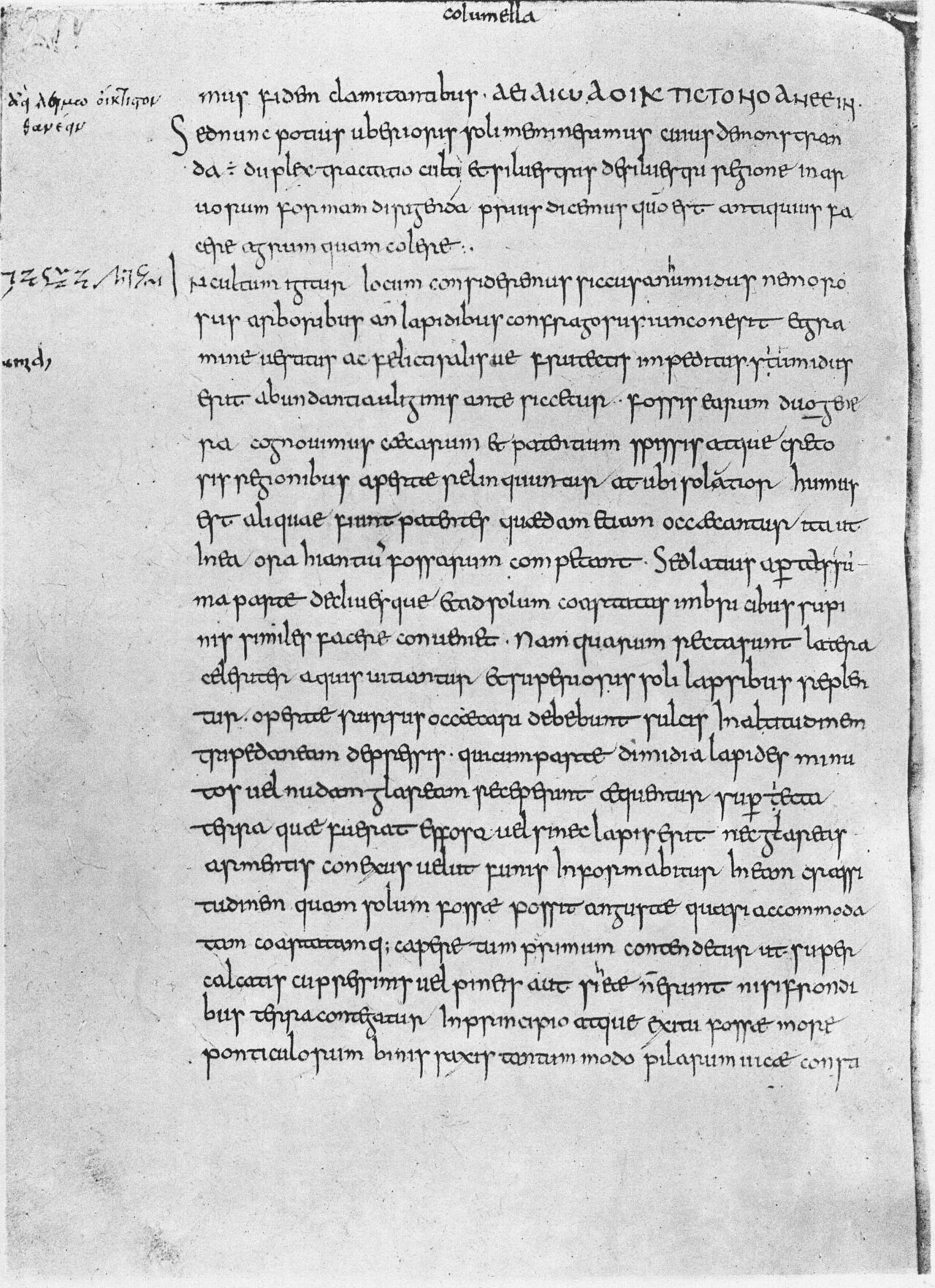

*Via Wikimedia Commons: [Columella, De re rustica, Milano, L 85 sup](https://commons.wikimedia.org/wiki/File:Columella,_De_re_rustica,_Milano,_L_85_sup.jpg) by Columella, public domain.*
*Via Wikimedia Commons: [Columella, De re rustica, Milano, L 85 sup](https://commons.wikimedia.org/wiki/File:Columella,_De_re_rustica,_Milano,_L_85_sup.jpg) by Columella, public domain.*
**For fruit and food.** Cato recommends preserving [pears, sorbs and black olives in boiled must](https://penelope.uchicago.edu/Thayer/E/Roman/Texts/Cato/De_Agricultura/A%2A.html) (chapter 7; the Latin uses both *sapa* and *defrutum*). Grout notes that the cookery book attributed to Apicius gives directions for [preserving quinces in defrutum and honey, and adds the syrup to almost a fifth of its sauces](https://penelope.uchicago.edu/encyclopaedia_romana/wine/leadpoisoning.html). According to Eisinger, sapa became [a favourite ingredient in Roman cooking, particularly for meats and sauces](https://doi.org/10.1017/S0025727300041508), and continued to be used in Italian and French cooking until the nineteenth century, where it was sometimes known as "sabe".
**For fruit and food.** Cato recommends preserving [pears, sorbs and black olives in boiled must](https://penelope.uchicago.edu/Thayer/E/Roman/Texts/Cato/De_Agricultura/A%2A.html) (chapter 7; the Latin uses both *sapa* and *defrutum*). Grout notes that the cookery book attributed to Apicius gives directions for [preserving quinces in defrutum and honey, and adds the syrup to almost a fifth of its sauces](https://penelope.uchicago.edu/encyclopaedia_romana/wine/leadpoisoning.html).[5] According to Eisinger, sapa became [a favourite ingredient in Roman cooking, particularly for meats and sauces](https://doi.org/10.1017/S0025727300041508), and continued to be used in Italian and French cooking until the nineteenth century, where it was sometimes known as "sabe".
## Lead
## Lead
Lead dissolves into acidic must as it is boiled. Grout explains that acetic acid reacts with lead oxide to form [lead acetate, known as "sugar of lead"](https://penelope.uchicago.edu/encyclopaedia_romana/wine/leadpoisoning.html), a sweet-tasting salt, but that it added very little to the sweetness of defrutum, which came mostly from the grapes' own sugars. Eisinger argues that the Romans had made [the empirical discovery that sapa "kept wine from spoiling"](https://doi.org/10.1017/S0025727300041508), and attributes its preserving power to its high lead content, since lead ions inhibit the enzymes of living organisms.
Lead dissolves into acidic must as it is boiled. Grout explains that acetic acid reacts with lead oxide to form [lead acetate, known as "sugar of lead"](https://penelope.uchicago.edu/encyclopaedia_romana/wine/leadpoisoning.html), a sweet-tasting salt, but that it added very little to the sweetness of defrutum, which came mostly from the grapes' own sugars.[5] Eisinger argues that the Romans had made [the empirical discovery that sapa "kept wine from spoiling"](https://doi.org/10.1017/S0025727300041508), and attributes its preserving power to its high lead content, since lead ions inhibit the enzymes of living organisms.
How much lead was involved can only be estimated. Using atomic absorption, Eisinger measured [approximately 1 gram of lead per litre in sapa made to the Roman recipes](https://doi.org/10.1017/S0025727300041508), while noting that the amount in any batch depends on the rate of heating, the acidity of the must and the size and shape of the vessel. Diluted 1 to 48 as Columella directs, that gives an estimated 20 milligrams of lead per litre of wine in his table of results. Grout points out that a similar result was obtained with a four-litre pot, and that [smaller vessels have a larger surface area relative to their volume](https://penelope.uchicago.edu/encyclopaedia_romana/wine/leadpoisoning.html) than the huge cauldron Columella describes, so laboratory figures may overstate what large-scale production yielded.
How much lead was involved can only be estimated. Using atomic absorption, Eisinger measured [approximately 1 gram of lead per litre in sapa made to the Roman recipes](https://doi.org/10.1017/S0025727300041508), while noting that the amount in any batch depends on the rate of heating, the acidity of the must and the size and shape of the vessel. Diluted 1 to 48 as Columella directs, that gives an estimated 20 milligrams of lead per litre of wine in his table of results. Grout points out that a similar result was obtained with a four-litre pot, and that [smaller vessels have a larger surface area relative to their volume](https://penelope.uchicago.edu/encyclopaedia_romana/wine/leadpoisoning.html) than the huge cauldron Columella describes, so laboratory figures may overstate what large-scale production yielded.[5]
## The lead-poisoning debate
## The lead-poisoning debate
Whether lead from defrutum, pipes and tableware damaged Roman health is disputed. Grout summarises the main positions. In 1965 S. C. Gilfillan argued that lead poisoning was [the major influence in the ruin of Roman culture](https://penelope.uchicago.edu/encyclopaedia_romana/wine/leadpoisoning.html), threatening the cognition and fertility of the nobility. In 1983 the geochemist Jerome Nriagu argued in the *New England Journal of Medicine*, and in a book published the same year, that ["lead poisoning contributed to the decline of the Roman empire"](https://penelope.uchicago.edu/encyclopaedia_romana/wine/leadpoisoning.html), estimating the lead that wealthy Romans took in from adulterated wine and sweetened dishes.
Whether lead from defrutum, pipes and tableware damaged Roman health is disputed. Grout summarises the main positions. In 1965 S. C. Gilfillan argued that lead poisoning was [the major influence in the ruin of Roman culture](https://penelope.uchicago.edu/encyclopaedia_romana/wine/leadpoisoning.html), threatening the cognition and fertility of the nobility.[5] In 1983 the geochemist Jerome Nriagu argued in the *New England Journal of Medicine*, and in a book published the same year, that ["lead poisoning contributed to the decline of the Roman empire"](https://penelope.uchicago.edu/encyclopaedia_romana/wine/leadpoisoning.html), estimating the lead that wealthy Romans took in from adulterated wine and sweetened dishes.[5]
Critics answered sharply. Grout quotes a 1984 review by the pharmacist and classicist John Scarborough, who found Nriagu's book [so full of errors and misused sources "that the reader cannot trust the basic arguments"](https://penelope.uchicago.edu/encyclopaedia_romana/wine/leadpoisoning.html) and concluded that lead poisoning was not endemic in the empire and did not cause its fall. Scarborough also argued that the texts mentioning a preference for lead show that the Romans most often used bronze cauldrons, and that the short boiling time would not have contaminated the juice. The occupational physician and archaeologist H. A. Waldron criticised Nriagu for relying on translations rather than primary sources, Grout also cites Walter Scheidel's 1999 study of the Roman elite, which saw [no need to suspect unusual marital sterility in the ruling class](https://penelope.uchicago.edu/encyclopaedia_romana/wine/leadpoisoning.html), and Gustave Drasch's finding that the average lead burden in Rome was not significantly higher than in Roman Augsburg.
Critics answered sharply. Grout quotes a 1984 review by the pharmacist and classicist John Scarborough, who found Nriagu's book [so full of errors and misused sources "that the reader cannot trust the basic arguments"](https://penelope.uchicago.edu/encyclopaedia_romana/wine/leadpoisoning.html) and concluded that lead poisoning was not endemic in the empire and did not cause its fall.[5] Scarborough also argued that the texts mentioning a preference for lead show that the Romans most often used bronze cauldrons, and that the short boiling time would not have contaminated the juice.[5] The occupational physician and archaeologist H. A. Waldron criticised Nriagu for relying on translations rather than primary sources, Grout also cites Walter Scheidel's 1999 study of the Roman elite, which saw [no need to suspect unusual marital sterility in the ruling class](https://penelope.uchicago.edu/encyclopaedia_romana/wine/leadpoisoning.html), and Gustave Drasch's finding that the average lead burden in Rome was not significantly higher than in Roman Augsburg.[5]
Grout's own conclusion is that the criticisms of Nriagu "seem valid", and that [the probable cause of chronic lead poisoning was the consumption of defrutum and sapa](https://penelope.uchicago.edu/encyclopaedia_romana/wine/leadpoisoning.html) rather than water from lead pipes, since mineral deposits lined the inside of the pipes and the water flowed through them constantly. Eisinger, from his measurements, judged that many wines across the centuries he studied were toxic enough to account for the colic described below. The extent of harm in Roman times remains unsettled.
Grout's own conclusion is that the criticisms of Nriagu "seem valid", and that [the probable cause of chronic lead poisoning was the consumption of defrutum and sapa](https://penelope.uchicago.edu/encyclopaedia_romana/wine/leadpoisoning.html) rather than water from lead pipes, since mineral deposits lined the inside of the pipes and the water flowed through them constantly.[5] Eisinger, from his measurements, judged that many wines across the centuries he studied were toxic enough to account for the colic described below.[4] The extent of harm in Roman times remains unsettled.
4 unchanged paragraphs
## Later history
## Later history
The practice of correcting sour wine with lead outlived Rome. Eisinger traces the custom of sweetening and preserving wine with lead additives to the Romans, and notes that Columella's book [went through at least six editions in Latin and German between 1491 and 1769](https://doi.org/10.1017/S0025727300041508). By the seventeenth century, wine dealers in southern Germany were sweetening sour wine with litharge (lead oxide). In 1696 Eberhard Gockel, the city physician of Ulm, connected outbreaks of the *colica Pictonum*, an intensely painful and often fatal colic, among monks to wine treated in this way. Duke Eberhard Ludwig of Württemberg issued an edict dated 10 March 1696 that prescribed ["loss of life, honour and fortune"](https://doi.org/10.1017/S0025727300041508) for dealers who treated wine with litharge and for anyone who failed to report them; Eisinger describes it as apparently the first law directed specifically against leaded wines.
The practice of correcting sour wine with lead outlived Rome. Eisinger traces the custom of sweetening and preserving wine with lead additives to the Romans, and notes that Columella's book [went through at least six editions in Latin and German between 1491 and 1769](https://doi.org/10.1017/S0025727300041508). By the seventeenth century, wine dealers in southern Germany were sweetening sour wine with litharge (lead oxide). In 1696 Eberhard Gockel, the city physician of Ulm, connected outbreaks of the *colica Pictonum*, an intensely painful and often fatal colic, among monks to wine treated in this way. Duke Eberhard Ludwig of Württemberg issued an edict dated 10 March 1696 that prescribed ["loss of life, honour and fortune"](https://doi.org/10.1017/S0025727300041508) for dealers who treated wine with litharge and for anyone who failed to report them; Eisinger describes it as apparently the first law directed specifically against leaded wines.
## Sources
## Sources
- Pliny the Elder, *Natural History*, book 14, sections 77–150, translated by H. Rackham (1952), Attalus.org. https://www.attalus.org/pliny/hn14b.html
- Cato the Elder, *De agri cultura* (On Agriculture), chapters 1–52 and 104–125, Loeb Classical Library translation (1934), LacusCurtius, University of Chicago. https://penelope.uchicago.edu/Thayer/E/Roman/Texts/Cato/De_Agricultura/A%2A.html and https://penelope.uchicago.edu/Thayer/E/Roman/Texts/Cato/De_Agricultura/G%2A.html
- Columella, *De re rustica*, book 12 (Latin text), The Latin Library. https://www.thelatinlibrary.com/columella/columella.rr12.shtml
- Josef Eisinger, "Lead and wine: Eberhard Gockel and the colica Pictonum", *Medical History* 26(3):279–302, 1982. https://doi.org/10.1017/S0025727300041508
- James Grout, "Lead Poisoning and Rome", *Encyclopaedia Romana*, University of Chicago (read 10 November 2026). https://penelope.uchicago.edu/encyclopaedia_romana/wine/leadpoisoning.html
