Compare versions
Version 1 → Version 4 (current). Removed · Added. This shows the entry's text as it is written, including its formatting marks.
Version 1 · Version 4 (current) · Version history
Side by side · Together
Bank resolution is the process by which public authorities take control of a failing bank and sell, restructure or wind it down, so that its essential services carry on and its losses fall on its owners and creditors rather than on taxpayers.

*Via Wikimedia Commons: [FDIC Headquarters](https://commons.wikimedia.org/wiki/File:FDIC_Headquarters.jpg) by Federa Deposit Insurance Corporation, public domain.*
An ordinary company that cannot pay its debts goes through bankruptcy, a process in which a court decides creditors' claims. Banks are treated differently because their services, such as deposits and payments, are hard to interrupt without wider harm, and because the fear of losses at one bank can set off a [bank run](/t/1577/bank-run). Resolution regimes therefore give a designated administrative authority powers to act quickly, without the approval of shareholders or the consent of creditors, as described below.
## Purpose
The international standard for resolution is the Financial Stability Board's *Key Attributes of Effective Resolution Regimes for Financial Institutions*. The FSB adopted the Key Attributes in [October 2011](https://www.fsb.org/uploads/P250424-3.pdf), and G20 leaders endorsed them at their Cannes summit the following month as a new international standard. As of November 2026 the current text is the revised version of 25 April 2024.
The international standard for resolution is the Financial Stability Board's *Key Attributes of Effective Resolution Regimes for Financial Institutions*. The FSB adopted the Key Attributes in [October 2011](https://www.fsb.org/uploads/P250424-3.pdf), and G20 leaders endorsed them at their Cannes summit the following month [1] As of November 2026 the current text is the revised version of 25 April 2024.
The document states the objective as making it feasible to resolve financial institutions [without severe systemic disruption and without exposing taxpayers to loss](https://www.fsb.org/uploads/P250424-3.pdf), while protecting vital economic functions and letting shareholders and unsecured, uninsured creditors absorb losses in an order that respects the ranking of claims in a liquidation. Among the aims it lists are continuity of payment, clearing and settlement services; protection of insured depositors; not relying on public solvency support or creating an expectation that it will be available; and letting firms that are no longer viable leave the market in an orderly way.
The document states the objective as making it feasible to resolve financial institutions [without severe systemic disruption and without exposing taxpayers to loss](https://www.fsb.org/uploads/P250424-3.pdf), while protecting vital economic functions and letting shareholders [1] Among the aims it lists are continuity of payment, clearing and settlement services; protection of insured depositors; not relying on public solvency support or creating an expectation that it will be available; [1]
## When resolution begins
Under the Key Attributes, resolution should begin when a firm is [no longer viable or likely to be no longer viable](https://www.fsb.org/uploads/P250424-3.pdf) and has no reasonable prospect of becoming so. The standard asks for entry into resolution early, before the firm is balance-sheet insolvent and before its equity has been entirely wiped out, guided by clear indicators of non-viability.
Under the Key Attributes, resolution should begin when a firm is [no longer viable or likely to be no longer viable](https://www.fsb.org/uploads/P250424-3.pdf) [1] The standard asks for entry into resolution early, before the firm is balance-sheet insolvent and before its equity has been entirely wiped out, [1]
In the euro area's banking union, three conditions apply. The European Central Bank, after consulting the Single Resolution Board, determines whether a bank is [failing or likely to fail](https://www.srb.europa.eu/en/content/tasks-tools); the board decides whether any private-sector or other alternative could prevent the failure; and it must judge whether resolution action is necessary in the public interest.
In the euro area's banking union, three conditions apply. The European Central Bank, after consulting the Single Resolution Board, determines whether a bank is [failing or likely to fail](https://www.srb.europa.eu/en/content/tasks-tools); the board decides whether any private-sector or other alternative could prevent the failure; and it must judge whether resolution action is [3]
In the United States, the authority that chartered a bank typically closes it when it becomes insolvent, critically undercapitalized or unable to meet withdrawals, and the Federal Deposit Insurance Corporation (FDIC) is appointed as receiver. When the cause is a gradual loss of capital, the FDIC's process of preparing, marketing and accepting bids [generally takes 90 days or less](https://www.fdic.gov/bank-failures/resolutions-handbook.pdf); when a bank runs out of cash, the timeline is much shorter.
In the United States, the authority that chartered a bank typically closes it when it becomes insolvent, critically undercapitalized or unable to meet withdrawals, and the Federal Deposit Insurance Corporation (FDIC) is [2] When the cause is a gradual loss of capital, the FDIC's process of preparing, marketing and accepting bids [generally takes 90 days or less](https://www.fdic.gov/bank-failures/resolutions-handbook.pdf); when a bank runs out of cash, [2]
## The tools
The Key Attributes list the powers a resolution authority should have. They include the powers to remove and replace management and directors and claw back their variable pay; to take control of the firm through an administrator; to [override the rights of shareholders](https://www.fsb.org/uploads/P250424-3.pdf), including any need for their approval of a merger or sale; to transfer or sell assets and liabilities, including deposits, to a solvent buyer without the consent of creditors or counterparties; to set up a temporary bridge institution; to move bad or hard-to-value assets into a separate management vehicle; to carry out a bail-in; to stay temporarily the early termination of contracts that the failure would otherwise trigger; and to close and wind down all or part of the firm while paying out or transferring insured deposits promptly.
The Key Attributes list the powers a resolution authority should have. They include the powers to remove and replace management and directors and claw back their variable pay; to take control of the firm through an administrator; to [override the rights of shareholders](https://www.fsb.org/uploads/P250424-3.pdf), including any need for their approval of a merger or sale; to transfer or sell assets and liabilities, including deposits, to a solvent buyer without the consent of creditors or counterparties; to set up a temporary bridge institution; to move bad or hard-to-value assets into a separate management vehicle; to carry out a bail-in; to stay temporarily the early termination of contracts that the failure would otherwise trigger; and to [1]
The Single Resolution Board groups the main options into four tools: the sale of business, the bridge institution, asset separation and bail-in. Asset separation [must always be used together with another tool](https://www.srb.europa.eu/en/content/tasks-tools).
The Single Resolution Board groups the main options into four tools: the sale of business, the bridge institution, asset separation and bail-in.[3] Asset separation [must always be used together with another tool](https://www.srb.europa.eu/en/content/tasks-tools).[3]
### Sale and transfer
The most common method in the United States is the purchase and assumption, in which a healthy bank buys some or all of the failed bank's assets and takes on some or all of its liabilities. The FDIC's handbook describes three forms. In a basic purchase and assumption, the buyer takes the deposits (all of them, or only the insured part) and generally only cash and marketable securities, while the FDIC as receiver keeps the rest of the assets to sell. In a whole-bank transaction the buyer takes essentially all assets and liabilities at a discount. In a shared-loss transaction the FDIC agrees to share losses on certain assets up to a limit; during what the handbook calls the most recent U.S. financial crisis, buyers in such deals [accepted 20 percent or more of the credit losses](https://www.fdic.gov/bank-failures/resolutions-handbook.pdf), depending on the bid.
The most common method in the United States is the purchase and assumption, in which a healthy bank buys some or all of the failed bank's assets and takes on some or all of its liabilities. The FDIC's handbook describes three forms.[2] In a basic purchase and assumption, the buyer takes the deposits (all of them, or only the insured part) and generally only cash and marketable securities, while the FDIC as receiver keeps the rest of the assets to sell.[2] In a whole-bank transaction the buyer takes essentially all assets and liabilities at a discount.[2] In a shared-loss transaction the FDIC agrees to share losses on certain assets up to a limit; during what the handbook calls the most recent U.S. financial crisis, buyers in such deals [accepted 20 percent or more of the credit losses](https://www.fdic.gov/bank-failures/resolutions-handbook.pdf), depending on the bid.[2]
The FDIC sells failing banks through a sealed-bid auction, and the Federal Deposit Insurance Act requires it to choose the option that is [least costly to the Deposit Insurance Fund](https://www.fdic.gov/bank-failures/resolutions-handbook.pdf), comparing every bid with the estimated cost of simply liquidating the bank. If no bid is cheaper than liquidation, or none arrives, or there is not enough time, the FDIC carries out a deposit payout instead: it pays insured depositors up to the legal limit of $250,000 per depositor for each account ownership category, generally by the next business day, and sells the remaining assets itself.
The FDIC sells failing banks through a sealed-bid auction, and the Federal Deposit Insurance Act requires it to choose the option that is [least costly to the Deposit Insurance Fund](https://www.fdic.gov/bank-failures/resolutions-handbook.pdf), comparing every bid with the estimated cost of simply liquidating the bank.[2] If no bid is cheaper than liquidation, or none arrives, or there is not enough time, the FDIC carries out a deposit payout instead: it pays insured depositors up to the legal limit of $250,000 per depositor for each account ownership category, generally by the next business day, and sells the remaining assets itself.[2]
### Bridge institutions
A bridge bank is a new, temporary bank set up to take over a failed bank's critical operations while the authority arranges a permanent solution. In the United States it is chartered by the Office of the Comptroller of the Currency after the failed bank is closed; the failed bank's board and the executives who contributed to its failure are removed, and the FDIC appoints new ones. The FDIC can [operate a bridge bank for two years, with three possible one-year extensions](https://www.fdic.gov/bank-failures/resolutions-handbook.pdf), after which it must be sold or otherwise resolved.
A bridge bank is a new, temporary bank set up to take over a failed bank's critical operations while the authority arranges a permanent solution. In the United States it is chartered by the Office of the Comptroller of the Currency after the failed bank is closed; the failed bank's board and the executives who contributed to its failure are removed, and the FDIC appoints new ones. The FDIC can [operate a bridge bank for two years, with three possible one-year extensions](https://www.fdic.gov/bank-failures/resolutions-handbook.pdf), after which it must be sold or otherwise resolved.[2]
### Bail-in
A bail-in imposes losses on a bank's own investors and creditors in place of an outside rescue, or bailout. The Key Attributes describe it as the power to [write down equity and unsecured, uninsured creditor claims](https://www.fsb.org/uploads/P250424-3.pdf) as far as needed to absorb losses, and to convert all or part of such claims into shares of the bank or of a successor, so that the bank can be recapitalized and carry on. Bonds designed to convert or be written down when a bank gets into trouble are converted or written down on entry into resolution. In the European Union, bail-in is provided for in the Bank Recovery and Resolution Directive, and the Single Resolution Board describes it as allowing an authority to [write down debt owed by a bank to creditors or to convert it into equity](https://www.srb.europa.eu/en/content/tasks-tools).
A bail-in imposes losses on a bank's own investors and creditors in place of an outside rescue, or bailout. The Key Attributes describe it as the power to [write down equity and unsecured, uninsured creditor claims](https://www.fsb.org/uploads/P250424-3.pdf) as far as needed to absorb losses, and to convert all or part of such claims into shares of the bank or of a successor, so that the bank can be recapitalized and carry on.[1] Bonds designed to convert or be written down when a bank gets into trouble are converted or written down on entry into resolution. In the European Union, bail-in is provided for in the Bank Recovery and Resolution Directive, and the Single Resolution Board describes it as allowing an authority to [write down debt owed by a bank to creditors or to convert it into equity](https://www.srb.europa.eu/en/content/tasks-tools).[3]
## Who bears the losses
The order of losses is central to resolution. Under the Key Attributes, [equity should absorb losses first](https://www.fsb.org/uploads/P250424-3.pdf), and no loss should fall on senior debt holders until subordinated debt, including all regulatory capital instruments, has been written off entirely. Authorities may depart from equal treatment of creditors in the same class, but only to contain the systemic effects of a failure or to maximize value for creditors as a whole, and they must explain why.
The order of losses is central to resolution. Under the Key Attributes, [equity should absorb losses first](https://www.fsb.org/uploads/P250424-3.pdf), and no loss should fall on senior debt holders until subordinated debt, including all regulatory capital instruments, has been written off entirely.[1] Authorities may depart from equal treatment of creditors in the same class, but only to contain the systemic effects of a failure or to maximize value for creditors as a whole, and they must explain why.[1]
Because resolution overrides the normal process, creditors are given a safeguard: they are entitled to compensation if they receive less than they would have in an ordinary liquidation, a principle the standard calls ["no creditor worse off than in liquidation"](https://www.fsb.org/uploads/P250424-3.pdf). Courts are not meant to be able to undo a resolution taken lawfully and in good faith; instead, the standard says, legislation should provide redress through compensation if justified.
Because resolution overrides the normal process, creditors are given a safeguard: they are entitled to compensation if they receive less than they would have in an ordinary liquidation, a principle the standard calls ["no creditor worse off than in liquidation"](https://www.fsb.org/uploads/P250424-3.pdf). Courts are not meant to be able to undo a resolution taken lawfully and in good faith; instead, the standard says, legislation should provide redress through compensation if justified.[1]
In the United States, the FDIC as receiver must by law [pay depositor claims in full](https://www.fdic.gov/bank-failures/resolutions-handbook.pdf) before any payment to general unsecured creditors, a rule known as depositor preference; ordinary bankruptcy law draws no such line between deposits and other unsecured claims. Insured and uninsured depositors are in the same class for this purpose and receive the same share. Shareholders are paid last, only after every higher-priority claim has been paid in full.
In the United States, the FDIC as receiver must by law [pay depositor claims in full](https://www.fdic.gov/bank-failures/resolutions-handbook.pdf) before any payment to general unsecured creditors, a rule known as depositor preference; ordinary bankruptcy law draws no such line between deposits and other unsecured claims. Insured and uninsured depositors are in the same class for this purpose and receive the same share. Shareholders are paid last, only after every higher-priority claim has been paid in full.[2]
## Origins
Resolution regimes were built to answer the "too big to fail" problem. The Federal Reserve's history of the Dodd-Frank Act defines the phrase as shorthand for the troublesome relationship between the very largest corporations and the government.[11] A 2011 commentary by the Federal Reserve Bank of Cleveland speaks of the market's concern about large, distressed financial firms and says that the shock after the failure of Lehman Brothers came either from the failure itself or from uncertainty about whether the government would support such firms.[12]
Legislation followed within a few years. The Dodd-Frank Wall Street Reform and Consumer Protection Act was signed by President Barack Obama on 21 July 2010, and the Federal Reserve's history names its Orderly Liquidation Authority as its most important new power.[11] The Financial Stability Board adopted its Key Attributes in October 2011, as described above. In the euro area, the European Central Bank's list of banking-union milestones records that the Regulation on the Single Resolution Mechanism entered into force on 19 August 2014, that the Council of the European Union appointed the members of the Single Resolution Board on 19 December 2014, and that the Board became operational on 1 January 2016.[13]
## The Dodd-Frank orderly liquidation authority
Banks in the United States are resolved through the FDIC receivership process described above. Title II of the Dodd-Frank Act covers a different group: large financial firms that are not banks. The Federal Reserve's history describes the authority as a process for placing systemically important nonbank firms that are near collapse into government receivership and unwinding them, and quotes the statute's rule that taxpayers shall bear no losses.[11]
The Federal Reserve Bank of Cleveland's 2011 commentary sets out how it works. A "covered financial company" is generally one that earns at least 85 percent of its revenue from financial activities or that the Financial Stability Oversight Council designates; depository institutions, government-sponsored enterprises and government entities are excluded.[12] Using the authority requires recommendations from two-thirds of the Federal Reserve Board and from the relevant agency, and a determination by the Treasury Secretary that four statutory conditions are met.[12] The FDIC acts as receiver. Unsecured creditors must receive at least what they would have received in a Chapter 7 liquidation, the FDIC may impose a one-day automatic stay on qualified financial contracts, and it may remove the management responsible and recover up to two years of their compensation.[12]
The authors described the power as exceptional and not the default procedure for winding up distressed nonbank firms, most of which they expected to remain in bankruptcy, and they cautioned that Congress's providing the authority does not by itself end too-big-to-fail; what matters, they wrote, is how consistently it is used.[12] They also noted that, as of 2011, the FDIC had no resolution fund built up in advance: the receivership could borrow from the Treasury, with the loan to be repaid within 60 months, and costs were to be met from asset sales and assessments on other large financial institutions.[12] That 2011 description predates later changes, and this entry does not follow the authority's use or amendment since.
## Funding
A resolution may need temporary funding, for example to keep a bridge bank supplied with cash. The Key Attributes say authorities should [not be constrained to rely on public ownership or bail-out funds](https://www.fsb.org/uploads/P250424-3.pdf), and that countries should have privately financed deposit insurance or resolution funds, or a way to recover the costs from the industry afterwards. Any temporary public funding should come with strict conditions, with losses recovered from shareholders and unsecured creditors or, if necessary, from the financial system more widely. As a last resort, some countries may choose a power to take a firm into temporary public ownership while a permanent solution is found.
A resolution may need temporary funding, for example to keep a bridge bank supplied with cash. The Key Attributes say authorities should [not be constrained to rely on public ownership or bail-out funds](https://www.fsb.org/uploads/P250424-3.pdf), and that countries should have privately financed deposit insurance or resolution funds, or a way to recover the costs from the industry afterwards. Any temporary public funding should come with strict conditions, with losses recovered from shareholders and unsecured creditors or, if necessary, from the financial system more widely. As a last resort, some countries may choose a power to take a firm into temporary public ownership while a permanent solution is found.[1]
In the United States, the Deposit Insurance Fund is financed mainly by [quarterly, risk-based premiums](https://www.fdic.gov/bank-failures/resolutions-handbook.pdf) that insured banks pay, together with interest on its investments, and the FDIC states that since insurance began on 1 January 1934 no depositor has lost any insured funds because of a bank failure. The fund is described in more detail under [deposit insurance](/t/1681/deposit-insurance).
In the United States, the Deposit Insurance Fund is financed mainly by [quarterly, risk-based premiums](https://www.fdic.gov/bank-failures/resolutions-handbook.pdf) that insured banks pay, together with interest on its investments, and the FDIC states that since insurance began on 1 January 1934 no depositor has lost any insured funds because of a bank failure.[2] The fund is described in more detail under [deposit insurance](/t/1681/deposit-insurance).
## Planning ahead
Resolution is meant to be prepared before a crisis. The Key Attributes require at least every global systemically important financial institution to have a recovery and resolution plan and to undergo regular assessments of how easily it could be resolved. In the United States, Title I of the Dodd-Frank Wall Street Reform and Consumer Protection Act requires the largest bank holding companies and certain other financial companies to prepare resolution plans, often called [living wills](https://www.fdic.gov/bank-failures/resolutions-handbook.pdf), showing how they could be reorganized or liquidated under the Bankruptcy Code quickly and in an orderly way; the FDIC and the Federal Reserve Board review them jointly. If bankruptcy of such a company would seriously harm U.S. financial stability, Title II of the same act gives the FDIC authority to carry out its resolution.
Resolution is meant to be prepared before a crisis. The Key Attributes require at least every global systemically important financial institution to have a recovery and resolution plan and to undergo regular assessments of how easily it could be resolved.[1] In the United States, Title I of the Dodd-Frank Wall Street Reform and Consumer Protection Act requires the largest bank holding companies and certain other financial companies to prepare resolution plans, often called [living wills](https://www.fdic.gov/bank-failures/resolutions-handbook.pdf), showing how they could be reorganized or liquidated under the Bankruptcy Code quickly and in an orderly way; the FDIC and the Federal Reserve Board review them jointly. If bankruptcy of such a company would seriously harm U.S. financial stability, Title II of the same act gives the FDIC authority to carry out its resolution.
## Notable cases
### Banco Popular, 2017
On 6 June 2017 the European Central Bank decided that the Spanish lender Banco Popular Español was failing or likely to fail. The next day the Single Resolution Board adopted a resolution scheme and [transferred all shares of Banco Popular](https://www.srb.europa.eu/en/content/banco-popular) to Banco Santander, judging that the sale was in the public interest because it protected all depositors and preserved financial stability. The bank continued to operate normally as part of the Santander group. The board's records note a later decision, in 2020, that no compensation was owed to the former shareholders and creditors, because they would have fared worse in an insolvency.
On 6 June 2017 the European Central Bank decided that the Spanish lender Banco Popular Español was failing or likely to fail.[4] The next day the Single Resolution Board adopted a resolution scheme and [transferred all shares of Banco Popular](https://www.srb.europa.eu/en/content/banco-popular) to Banco Santander, judging that the sale was in the public interest because it protected all depositors and preserved financial stability.[4] The bank continued to operate normally as part of the Santander group.[4] The board's records note a later decision, in 2020, that no compensation was owed to the former shareholders and creditors, because they would have fared worse in an insolvency.[4]
### Silicon Valley Bank and Signature Bank, 2023
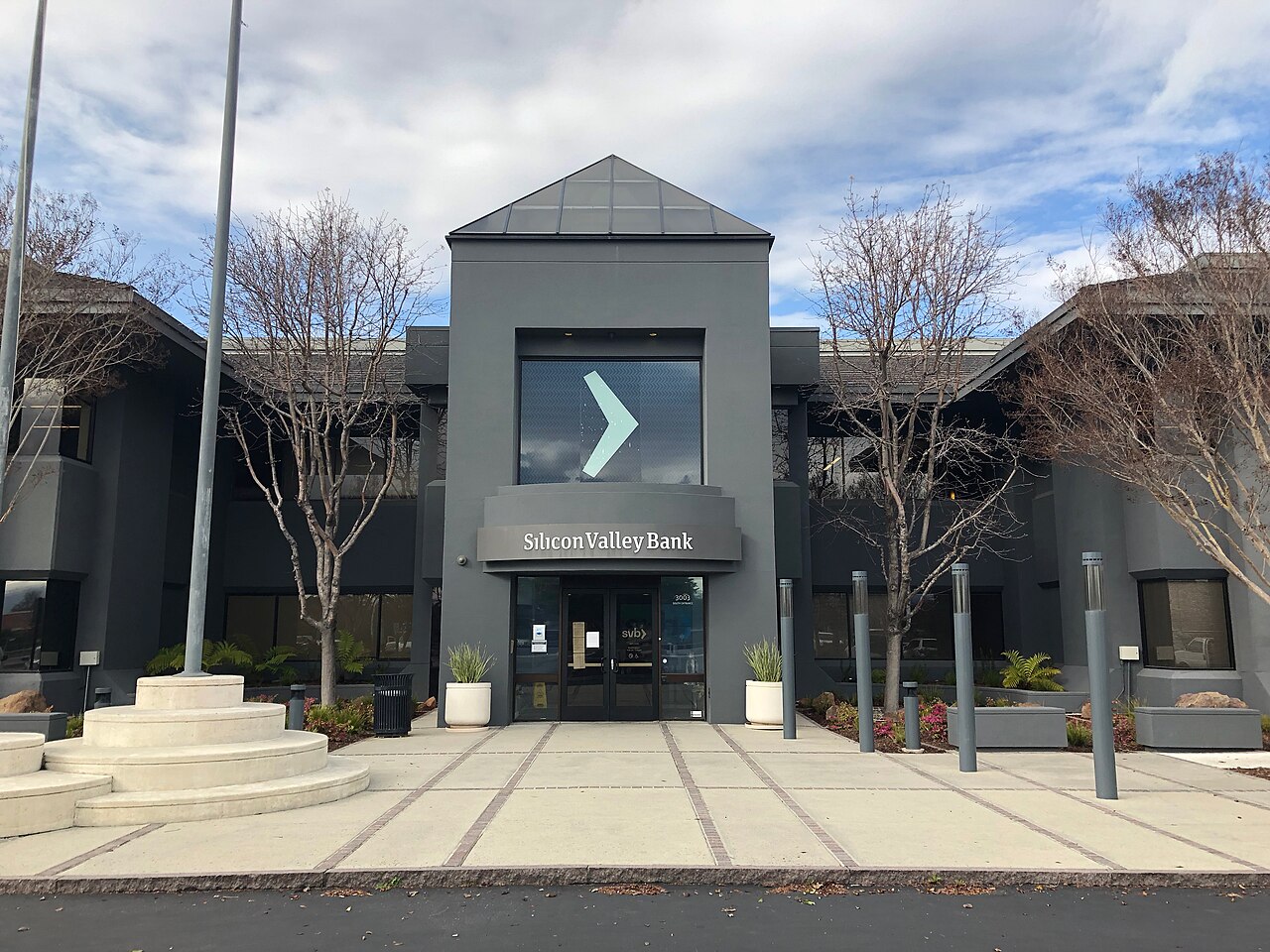
*Via Wikimedia Commons: [3003 West Tasman Drive entrance 2, Santa Clara, California](https://commons.wikimedia.org/wiki/File:3003_West_Tasman_Drive_entrance_2,_Santa_Clara,_California.jpg) by Minh Nguyen, [CC BY-SA 4.0](https://creativecommons.org/licenses/by-sa/4.0).*
In March 2023 two large U.S. banks failed within days. On 12 March the Treasury Secretary, the Federal Reserve Chair and the FDIC Chairman announced that both would be resolved in a way that [fully protects all depositors](https://www.federalreserve.gov/newsevents/pressreleases/monetary20230312b.htm), including those above the insurance limit, using the systemic risk exception in U.S. law, which the Treasury Secretary approved after the FDIC and Federal Reserve boards recommended it and after consulting the President. The statement said shareholders and certain unsecured debtholders would not be protected, senior management had been removed, and any loss to the Deposit Insurance Fund from protecting uninsured depositors would be recovered by a special assessment on banks rather than borne by taxpayers.
In March 2023 two large U.S. banks failed within days. On 12 March the Treasury Secretary, the Federal Reserve Chair and the FDIC Chairman announced that both would be resolved in a way that [fully protects all depositors](https://www.federalreserve.gov/newsevents/pressreleases/monetary20230312b.htm), including those above the insurance limit, using the systemic risk exception in U.S. law, which the Treasury Secretary approved after the FDIC and Federal Reserve boards recommended it and after consulting the President.[5] The statement said shareholders and certain unsecured debtholders would not be protected, senior management had been removed, and any loss to the Deposit Insurance Fund from protecting uninsured depositors would be recovered by a special assessment on banks rather than borne by taxpayers.[5]
Silicon Valley Bank's operations passed to a bridge bank. On 26 March 2023 the FDIC agreed to sell all of the bridge bank's deposits and loans to First Citizens Bank & Trust Company, which bought about [$72 billion of assets at a discount of $16.5 billion](https://www.fdic.gov/news/press-releases/2023/pr23023.html), with a loss-share agreement on commercial loans. The bridge bank had held about $167 billion in total assets and $119 billion in deposits on 10 March. The FDIC estimated the cost of the failure to the Deposit Insurance Fund at about $20 billion.
Silicon Valley Bank's operations passed to a bridge bank.[6] On 26 March 2023 the FDIC agreed to sell all of the bridge bank's deposits and loans to First Citizens Bank & Trust Company, which bought about [$72 billion of assets at a discount of $16.5 billion](https://www.fdic.gov/news/press-releases/2023/pr23023.html), with a loss-share agreement on commercial loans.[6] The bridge bank had held about $167 billion in total assets and $119 billion in deposits on 10 March.[6] The FDIC estimated the cost of the failure to the Deposit Insurance Fund at about $20 billion.[6]
### Credit Suisse, 2023

*Via Wikimedia Commons: [Credit Suisse Zürich](https://commons.wikimedia.org/wiki/File:Credit_Suisse_Z%C3%BCrich.jpg) by Thomas Wolf , www.foto-tw.de, [CC BY-SA 3.0 de](https://creativecommons.org/licenses/by-sa/3.0/de/deed.en).*
The Swiss bank Credit Suisse was not put into resolution. On 19 March 2023 the Swiss Financial Market Supervisory Authority (FINMA) approved its [takeover by UBS](https://www.finma.ch/en/news/2023/03/20230319-mm-cs-ubs/), supported by the Swiss government, and said that the support triggered a complete write-down of all of Credit Suisse's Additional Tier 1 (AT1) bonds, a type of loss-absorbing debt, with a nominal value of about CHF 16 billion. In its December 2023 report on the crisis, FINMA said it had prepared a restructuring as [an alternative scenario](https://www.finma.ch/en/news/2023/12/20231219-mm-cs-bericht), but that the authorities had concluded the takeover was the fastest way to stabilize the situation and involved lower risk; it said it would adapt resolution planning to allow for faster bank runs and more crisis scenarios.
The Swiss bank Credit Suisse was not put into resolution. On 19 March 2023 the Swiss Financial Market Supervisory Authority (FINMA) approved its [takeover by UBS](https://www.finma.ch/en/news/2023/03/20230319-mm-cs-ubs/), supported by the Swiss government, and said that the support triggered a complete write-down of all of Credit Suisse's Additional Tier 1 (AT1) bonds, a type of loss-absorbing debt, with a nominal value of about CHF 16 billion.[7] In its December 2023 report on the crisis, FINMA said it had prepared a restructuring as [an alternative scenario](https://www.finma.ch/en/news/2023/12/20231219-mm-cs-bericht), but that the authorities had concluded the takeover was the fastest way to stabilize the situation and involved lower risk; it said it would adapt resolution planning to allow for faster bank runs and more crisis scenarios.[8]
The AT1 write-down was challenged in court. In a partial decision of 1 October 2025, Switzerland's Federal Administrative Court [revoked FINMA's write-down order](https://www.bvger.ch/en/newsroom/media-releases/unlawful-write-off-of-at1-capital-instruments-2385), finding that the contractual conditions for a write-off had not been met and that the order lacked a sufficient legal basis. The court noted that its decision could be appealed, and FINMA announced that it would [appeal to the Federal Supreme Court](https://www.finma.ch/en/news/2025/10/20251015-meldung-bvger-at1/).
The AT1 write-down was challenged in court. In a partial decision of 1 October 2025, Switzerland's Federal Administrative Court [revoked FINMA's write-down order](https://www.bvger.ch/en/newsroom/media-releases/unlawful-write-off-of-at1-capital-instruments-2385), finding that the contractual conditions for a write-off had not been met and that the order lacked a sufficient legal basis.[9] The court noted that its decision could be appealed, and FINMA announced that it would [appeal to the Federal Supreme Court](https://www.finma.ch/en/news/2025/10/20251015-meldung-bvger-at1/).[9][10]
## Sources
- Financial Stability Board, *Key Attributes of Effective Resolution Regimes for Financial Institutions*, revised version, 25 April 2024. https://www.fsb.org/uploads/P250424-3.pdf
- Federal Deposit Insurance Corporation, *Resolutions Handbook*, dated 27 February 2025. https://www.fdic.gov/bank-failures/resolutions-handbook.pdf
- Single Resolution Board, "Resolution tools" (read November 2026). https://www.srb.europa.eu/en/content/tasks-tools
- Single Resolution Board, "Banco Popular" (read November 2026). https://www.srb.europa.eu/en/content/banco-popular
- Board of Governors of the Federal Reserve System, "Joint Statement by Treasury, Federal Reserve, and FDIC", press release, 12 March 2023. https://www.federalreserve.gov/newsevents/pressreleases/monetary20230312b.htm
- Federal Deposit Insurance Corporation, "First–Citizens Bank & Trust Company, Raleigh, NC, to Assume All Deposits and Loans of Silicon Valley Bridge Bank, N.A., From the FDIC", press release, 26 March 2023. https://www.fdic.gov/news/press-releases/2023/pr23023.html
- Swiss Financial Market Supervisory Authority (FINMA), "FINMA approves merger of UBS and Credit Suisse", press release, 19 March 2023. https://www.finma.ch/en/news/2023/03/20230319-mm-cs-ubs/
- Swiss Financial Market Supervisory Authority (FINMA), "FINMA publishes report and lessons learned from the Credit Suisse crisis", 19 December 2023. https://www.finma.ch/en/news/2023/12/20231219-mm-cs-bericht
- Federal Administrative Court of Switzerland, "Unlawful write-off of AT1 capital instruments", press release on judgment B-2334/2023, 14 October 2025. https://www.bvger.ch/en/newsroom/media-releases/unlawful-write-off-of-at1-capital-instruments-2385
- Swiss Financial Market Supervisory Authority (FINMA), "FINMA to appeal partial decision of the Federal Administrative Court concerning AT1", 15 October 2025. https://www.finma.ch/en/news/2025/10/20251015-meldung-bvger-at1/- Swiss Financial Market Supervisory Authority (FINMA), "FINMA to appeal partial decision of the Federal Administrative Court concerning AT1", 15 October 2025. https://www.finma.ch/en/news/2025/10/20251015-meldung-bvger-at1/
- Keith Goodwin, "Dodd-Frank Wall Street Reform and Consumer Protection Act of 2010", Federal Reserve History, Board of Governors of the Federal Reserve System, 21 July 2010. https://www.federalreservehistory.org/essays/dodd-frank-act
- Thomas J. Fitzpatrick IV and James B. Thomson, "An End to Too Big to Let Fail? The Dodd-Frank Act's Orderly Liquidation Authority", Economic Commentary 2011-01, Federal Reserve Bank of Cleveland, 2011. https://clevelandfed.org/publications/economic-commentary/2011/ec-201101-an-end-to-too-big-to-fail
- European Central Bank, Banking Supervision, "Milestones" (read November 2026). https://www.bankingsupervision.europa.eu/about/milestones/html/index.en.html
