Compare versions
Version 1 → Version 5 (current). Removed · Added. This shows the entry's text as it is written, including its formatting marks.
Version 1 · Version 5 (current) · Version history
Side by side · Together
A bitcoin treasury company is a business, usually publicly listed, that holds bitcoin as a principal reserve asset on its balance sheet and often raises money by selling shares, preferred stock or debt in order to buy more of it.
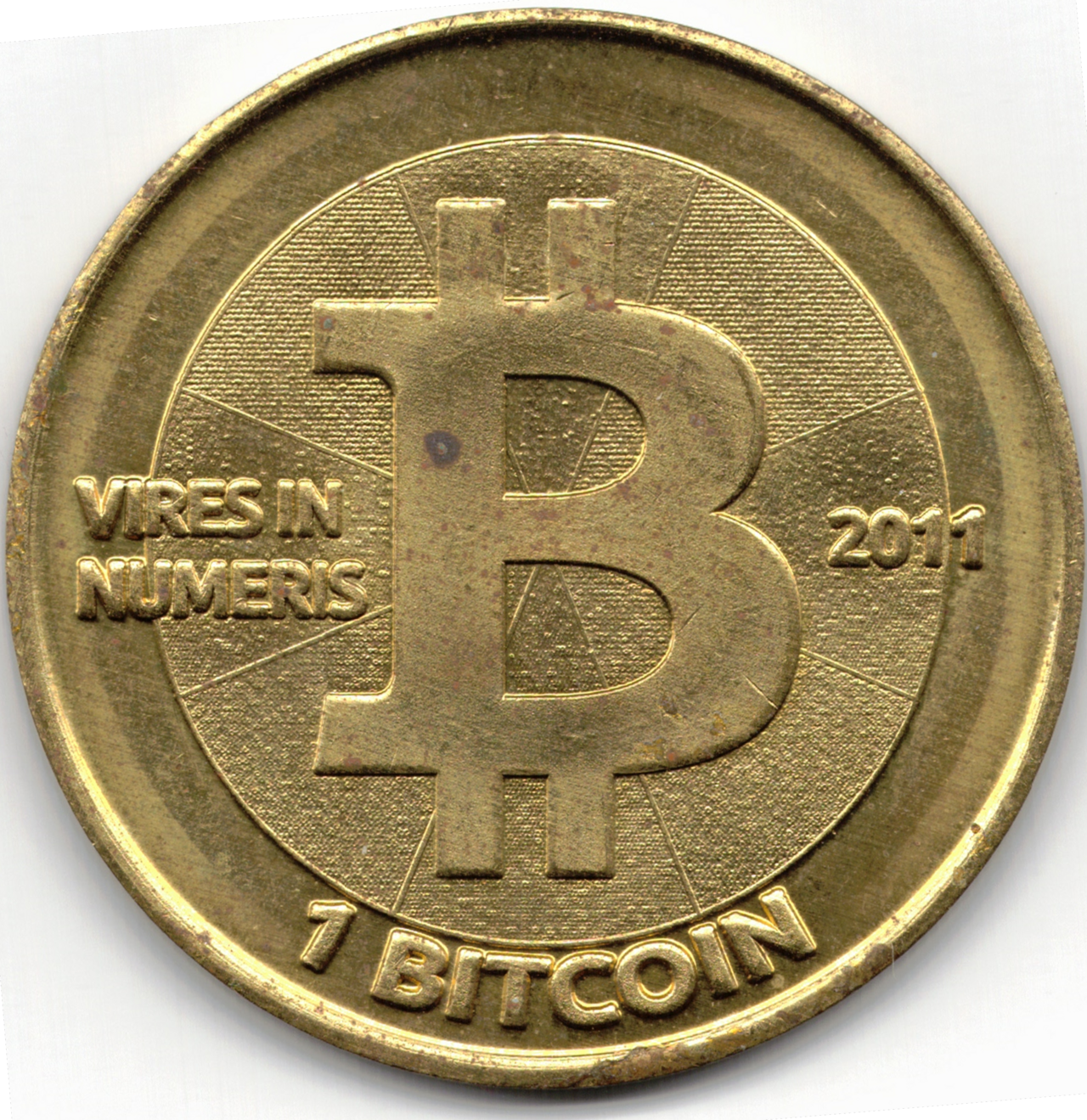
*Via Wikimedia Commons: [Physical Bitcoin 2011 Casascius 1 Bitcoin Coin Token](https://commons.wikimedia.org/wiki/File:Physical_Bitcoin_2011_Casascius_1_Bitcoin_Coin_Token.png) by Tiberiandusk, [CC BY-SA 4.0](https://creativecommons.org/licenses/by-sa/4.0).*
## Terms
The phrase describes a corporate strategy rather than an industry: the companies involved have included a software firm, a carmaker and [healthcare companies](https://www.brattle.com/wp-content/uploads/2025/12/Why-Digital-Asset-Treasuries-Are-Drawing-Regulator-Concerns.pdf). Strategy Inc., formerly MicroStrategy, describes itself in its quarterly report for the period ended 30 September 2026 as ["the world's first and largest Bitcoin Treasury Company"](https://www.sec.gov/Archives/edgar/data/1050446/000105044626000060/mstr-20260930.htm). A wider term, "digital asset treasury" or DAT, covers firms holding any crypto-asset. In a December 2025 note for the consultancy Brattle, Sujay Dave and Anil Donmez define DATs as firms that hold crypto-assets [not merely as speculative investments](https://www.brattle.com/wp-content/uploads/2025/12/Why-Digital-Asset-Treasuries-Are-Drawing-Regulator-Concerns.pdf) but as deliberate components of their corporate asset base. A company's treasury reserve is the cash it holds beyond what it needs for operations; Tesla's 2021 filing, for example, describes its policy for [cash that is not required to maintain adequate operating liquidity](https://www.sec.gov/Archives/edgar/data/1318605/000156459021004599/tsla-10k_20201231.htm). For the asset itself, see [Bitcoin](/t/1497/bitcoin).
The phrase describes a corporate strategy rather than an industry: the companies involved have included a software firm, a carmaker and [healthcare companies](https://www.brattle.com/wp-content/uploads/2025/12/Why-Digital-Asset-Treasuries-Are-Drawing-Regulator-Concerns.pdf). [Strategy Inc.](/t/1934/strategy-inc), formerly MicroStrategy, describes itself in its quarterly report for the period ended 30 September 2026 as ["the world's first and largest Bitcoin Treasury Company"](https://www.sec.gov/Archives/edgar/data/1050446/000105044626000060/mstr-20260930.htm). A wider term, "digital asset treasury" or DAT, covers firms holding any crypto-asset. In a December 2025 note for the consultancy Brattle, Sujay Dave and Anil Donmez define DATs as firms that hold crypto-assets [not merely as speculative investments](https://www.brattle.com/wp-content/uploads/2025/12/Why-Digital-Asset-Treasuries-Are-Drawing-Regulator-Concerns.pdf) but as deliberate components of their corporate asset base. A company's treasury reserve is the cash it holds beyond what it needs for operations; Tesla's 2021 filing, for example, describes its policy for [cash that is not required to maintain adequate operating liquidity](https://www.sec.gov/Archives/edgar/data/1318605/000156459021004599/tsla-10k_20201231.htm). For the asset itself, see [Bitcoin](/t/1497/bitcoin).
## Origins
The model is usually dated to 11 August 2020, when MicroStrategy, a business intelligence software company in Tysons Corner, Virginia, announced that it had bought [21,454 bitcoins for $250 million](https://www.sec.gov/Archives/edgar/data/1050446/000119312520215604/d921849dex991.htm), including fees, and had adopted bitcoin as its "primary treasury reserve asset". The purchase was one half of a capital allocation plan announced in July 2020; the other half was a cash tender offer for up to $250 million of the company's own shares. In the announcement the company's chief executive called bitcoin "a dependable store of value" and cited COVID-19, government stimulus including quantitative easing, and political and economic uncertainty as factors that might reduce the long-term real value of [fiat currencies](https://www.sec.gov/Archives/edgar/data/1050446/000119312520215604/d921849dex991.htm).
Tesla followed with a smaller, shorter-lived position. Its annual report for 2020, filed on 8 February 2021, says it updated its investment policy in January 2021 to allow investment in alternative reserve assets, including digital assets, and then [invested an aggregate $1.50 billion in bitcoin](https://www.sec.gov/Archives/edgar/data/1318605/000156459021004599/tsla-10k_20201231.htm). By 30 June 2022, Tesla reported, it had [converted approximately 75% of its purchases into fiat currency](https://www.sec.gov/Archives/edgar/data/1318605/000095017022012936/tsla-20220630.htm), recording an impairment loss of $170 million and realised gains of $64 million in that half-year.
The number of such companies grew quickly in 2025. Dave and Donmez, citing data from CoinGecko, wrote that [more than 190 publicly traded entities](https://www.brattle.com/wp-content/uploads/2025/12/Why-Digital-Asset-Treasuries-Are-Drawing-Regulator-Concerns.pdf) maintained digital asset treasuries with an aggregate value above $121 billion, and that the crypto-assets held by the largest of them (those holding more than $500 million) doubled from about $60 billion to $120 billion between May and October 2025, driven mainly by purchases of bitcoin and ether.
## How the model works
The Brattle note summarises the typical business model as raising capital through the issuance of equity or convertible debt and [deploying the proceeds to purchase crypto-assets](https://www.brattle.com/wp-content/uploads/2025/12/Why-Digital-Asset-Treasuries-Are-Drawing-Regulator-Concerns.pdf); by holding the assets on their balance sheets, such companies give investors indirect exposure to crypto through ordinary stock markets. Convertible debt is borrowing that the lender may later exchange for shares.
Strategy's filings show the mechanics at the largest scale. Besides its common stock, it has four series of perpetual [preferred stock](/t/1791/preferred-stock) listed on Nasdaq: the 10.00% Strife (STRF), the variable-rate Stretch (STRC), the 8.00% Strike (STRK) and the 10.00% Stride (STRD). It sells these through "at-the-market" programmes, in which shares are sold gradually into the market at prevailing prices rather than in one offering. In the week of 2 to 8 November 2026, according to a filing of 9 November, it sold 2,051,348 common shares for net proceeds of $283.8 million; $81.9 million of that bought [1,036 bitcoins at an average of $79,012](https://www.sec.gov/Archives/edgar/data/1050446/000119312526452693/mstr-20261109.htm), $188.3 million was used to repurchase STRC preferred shares, and $13.6 million was kept as cash. As of 8 November 2026 the company reported holding 850,364 bitcoins, bought for an aggregate $64.16 billion, an average of $75,456 each, including fees ([Strategy 8-K, 9 November 2026](https://www.sec.gov/Archives/edgar/data/1050446/000119312526452693/mstr-20261109.htm)).
The preferred shares and debt create regular cash obligations that the bitcoin itself does not pay. Strategy's quarterly report says it relies substantially on the [availability of equity and debt capital markets](https://www.sec.gov/Archives/edgar/data/1050446/000105044626000060/mstr-20260930.htm) to fund its preferred [dividends](/t/1780/dividend), interest and other obligations. It keeps a U.S. dollar reserve, established in December 2025, intended to support those payments, and its board has authorised a "BTC Monetization Program" under which it may sell bitcoin to fund the reserve (up to $1.25 billion of proceeds) or to pay dividends and interest. The same report records that the company sold about 5,552 bitcoins for $348.6 million in the three months to 30 September 2026, and about 6,947 for $431.8 million in the first nine months of the year, while buying about 182,113 over those nine months ([Strategy 10-Q, Q3 2026](https://www.sec.gov/Archives/edgar/data/1050446/000105044626000060/mstr-20260930.htm)).
## Premium and per-share measures
Much of the model depends on how the market values the company's shares relative to the bitcoin it holds. Dave and Donmez note that in periods of optimism DAT shares often trade at a [substantial premium to their net asset value](https://www.brattle.com/wp-content/uploads/2025/12/Why-Digital-Asset-Treasuries-Are-Drawing-Regulator-Concerns.pdf), meaning investors pay more than a dollar for each dollar of crypto held, and cite research putting Strategy's premium at 53% in August 2025. They attribute the premium to a preference for crypto exposure through a conventional security, or to confidence that the company will keep expanding its holdings. When shares sell at a premium, a company can issue new stock and buy more bitcoin than the new shares dilute, raising the bitcoin held per share; and by less when the premium shrinks ([Strategy 10-Q, Q3 2026](https://www.sec.gov/Archives/edgar/data/1050446/000105044626000060/mstr-20260930.htm)).
Strategy reports its own measures of this. "BPS (in Sats)" is its gross bitcoin holdings divided by its assumed diluted shares outstanding, expressed in satoshis (one hundred-millionth of a bitcoin), and "BTC Yield" is the percentage change in BPS over a period. The company states that BTC Yield ["is not equivalent to 'yield' in the traditional financial context"](https://www.sec.gov/Archives/edgar/data/1050446/000105044626000060/mstr-20260930.htm) and is not a measure of shareholder return or of income. Its report for the third quarter of 2026 attributes a lower BTC Yield partly to raising money from common stock at lower premiums to the value of its underlying bitcoin ([Strategy 10-Q, Q3 2026](https://www.sec.gov/Archives/edgar/data/1050446/000105044626000060/mstr-20260930.htm)).
## Accounting
Under U.S. accounting rules as they stood in 2021, bitcoin held by a company was treated as an indefinite-lived intangible asset. Tesla's 2020 annual report explains the consequence: any fall in fair value below the carrying value required an impairment charge, while [no upward revisions](https://www.sec.gov/Archives/edgar/data/1318605/000156459021004599/tsla-10k_20201231.htm) could be made for price rises until the asset was sold.
In December 2023 the Financial Accounting Standards Board issued Accounting Standards Update 2023-08, which requires crypto assets within its scope, such as bitcoin and ether, to be [measured at fair value with changes recorded in net income](https://kpmg.com/us/en/frv/reference-library/2023/fasb-to-issue-final-crypto-asset-accounting-asu.html), effective for fiscal years beginning after 15 December 2024, with early adoption permitted. Strategy adopted it on 1 January 2025. The change makes reported earnings move with the price of bitcoin: Strategy recorded a gain on digital assets of about $20.9 billion in the third quarter of 2026, but a loss of about $1.86 billion for the first nine months of the year ([Strategy 10-Q, Q3 2026](https://www.sec.gov/Archives/edgar/data/1050446/000105044626000060/mstr-20260930.htm)).
## Beyond the United States
The model spread to other stock markets. In Japan, Metaplanet, a Japanese listed company, disclosed on 10 May 2024 that it had bought [117.7 bitcoins at an average of about 10.2 million yen](https://cointelegraph.com/news/metaplanet-bitcoin-reserve-asset-117-btc) and announced on 13 May 2024 that it was adopting bitcoin as a strategic reserve asset. It gave as reasons sustained economic pressures in Japan, notably high government debt, along with negative real interest rates and a weak yen. In a disclosure of 2 July 2026 it reported buying 2,823 bitcoins in the second quarter of 2026, for about 35.9 billion yen, bringing its holdings to [43,000 bitcoins bought for a total of 659.2 billion yen](https://theblock.co/post/406999/metaplanet-bitcoin-acquisition-q2), an average of about 15.3 million yen each; it stated targets of 100,000 bitcoins by the end of 2026 and 210,000 by the end of 2027.
The index provider MSCI's October 2025 list of companies that might fall under its proposed treatment of the sector (see below) gives a sense of its spread. It named 39 securities, among them companies listed in the United States, Japan, China, Germany, France, the United Kingdom, Sweden, Singapore and Australia. Besides Strategy and Metaplanet, they included bitcoin miners such as MARA Holdings and Riot Platforms, and companies such as Semler Scientific and SharpLink Gaming ([MSCI, *Consultation on Digital Asset Treasury Companies*, October 2025](https://www.msci.com/downloads/web/msci-com/indexes/index-resources/consultation-on-digital-asset-treasury-companies-2025.pdf)). SharpLink holds ether rather than bitcoin ([The Block, 15 October 2026](https://www.theblock.co/news/business/2026-10-15-msci-rules-could-exclude-strategy-mstr-from-indexes-418729)). Some have reached the stock market through mergers: [Strive Inc.](/t/1936/strive-inc), which reported a bitcoin treasury of 13,628 bitcoins as of 17 March 2026, took its present form on 12 September 2025, when the asset manager Strive Enterprises completed a reverse acquisition of the listed company Asset Entities ([Strive 10-K for 2025](https://www.sec.gov/Archives/edgar/data/1920406/000162828026019879/asst-20251231.htm)).
## Index treatment
Whether these companies count as operating businesses or as investment vehicles has been tested by index providers. In October 2025 MSCI opened a consultation on whether to exclude from its Global Investable Market Indexes companies whose primary business involves bitcoin or other digital asset treasury activities, [if digital asset holdings represent 50% or more of their total assets](https://www.msci.com/downloads/web/msci-com/indexes/index-resources/consultation-on-digital-asset-treasury-companies-2025.pdf). It noted that some market participants saw such companies as resembling investment funds, which are not eligible for its indexes.
On 6 January 2026 MSCI announced that it would [not, at that time, implement the exclusion](https://app2.msci.com/webapp/index_ann/DocGet?pub_key=DD3Olh5uInk%3D&lang=en&format=html) for its February 2026 review. Companies on its list that were already in the indexes stayed in, but MSCI froze increases in their share counts and inclusion factors and deferred any additions or moves between size segments. It said it would hold a broader consultation on "non-operating companies", noting investor feedback that the issue might extend to firms whose business activities are predominantly investment-oriented.
On 15 October 2026 MSCI announced the result of that broader consultation: it would [classify non-operating companies as ineligible](https://app2.msci.com/webapp/index_ann/DocGet?format=html&lang=en&pub_key=aq0wbkjxPgo%3D) for its Global Investable Market Indexes, effective with the November 2026 index review as of the close of 30 November 2026, and would discontinue the interim measures for digital asset treasury companies. Under the new method, a company is first checked for substantial operating assets; one that fails is tested on five financial ratios, and a security flagged on four or more is ineligible. A company already in the indexes is removed only if it fails in each of its two most recent annual filing periods. MSCI said a final list of affected constituents would be published on 11 November 2026. Strategy's management had opposed the proposal, calling it discriminatory against digital asset treasuries, while also saying in a September 2026 letter that it would have [no meaningful impact on Strategy's business](https://www.theblock.co/news/business/2026-10-15-msci-rules-could-exclude-strategy-mstr-from-indexes-418729).
On 11 November 2026 MSCI published the results of its November 2026 review of the MSCI Global Standard Indexes, with changes effective as of the close of business on 30 November 2026. Its [list of deletions from the MSCI USA Index](https://www.msci.com/eqb/gimi/stdindex/MSCI_Nov26_STPublicList.pdf) includes "Strategy A", the company's Class A common stock; the list itself gives no reason. A same-day report by investingLive, citing Reuters and MSCI's list, described it as the first review under the new non-operating company rule and said Strategy went straight onto the deletion list because it had already failed the screen across the two-year buffer that existing constituents usually receive. The same report said Strategy put the index-tracking funds' holding at about 13 million shares, roughly 3.1% of its basic shares outstanding, and quoted its executive chairman calling the rule discriminatory ([investingLive, 11 November 2026](https://investinglive.com/stocks/strategy-mstr-is-to-be-removed-from-msci-global-investable-market-indexes-following-msci-s-implementation-of-a-new-non-operating-company-rule/)). As of 15 November 2026 the full list had not been checked here for other bitcoin treasury companies, so the entry does not say which others were affected.
## Scrutiny and criticism
The risks most often raised concern volatility, funding and disclosure. Strategy's 2025 quarterly report, as quoted in the Brattle note, warned that a significant decrease in the price of bitcoin [would have a material adverse effect](https://www.brattle.com/wp-content/uploads/2025/12/Why-Digital-Asset-Treasuries-Are-Drawing-Regulator-Concerns.pdf) on its earnings, and its report for the third quarter of 2026 lists among its risks the availability of capital on favourable terms and its ability to sell bitcoin at attractive prices ([Strategy 10-Q, Q3 2026](https://www.sec.gov/Archives/edgar/data/1050446/000105044626000060/mstr-20260930.htm)).
Regulators have also taken an interest. According to the Brattle note, the U.S. Securities and Exchange Commission and the Financial Industry Regulatory Authority [reportedly launched coordinated inquiries](https://www.brattle.com/wp-content/uploads/2025/12/Why-Digital-Asset-Treasuries-Are-Drawing-Regulator-Concerns.pdf) in September 2025 into more than 200 public companies with significant digital asset holdings, said to focus on possible insider trading before announcements of crypto purchases; the authors noted that no enforcement actions had been announced as of December 2025. They described reports of sharp share-price rises in the days before some companies announced treasury plans, and found risk disclosures uneven across the sector, with some companies omitting price-sensitivity analysis or the identity of their custodians ([Dave and Donmez, 2025](https://www.brattle.com/wp-content/uploads/2025/12/Why-Digital-Asset-Treasuries-Are-Drawing-Regulator-Concerns.pdf)).
## Sources
- MicroStrategy Incorporated, "MicroStrategy Adopts Bitcoin as Primary Treasury Reserve Asset", press release filed as Exhibit 99.1 to Form 8-K, 11 August 2020. https://www.sec.gov/Archives/edgar/data/1050446/000119312520215604/d921849dex991.htm
- Strategy Inc, Form 10-Q for the quarter ended 30 September 2026, filed 2 November 2026. https://www.sec.gov/Archives/edgar/data/1050446/000105044626000060/mstr-20260930.htm
- Strategy Inc, Form 8-K, 9 November 2026 (ATM, bitcoin holdings and repurchase updates). https://www.sec.gov/Archives/edgar/data/1050446/000119312526452693/mstr-20261109.htm
- Tesla, Inc., Form 10-K for the year ended 31 December 2020, filed 8 February 2021. https://www.sec.gov/Archives/edgar/data/1318605/000156459021004599/tsla-10k_20201231.htm
- Tesla, Inc., Form 10-Q for the quarter ended 30 June 2022, filed 25 July 2022. https://www.sec.gov/Archives/edgar/data/1318605/000095017022012936/tsla-20220630.htm
- Sujay Dave and Anil Donmez, "Why Digital Asset Treasuries Are Drawing Regulator Concerns", The Brattle Group, 4 December 2025. https://www.brattle.com/wp-content/uploads/2025/12/Why-Digital-Asset-Treasuries-Are-Drawing-Regulator-Concerns.pdf
- KPMG, "FASB to issue final crypto asset accounting ASU" (ASU 2023-08), December 2023. https://kpmg.com/us/en/frv/reference-library/2023/fasb-to-issue-final-crypto-asset-accounting-asu.html- KPMG, "FASB to issue final crypto asset accounting ASU" (ASU 2023-08), December 2023. https://kpmg.com/us/en/frv/reference-library/2023/fasb-to-issue-final-crypto-asset-accounting-asu.html
- Cointelegraph, "Japanese-listed firm adds Bitcoin as reserve asset with 117 BTC", 13 May 2024. https://cointelegraph.com/news/metaplanet-bitcoin-reserve-asset-117-btc
- The Block, "Metaplanet adds 2,823 bitcoin to holdings in Q2, bringing total to 43,000 BTC", 2 July 2026. https://theblock.co/post/406999/metaplanet-bitcoin-acquisition-q2
- MSCI, *Consultation on Digital Asset Treasury Companies*, October 2025. https://www.msci.com/downloads/web/msci-com/indexes/index-resources/consultation-on-digital-asset-treasury-companies-2025.pdf
- MSCI, "MSCI Announces Results of the Consultation on the Treatment of Digital Asset Treasury Companies", 6 January 2026. https://app2.msci.com/webapp/index_ann/DocGet?pub_key=DD3Olh5uInk%3D&lang=en&format=html
- MSCI, "MSCI Announces Results of the Consultation on the Eligibility of Non-Operating Companies in the MSCI Global Investable Market Indexes", 15 October 2026. https://app2.msci.com/webapp/index_ann/DocGet?format=html&lang=en&pub_key=aq0wbkjxPgo%3D
- Jason Shubnell, "MSCI finalizes index rules that put Strategy, crypto treasury firms at risk of exclusion", The Block, 15 October 2026. https://www.theblock.co/news/business/2026-10-15-msci-rules-could-exclude-strategy-mstr-from-indexes-418729
- Strive, Inc., Form 10-K for the year ended 31 December 2025. https://www.sec.gov/Archives/edgar/data/1920406/000162828026019879/asst-20251231.htm
- MSCI, "MSCI Global Standard Indexes" review results, 11 November 2026 (changes effective 30 November 2026). https://www.msci.com/eqb/gimi/stdindex/MSCI_Nov26_STPublicList.pdf
- Eamonn Sheridan, "Strategy (MSTR) is to be removed from MSCI Global Investable Market Indexes...", investingLive, 11 November 2026. https://investinglive.com/stocks/strategy-mstr-is-to-be-removed-from-msci-global-investable-market-indexes-following-msci-s-implementation-of-a-new-non-operating-company-rule/
