Version 2 (current)
Nov 11, 2026. Version history
Lead poisoning is harm to the body caused by taking in lead, a toxic metal that builds up in bones and teeth and damages the brain, nerves, kidneys, blood and heart; young children and unborn babies are the most vulnerable, and no level of exposure is known to be safe.
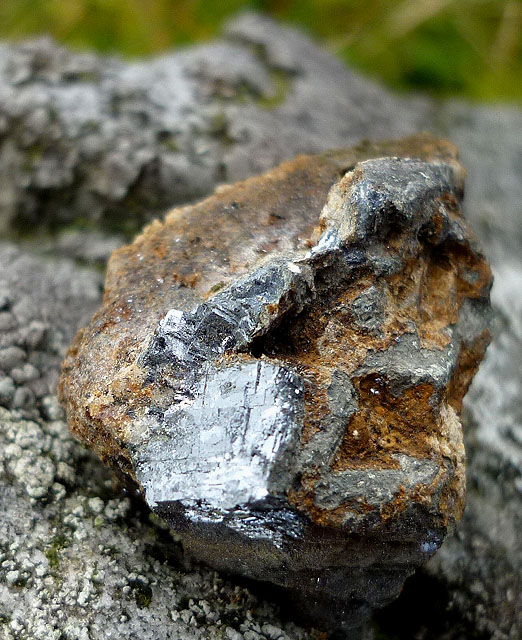
Via Wikimedia Commons: Galena - lead ore - geograph.org.uk - 3170126 by Karl and Ali, CC BY-SA 2.0.
What it is
Lead is a naturally occurring metal found in the Earth's crust, and its widespread use has caused extensive environmental contamination and human exposure worldwide, according to the World Health Organization (WHO) fact sheet on lead poisoning (10 June 2026). Once in the body, lead is carried to the brain, liver, kidneys and bones, and it is stored in the teeth and bones, where it accumulates over time. Human exposure is assessed by measuring the amount of lead in the blood (WHO).
The condition has older names. The US National Library of Medicine's MedlinePlus encyclopedia (reviewed 8 January 2025) lists plumbism and saturnism as alternative names. The first comes from plumbum, the Latin word for lead (Grout, Encyclopaedia Romana).
Lead poisoning is not always dramatic. MedlinePlus notes that a single high dose can cause severe emergency symptoms, but that it is more common for poisoning to develop slowly through repeated exposure to small amounts, often with no obvious symptoms (MedlinePlus).
Sources of exposure
WHO names mining, smelting, manufacturing and recycling as important sources of environmental contamination, and notes that most of the lead consumed worldwide goes into lead-acid batteries for motor vehicles. Lead has been used in pigments, paints, solder, stained glass, lead crystal glassware, ammunition, ceramic glazes, jewellery, toys, some traditional cosmetics and some traditional medicines, and it can enter drinking water through pipes, solders and fittings that contain it (WHO).
People take lead in mainly in two ways, according to WHO: by breathing in lead particles produced when materials containing lead are burned (as in smelting, recycling, stripping leaded paint and burning plastic cables), and by swallowing contaminated dust, soil, water or food. WHO describes outbreaks of mass lead poisoning, including deaths of young children, caused by soil and dust contaminated by battery recycling and mining in some countries (WHO). WHO calls lead paint "a major source of exposure globally" (WHO).
In the United States, the National Institute of Environmental Health Sciences (NIEHS) identifies dust from old lead-based paint, which survives in older homes and buildings despite the ban, as the most common way people are exposed (NIEHS, "Lead", last reviewed 3 June 2026). MedlinePlus adds that in adults exposure usually comes from breathing it in at work, while children more often swallow it, for example from paint chips, dust or soil near highways and old houses (MedlinePlus).
Why children are most at risk
WHO states that young children may absorb four to five times as much lead as adults from the same swallowed dose, and that their hand-to-mouth and object-to-mouth behaviour raises their exposure to contaminated dust, soil and paint. Children who are malnourished absorb more lead, especially when they lack calcium or iron (WHO).
Pregnancy adds a further route. Lead stored in a mother's bones can be released into her blood during pregnancy and reach the fetus, and exposure during pregnancy can cause reduced fetal growth and preterm birth (WHO). MedlinePlus describes unborn children as the most vulnerable of all (MedlinePlus).
Effects on the body
In children
At very high levels, WHO states, lead can severely damage the brain and central nervous system, causing coma, convulsions and death, and children who survive severe poisoning may be left with permanent intellectual disability and behavioural disorders. At lower levels, which may cause no obvious symptoms, lead can permanently affect brain development, reducing IQ (intelligence quotient, a standardised score on intelligence tests), shortening attention span, increasing antisocial behaviour and lowering educational attainment. It also causes anaemia (too few red blood cells), high blood pressure, kidney impairment and damage to the immune and reproductive systems (WHO).
MedlinePlus lists among the possible signs abdominal pain and cramping (usually the first sign of a high, toxic dose), aggressive behaviour, anaemia, constipation, headaches, hearing loss, irritability, loss of developmental skills already gained in young children, and low appetite and energy; very high levels may cause vomiting, a staggering walk, muscle weakness, seizures or coma (MedlinePlus).
In adults
WHO states that lead causes long-term harm in adults, including a higher risk of high blood pressure (see Hypertension), cardiovascular problems and kidney damage (WHO). According to MedlinePlus, adults with mildly raised lead levels often recover without problems, while people with higher levels face a greater risk of lasting damage to nerves, muscles, kidneys and blood vessels, and complete recovery from chronic poisoning may take months to years (MedlinePlus).
Measuring exposure: "no known safe level"
Exposure is measured as the concentration of lead in the blood, in micrograms per decilitre (µg/dL), and the reference levels used by health agencies have been lowered over time.
The US Centers for Disease Control and Prevention (CDC) uses a blood lead reference value, a statistical benchmark set at the 97.5th percentile of blood lead levels among US children aged 1 to 5, taken from the National Health and Nutrition Examination Survey. The CDC set it at 5 µg/dL in 2012 and lowered it to 3.5 µg/dL on 28 October 2021, using survey data from 2015 to 2018 (CDC, "CDC updates blood lead reference value", page dated 25 August 2026).
WHO states that "there is no known safe blood lead concentration", and that concentrations as low as 3.5 µg/dL may be associated with decreased intelligence, behavioural difficulties and learning problems in children (WHO).
The evidence for harm at low levels rests largely on studies such as a 2005 pooled analysis by B. P. Lanphear and colleagues in Environmental Health Perspectives, which combined data on 1,333 children from seven population-based cohort studies in several countries followed from birth or infancy to between 5 and 10 years of age. It found that IQ fell as blood lead rose, and that the fall was steepest at the lowest levels: an estimated 3.9 IQ points between 2.4 and 10 µg/dL, compared with 1.9 points between 10 and 20 µg/dL and 1.1 points between 20 and 30 µg/dL. The authors concluded that exposure in children whose highest measured blood lead was below 7.5 µg/dL is associated with intellectual deficits (Lanphear et al., 2005).
Treatment
WHO states that the harm from lead exposure is "entirely preventable". Its Guidelines for clinical management of exposure to lead, published in 2021, recommend that for anyone with a blood lead concentration of 5 µg/dL or more, the source of exposure should be identified and action taken to end it (WHO).
MedlinePlus describes the tests that may be used, including a blood lead level, a complete blood count and X-rays of the long bones and abdomen. It describes chelation therapy, the use of compounds that bind lead, as a procedure that can remove high levels of lead built up in the body over time. In children, MedlinePlus states, even mild lead poisoning can have a permanent effect on attention and IQ (MedlinePlus).
History
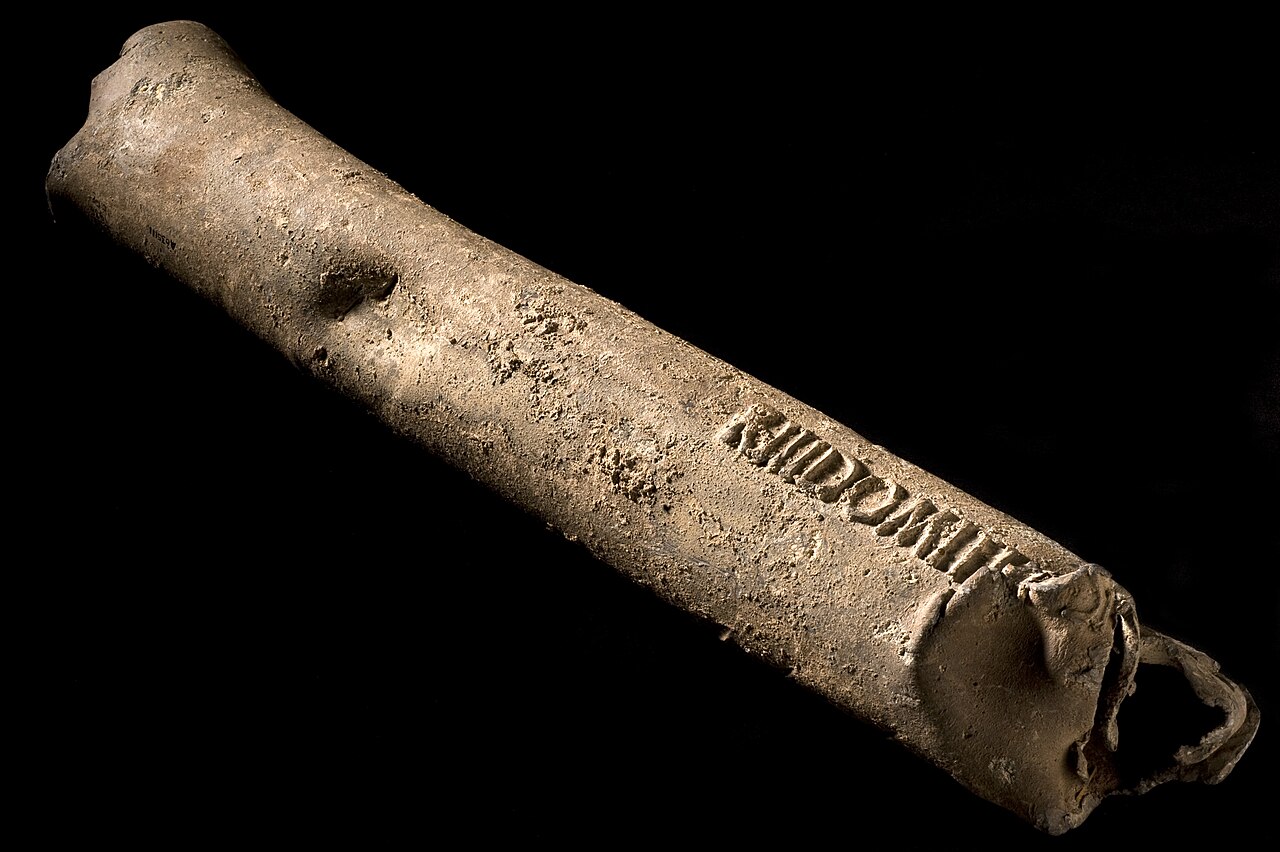
Via Wikimedia Commons: Lead water pipe, Roman, 81-96 CE Wellcome L0058470, CC BY 4.0.
Rome and the ancient world
Lead was a by-product of silver mining in the Roman world and was used for water pipes, aqueduct linings and cooking vessels (Grout, Encyclopaedia Romana, University of Chicago). Some ancient writers already suspected it. The architect Vitruvius, writing under Augustus, preferred clay water pipes to lead ones, arguing that lead workers were pallid and that water carried in lead must be harmful (On Architecture VIII.6.10–11, quoted by Grout).
A suspected source of heavier exposure was the sweet syrup made by boiling down grape juice, called defrutum or sapa. Cato, around 160 BCE, gave directions for boiling must "in a copper or lead vessel", and Columella, in the first century CE, wrote that the boiling vessels should be "of lead rather than of brass" (Grout).
In 1983 the geochemist Jerome Nriagu asked in the New England Journal of Medicine whether lead poisoning, which he saw in gout among Roman aristocrats, contributed to the fall of the Roman Empire; in a book the same year he argued that it did (Nriagu, 1983). The thesis was sharply disputed. The classicist and pharmacist John Scarborough wrote that Nriagu's book on the subject was "so full of false evidence, miscitations, typographical errors, and a blatant flippancy regarding primary sources that the reader cannot trust the basic arguments", and Waldron, a specialist in occupational medicine and archaeology, cautioned that the decline of the Empire was too complex to ascribe to a single cause (Grout). As of November 2026 the role of lead in Rome's decline remains a debated hypothesis rather than an established finding.
Newer evidence measures exposure more directly. A 2025 study in the Proceedings of the National Academy of Sciences led by J. R. McConnell used lead pollution recorded in Arctic ice cores, atmospheric modelling and modern relationships between air lead, blood lead and cognition. It estimated that pollution from Roman mining and smelting raised young children's blood lead by about 2.4 µg/dL above an estimated Neolithic background of 1.0 µg/dL at the height of the Empire, the Pax Romana, implying a reduction of 2.5 to 3 IQ points across the Roman Empire (McConnell et al., 2025). The figure is a modelled estimate, not a measurement of any ancient person.
The Devonshire colic
In eighteenth-century Devon, England, an endemic illness known as the Devonshire colic was linked to cider. In essays published in 1767 and 1768, the physician Sir George Baker showed that the disease was a form of lead poisoning and argued that the lead came from lead in the cider presses, which was largely confined to Devon. His "leaden hypothesis" met strong resistance from cider makers worried about their trade. In 1778 James Hardy reported experiments showing that cider and several other liquids took up lead rapidly from the lead-glazed earthenware in almost universal use in Devon, especially when boiled or stirred (Waldron, 1969).
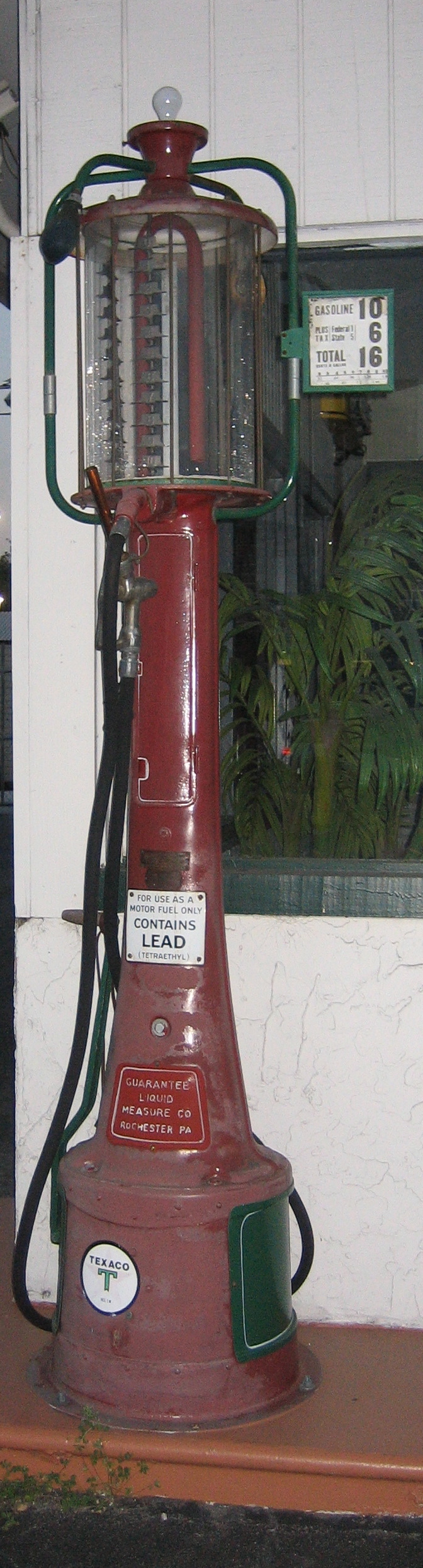
Via Wikimedia Commons: OldGasPumpContainsLeadTexaco by Infrogmation, CC BY 2.5.
Leaded petrol and paint in the twentieth century
Tetraethyllead was first added to petrol in 1922 to boost engine performance, and by the 1970s almost all petrol produced worldwide contained lead, according to the UN Environment Programme as reported by UN News (30 August 2021). The US Environmental Protection Agency (EPA) began phasing it down in 1973, when the average was 2 to 3 grams of lead per gallon, or about 200,000 tons of lead a year; the Clean Air Act banned its sale for on-road vehicles from 1 January 1996, though the EPA said fuel containing lead could still be sold for off-road uses such as aircraft, racing cars, farm equipment and marine engines (EPA press release, 29 January 1996). At that point the EPA Administrator, Carol Browner, said children's blood lead levels in the United States were "down 70 percent" (EPA).
The United States banned the manufacture of lead-based house paint in 1978 and restricted lead in solder, faucets and pipes in 1986 (NIEHS).
Most high-income countries had banned leaded petrol by the 1980s, but almost all low- and middle-income countries still used it in 2002, when UNEP launched the Partnership for Clean Fuels and Vehicles to end it. Its use ended worldwide in July 2021, when service stations in Algeria stopped selling it. UN Secretary-General António Guterres said the change would prevent more than a million premature deaths a year, and UNEP estimated savings of US$2.45 trillion for the global economy (UN News).
The legacy of exposure
The effects of past exposure are still being counted. A 2022 study in the Proceedings of the National Academy of Sciences by M. J. McFarland, M. E. Hauer and A. Reuben estimated that more than 170 million Americans then alive had been exposed to high lead levels in early childhood, several million of them to more than five times the current reference value, and that lead was responsible for the loss of 824,097,690 IQ points in the US population as of 2015 (McFarland et al., 2022). NIEHS quotes the researchers' view that the exposure was concentrated "from the late 1950s to the early 1980s" (NIEHS).
How common it is today
WHO, citing estimates from the Institute for Health Metrics and Evaluation's Global Burden of Disease study, attributes more than 3.5 million deaths worldwide in 2023 to lead exposure, mainly through its effects on the heart and blood vessels, along with more than 71.5 million years lost to disability, measured as disability-adjusted life years (DALYs) (WHO). A 2020 UNICEF study, as summarised by NIEHS, found that up to 800 million children had blood lead levels of 5 µg/dL or more, nearly half of them in South Asia (NIEHS). In the United States, MedlinePlus states, an estimated half a million children aged 1 to 5 have unhealthy levels of lead in their blood (MedlinePlus).
NIEHS notes that elevated blood lead remains an issue for US children, particularly in poorer areas, and that disparities in who is harmed persist (NIEHS).
Public health response
WHO lists lead as one of ten chemicals of major public health concern. With UNEP it leads the Global Alliance to Eliminate Lead Paint, which encourages every country to adopt legally binding limits on lead in paint; as of January 2024, 48 percent of countries had such controls (WHO). WHO also states that it is a partner in a Bloomberg Philanthropies initiative to reduce lead poisoning and plans a technical package on prevention (WHO).
This entry explains; it is not medical advice. Ask a doctor or pharmacist about your own health.
Sources
- World Health Organization, "Lead poisoning", fact sheet, 10 June 2026.
- US Centers for Disease Control and Prevention, "CDC updates blood lead reference value", page dated 25 August 2026.
- National Institute of Environmental Health Sciences (NIH), "Lead", last reviewed 3 June 2026.
- US National Library of Medicine, MedlinePlus Medical Encyclopedia, "Lead poisoning", reviewed 8 January 2025.
- B. P. Lanphear et al., "Low-level environmental lead exposure and children's intellectual function: an international pooled analysis", Environmental Health Perspectives 113, no. 7 (2005): 894–899.
- M. J. McFarland, M. E. Hauer and A. Reuben, "Half of US population exposed to adverse lead levels in early childhood", Proceedings of the National Academy of Sciences 119 (2022): e2118631119.
- J. R. McConnell et al., "Pan-European atmospheric lead pollution, enhanced blood lead levels, and cognitive decline from Roman-era mining and smelting", Proceedings of the National Academy of Sciences 122 (2025): e2419630121.
- J. O. Nriagu, "Saturnine gout among Roman aristocrats: did lead poisoning contribute to the fall of the Empire?", New England Journal of Medicine 308 (1983): 660–663.
- H. A. Waldron, "James Hardy and the Devonshire colic", Medical History 13, no. 1 (1969): 74–81.
- James Grout, "Lead Poisoning and Rome", Encyclopaedia Romana, University of Chicago (read November 2026).
- US Environmental Protection Agency, ["EPA Takes Final Step in Phaseout of Leaded Gasoline"](epa.gov/archive/epa/aboutepa/epa-takes-final-step-phaseout-leaded-g…
