← Bitcoin exchange-traded fund
Compare versions
Version 3 → Version 4. Removed · Added. This shows the entry's text as it is written, including its formatting marks.
Version 3 · Version 4 · Version history
Side by side · Together
A bitcoin exchange-traded fund is an investment product whose shares trade on a stock exchange and which holds bitcoin, or contracts on its price, so that the shares track the price of bitcoin without the buyer holding the coins directly.

*Via Wikimedia Commons: [Nasdaq MarketSite (51494550508)](https://commons.wikimedia.org/wiki/File:Nasdaq_MarketSite_(51494550508).jpg) by ajaysuresh, [CC BY 2.0](https://creativecommons.org/licenses/by/2.0).*
The term is used loosely. In the United States the products that hold [bitcoin](/t/1497/bitcoin) itself are usually organised as trusts rather than as funds registered under the Investment Company Act of 1940, and the Securities and Exchange Commission (SEC) calls them spot bitcoin exchange-traded products (ETPs). "Spot" means the product holds the asset itself, as opposed to futures contracts, which are agreements to buy or sell it at a set price on a later date. BlackRock's iShares Bitcoin Trust, for example, states on its product page that it [is not an investment company registered under the Investment Company Act of 1940](https://www.ishares.com/us/products/333011/ishares-bitcoin-trust-etf
- CoinDesk Data, "Institutional Primer: The Impact of the First US Spot Bitcoin ETFs", 12 January 2024. https://data.coindesk.com/reports/institutional-primer-the-impact-of-the-first-us-spot-bitcoin-etfs
- RT Watson, "Spot bitcoin ETFs hit $4 billion in trading volume on first day so far", The Block, 11 January 2024. https://www.theblock.co/post/272066/spot-bitcoin-etfs-hit-4-billion-in-trading-volume-on-first-day-so-far) and that it seeks to reflect the performance of the price of bitcoin.
The term is used loosely. In the United States the products that hold [bitcoin](/t/1497/bitcoin) itself are usually organised as trusts rather than as funds registered under the Investment Company Act of 1940, and the Securities and Exchange Commission (SEC) calls them spot bitcoin exchange-traded products (ETPs). "Spot" means the product holds the asset itself, as opposed to futures contracts, which are agreements to buy or sell it at a set price on a later date. BlackRock's iShares Bitcoin Trust, for example, states on its product page that it [is not an investment company registered under the Investment Company Act of 1940](https://www.ishares.com/us/products/333011/ishares-bitcoin-trust-etf) and that it seeks to reflect the performance of the price of bitcoin.
## How it works
A fund that trades on an exchange can issue and cancel shares continuously. Firms called authorized participants deliver assets to the fund in exchange for a block of new shares (a creation) or hand shares back for assets (a redemption). The United States Court of Appeals for the District of Columbia Circuit explained in 2023 why this matters: continuous creation and redemption allow [arbitrage to prevent the product's price from deviating too far from the value of its underlying assets](https://www.govinfo.gov/content/pkg/USCOURTS-caDC-22-01142/pdf/USCOURTS-caDC-22-01142-0.pdf), while products that cannot offer it often trade at a discount to what they hold.
When the first spot bitcoin products were approved in the United States in January 2024, creation and redemption were allowed only in cash: the SEC's order noted that the proposals [only contemplate cash creation and redemption by authorized participants](https://www.govinfo.gov/content/pkg/FR-2024-01-17/html/2024-00743.htm), so the trust itself bought or sold bitcoin when shares were created or cancelled. On 29 July 2025 the SEC approved orders permitting [in-kind creations and redemptions](https://www.sec.gov/newsroom/press-releases/2025-101-sec-permits-kind-creations-redemptions-crypto-etps) for crypto asset ETP shares, so that authorized participants could deliver and receive bitcoin itself, as with other commodity-based products.
The bitcoin a trust holds is kept by a custodian. Because bitcoin exists only as entries on a public ledger, what a custodian actually controls is the private keys that authorise spending. The SEC acknowledged in its approval order that [the aggregation of bitcoin under the Trusts' control](https://www.govinfo.gov/content/pkg/FR-2024-01-17/html/2024-00743.htm), and the fact that custodians hold only keys and not the bitcoin itself, could introduce risks, while noting that some commenters regarded custody by a trust's custodian as more secure than self-custody.
## Futures-based funds
Before any fund holding bitcoin itself was allowed in the United States, funds holding bitcoin futures were. The D.C. Circuit recorded that the SEC approved NYSE Arca's proposal to list the Teucrium Bitcoin Futures Fund in [April 2022](https://www.govinfo.gov/content/pkg/USCOURTS-caDC-22-01142/pdf/USCOURTS-caDC-22-01142-0.pdf), and Nasdaq's proposal for the Valkyrie XBTO Bitcoin Futures Fund a month later. In both cases the listing exchange had a surveillance-sharing agreement with the Chicago Mercantile Exchange (CME), where the futures trade, and in both orders the Commission stated that approving bitcoin futures products did not mean approval of spot bitcoin products was imminent.
## The long road to approval in the United States
### The first proposal
The idea is almost as old as public interest in bitcoin. On 1 July 2013 the Winklevoss Bitcoin Trust, a New York trust sponsored by Math-Based Asset Services LLC, filed a registration statement on Form S-1 with the SEC. Its stated investment objective was [for the Shares to reflect the performance of a weighted average price of Bitcoins](https://www.sec.gov/Archives/edgar/data/0001579346/000119312513279830/d562329ds1.htm), and it planned to issue shares continuously in blocks to authorized participants in exchange for deposits of bitcoin. The draft said the trustee would keep the coins [in US vaulting premises on a segregated basis](https://www.sec.gov/Archives/edgar/data/0001579346/000119312513279830/d562329ds1.htm), and left the name of the listing exchange and the ticker symbol blank.
To trade, the shares also needed an exchange whose rules allowed them. Bats BZX Exchange filed that rule change in June 2016, and on 10 March 2017 the SEC disapproved it. The order set out two conditions it said earlier commodity trusts had met: the exchange must have surveillance-sharing agreements with significant markets for the commodity or its derivatives, and those markets must be regulated. It concluded that [the significant markets for bitcoin are unregulated](https://www.sec.gov/files/rules/sro/batsbzx/2017/34-80206.pdf), so the exchange could not enter into the kind of agreement that had been in place for every commodity-trust product approved before.
### A decade of refusals
For years the SEC turned down every proposal to list a spot bitcoin product. The D.C. Circuit's account lists, among others, the Winklevoss Bitcoin Trust, refused in 2018, and the United States Bitcoin and Treasury Investment Trust, refused in 2020, and says that [the Commission denied every proposal to list a bitcoin ETP](https://www.govinfo.gov/content/pkg/USCOURTS-caDC-22-01142/pdf/USCOURTS-caDC-22-01142-0.pdf). The reason given each time was the same. Under the Securities Exchange Act of 1934, an exchange's rules must be designed to prevent fraudulent and manipulative acts and practices. The SEC held that features of bitcoin itself, such as the blockchain and the size and liquidity of the market, were not enough, and asked instead for a surveillance-sharing agreement with a regulated market of "significant size" related to bitcoin, a test no proposal met.
### Grayscale v. SEC
The Grayscale Bitcoin Trust was the case that changed this. It already held a large amount of bitcoin, 3.4 percent of all outstanding coins according to the court, but because it lacked approval to trade on an exchange its shares were restricted securities traded over the counter, and they traded at [a discount—as much as 30 percent](https://www.govinfo.gov/content/pkg/USCOURTS-caDC-22-01142/pdf/USCOURTS-caDC-22-01142-0.pdf) to the value of the bitcoin behind them. When the SEC refused NYSE Arca's proposal to convert it into an exchange-traded product, Grayscale Investments petitioned for review.
On 29 August 2023 the D.C. Circuit ruled for Grayscale. Writing for a panel of three judges, Circuit Judge Rao began from the principle that [agencies must treat like cases alike](https://www.govinfo.gov/content/pkg/USCOURTS-caDC-22-01142/pdf/USCOURTS-caDC-22-01142-0.pdf). The SEC had approved two bitcoin futures funds whose prices, like Grayscale's, depended on the price of bitcoin, and whose exchanges relied on the same surveillance agreement with the CME. The court held that the denial was [arbitrary and capricious because the Commission failed to explain its different treatment of similar products](https://www.govinfo.gov/content/pkg/USCOURTS-caDC-22-01142/pdf/USCOURTS-caDC-22-01142-0.pdf), and vacated the SEC's order.
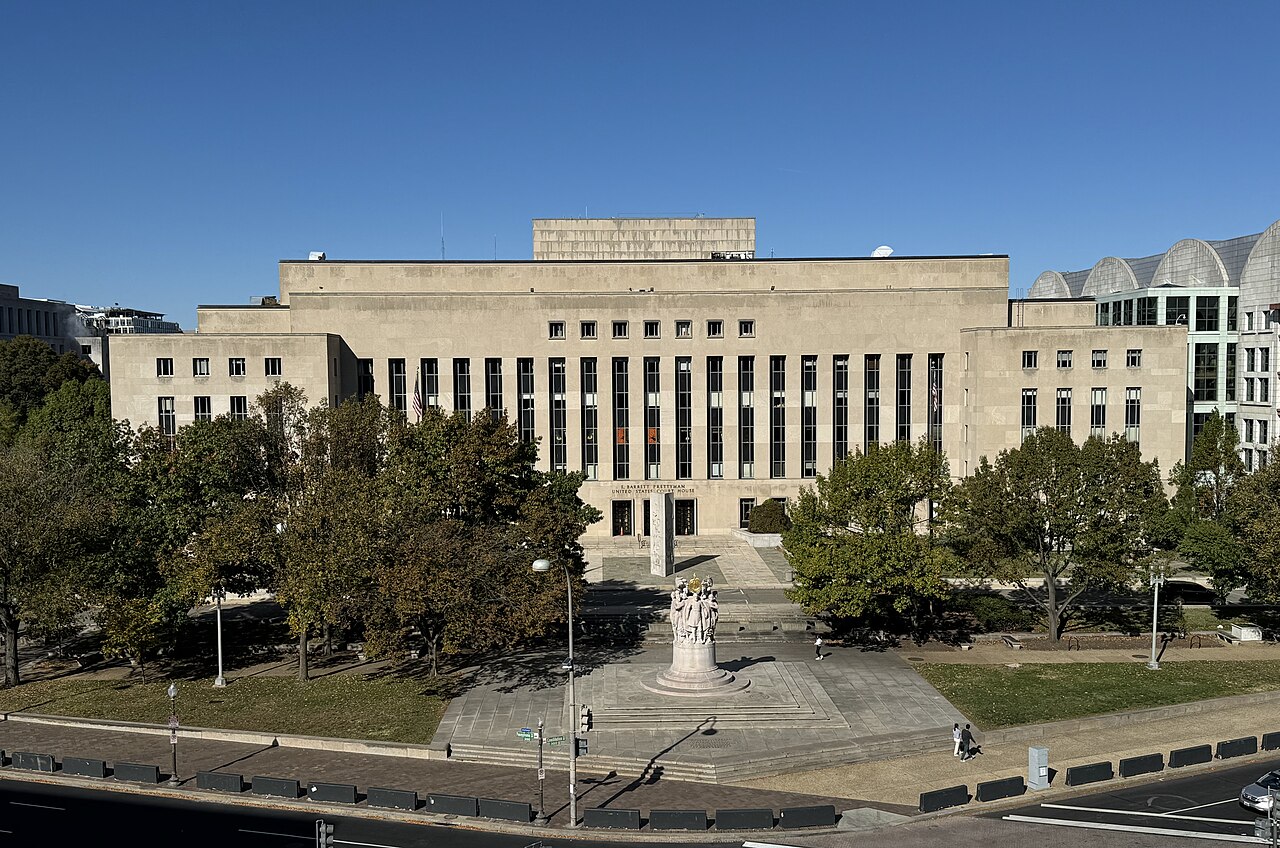
*Via Wikimedia Commons: [E. Barrett Prettyman Courthouse from NGA East Building](https://commons.wikimedia.org/wiki/File:E._Barrett_Prettyman_Courthouse_from_NGA_East_Building.jpg) by Toohool, [CC BY-SA 4.0](https://creativecommons.org/licenses/by-sa/4.0).*
### The January 2024 approval
On 10 January 2024 the SEC granted accelerated approval to rule changes from three exchanges, NYSE Arca, Nasdaq and Cboe BZX, to list [eleven bitcoin trusts and funds](https://www.govinfo.gov/content/pkg/FR-2024-01-17/html/2024-00743.htm): the Grayscale Bitcoin Trust, Bitwise Bitcoin ETF, Hashdex Bitcoin ETF, iShares Bitcoin Trust, Valkyrie Bitcoin Fund, ARK 21Shares Bitcoin ETF, Invesco Galaxy Bitcoin ETF, VanEck Bitcoin Trust, WisdomTree Bitcoin Fund, Fidelity Wise Origin Bitcoin Fund and Franklin Bitcoin ETF.
The order did not find that the CME was a market of "significant size" related to spot bitcoin. Instead it relied on the alternative route of "other means" of preventing fraud. Using its own correlation analysis, the Commission found the CME bitcoin futures market [consistently highly correlated](https://www.govinfo.gov/content/pkg/FR-2024-01-17/html/2024-00743.htm) with a group of spot trading platforms over about two and a half years, at no less than 98.4 percent using hourly data, 94.2 percent at five-minute intervals and 76.9 percent at one-minute intervals. It concluded that fraud or manipulation affecting spot bitcoin prices would likely show up in CME futures prices as well, so that the exchanges' existing surveillance-sharing agreements with the CME could be reasonably expected to help detect it.
The SEC's chair, Gary Gensler, issued a statement the same day. It explained the decision by reference to the court ruling, and added that [we did not approve or endorse bitcoin](https://www.sec.gov/newsroom/speeches-statements/gensler-statement-spot-bitcoin-011023), describing bitcoin as primarily a speculative, volatile asset that is also used for illicit activity, including ransomware.
### The first day of trading
The eleven products began trading on 11 January 2024, the day after the approval order. The Block, reporting during that afternoon, said combined trading in the eleven spot funds had [passed $4 billion](https://www.theblock.co/post/272066/spot-bitcoin-etfs-hit-4-billion-in-trading-volume-on-first-day-so-far), with the converted Grayscale fund the busiest at more than $1.9 billion by 3:02 p.m. Eastern time, ahead of BlackRock's at $942 million and Fidelity's at $628 million.[15] The next day CoinDesk Data's primer put the first-day total for the eleven funds at [$4.37 billion](https://data.coindesk.com/reports/institutional-primer-the-impact-of-the-first-us-spot-bitcoin-etfs), and noted nearly $2 billion of volume in ProShares' futures-based fund (BITO) the same day.[14] Both are trading volumes, the value of shares bought and sold, and neither measures how much money flowed into the funds, which is a separate figure; the sources opened here do not give a final flow total for that day.
### Generic listing standards
Each of these products had needed its own rule change approved by the SEC before it could list. On 17 September 2025 the SEC approved proposals by three exchanges to adopt generic listing standards for commodity-based trust shares, under which a product meeting the standards can be listed [without first submitting a proposed rule change to the Commission](https://www.sec.gov/newsroom/press-releases/2025-121-sec-approves-generic-listing-standards-commodity-based-trust-shares). The same day it approved the listing of the Grayscale Digital Large Cap Fund, which holds spot digital assets.
## Options on the products
Once the trusts were trading, exchanges sought to list options on their shares; an option is a contract giving the right, but not the obligation, to buy or sell at a set price before a set date. Nasdaq ISE filed a proposal on 9 January 2024 to list options on the iShares Bitcoin Trust, and the SEC granted accelerated approval on 20 September 2024 (Release No. 34-101128). As amended, the proposal set [position and exercise limits of 25,000 contracts](https://www.sec.gov/files/rules/sro/ise/2024/34-101128.pdf) for those options, the most any one holder could carry or exercise on one side of the market, regardless of the trust's trading volume or shares outstanding. The exchange described that figure as [the lowest position limit available in the options industry](https://www.sec.gov/files/rules/sro/ise/2024/34-101128.pdf), and said the surveillance it applied to other options on exchange-traded funds would apply to these as well.
## Outside the United States
Canada allowed a spot product first. The Toronto Stock Exchange announced on 18 February 2021 that the Purpose Bitcoin ETF had begun trading, describing it as [the first direct custody bitcoin ETF in the world](https://www.tsx.com/en/news?id=814), investing directly in physically settled bitcoin, with units denominated in Canadian dollars and in US dollars.
In Asia, Hong Kong came first. Hong Kong Exchanges and Clearing announced on 30 April 2024 the listing that day of [Asia's first Spot Virtual Asset (VA) ETFs](https://www.hkex.com.hk/News/News-Release/2024/240430news?sc_lang=en), following three exchange-traded funds based on virtual-asset futures that were already listed in the city.
In the United Kingdom, the Financial Conduct Authority (FCA) banned the sale, marketing and distribution to retail clients of derivatives and exchange-traded notes (ETNs) referencing unregulated cryptoassets [in January 2021](https://www.fca.org.uk/news/press-releases/fca-lift-ban-crypto-exchange-traded-notes). It announced on 1 August 2025 that, from 8 October 2025, retail investors could buy crypto ETNs [traded on an FCA-approved, UK-based investment exchange](https://www.fca.org.uk/news/press-releases/fca-opens-retail-access-crypto-etns), subject to its financial promotion rules, with no cover from the Financial Services Compensation Scheme. The ban on retail access to cryptoasset derivatives stayed in place.
## Size
As of 10 November 2026, the iShares Bitcoin Trust reported [net assets of $58,314,562,292](https://www.ishares.com/us/products/333011/ishares-bitcoin-trust-etf) and a sponsor fee of 0.25 percent a year.
## Debate
Supporters of these products, among them the commenters cited in the SEC's order, pointed to custody by regulated custodians and to the transparency of the blockchain, which [could enable the real-time tracking](https://www.govinfo.gov/content/pkg/FR-2024-01-17/html/2024-00743.htm) of what a trust holds. Critics raised the concentration of bitcoin in the trusts, the risk of hacking, and the question of whether a custodian that holds only keys is a true custodian at all. The SEC itself, in approving the products, stressed that approval of a listing was not an endorsement of the asset, and that investors [should remain cautious](https://www.sec.gov/newsroom/speeches-statements/gensler-statement-spot-bitcoin-011023) about the risks of bitcoin and of products tied to crypto.
Bitcoin exchange-traded funds sit alongside other ways of gaining exposure to bitcoin through the stock market, such as shares of a [bitcoin treasury company](/t/1928/bitcoin-treasury-company), a listed company that holds bitcoin on its balance sheet.
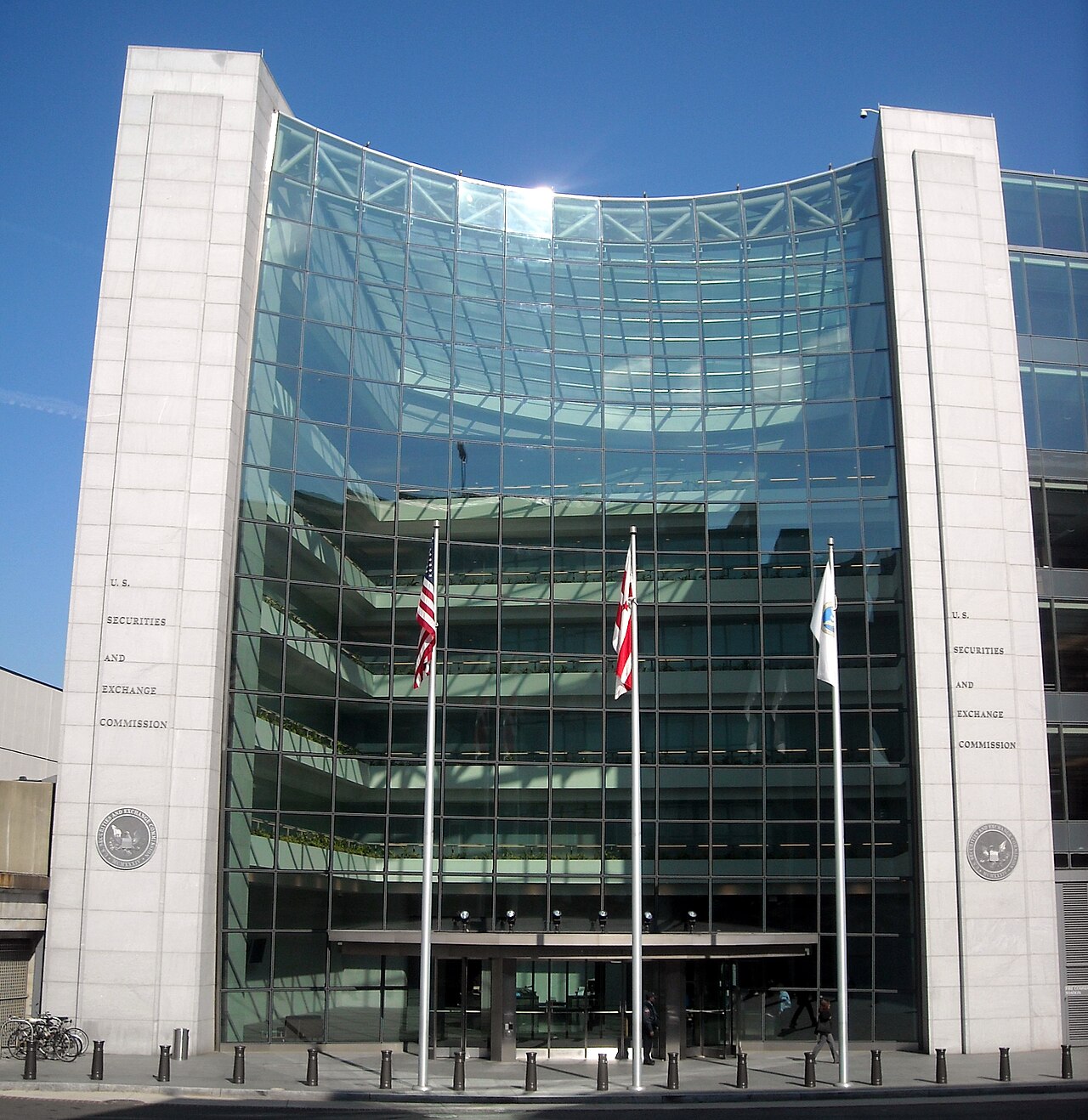
*Via Wikimedia Commons: [U.S. Securities and Exchange Commission headquarters](https://commons.wikimedia.org/wiki/File:U.S._Securities_and_Exchange_Commission_headquarters.JPG) by AgnosticPreachersKid, [CC BY-SA 3.0](https://creativecommons.org/licenses/by-sa/3.0).*
## Sources
- United States Securities and Exchange Commission, "Order Granting Accelerated Approval of Proposed Rule Changes, as Modified by Amendments Thereto, To List and Trade Bitcoin-Based Commodity-Based Trust Shares and Trust Units", Release No. 34-99306, 10 January 2024, published in the Federal Register, vol. 89, no. 11, 17 January 2024. https://www.govinfo.gov/content/pkg/FR-2024-01-17/html/2024-00743.htm
- United States Court of Appeals for the District of Columbia Circuit, *Grayscale Investments, LLC v. Securities and Exchange Commission*, No. 22-1142, decided 29 August 2023. https://www.govinfo.gov/content/pkg/USCOURTS-caDC-22-01142/pdf/USCOURTS-caDC-22-01142-0.pdf
- Gary Gensler, "Statement on the Approval of Spot Bitcoin Exchange-Traded Products", U.S. Securities and Exchange Commission, 10 January 2024. https://www.sec.gov/newsroom/speeches-statements/gensler-statement-spot-bitcoin-011023
- U.S. Securities and Exchange Commission, "SEC Permits In-Kind Creations and Redemptions for Crypto ETPs", press release 2025-101, 29 July 2025. https://www.sec.gov/newsroom/press-releases/2025-101-sec-permits-kind-creations-redemptions-crypto-etps
- U.S. Securities and Exchange Commission, "SEC Approves Generic Listing Standards for Commodity-Based Trust Shares", press release 2025-121, 17 September 2025. https://www.sec.gov/newsroom/press-releases/2025-121-sec-approves-generic-listing-standards-commodity-based-trust-shares
- Winklevoss Bitcoin Trust, Registration Statement on Form S-1, filed with the U.S. Securities and Exchange Commission, 1 July 2013. https://www.sec.gov/Archives/edgar/data/0001579346/000119312513279830/d562329ds1.htm
- U.S. Securities and Exchange Commission, "Order Disapproving a Proposed Rule Change ... to List and Trade Shares Issued by the Winklevoss Bitcoin Trust", Release No. 34-80206, 10 March 2017. https://www.sec.gov/files/rules/sro/batsbzx/2017/34-80206.pdf
- U.S. Securities and Exchange Commission, "Order Granting Accelerated Approval of a Proposed Rule Change ... to Permit the Listing and Trading of Options on the iShares Bitcoin Trust", Release No. 34-101128, 20 September 2024. https://www.sec.gov/files/rules/sro/ise/2024/34-101128.pdf
- Hong Kong Exchanges and Clearing, "HKEX Welcomes Asia's First Spot Virtual Asset ETFs", news release, 30 April 2024. https://www.hkex.com.hk/News/News-Release/2024/240430news?sc_lang=en
- Financial Conduct Authority, "FCA to lift ban on crypto ETNs to support UK growth and competitiveness", press release, 6 June 2025. https://www.fca.org.uk/news/press-releases/fca-lift-ban-crypto-exchange-traded-notes
- Financial Conduct Authority, "FCA opens retail access to crypto ETNs", press release, 1 August 2025. https://www.fca.org.uk/news/press-releases/fca-opens-retail-access-crypto-etns
- TMX Group, "Toronto Stock Exchange Lists World's First Bitcoin ETF", 18 February 2021. https://www.tsx.com/en/news?id=814
- BlackRock, "iShares Bitcoin Trust ETF" (product page, data as of 10 November 2026, read 11 November 2026). https://www.ishares.com/us/products/333011/ishares-bitcoin-trust-etf- BlackRock, "iShares Bitcoin Trust ETF" (product page, data as of 10 November 2026, read 11 November 2026). https://www.ishares.com/us/products/333011/ishares-bitcoin-trust-etf
- CoinDesk Data, "Institutional Primer: The Impact of the First US Spot Bitcoin ETFs", 12 January 2024. https://data.coindesk.com/reports/institutional-primer-the-impact-of-the-first-us-spot-bitcoin-etfs
- RT Watson, "Spot bitcoin ETFs hit $4 billion in trading volume on first day so far", The Block, 11 January 2024. https://www.theblock.co/post/272066/spot-bitcoin-etfs-hit-4-billion-in-trading-volume-on-first-day-so-far
