Compare versions
Version 2 → Version 3 (current). Removed · Added. This shows the entry's text as it is written, including its formatting marks.
Version 2 · Version 3 (current) · Version history
Side by side · Together
Version 2Version 3 (current)
18 unchanged paragraphs
UC Davis is a campus of the University of California that began in 1905 as a state-authorized farm school and, as of November 2026, is a general university with four colleges and seven schools.
UC Davis is a campus of the University of California that began in 1905 as a state-authorized farm school and, as of November 2026, is a general university with four colleges and seven schools.
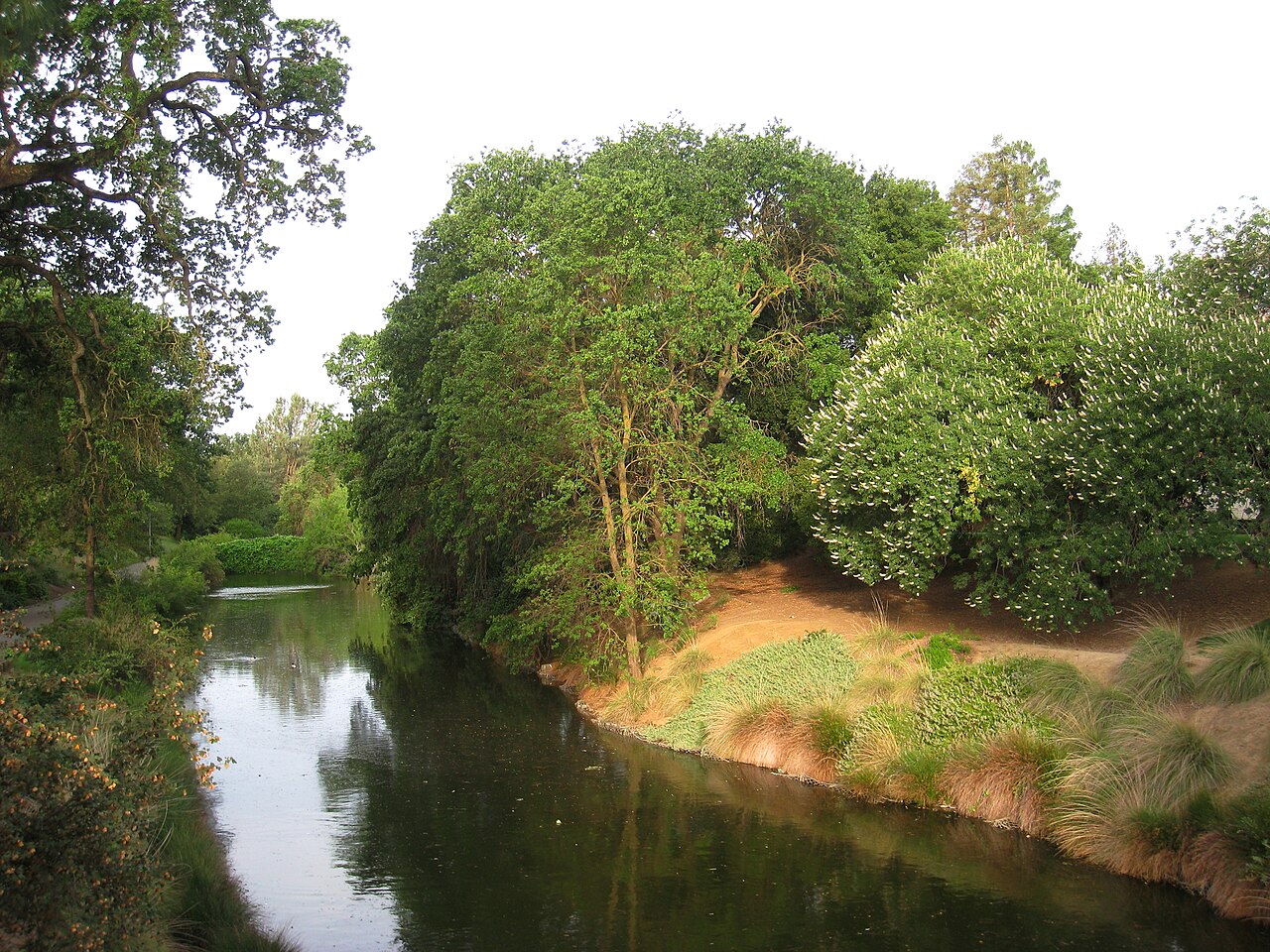

*Via Wikimedia Commons: [UC Davis arboretum - general view](https://commons.wikimedia.org/wiki/File:UC_Davis_arboretum_-_general_view.jpg) by Daderot, public domain.*
*Via Wikimedia Commons: [UC Davis arboretum - general view](https://commons.wikimedia.org/wiki/File:UC_Davis_arboretum_-_general_view.jpg) by Daderot, public domain.*
## Origins: the University Farm Act of 1905
## Origins: the University Farm Act of 1905
The campus traces its founding to a law signed on 18 March 1905, when Governor George Pardee approved an act creating a university farm school for the University of California. The act set up a commission to choose a site and set aside $150,000 to buy land.[1] The Library's history gives the same origin: the campus, first called the University Farm, was established by an act of the State Legislature in 1905.[2]
The campus traces its founding to a law signed on 18 March 1905, when Governor George Pardee approved an act creating a university farm school for the University of California. The act set up a commission to choose a site and set aside $150,000 to buy land.[1] The Library's history gives the same origin: the campus, first called the University Farm, was established by an act of the State Legislature in 1905.[2]
The bill's chief promoter was Peter J. Shields, a Sacramento judge and breeder of prize Jersey cattle, who became known as the "Father of the Farm." His earlier attempts in 1901 and 1903 had failed. The dairy industry backed the 1905 bill, and a group from Yolo County had Shields add a requirement that the land have irrigation or existing water rights.[1] More than 70 communities competed for the farm.[1]
The bill's chief promoter was Peter J. Shields, a Sacramento judge and breeder of prize Jersey cattle, who became known as the "Father of the Farm." His earlier attempts in 1901 and 1903 had failed. The dairy industry backed the 1905 bill, and a group from Yolo County had Shields add a requirement that the land have irrigation or existing water rights.[1] More than 70 communities competed for the farm.[1]
## Choosing Davisville and the first years
## Choosing Davisville and the first years
The commission chose the town then called Davisville more than a year after the signing.[1] The campus's library history says a committee appointed by the Regents bought land "near Davisville" in 1906, that the Regents took control of the property in September 1906, and that four buildings went up in 1907.[2] The Davisville Chamber of Commerce, led by George Pierce Jr. and Jacob "Gene" LaRue, had promoted the site.[1]
The commission chose the town then called Davisville more than a year after the signing.[1] The campus's library history says a committee appointed by the Regents bought land "near Davisville" in 1906, that the Regents took control of the property in September 1906, and that four buildings went up in 1907.[2] The Davisville Chamber of Commerce, led by George Pierce Jr. and Jacob "Gene" LaRue, had promoted the site.[1]
Instruction began with short courses for farmers in 1908. In January 1909 the Farm School opened with 18 students.[3] A four-year degree program began in 1922, when the campus became the Northern Branch of the College of Agriculture, and the first graduates came in 1926.[2][3] In 1938 it was renamed the College of Agriculture at Davis.[3]
Instruction began with short courses for farmers in 1908. In January 1909 the Farm School opened with 18 students.[3] A four-year degree program began in 1922, when the campus became the Northern Branch of the College of Agriculture, and the first graduates came in 1926.[2][3] In 1938 it was renamed the College of Agriculture at Davis.[3]
## Growth into a general campus
## Growth into a general campus
The campus grew in area as well as in teaching. The Library's history gives about 1,000 acres by 1930, 3,000 acres by 1951 and 5,300 acres in 2007, and it describes the campus as the largest in the University of California by acreage.[2]
The campus grew in area as well as in teaching. The Library's history gives about 1,000 acres by 1930, 3,000 acres by 1951 and 5,300 acres in 2007, and it describes the campus as the largest in the University of California by acreage.[2]
The School of Veterinary Medicine was established in 1946, and the College of Letters and Science in 1951.[3] In 1959 the Regents declared that Davis would become a general campus of the University.[2][3] The College of Engineering followed in 1962.[2][3]
The School of Veterinary Medicine was established in 1946, and the College of Letters and Science in 1951.[3] In 1959 the Regents declared that Davis would become a general campus of the University.[2][3] The College of Engineering followed in 1962.[2][3]
The two UC Davis pages differ on the professional schools of the 1960s. One lists the School of Law as opening in 1965 and the School of Medicine in 1966;[3] the Library's history says the Law School opened in fall 1966 and the School of Medicine began instruction in fall 1968.[2] Both agree that the two schools were established in the middle of that decade.
The two UC Davis pages differ on the professional schools of the 1960s. One lists the School of Law as opening in 1965 and the School of Medicine in 1966;[3] the Library's history says the Law School opened in fall 1966 and the School of Medicine began instruction in fall 1968.[2] Both agree that the two schools were established in the middle of that decade.
## Colleges and schools as of November 2026
## Colleges and schools as of November 2026
UC Davis's "facts" page, last updated 12 November 2026, lists four colleges (Agricultural and Environmental Sciences, Biological Sciences, Engineering, and Letters and Science) and seven schools: the Betty Irene Moore School of Nursing, Continuing and Professional Education, the Graduate School of Management, the School of Education, the School of Law, the School of Medicine and the School of Veterinary Medicine.[4] The same page gives an enrollment of 39,414 students and a student-to-faculty ratio of 21 to 1, without stating the year of those figures.[4]
UC Davis's "facts" page, last updated 12 November 2026, lists four colleges (Agricultural and Environmental Sciences, Biological Sciences, Engineering, and Letters and Science) and seven schools: the Betty Irene Moore School of Nursing, Continuing and Professional Education, the Graduate School of Management, the School of Education, the School of Law, the School of Medicine and the School of Veterinary Medicine.[4] The same page gives an enrollment of 39,414 students and a student-to-faculty ratio of 21 to 1, without stating the year of those figures.[4]
## Traditions, programs and health care
## Traditions, programs and health care
UC Davis's own timeline records that the first Picnic Day, an open-house day for the campus, drew more than 2,200 people in May 1909, a few months after the Farm School opened.[4] It also notes that animals from the University Farm herd won championships at the Chicago International Livestock Show in 1916, that the Whole Earth Festival, which began as an "art happening," drew 30,000 people in 1969, and that the football team won its 20th consecutive league championship in 1990, which the page calls a national record.[4]
UC Davis's own timeline records that the first Picnic Day, an open-house day for the campus, drew more than 2,200 people in May 1909, a few months after the Farm School opened.[4] It also notes that animals from the University Farm herd won championships at the Chicago International Livestock Show in 1916, that the Whole Earth Festival, which began as an "art happening," drew 30,000 people in 1969, and that the football team won its 20th consecutive league championship in 1990, which the page calls a national record.[4]
As of November 2026 the facts page counts 107 academic majors, 101 graduate degrees and 25 Division I sports teams, and it describes a 625-bed teaching hospital in Sacramento.[4] These are the university's own figures, given without a year, and the page does not say how a "major" or a "degree" is counted. The same page says the main campus is in Davis, California, about 15 miles west of Sacramento.[4]
As of November 2026 the facts page counts 107 academic majors, 101 graduate degrees and 25 Division I sports teams, and it describes a 625-bed teaching hospital in Sacramento.[4] These are the university's own figures, given without a year, and the page does not say how a "major" or a "degree" is counted. The same page says the main campus is in Davis, California, about 15 miles west of Sacramento.[4]
## Viticulture and enology
Wine-related teaching at Davis was shaped by Prohibition. According to the finding aid for the department's records, junior and senior students were spending one or two semesters at Davis by 1921, taught by faculty that included A. J. Winkler.[5] When National Prohibition began in 1919, the department had shifted from enology research to fruit-processing research and was renamed the Department of Viticulture and Fruit Products.[5] The same finding aid states that the Department of Viticulture and Enology was established on the Davis campus in 1935, after Prohibition was repealed, by splitting from the Berkeley Department of Fruit Products, with Winkler as its Davis head.[5] It adds that Winkler built a grape cultivation program and published *General Viticulture* in 1962.[5] The finding aid was produced by the Library's Archives and Special Collections in 2023 and gives the records' span as 1907 to 2006.[5]
## The tomato harvester
UC Davis credits plant breeder Jack Hanna and engineer Coby Lorenzen with inventing, in the 1950s, a machine that could harvest tomatoes mechanically; the university's page says that in 1959 they invented the first machine that sorted and loaded processing tomatoes.[6] A tomato bred to withstand machine picking became known as the "square tomato", because its blocky shape kept it from rolling off the harvester.[6] As of the page's last update on 1 October 2026, the university says that nearly all tomatoes grown in the United States for sauce, paste, ketchup, juice and other processed foods are harvested by the machine; it gives no exact percentage.[6] This is the university's own account of its discovery.
## Sources
## Sources
1. Amy Agronis, "Today marks conception of University Farm", Dateline, UC Davis News & Information, 18 March 2005. https://www.ucdavis.edu/news/today-marks-conception-university-farm
2. "History of UC Davis", UC Davis Library, Archives and Special Collections (undated). https://www.library.ucdavis.edu/archives-and-special-collections/history-uc-davis/
3. "History", University of California, Davis (undated; opened 17 November 2026). https://www.ucdavis.edu/about/history
4. "Facts", University of California, Davis, last updated 12 November 2026. https://www.ucdavis.edu/about/facts
5. "Department of Viticulture and Enology Records, 1907-2006", finding aid, Archives and Special Collections, UC Davis Library, on the Online Archive of California, produced 31 January 2023. https://oac.cdlib.org/findaid/ark:/13030/c8x63sd0/admin/
6. "Tomato harvester", UC Davis research discoveries, University of California, Davis, last updated 1 October 2026. https://ucdavis.edu/research/discoveries/agricultural-discoveries/tomato-harvester
