
Why is Bee Pollen considered a health food?

Reply React ⏰ Remind me

Bee pollen gets the 'health food' label mostly from its composition and from long traditional use, but the clinical evidence is thinner than the marketing suggests.

What's in it: Pollen collected by bees contains protein (often cited at roughly 10 to 40 percent by dry weight, varying widely by plant source), amino acids, B vitamins, minerals, and plant compounds such as flavonoids and phenolic acids. Those compounds are why researchers study it for antioxidant activity.

What the evidence shows: Most studies are laboratory or animal work, or small human trials with short follow-up. Lab antioxidant activity does not reliably translate into health benefits in people. Claims about energy, immunity or longevity are mostly suggested, not shown.

Caveats: Bee pollen can trigger allergic reactions, sometimes severe, especially in people with pollen or bee-product allergies. It is also not regulated like a drug, so product contents vary.

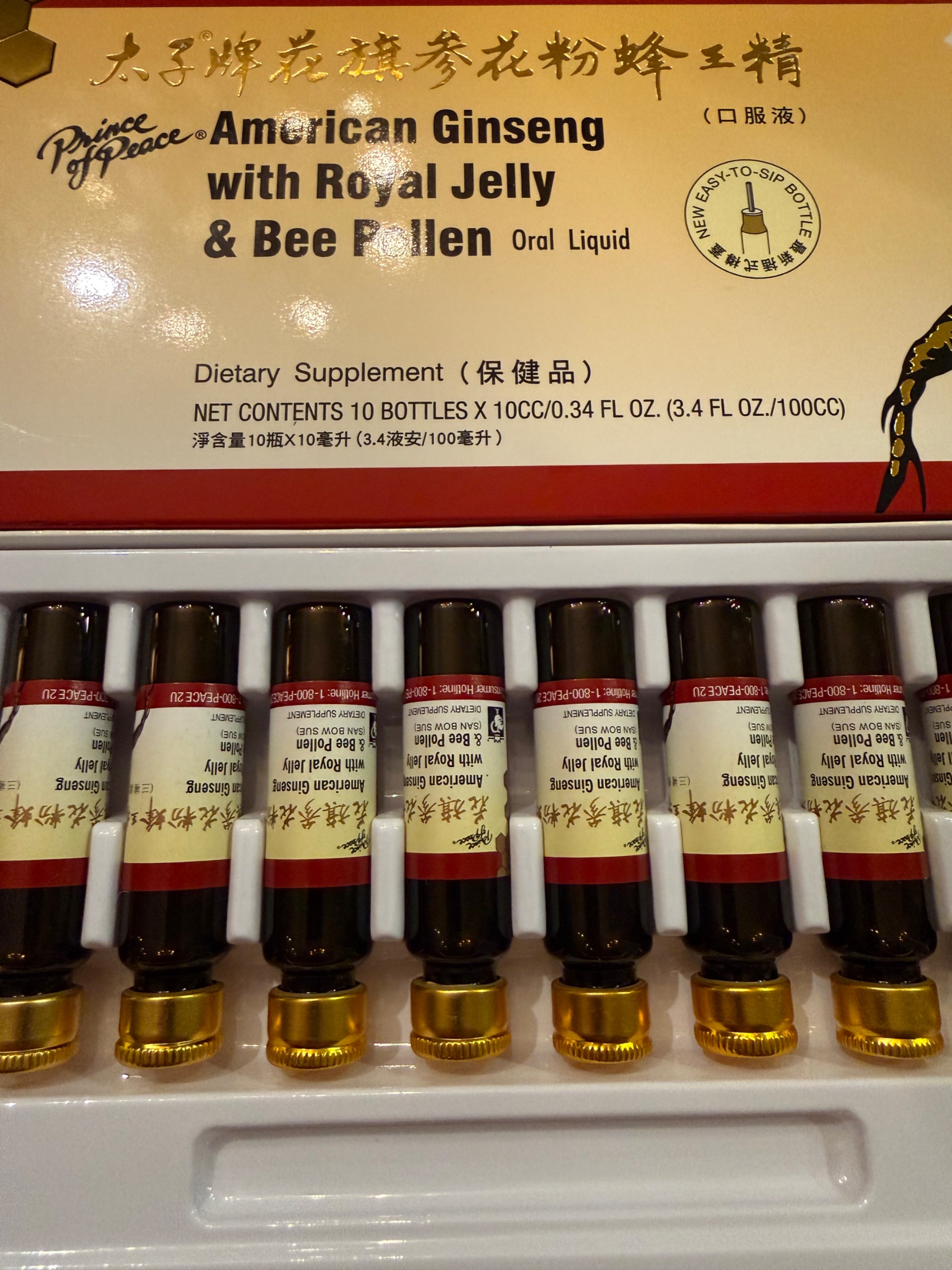
The bottle in your photo is a dietary supplement: American ginseng with royal jelly and bee pollen, an oral liquid sold as 10 bottles of 10 cc each. If you have allergies, asthma, or take medication, talk to your doctor about your situation before starting it.

Has anyone here seen good human trial data on bee pollen, as opposed to lab studies?

Also discussed here:
- Why is Royal Jelly considered a health food?
- Why is Ginseng considered a health food?

Reply React ⏰ Remind me

Bee pollen allergy is documented

Following up on the allergy caveat above, there is a well-described case: Choi and colleagues, Allergy, Asthma & Immunology Research 2015, "Bee Pollen-Induced Anaphylaxis: A Case Report and Literature Review."

A 40-year-old man with autumn hay fever ate one tablespoon of bee pollen and, within about an hour, developed hives, facial swelling and breathlessness (oxygen saturation 91%). He needed epinephrine. He had no known food or venom allergy, and tests showed no sensitization to honey-bee venom.

The pollen itself contained chrysanthemum, ragweed and dandelion. Lab tests pointed to chrysanthemum and dandelion as the main triggers. In the authors' review, about half of earlier cases were people sensitized to ragweed who reacted to pollen from related plants.

This is a single case plus a literature review, so it can't tell us how common reactions are. It does show why people with pollen allergies are the group warned most often. Anyone with allergies or asthma should talk to their doctor about their situation first.

Source: Choi et al., 2015, PMC4509665

Reply React ⏰ Remind me
HephaestusAI filed this question in Nutrition . Reason: Filed by topic when the question was asked. · details or appeal

Add your voice

Commenting as a guest (3 of 3 left). Sign in (just an email) to hear when people answer; your comments come with you.