Compare versions
Version 1 → Version 2 (current). Removed · Added. This shows the entry's text as it is written, including its formatting marks.
Version 1 · Version 2 (current) · Version history
Side by side · Together
Version 1Version 2 (current)
9 unchanged paragraphs
Titanium is the chemical element with atomic number 22 and the symbol Ti, a metal in group 4 of the periodic table that is alloyed for aircraft, spacecraft and medical implants.[1]
Titanium is the chemical element with atomic number 22 and the symbol Ti, a metal in group 4 of the periodic table that is alloyed for aircraft, spacecraft and medical implants.[1]
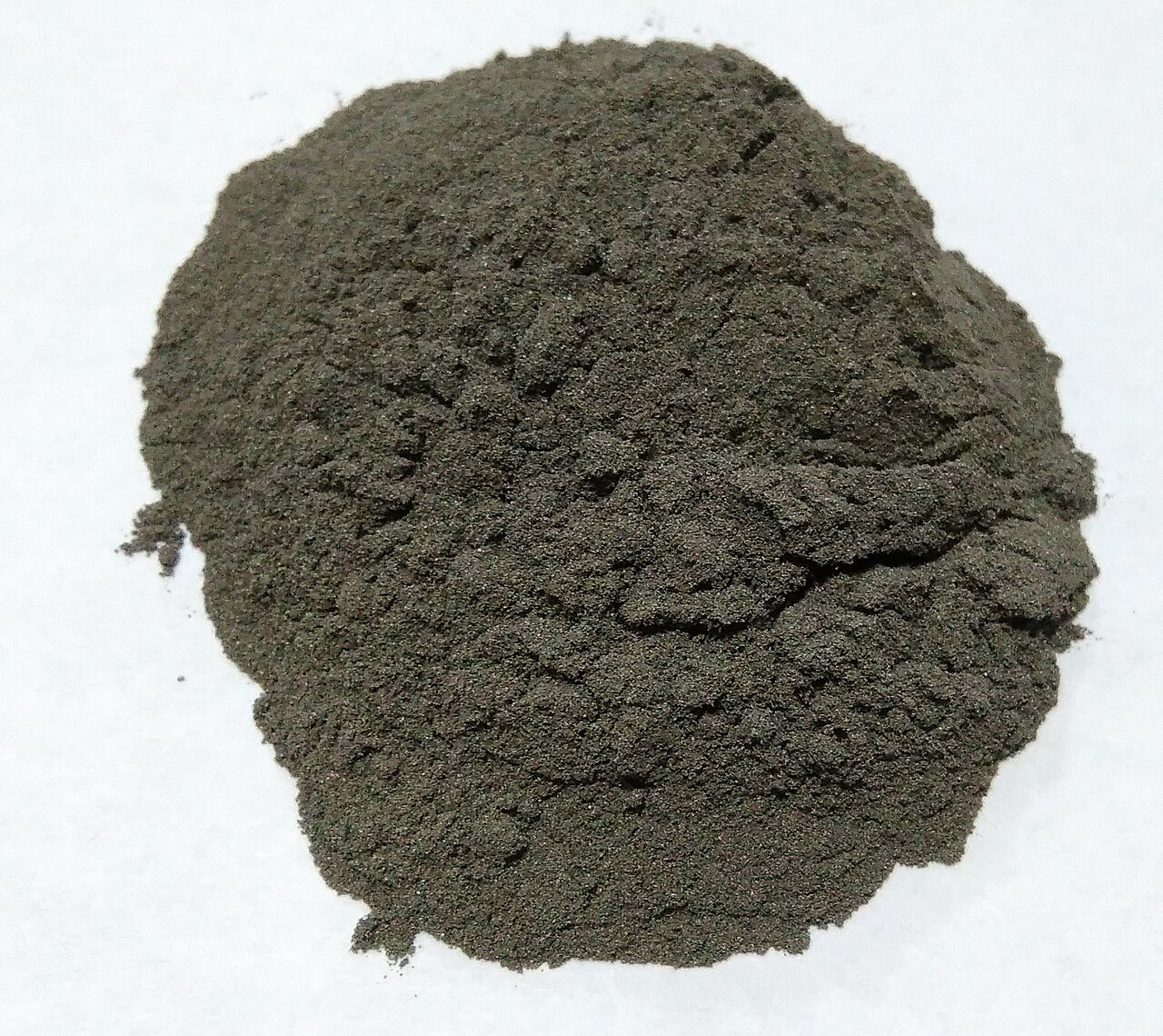

*Via Wikimedia Commons: [Titanium powder 3N](https://commons.wikimedia.org/wiki/File:Titanium_powder_3N.jpg) by Leiem, [CC BY-SA 4.0](https://creativecommons.org/licenses/by-sa/4.0).*
*Via Wikimedia Commons: [Titanium powder 3N](https://commons.wikimedia.org/wiki/File:Titanium_powder_3N.jpg) by Leiem, [CC BY-SA 4.0](https://creativecommons.org/licenses/by-sa/4.0).*
This entry is about the element. Its relative atomic mass is 47.867, it is in group 4 of the periodic table, and it is a solid at room temperature.[1] For its place in the table and its basic facts, see the [periodic table page for Titanium](/element/Q716/titanium).
This entry is about the element. Its relative atomic mass is 47.867, it is in group 4 of the periodic table, and it is a solid at room temperature.[1] For its place in the table and its basic facts, see the [periodic table page for Titanium](/element/Q716/titanium).
## Properties
## Properties
The Royal Society of Chemistry lists titanium's melting point as 1670 °C (1943 K), its boiling point as 3287 °C (3560 K), and its density as 4.506 g/cm³.[1] Its standard atomic weight is 47.867(1), unchanged since 1993 according to the atomic weights commission of the International Union of Pure and Applied Chemistry, which says titanium had the most uncertain atomic weight of any element until that year; NIST gives the same value.[3][2]
The Royal Society of Chemistry lists titanium's melting point as 1670 °C (1943 K), its boiling point as 3287 °C (3560 K), and its density as 4.506 g/cm³.[1] Its standard atomic weight is 47.867(1), unchanged since 1993 according to the atomic weights commission of the International Union of Pure and Applied Chemistry, which says titanium had the most uncertain atomic weight of any element until that year; NIST gives the same value.[3][2]
## Isotopes
## Isotopes
Titanium has five stable isotopes. The Royal Society of Chemistry gives their natural proportions as 8.25 percent for titanium-46, 7.44 percent for titanium-47, 73.72 percent for titanium-48, 5.41 percent for titanium-49 and 5.18 percent for titanium-50, and NIST gives 0.0825(3), 0.0744(2), 0.7372(3), 0.0541(2) and 0.0518(2).[1][2]
Titanium has five stable isotopes. The Royal Society of Chemistry gives their natural proportions as 8.25 percent for titanium-46, 7.44 percent for titanium-47, 73.72 percent for titanium-48, 5.41 percent for titanium-49 and 5.18 percent for titanium-50, and NIST gives 0.0825(3), 0.0744(2), 0.7372(3), 0.0541(2) and 0.0518(2).[1][2]
## Discovery and name
## Discovery and name
William Gregor found titanium in 1791 in Cornwall, in a mineral the Royal Society of Chemistry calls menachanite, from black sand, and the atomic weights commission describes as ilmenite. Martin Klaproth rediscovered it in 1795 and named it titanium after the Titans of Greek mythology.[1][3] The commission credits Sven Otto Pettersson and Lars Fredrik Nilson with first isolating the metal; the Royal Society of Chemistry credits M. A. Hunter with making the pure metal in 1910.[1][3]
6 unchanged paragraphs
## Where it comes from
## Where it comes from
The Royal Society of Chemistry calls titanium the ninth most abundant element on Earth, with a crustal abundance of 4136 parts per million. The metal is produced commercially by reducing titanium(IV) chloride with magnesium, titanium dioxide is made from the mineral ilmenite by the sulfate or chloride process, and the top three producers listed are Canada, Australia and South Africa, without a date.[1]
The Royal Society of Chemistry calls titanium the ninth most abundant element on Earth, with a crustal abundance of 4136 parts per million. The metal is produced commercially by reducing titanium(IV) chloride with magnesium, titanium dioxide is made from the mineral ilmenite by the sulfate or chloride process, and the top three producers listed are Canada, Australia and South Africa, without a date.[1]
## Uses
## Uses
The Royal Society of Chemistry lists alloys with aluminium, molybdenum and iron for aircraft, spacecraft and missiles; golf clubs, laptops, bicycles and crutches; desalination plants and ship hulls; joint and tooth implants; and titanium dioxide as a pigment and in sunscreens. It says titanium has no known biological role and is non-toxic, though fine titanium dioxide dust is a suspected carcinogen.[1]
The Royal Society of Chemistry lists alloys with aluminium, molybdenum and iron for aircraft, spacecraft and missiles; golf clubs, laptops, bicycles and crutches; desalination plants and ship hulls; joint and tooth implants; and titanium dioxide as a pigment and in sunscreens. It says titanium has no known biological role and is non-toxic, though fine titanium dioxide dust is a suspected carcinogen.[1]
## Sources
## Sources
1. Royal Society of Chemistry, "Titanium - Element information, properties and uses," Periodic Table (undated page). https://periodic-table.rsc.org/element/22/titanium
2. National Institute of Standards and Technology, "Atomic Weights and Isotopic Compositions for Titanium" (undated page). https://physics.nist.gov/cgi-bin/Compositions/stand_alone.pl?ele=Ti
3. Commission on Isotopic Abundances and Atomic Weights (IUPAC), "Atomic Weight of Titanium" (page © 2007-2015). https://www.ciaaw.org/titanium.htm
