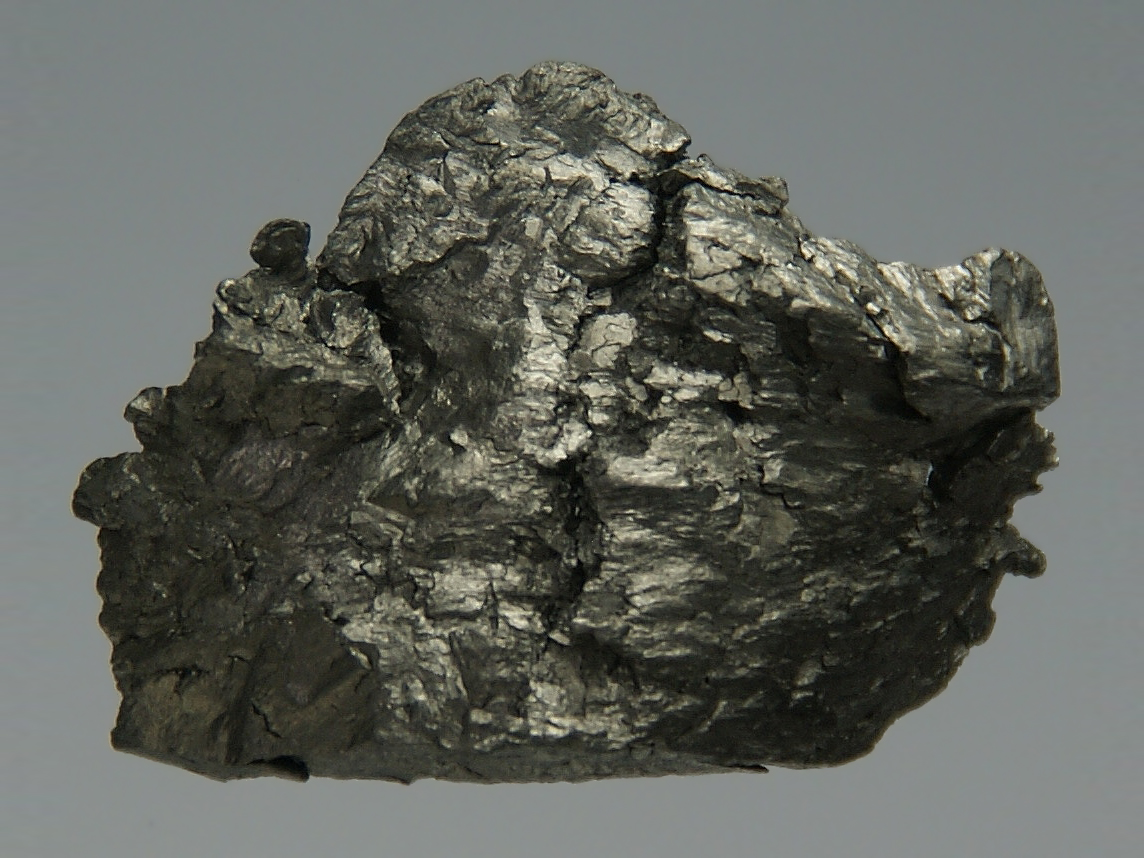
Gadolinium is the chemical element with atomic number 64 and the symbol Gd, a metal in the lanthanide series that is named after the mineral gadolinite and used in contrast agents for magnetic resonance imaging.[1][3]
This entry is about the element. Its relative atomic mass is 157.25, it is one of the lanthanides in the periodic table, and it is a solid at room temperature.[1] For its place in the table and its basic facts, see the [periodic table page for Gadolinium](/element/Q1832/gadolinium).
Properties
The Royal Society of Chemistry lists gadolinium's melting point as 1313 °C (1586 K), its boiling point as 3273 °C (3546 K), and its density as 7.90 g/cm³.[1] The atomic weights commission of the International Union of Pure and Applied Chemistry revised its recommended atomic weight in 2024 to 157.249 ± 0.002, and notes that some rare terrestrial materials have abnormal isotopic compositions, the most extreme a sample from the Oklo natural nuclear reactor in Gabon.[3] NIST and the Royal Society of Chemistry give 157.25.[2][1]
Isotopes
Gadolinium has seven naturally occurring isotopes. The Royal Society of Chemistry gives their proportions as 0.2 percent for gadolinium-152, 2.18 percent for gadolinium-154, 14.8 percent for gadolinium-155, 20.47 percent for gadolinium-156, 15.65 percent for gadolinium-157, 24.84 percent for gadolinium-158 and 21.86 percent for gadolinium-160, and NIST gives the same figures as fractions.[1][2]
Discovery and name
The Royal Society of Chemistry credits Jean Charles Galissard de Marignac, working at Geneva, with extracting a new rare earth from didymium in 1880, and says Boisbaudran extracted pure gadolinium oxide and named the element in 1886. The atomic weights commission describes Marignac as Swiss, dates his discovery to 1886, and says Paul-Émile Lecoq de Boisbaudran gave the name gadolinium.[1][3] It is named after the mineral gadolinite, and the commission says the mineral was named for the Finnish rare earth chemist Johan Gadolin.[1][3]
Where it comes from
The Royal Society of Chemistry says gadolinium is obtained from monazite and bastnaesite by ion exchange and solvent extraction, or by reducing the anhydrous fluoride with calcium.[1]
Uses
The Royal Society of Chemistry lists alloys that improve the workability and high-temperature resistance of iron and chromium alloys, magnet, electronic and data-storage alloys, compounds used as contrast agents in magnetic resonance imaging, and a neutron absorber in nuclear reactors. It says gadolinium has no known biological role and low toxicity.[1]