Version 2
Nov 21, 2026. Compare with the current version · Version history
California is a state of the United States, admitted to the Union as the 31st state on 9 September 1850, with Sacramento as its capital.[3][6]
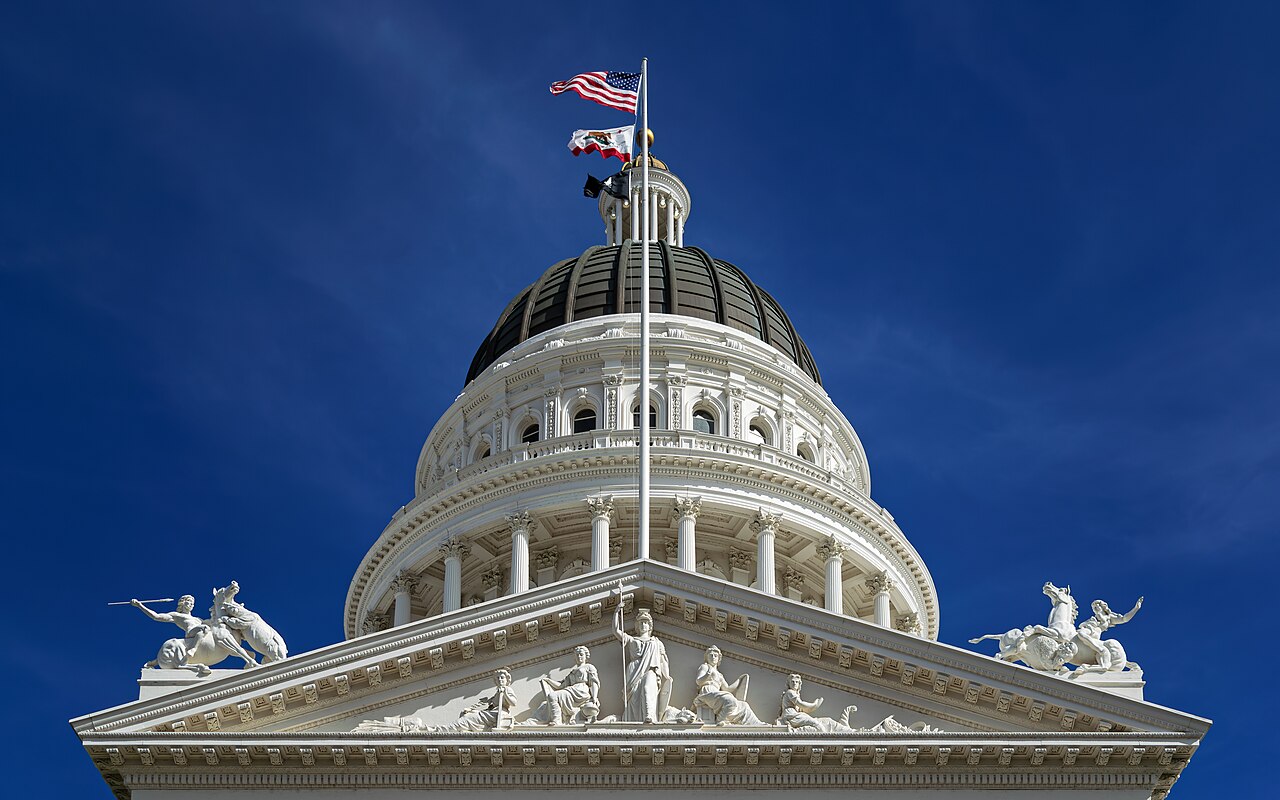
Via Wikimedia Commons: California State Capitol (top), NW view up by Photograph: Radomianin, public domain.
From Mexican territory to statehood
On 24 January 1848, the carpenter James W. Marshall found gold in the American River while working at John Sutter's sawmill near Coloma, California.[2] Nine days later, on 2 February 1848, the United States and Mexico signed the Treaty of Guadalupe Hidalgo. Under it Mexico ceded about 55 percent of its territory, including present-day California, and the United States agreed to pay $15 million.[1]
The Census Bureau describes the discovery as the start of "the first of several large-scale westward migrations in American history", with thousands of miners, entrepreneurs and families travelling to California by land and sea between 1849 and 1855.[2] The 1850 census counted 92,597 people in the state, and the population rose by more than 300 percent between 1850 and 1860.[2]
Californians sought statehood in 1849.[3] After heated debate over slavery, Congress accepted California as a free-labor state under the Compromise of 1850, and it became the 31st state on 9 September 1850.[3][4]
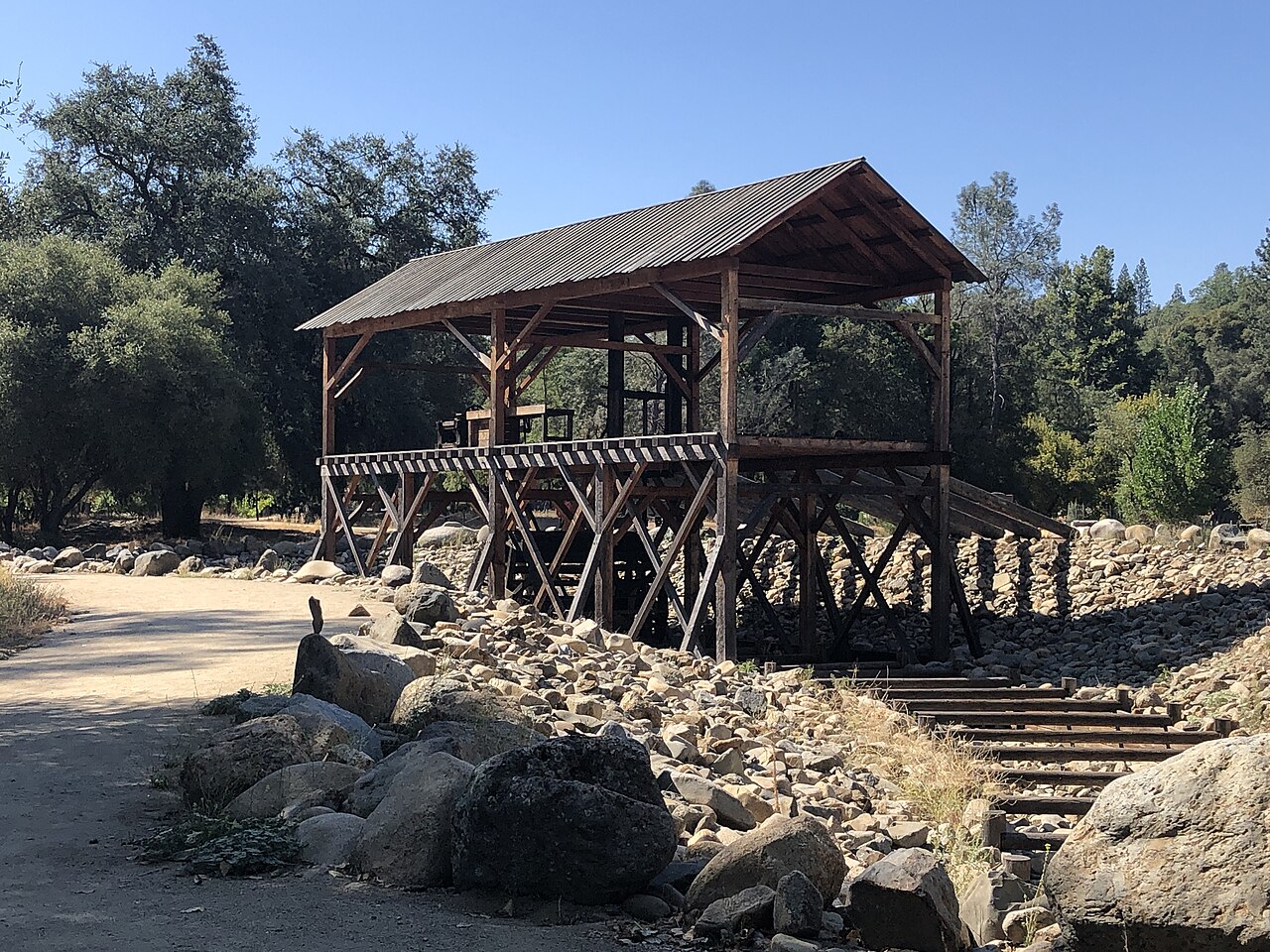
Via Wikimedia Commons: Marshall Gold Discovery State Historic Park - Aug 2019 - Stierch 11 by Missvain, CC BY 4.0.
The capital
According to California State Parks, San Jose was the first capital, but it lacked suitable facilities, and the wet winter of 1850-1851 left its roads muddy. The legislature met in Vallejo for one week in 1852 and for a month in 1853, then moved to Benicia, where a brick statehouse was built but the site proved too small to expand. The capital moved to Sacramento in 1854.[3]
Population
The 2020 Census counted 39,538,223 residents in California as of 1 April 2020, up 6.1 percent from 37,253,956 in 2010.[5] The state's number of seats in the U.S. House of Representatives fell from 53 to 52 on the 2020 apportionment, which the Census Bureau released on 26 April 2021.[5]
Area
As of the 2010 Census, California's land area was 155,779.2 square miles, the third largest of any state.[6]
The Legislature
California's Legislature has two chambers. The Assembly has 80 members and the Senate has 40, and each Assembly or Senate district chooses one member.[7] Under Article IV, Section 2 of the state constitution, as reproduced by FindLaw with a currency note of 1 January 2026, Senators serve four-year terms, with half elected every two years, and Assembly members serve two-year terms.[8] The same section limits a person to 12 years of service in the Senate, the Assembly, or both, for members first elected after the limit took effect.[8] Because FindLaw warns that its copy may not reflect the latest law, these provisions should be checked against the legislature's own text.[8]
Sources
- Treaty of Guadalupe Hidalgo (1848), Milestone Documents, U.S. National Archives.
- History and the Census: The 1848 California Gold Rush, U.S. Census Bureau, January 2018.
- California statehood and capital history, California State Parks.
- California becomes the 31st state in record time, HISTORY.
- 2020 Census demographics, California Department of Finance, with the Census Bureau's 2020 apportionment counts released 26 April 2021.
- California state and local geography guide, 2010, U.S. Census Bureau.
- Assembly & Senate, California State Capitol Museum.
- California Constitution, Article IV, Section 2, FindLaw, current as of 1 January 2026.
