Compare versions
Version 3 → Version 4 (current). Removed · Added. This shows the entry's text as it is written, including its formatting marks.
Version 3 · Version 4 (current) · Version history
Side by side · Together
Version 3Version 4 (current)
13 unchanged paragraphs
Asteroids, sometimes called minor planets, are rocky, airless remnants left over from the early formation of the solar system about 4.6 billion years ago.[1] Most orbit the Sun between Mars and Jupiter in the [asteroid belt](https://micwyn.com/t/3158/asteroid-belt).[1]
Asteroids, sometimes called minor planets, are rocky, airless remnants left over from the early formation of the solar system about 4.6 billion years ago.[1] Most orbit the Sun between Mars and Jupiter in the [asteroid belt](https://micwyn.com/t/3158/asteroid-belt).[1]
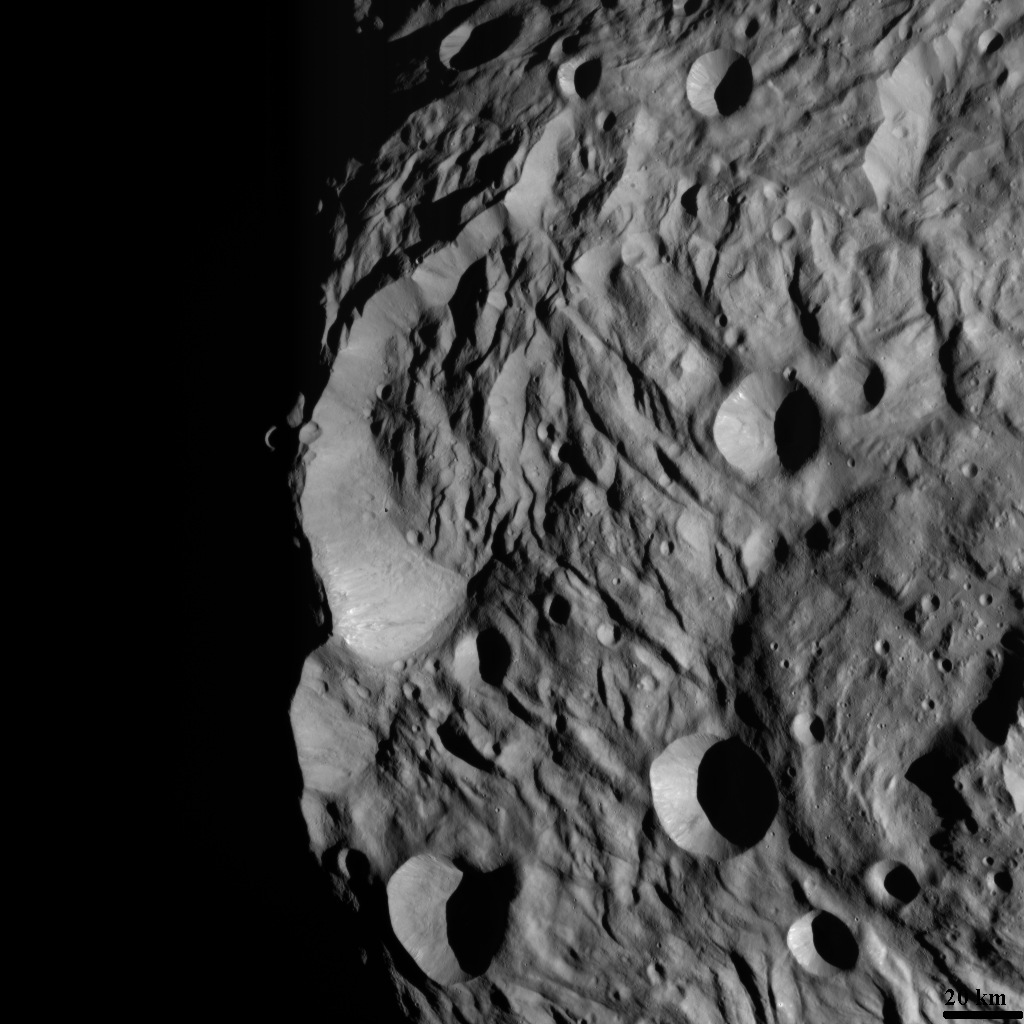

*Via Wikimedia Commons: [South Polar Scarp on the asteroid Vesta image of NASA’s Dawn spacecraf](https://commons.wikimedia.org/wiki/File:South_Polar_Scarp_on_the_asteroid_Vesta_image_of_NASA%E2%80%99s_Dawn_spacecraft_17f2_355999933_detail.jpg) by NASA/JPL-Caltech/UCLA/MPS/DLR/IDA, public domain.*
*Via Wikimedia Commons: [South Polar Scarp on the asteroid Vesta image of NASA’s Dawn spacecraf](https://commons.wikimedia.org/wiki/File:South_Polar_Scarp_on_the_asteroid_Vesta_image_of_NASA%E2%80%99s_Dawn_spacecraft_17f2_355999933_detail.jpg) by NASA/JPL-Caltech/UCLA/MPS/DLR/IDA, public domain.*
## Size and number
## Size and number
NASA says asteroids range in size from Vesta, the largest, at about 530 kilometres in diameter, to bodies less than 10 metres across, and that the total mass of all the asteroids combined is less than that of Earth's [Moon](https://micwyn.com/t/3025/moon).[1][2] NASA says the main belt is estimated to contain between 1.1 and 1.9 million asteroids larger than 1 kilometre in diameter, and millions of smaller ones.[2] NASA's Ceres page calls Ceres the largest object in the belt, but it is classed as a [dwarf planet](https://micwyn.com/t/3153/dwarf-planet) and not an asteroid; see [Ceres](https://micwyn.com/t/3150/ceres).[3]
NASA says asteroids range in size from Vesta, the largest, at about 530 kilometres in diameter, to bodies less than 10 metres across, and that the total mass of all the asteroids combined is less than that of Earth's [Moon](https://micwyn.com/t/3025/moon).[1][2] NASA says the main belt is estimated to contain between 1.1 and 1.9 million asteroids larger than 1 kilometre in diameter, and millions of smaller ones.[2] NASA's Ceres page calls Ceres the largest object in the belt, but it is classed as a [dwarf planet](https://micwyn.com/t/3153/dwarf-planet) and not an asteroid; see [Ceres](https://micwyn.com/t/3150/ceres).[3]
On 2 April 2026 the Vera C. Rubin Observatory announced that early survey data, submitted to the International Astronomical Union's Minor Planet Center, had revealed over 11,000 new asteroids, the largest single batch of discoveries in the past year, together with observations of more than 80,000 already known asteroids, including some previously "lost". The release also lists roughly 380 candidate trans-Neptunian objects and 33 previously unknown near-Earth objects, none a threat to Earth, the largest about 500 metres wide.[4] Rubin's solar system lead, Mario Juric, called the haul "just the tip of the iceberg", and the release says that once Rubin operates in full survey mode it is expected to add nearly 90,000 new near-Earth objects.[4]
On 2 April 2026 the Vera C. Rubin Observatory announced that early survey data, submitted to the International Astronomical Union's Minor Planet Center, had revealed over 11,000 new asteroids, the largest single batch of discoveries in the past year, together with observations of more than 80,000 already known asteroids, including some previously "lost". The release also lists roughly 380 candidate trans-Neptunian objects and 33 previously unknown near-Earth objects, none a threat to Earth, the largest about 500 metres wide.[4] Rubin's solar system lead, Mario Juric, called the haul "just the tip of the iceberg", and the release says that once Rubin operates in full survey mode it is expected to add nearly 90,000 new near-Earth objects.[4]
## Shape, spin and moons
## Shape, spin and moons
NASA says most asteroids are irregularly shaped, though a few are nearly round, and they are often pitted or cratered. As they orbit the Sun on elliptical paths they also rotate, sometimes tumbling.[2] NASA says more than 150 asteroids are known to have small companion moons, some of them two, and there are also binary asteroids, in which two rocky bodies of roughly equal size orbit each other, and triple systems.[2] See [Natural satellite](https://micwyn.com/t/3154/natural-satellite).
NASA says most asteroids are irregularly shaped, though a few are nearly round, and they are often pitted or cratered. As they orbit the Sun on elliptical paths they also rotate, sometimes tumbling.[2] NASA says more than 150 asteroids are known to have small companion moons, some of them two, and there are also binary asteroids, in which two rocky bodies of roughly equal size orbit each other, and triple systems.[2] See [Natural satellite](https://micwyn.com/t/3154/natural-satellite).
## What they are made of
## What they are made of
NASA says there are three broad composition classes. The C-types (chondrite) are the most common, probably clay and silicate rocks, dark, and among the most ancient objects in the solar system. The S-types ("stony") are silicate materials with nickel-iron, and the M-types are metallic nickel-iron. NASA says the differences are related to how far from the Sun the asteroids formed, and that some experienced high temperatures after formation and partly melted, with iron sinking to the centre and basaltic lava forced to the surface.[2]
NASA says there are three broad composition classes. The C-types (chondrite) are the most common, probably clay and silicate rocks, dark, and among the most ancient objects in the solar system. The S-types ("stony") are silicate materials with nickel-iron, and the M-types are metallic nickel-iron. NASA says the differences are related to how far from the Sun the asteroids formed, and that some experienced high temperatures after formation and partly melted, with iron sinking to the centre and basaltic lava forced to the surface.[2]
## Groups of asteroids
## Groups of asteroids
NASA lists three main groups. The main belt holds most known asteroids, which NASA says stopped forming into a planet because of Jupiter's gravity. [Trojans](https://micwyn.com/t/3160/trojan-asteroid) share an orbit with a larger planet, without colliding with it, by gathering around two special places called the L4 and L5 Lagrangian points, where the gravitational pull from the Sun and the planet is balanced; NASA says the Jupiter trojans are the most significant population and are thought to be as numerous as the asteroids in the main belt, and that there are also Mars and Neptune trojans and an Earth trojan announced in 2011. Near-Earth asteroids have orbits that pass close by Earth's, and those that actually cross Earth's orbital path are called Earth-crossers.[2]
NASA lists three main groups. The main belt holds most known asteroids, which NASA says stopped forming into a planet because of Jupiter's gravity. [Trojans](https://micwyn.com/t/3160/trojan-asteroid) share an orbit with a larger planet, without colliding with it, by gathering around two special places called the L4 and L5 Lagrangian points, where the gravitational pull from the Sun and the planet is balanced; NASA says the Jupiter trojans are the most significant population and are thought to be as numerous as the asteroids in the main belt, and that there are also Mars and Neptune trojans and an Earth trojan announced in 2011. Near-Earth asteroids have orbits that pass close by Earth's, and those that actually cross Earth's orbital path are called Earth-crossers.[2]
## Near-Earth objects
## Near-Earth objects
NASA says that the gravity of nearby planets sometimes nudges asteroids and comets into Earth's neighbourhood, and such objects are called near-Earth objects, most of them asteroids, with a closest approach to the Sun of less than 1.3 times Earth's distance from it.[1][2] NASA says asteroids and comets that can come within 30 million miles (48 million kilometres) of Earth's orbit are near-Earth objects, and that thousands have been discovered.[2] An asteroid is considered potentially hazardous if its orbit comes within 4.6 million miles (7.5 million kilometres) of Earth's and it is at least 140 metres across.[2] The Rubin release says only about 40 percent of such mid-sized near-Earth objects had been identified, and that Rubin should raise that to around 70 percent.[4]
NASA says that the gravity of nearby planets sometimes nudges asteroids and comets into Earth's neighbourhood, and such objects are called [near-Earth objects](https://micwyn.com/t/3161/near-earth-object), most of them asteroids, with a closest approach to the Sun of less than 1.3 times Earth's distance from it.[1][2] NASA says asteroids and comets that can come within 30 million miles (48 million kilometres) of Earth's orbit are near-Earth objects, and that thousands have been discovered.[2] An asteroid is considered potentially hazardous if its orbit comes within 4.6 million miles (7.5 million kilometres) of Earth's and it is at least 140 metres across.[2] The Rubin release says only about 40 percent of such mid-sized near-Earth objects had been identified, and that Rubin should raise that to around 70 percent.[4]
14 unchanged paragraphs
## Impacts
## Impacts
NASA says it is highly unlikely that an asteroid large enough to cause widespread damage will hit Earth in the next 100 years or more, according to scientists at its Center for Near Earth Object Studies, and that small objects of a few metres reach the atmosphere a few times a year without damage.[2] NASA's table of typical impact rates gives: about 10 metres, roughly once a decade, with a bright fireball and sonic boom; about 50 metres, about every 1,000 years, with local devastation; about 140 metres, about every 20,000 years; about 1 kilometre, about every 700,000 years, with global devastation; and about 10 kilometres, about every 100 million years, with mass extinctions.[2] NASA says Arizona's Barringer, or Meteor, Crater, about 1.2 kilometres wide, was made about 50,000 years ago by an asteroid thought to be 30 to 50 metres across, that a house-sized asteroid exploded over Chelyabinsk, Russia on 15 February 2013 with the energy of about 440,000 tons of TNT and injured hundreds of people, mostly from broken glass, and that most scientists consider the 180-kilometre Chicxulub crater to be evidence that a large asteroid struck 65 million years ago and caused the extinction of more than 70 percent of species including the dinosaurs.[2]
NASA says it is highly unlikely that an asteroid large enough to cause widespread damage will hit Earth in the next 100 years or more, according to scientists at its Center for Near Earth Object Studies, and that small objects of a few metres reach the atmosphere a few times a year without damage.[2] NASA's table of typical impact rates gives: about 10 metres, roughly once a decade, with a bright fireball and sonic boom; about 50 metres, about every 1,000 years, with local devastation; about 140 metres, about every 20,000 years; about 1 kilometre, about every 700,000 years, with global devastation; and about 10 kilometres, about every 100 million years, with mass extinctions.[2] NASA says Arizona's Barringer, or Meteor, Crater, about 1.2 kilometres wide, was made about 50,000 years ago by an asteroid thought to be 30 to 50 metres across, that a house-sized asteroid exploded over Chelyabinsk, Russia on 15 February 2013 with the energy of about 440,000 tons of TNT and injured hundreds of people, mostly from broken glass, and that most scientists consider the 180-kilometre Chicxulub crater to be evidence that a large asteroid struck 65 million years ago and caused the extinction of more than 70 percent of species including the dinosaurs.[2]
## Defending Earth
## Defending Earth
NASA says its Planetary Defense Coordination Office manages efforts to find, track and understand hazardous asteroids and comets, with ground-based and space-based telescopes. NASA's NEOWISE space telescope spent more than 11 years as a "planetary defender" and discovered 215 near-Earth objects before its mission ended on 31 July 2024, and NASA's upcoming NEO Surveyor will be the first space telescope designed specifically to hunt such hazards.[2] NASA says its Double Asteroid Redirection Test, led by the Johns Hopkins University Applied Physics Laboratory, intentionally struck the asteroid moonlet Dimorphos on 26 September 2022 and successfully altered its orbit and shape.[2]
NASA says its Planetary Defense Coordination Office manages efforts to find, track and understand hazardous asteroids and comets, with ground-based and space-based telescopes. NASA's NEOWISE space telescope spent more than 11 years as a "planetary defender" and discovered 215 near-Earth objects before its mission ended on 31 July 2024, and NASA's upcoming NEO Surveyor will be the first space telescope designed specifically to hunt such hazards.[2] NASA says its Double Asteroid Redirection Test, led by the Johns Hopkins University Applied Physics Laboratory, intentionally struck the asteroid moonlet Dimorphos on 26 September 2022 and successfully altered its orbit and shape.[2]
## Names
## Names
NASA says the International Astronomical Union's Committee on Small Body Nomenclature is not very strict about naming asteroids, so one is named Mr. Spock, a memorial to a cat, others are named for the musician Frank Zappa and for the crew of the Space Shuttle Columbia, and asteroids are also named for places.[2]
NASA says the International Astronomical Union's Committee on Small Body Nomenclature is not very strict about naming asteroids, so one is named Mr. Spock, a memorial to a cat, others are named for the musician Frank Zappa and for the crew of the Space Shuttle Columbia, and asteroids are also named for places.[2]
## See also
## See also
The [Solar System](https://micwyn.com/t/3151/solar-system) entry puts asteroids in context, and the [Planet](https://micwyn.com/t/3152/planet) and [Dwarf planet](https://micwyn.com/t/3153/dwarf-planet) entries explain how they differ from planets and dwarf planets.
The [Solar System](https://micwyn.com/t/3151/solar-system) entry puts asteroids in context, and the [Planet](https://micwyn.com/t/3152/planet) and [Dwarf planet](https://micwyn.com/t/3153/dwarf-planet) entries explain how they differ from planets and dwarf planets.
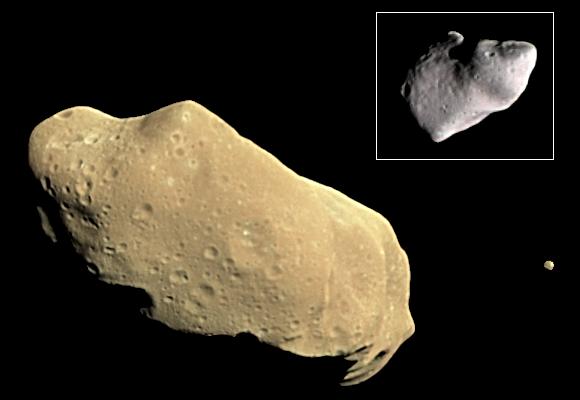

*Via Wikimedia Commons: [Galileo Ida n Dactyl](https://commons.wikimedia.org/wiki/File:Galileo_Ida_n_Dactyl.jpg), public domain.*
*Via Wikimedia Commons: [Galileo Ida n Dactyl](https://commons.wikimedia.org/wiki/File:Galileo_Ida_n_Dactyl.jpg), public domain.*
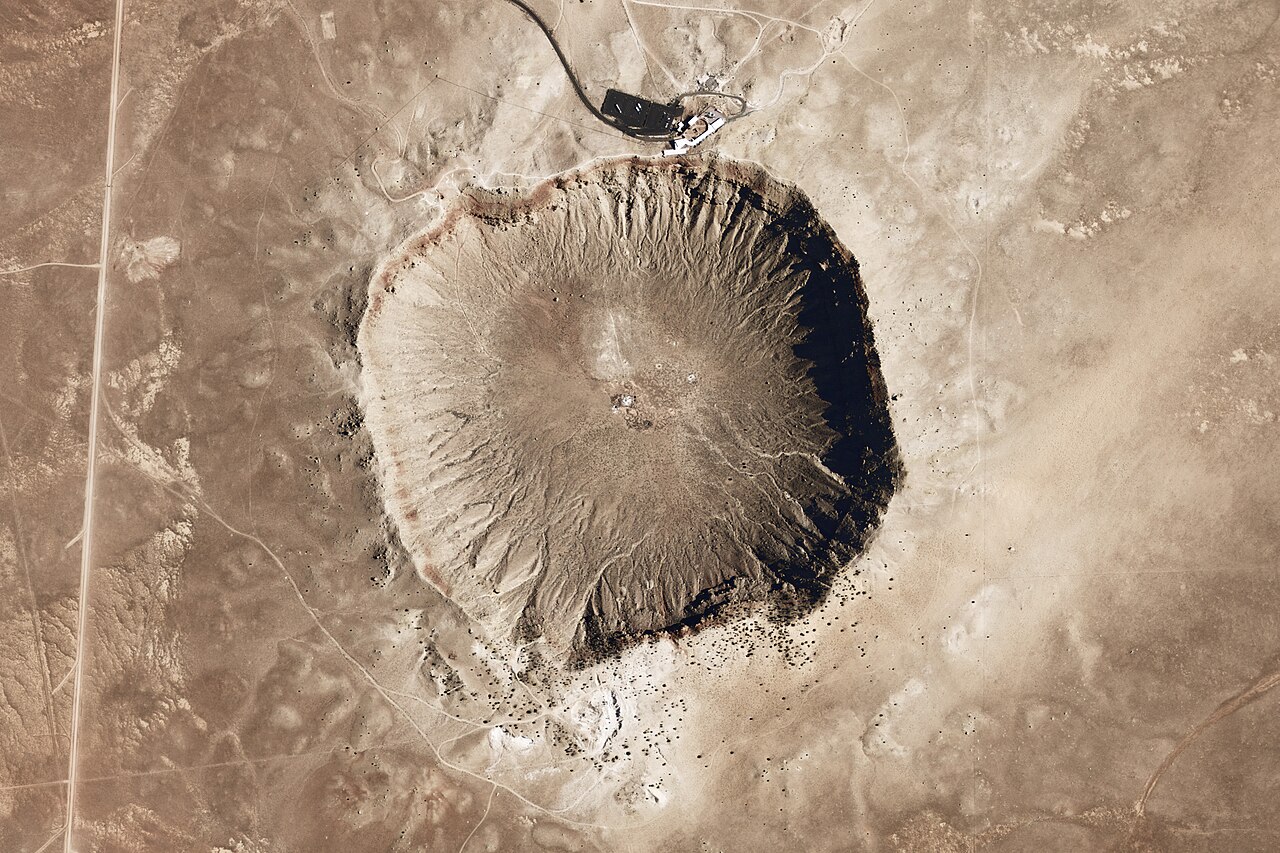

*Via Wikimedia Commons: [Meteor Crater - Arizona](https://commons.wikimedia.org/wiki/File:Meteor_Crater_-_Arizona.jpg) by National Map Seamless Server, public domain.*
*Via Wikimedia Commons: [Meteor Crater - Arizona](https://commons.wikimedia.org/wiki/File:Meteor_Crater_-_Arizona.jpg) by National Map Seamless Server, public domain.*
## Sources
## Sources
1. NASA Science. "Asteroids." https://science.nasa.gov/solar-system/asteroids/ (read 23 November 2026)
2. NASA Science. "Asteroid Facts." https://science.nasa.gov/solar-system/asteroids/facts/ (read 23 November 2026)
3. NASA Science. "Ceres Facts." https://science.nasa.gov/dwarf-planets/ceres/facts/ (read 23 November 2026)
4. NSF–DOE Vera C. Rubin Observatory. "Early Data from NSF–DOE Vera C. Rubin Observatory Reveals Over 11,000 New Asteroids." 2 April 2026. https://rubinobservatory.org/news/11000-new-asteroids (read 23 November 2026)
