Version 1
Nov 25, 2026. Compare with the current version · Version history
The Federal Deposit Insurance Corporation (FDIC) is an independent agency of the United States government, created by Congress in 1933, that insures deposits at U.S. banks and savings associations and supervises many of them.[5][4]
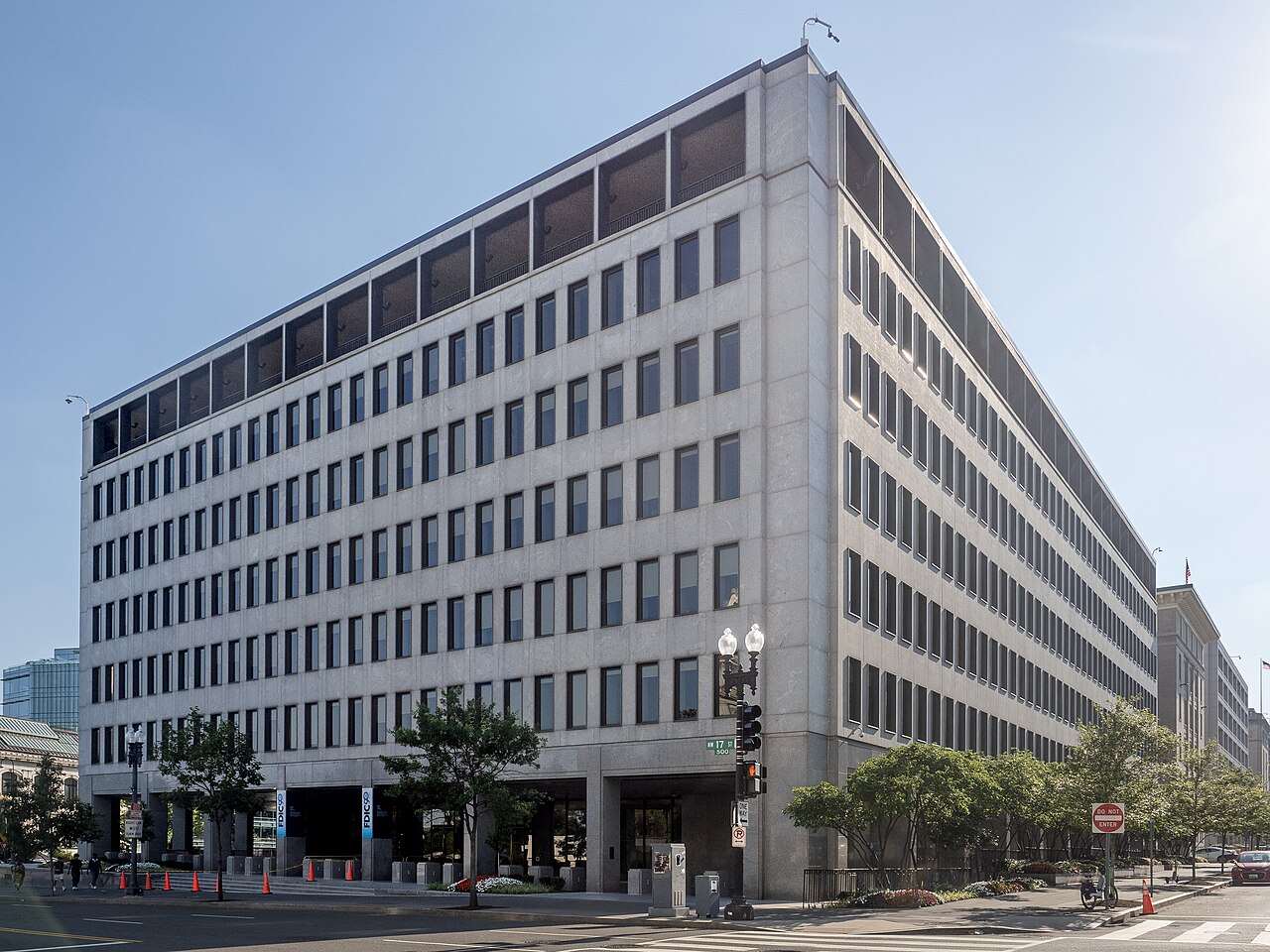
Via Wikimedia Commons: Federal Deposit Insurance Corporation Headquarters (53844538271) by ajaysuresh, CC BY 2.0.
What it insures
As of the FDIC's page last updated April 1, 2024, the agency insures deposits up to at least $250,000 per depositor, per ownership category, at each FDIC-insured bank.[1] Deposits in the same ownership category at one bank are added together, while the same person's accounts at a different insured bank are covered separately.[1] The categories the FDIC lists include single accounts, joint accounts, certain retirement accounts, trust accounts, employee benefit plan accounts, business accounts and government accounts.[1]
Covered products are checking, NOW, savings and money market deposit accounts, certificates of deposit, and official items such as cashier's checks and money orders.[1] Not covered are stocks, bonds, mutual funds, annuities, life insurance, the contents of safe deposit boxes, U.S. Treasury securities, municipal securities and crypto assets, nor non-deposit investment products sold through an insured bank.[1] The FDIC states that since its founding in 1933 "no depositor has lost a penny of FDIC-insured funds."[1]
Origins
The FDIC was created by the Banking Act of 1933, commonly called Glass-Steagall, which President Franklin D. Roosevelt signed on June 16, 1933.[3][4] Deposit insurance was its most controversial provision: Representative Henry Steagall insisted on it, mainly to protect small rural banks, large banks opposed it for fear of subsidizing smaller ones, and Roosevelt threatened a veto before public support after the bank holiday helped win him over.[3] A temporary insurance fund began in January 1934 covering deposits up to $2,500; in July 1934 the fund became permanent and the limit rose to $5,000.[3] Federal Reserve member banks had to become FDIC stockholders by July 1, 1934.[3]
The agency's statutory basis was first section 12B of the Federal Reserve Act; in 1950 that text was set apart as its own chapter of the U.S. Code.[4] Savings associations were added to the institutions it insures in 1989 by Pub. L. 101-73.[4] For the run-on-the-bank problem the corporation was built to address, see Bank run; for the broader idea, see Deposit insurance.
Structure and funding
As of a page last updated January 28, 2026, the FDIC lists three main responsibilities: insuring deposits, supervising and examining banks and savings associations for safety, soundness and consumer-protection compliance (it directly supervises over 2,700 institutions), and responding when an institution fails, most commonly by selling the failed institution's deposits and loans to another bank.[2] Its Board of Directors has up to five members, appointed by the President and confirmed by the Senate, with no more than three from one political party; the Comptroller of the Currency and the Director of the Consumer Financial Protection Bureau sit on it.[2]
The FDIC receives no Congressional appropriations and is funded by assessments paid by the institutions it insures.[2] Its Deposit Insurance Fund draws on those assessments and on interest earned on Treasury notes the FDIC buys, and is backed by the full faith and credit of the U.S. government.[1] For how failures are handled, see Bank resolution.
Bank failures
The FDIC publishes a list of banks that have failed since October 1, 2000. As of its update of September 25, 2026, the most recent entry is Nano Banc of Irvine, California, which closed on September 25, 2026 and was acquired by Sunwest Bank.[6]
Sources
- Federal Deposit Insurance Corporation, "Understanding Deposit Insurance," last updated April 1, 2024. fdic.gov/resources/deposit-insurance/understanding-deposit-insurance/
- Federal Deposit Insurance Corporation, "What We Do," last updated January 28, 2026. fdic.gov/about/what-we-do
- Julia Maues, "Banking Act of 1933, Commonly Called Glass-Steagall," Federal Reserve History, November 22, 2013. federalreservehistory.org/essays/glass-steagall-act
- "12 U.S. Code § 1811 – Federal Deposit Insurance Corporation," Legal Information Institute, Cornell Law School. law.cornell.edu/uscode/text/12/1811
- Federal Deposit Insurance Corporation, "History of the FDIC," last updated March 8, 2024. fdic.gov/about/history
- Federal Deposit Insurance Corporation, "Failed Bank List," last updated September 25, 2026. fdic.gov/bank-failures/failed-bank-list
