Compare versions
Version 3 → Version 4 (current). Removed · Added. This shows the entry's text as it is written, including its formatting marks.
Version 3 · Version 4 (current) · Version history
Side by side · Together
Version 3Version 4 (current)
22 unchanged paragraphs
Armageddon is the place named once in the New Testament where, according to the Book of Revelation, the kings of the earth will make war on the forces of God at the end of history.[1]
Armageddon is the place named once in the New Testament where, according to the Book of Revelation, the kings of the earth will make war on the forces of God at the end of history.[1]
## The word and the place
## The word and the place
The name is probably Hebrew in origin and is usually explained as "Hill of Megiddo."[1] It appears only once in the Bible, in the Revelation to John, also called the Apocalypse.[1] Megiddo was an ancient city on a pass that commanded the road linking Egypt and Syria, and because its strategic position had made it the scene of many battles, it was probably chosen as a symbol for a decisive final battle.[1] The site kept that reputation into modern times: a crucial battle of the First World War was fought there in 1918, and the victorious commander took the title Lord Allenby of Megiddo.[1]
The name is probably Hebrew in origin and is usually explained as "Hill of Megiddo."[1] It appears only once in the Bible, in the Revelation to John, also called the Apocalypse.[1] Megiddo was an ancient city on a pass that commanded the road linking Egypt and Syria, and because its strategic position had made it the scene of many battles, it was probably chosen as a symbol for a decisive final battle.[1] The site kept that reputation into modern times: a crucial battle of the First World War was fought there in 1918, and the victorious commander took the title Lord Allenby of Megiddo.[1]
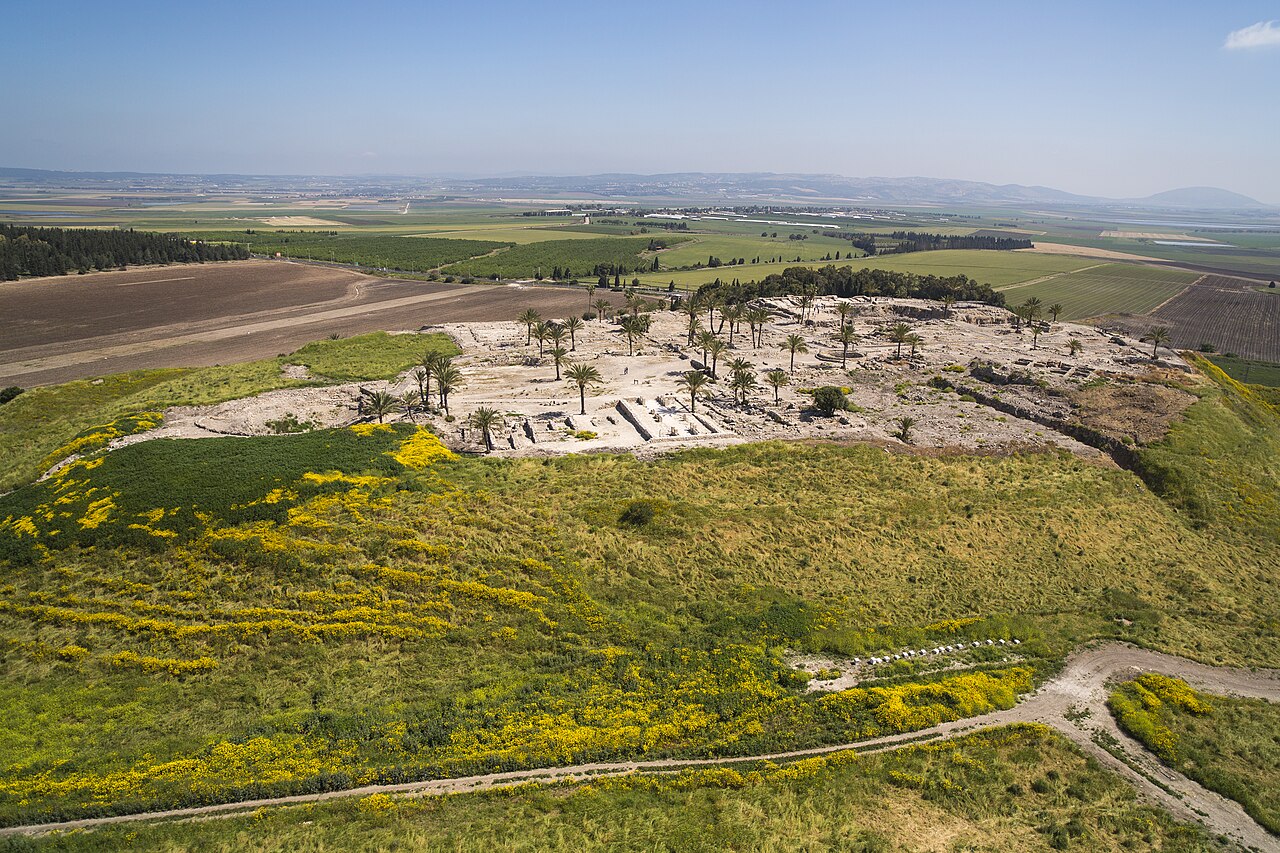

*Via Wikimedia Commons: [AERIAL VIEW OF TEL MEGIDDO (7723470910)](https://commons.wikimedia.org/wiki/File:AERIAL_VIEW_OF_TEL_MEGIDDO_(7723470910).jpg) by israeltourism from Israel, [CC BY-SA 2.0](https://creativecommons.org/licenses/by-sa/2.0).*
*Via Wikimedia Commons: [AERIAL VIEW OF TEL MEGIDDO (7723470910)](https://commons.wikimedia.org/wiki/File:AERIAL_VIEW_OF_TEL_MEGIDDO_(7723470910).jpg) by israeltourism from Israel, [CC BY-SA 2.0](https://creativecommons.org/licenses/by-sa/2.0).*
Outside the Bible, the word has taken on wider meanings: Encyclopaedia Britannica notes that peace activists, among others, have used it figuratively for a possible nuclear world war.[1]
Outside the Bible, the word has taken on wider meanings: Encyclopaedia Britannica notes that peace activists, among others, have used it figuratively for a possible nuclear world war.[1]
## What Jehovah's Witnesses teach
## What Jehovah's Witnesses teach
### A war between God and human governments
### A war between God and human governments
Jehovah's Witnesses teach that the battle of Armageddon is the final war between human governments and God, and that it will bring human rule to an end.[2] Their publications state that the word, as the Bible uses it, does not mean a nuclear war, a natural disaster or an environmental collapse.[3] Witnesses also teach that the battle is not tied to one region: their publications describe Megiddo as a city of ancient Israel, but say that Armageddon cannot refer to the literal area near it and will instead take in the whole earth.[2][4]
Jehovah's Witnesses teach that the battle of Armageddon is the final war between human governments and God, and that it will bring human rule to an end.[2] Their publications state that the word, as the Bible uses it, does not mean a nuclear war, a natural disaster or an environmental collapse.[3] Witnesses also teach that the battle is not tied to one region: their publications describe Megiddo as a city of ancient Israel, but say that Armageddon cannot refer to the literal area near it and will instead take in the whole earth.[2][4]
Jehovah's Witnesses teach that Jesus Christ, appointed by God, leads armies of angels against God's enemies in this war.[2][3] A 1999 issue of The Watchtower, the organization's main magazine, called it "God's war" and stated that "genuine Christians on earth will not fight in that war."[4]
Jehovah's Witnesses teach that Jesus Christ, appointed by God, leads armies of angels against God's enemies in this war.[2][3] A 1999 issue of The Watchtower, the organization's main magazine, called it "God's war" and stated that "genuine Christians on earth will not fight in that war."[4]
### Who survives
### Who survives
Jehovah's Witnesses teach that Armageddon will destroy only those their publications call the "incorrigibly wicked," and that a "great crowd" of God's servants will survive it.[3] For that reason the organization describes the war as saving humanity rather than destroying it.[2] Witnesses also teach that Armageddon is not the end of the planet, because they regard the earth as the permanent home of humankind.[2]
Jehovah's Witnesses teach that Armageddon will destroy only those their publications call the "incorrigibly wicked," and that a "great crowd" of God's servants will survive it.[3] For that reason the organization describes the war as saving humanity rather than destroying it.[2] Witnesses also teach that Armageddon is not the end of the planet, because they regard the earth as the permanent home of humankind.[2]
### What follows: the Thousand Year Reign
### What follows: the Thousand Year Reign
In Witness teaching, Armageddon clears the way for the Thousand Year Reign of Christ, which they understand as a literal period of one thousand years.[4] The 1999 Watchtower article sets out the sequence: Christ first removes all who oppose his rule at Armageddon, then turns to Satan and the demons, who are later destroyed for ever.[4] During the thousand years, according to the same article, living conditions on earth steadily improve, the dead are raised to life, and the survivors of Armageddon are gradually helped to overcome their sinful tendencies until they reach perfection.[4] Witness publications describe the result as an earth possessed by "the meek ones," from which God, through Christ, has removed "all causes of pain and sorrow."[3][4]
In Witness teaching, Armageddon clears the way for the Thousand Year Reign of Christ, which they understand as a literal period of one thousand years.[4] The 1999 Watchtower article sets out the sequence: Christ first removes all who oppose his rule at Armageddon, then turns to Satan and the demons, who are later destroyed for ever.[4] During the thousand years, according to the same article, living conditions on earth steadily improve, the dead are raised to life, and the survivors of Armageddon are gradually helped to overcome their sinful tendencies until they reach perfection.[4] Witness publications describe the result as an earth possessed by "the meek ones," from which God, through Christ, has removed "all causes of pain and sorrow."[3][4]
### When it will come
### When it will come
Jehovah's Witnesses teach that no one knows the day or the hour of Armageddon.[2][3] They also teach that it will take place during Christ's invisible "presence," which they date from 1914.[2] A 2011 Watchtower article stated that this presence is already here.[3]
Jehovah's Witnesses teach that no one knows the day or the hour of Armageddon.[2][3] They also teach that it will take place during Christ's invisible "presence," which they date from 1914.[2] A 2011 Watchtower article stated that this presence is already here.[3]
## Dated expectations
## Dated expectations
The movement's hopes about the end have been tied to particular years at several points in its history. A 2010 article in the International Journal for the Study of New Religions divided the Watch Tower Society's calculations about the last days into four periods: the era of the founder Charles Taze Russell, the early period of leadership under Rutherford, a changed system of chronology adopted in 1935, and the present-day understanding.[5] The article identified 1914, 1918, 1925 and 1975 as the key dates, and also discussed the Society's changed understanding of "the generation that would not pass" before prophecy was fulfilled.[5]
The movement's hopes about the end have been tied to particular years at several points in its history. A 2010 article in the International Journal for the Study of New Religions divided the Watch Tower Society's calculations about the last days into four periods: the era of the founder Charles Taze Russell, the early period of leadership under Rutherford, a changed system of chronology adopted in 1935, and the present-day understanding.[5] The article identified 1914, 1918, 1925 and 1975 as the key dates, and also discussed the Society's changed understanding of "the generation that would not pass" before prophecy was fulfilled.[5]
### 1874 and 1914
### 1874 and 1914
Charles Taze Russell (1852–1916) founded the International Bible Students Association, the forerunner of Jehovah's Witnesses, and in 1884 founded the Watch Tower Bible and Tract Society, which he led until his death.[6] From 1877 he preached that Christ's invisible return had taken place in 1874, and that 1914 would bring the end of "the Gentile times" and the beginning of a golden age, after which God's kingdom through Christ would rule the earth.[6] Britannica describes this as an apparent failure of his prediction and says the movement survived the problem it caused.[6] Jehovah's Witnesses today keep 1914 as the start of Christ's invisible presence.[2]
Charles Taze Russell (1852–1916) founded the International Bible Students Association, the forerunner of Jehovah's Witnesses, and in 1884 founded the Watch Tower Bible and Tract Society, which he led until his death.[6] From 1877 he preached that Christ's invisible return had taken place in 1874, and that 1914 would bring the end of "the Gentile times" and the beginning of a golden age, after which God's kingdom through Christ would rule the earth.[6] Britannica describes this as an apparent failure of his prediction and says the movement survived the problem it caused.[6] Jehovah's Witnesses today keep 1914 as the start of Christ's invisible presence.[2]
### 1925
### 1925
According to the organization's own account, published in The Watchtower in October 2025, many Bible Students, as the article calls the movement's members of that time, expected 1925 to bring the restoration of an earthly Paradise, the departure of the remaining anointed followers of Christ to heaven, and the resurrection of faithful men of old, such as Abraham and David, as princes.[7] The same article says that as the year went on and these hopes were not realized, some members became disappointed, but that most stayed busy in preaching and became more aware of their responsibility to be "Witnesses of Jehovah."[7]
According to the organization's own account, published in The Watchtower in October 2025, many Bible Students, as the article calls the movement's members of that time, expected 1925 to bring the restoration of an earthly Paradise, the departure of the remaining anointed followers of Christ to heaven, and the resurrection of faithful men of old, such as Abraham and David, as princes.[7] The same article says that as the year went on and these hopes were not realized, some members became disappointed, but that most stayed busy in preaching and became more aware of their responsibility to be "Witnesses of Jehovah."[7]
6 unchanged paragraphs
### 1975
### 1975
In July 1969, Time magazine reported that the Witnesses' latest calculations placed the end of the world in the autumn of 1975, and that they fully expected Armageddon within a few years.[8] In March 1980 The Watchtower gave the organization's own account.[9] It said that the book Life Everlasting—in Freedom of the Sons of God, with its comments on how appropriate it would be for the millennial reign of Christ to parallel the seventh millennium of human existence, had aroused "considerable expectation" about 1975.[9] It said statements had been made at the time and afterwards stressing that this was only a possibility, but that "other statements published" implied that the realization of hopes by that year was "more of a probability than a mere possibility."[9] The magazine said it was "to be regretted" that these later statements had overshadowed the cautionary ones and added to the buildup of expectation.[9] It also recalled a July 1976 issue that had commented on the inadvisability of setting one's sights on a certain date, and said that the disappointed included those who had worked on the publications concerned.[9]
In July 1969, Time magazine reported that the Witnesses' latest calculations placed the end of the world in the autumn of 1975, and that they fully expected Armageddon within a few years.[8] In March 1980 The Watchtower gave the organization's own account.[9] It said that the book Life Everlasting—in Freedom of the Sons of God, with its comments on how appropriate it would be for the millennial reign of Christ to parallel the seventh millennium of human existence, had aroused "considerable expectation" about 1975.[9] It said statements had been made at the time and afterwards stressing that this was only a possibility, but that "other statements published" implied that the realization of hopes by that year was "more of a probability than a mere possibility."[9] The magazine said it was "to be regretted" that these later statements had overshadowed the cautionary ones and added to the buildup of expectation.[9] It also recalled a July 1976 issue that had commented on the inadvisability of setting one's sights on a certain date, and said that the disappointed included those who had worked on the publications concerned.[9]
### How scholars read these episodes
### How scholars read these episodes
Assessments differ. Britannica's account of Russell treats the 1914 prediction as an apparent failure that the movement survived.[6] The 2010 journal article argued that, although there had been failures in prophetic speculation, the Witnesses' changing views and dates are better explained by changed understandings of biblical chronology than by failed predictions, and that for Witnesses prophecy serves more as a way of discerning a divine plan in history than as a means of predicting the future.[5]
Assessments differ. Britannica's account of Russell treats the 1914 prediction as an apparent failure that the movement survived.[6] The 2010 journal article argued that, although there had been failures in prophetic speculation, the Witnesses' changing views and dates are better explained by changed understandings of biblical chronology than by failed predictions, and that for Witnesses prophecy serves more as a way of discerning a divine plan in history than as a means of predicting the future.[5]
## Other Christian views
## Other Christian views
Christian traditions have understood the end of history, and the thousand-year reign of Christ (the "millennium") expected with it, in very different ways.[10]
Christian traditions have understood the end of history, and the thousand-year reign of Christ (the "millennium") expected with it, in very different ways.[10]
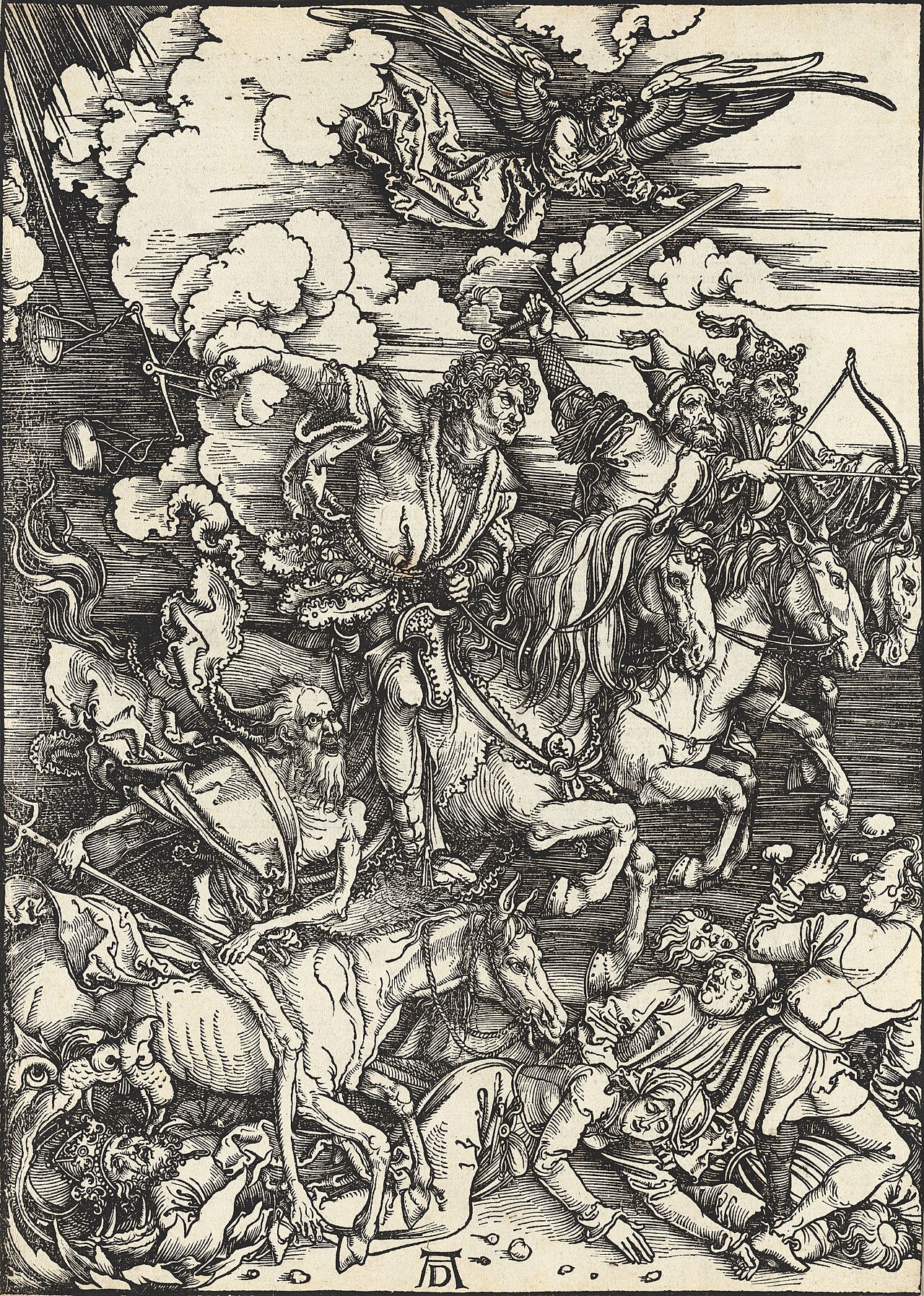
*Via Wikimedia Commons: [The Four Horsemen (CBL WEp 0021)](https://commons.wikimedia.org/wiki/File:The_Four_Horsemen_(CBL_WEp_0021).jpg) by Albrecht Dürer, public domain.*
11 unchanged paragraphs
### The millennium as already begun
### The millennium as already begun
At the start of the fifth century, Augustine and Jerome, seeing danger in apocalyptic expectation of the millennium, developed stricter ways of opposing it.[10] Augustine taught that the millennium was not a future event but one that Christ had already set in motion, and argued that neither history nor chronology could be interpreted apocalyptically.[10] According to Britannica, this ban on millennial thought dominated the "official" theological writing of the early Middle Ages, until the medieval theologian Joachim became the first to reject Augustine and return to the idea of a millennium still to come.[10]
At the start of the fifth century, Augustine and Jerome, seeing danger in apocalyptic expectation of the millennium, developed stricter ways of opposing it.[10] Augustine taught that the millennium was not a future event but one that Christ had already set in motion, and argued that neither history nor chronology could be interpreted apocalyptically.[10] According to Britannica, this ban on millennial thought dominated the "official" theological writing of the early Middle Ages, until the medieval theologian Joachim became the first to reject Augustine and return to the idea of a millennium still to come.[10]
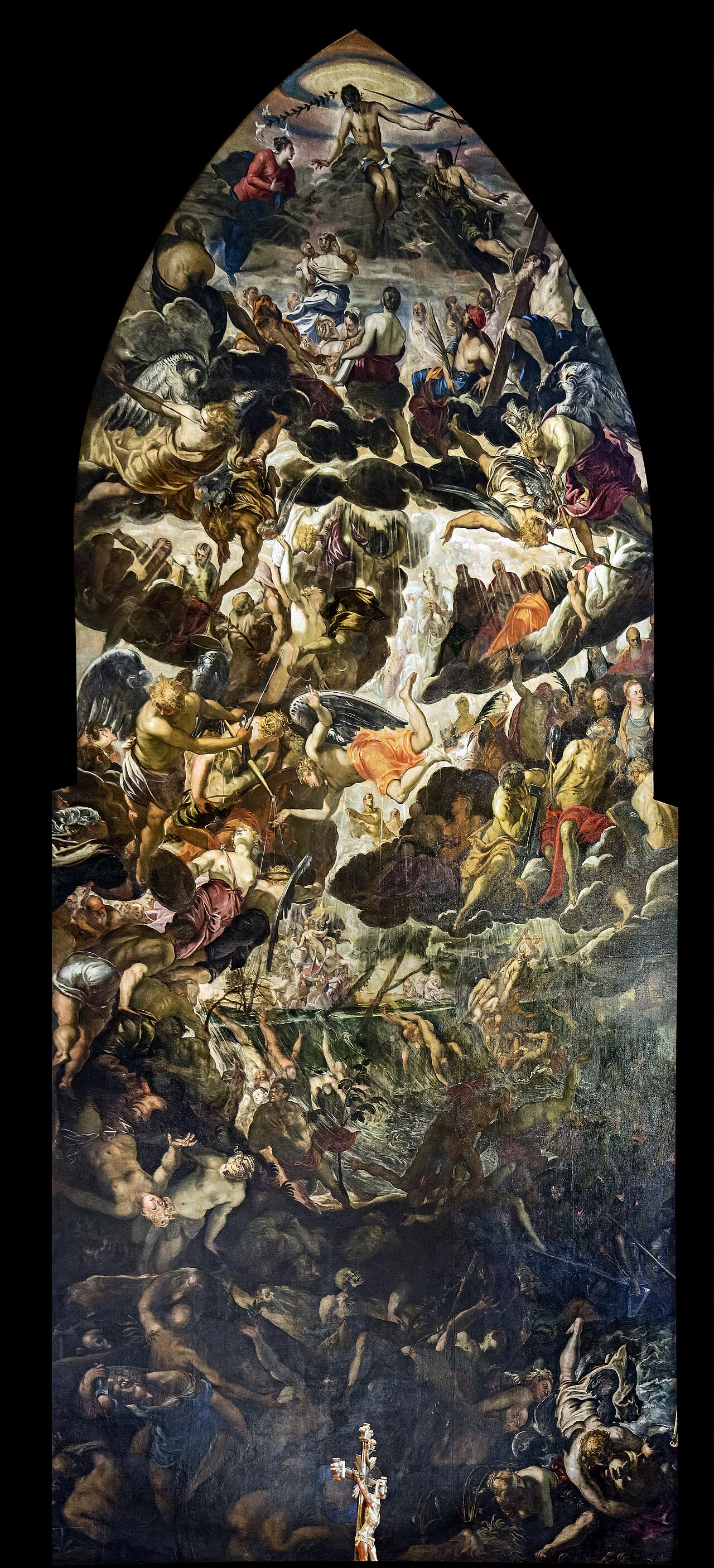

*Via Wikimedia Commons: [Madonna dell'Orto (Venice) - Choir - The Last Judgment by Jacopo Tinto](https://commons.wikimedia.org/wiki/File:Madonna_dell%27Orto_(Venice)_-_Choir_-_The_Last_Judgment_by_Jacopo_Tintoretto.jpg) by Didier Descouens, public domain.*
*Via Wikimedia Commons: [Madonna dell'Orto (Venice) - Choir - The Last Judgment by Jacopo Tinto](https://commons.wikimedia.org/wiki/File:Madonna_dell%27Orto_(Venice)_-_Choir_-_The_Last_Judgment_by_Jacopo_Tintoretto.jpg) by Didier Descouens, public domain.*
### Premillennial and dispensationalist views
### Premillennial and dispensationalist views
In the United States, millennial thought split into two traditions.[10] Premillennialism holds that Jesus will come before the millennium and inaugurate it, and tends to expect catastrophe; postmillennialism holds that he will come after a millennium brought about by an inspired humanity, and tends to be gradualist and reform-minded.[10] The evangelical and fundamentalist movement that developed around 1910–30 was premillennial and grounded in dispensationalism, the idea that God has dealt with humanity differently in a series of periods, or "dispensations"; it drew on the work of John Darby and on the Scofield Bible.[10] In this premillennial scheme, the seven years before Christ's coming are marked by the Rapture (the rescue of the living faithful by the Lord), war, disease, famine and the coming of the Antichrist.[10] Britannica's entry on Armageddon notes that Protestant fundamentalists have often used the word for an impending cataclysmic struggle between the forces of good and evil.[1]
In the United States, millennial thought split into two traditions.[10] Premillennialism holds that Jesus will come before the millennium and inaugurate it, and tends to expect catastrophe; postmillennialism holds that he will come after a millennium brought about by an inspired humanity, and tends to be gradualist and reform-minded.[10] The evangelical and fundamentalist movement that developed around 1910–30 was premillennial and grounded in dispensationalism, the idea that God has dealt with humanity differently in a series of periods, or "dispensations"; it drew on the work of John Darby and on the Scofield Bible.[10] In this premillennial scheme, the seven years before Christ's coming are marked by the Rapture (the rescue of the living faithful by the Lord), war, disease, famine and the coming of the Antichrist.[10] Britannica's entry on Armageddon notes that Protestant fundamentalists have often used the word for an impending cataclysmic struggle between the forces of good and evil.[1]
Britannica traces a revival of this kind of expectation in the 1970s, with the best-selling book The Late Great Planet Earth (1970) and the Rapture film Thief in the Night (1972), and Edgar Whisenant's 1988 pamphlet 88 Reasons Why the Rapture Will Happen in 1988 began a run of Rapture predictions through the 1990s.[10]
Britannica traces a revival of this kind of expectation in the 1970s, with the best-selling book The Late Great Planet Earth (1970) and the Rapture film Thief in the Night (1972), and Edgar Whisenant's 1988 pamphlet 88 Reasons Why the Rapture Will Happen in 1988 began a run of Rapture predictions through the 1990s.[10]
### Where Jehovah's Witnesses stand
### Where Jehovah's Witnesses stand
Britannica places Jehovah's Witnesses, together with the Latter-day Saints and the Seventh-day Adventists, among the new religious movements that American millennialism produced.[10] Witness teaching shares with premillennialism an order of events in which Christ's thousand-year reign follows his intervention, in their case the war of Armageddon; it differs from the Augustinian reading in treating the thousand years as a literal period still to come, on a restored earth.[4][10]
Britannica places Jehovah's Witnesses, together with the Latter-day Saints and the Seventh-day Adventists, among the new religious movements that American millennialism produced.[10] Witness teaching shares with premillennialism an order of events in which Christ's thousand-year reign follows his intervention, in their case the war of Armageddon; it differs from the Augustinian reading in treating the thousand years as a literal period still to come, on a restored earth.[4][10]
## Sources
## Sources
1. Robert E. Lerner, "Armageddon," Encyclopaedia Britannica. No date shown; accessed 25 November 2026. https://www.britannica.com/place/Armageddon
2. "What Is the Battle of Armageddon?," Bible Questions Answered (article 85), Watchtower Online Library, Watch Tower Bible and Tract Society of Pennsylvania. No date shown; accessed 25 November 2026. https://wol.jw.org/en/wol/d/r1/lp-e/502014295
3. "What Is Armageddon?" ("Our Readers Ask"), The Watchtower, 1 September 2011, p. 10, Watch Tower Bible and Tract Society of Pennsylvania, jw.org. https://www.jw.org/en/library/magazines/wp20110901/What-is-Armageddon
4. "Prepare for the Millennium That Matters!," The Watchtower, 1 November 1999, pp. 7–8, Watchtower Online Library. https://wol.jw.org/en/wol/d/r1/lp-e/1999802
5. George D. Chryssides, "How Prophecy Succeeds: The Jehovah's Witnesses and Prophetic Expectations," International Journal for the Study of New Religions 1, no. 1 (2010): 27–48, Equinox Publishing (abstract). https://doi.org/10.1558/ijsnr.v1i1.27
6. Britannica Editors, "Charles Taze Russell," Encyclopaedia Britannica. No date shown; accessed 25 November 2026. https://www.britannica.com/biography/Charles-Taze-Russell
7. "1925—One Hundred Years Ago," The Watchtower (Study Edition), October 2025, pp. 2–5, Watch Tower Bible and Tract Society of Pennsylvania, jw.org. https://www.jw.org/en/library/magazines/watchtower-study-october-2025/1925-%E2%80%8BOne-Hundred-Years-Ago/
8. "Sects: Witnessing the End," Time, 18 July 1969. https://content.time.com/time/subscriber/article/0,33009,901074,00.html
9. "Choosing the Best Way of Life," The Watchtower, 15 March 1980, pp. 16–20, Watchtower Online Library. https://wol.jw.org/en/wol/d/r1/lp-e/1980207
10. Richard Landes, "Millennialism," Encyclopaedia Britannica, sections "Patristic and medieval millennialism" and "Millennialism from the Renaissance to the modern world." No date shown; accessed 25 November 2026. https://www.britannica.com/topic/millennialism/Patristic-and-medieval-millennialism and https://www.britannica.com/topic/millennialism/Millennialism-from-the-Renaissance-to-the-modern-world
