The coming time of worldwide distress that, in the teaching of Jehovah's Witnesses, begins with the destruction of false religion and ends at Armageddon
Jehovah's Witnesses teach that the great tribulation is a coming period of distress greater than any before it, which starts with the destruction of false religion and reaches its climax in God's war of Armageddon.[1][2]
The term
The phrase comes from Jesus' words recorded at Matthew 24:21 in the Gospels.[1][7] Jehovah's Witnesses use it as a fixed name for one stage in their account of the end of the present world order, which they call the "system of things."[7] Their publications link it chiefly to Matthew 24:21, 22, Mark 13:19 and Daniel 12:1, and draw the events within it from passages such as Revelation 17 and 18, Ezekiel 38 and Revelation 7.[1] The organization's explanation of when the tribulation begins has been restated several times since the 1920s, and its most recent changes were published in 2013 and 2024.[2][3][6]
What Jehovah's Witnesses teach
A time without equal
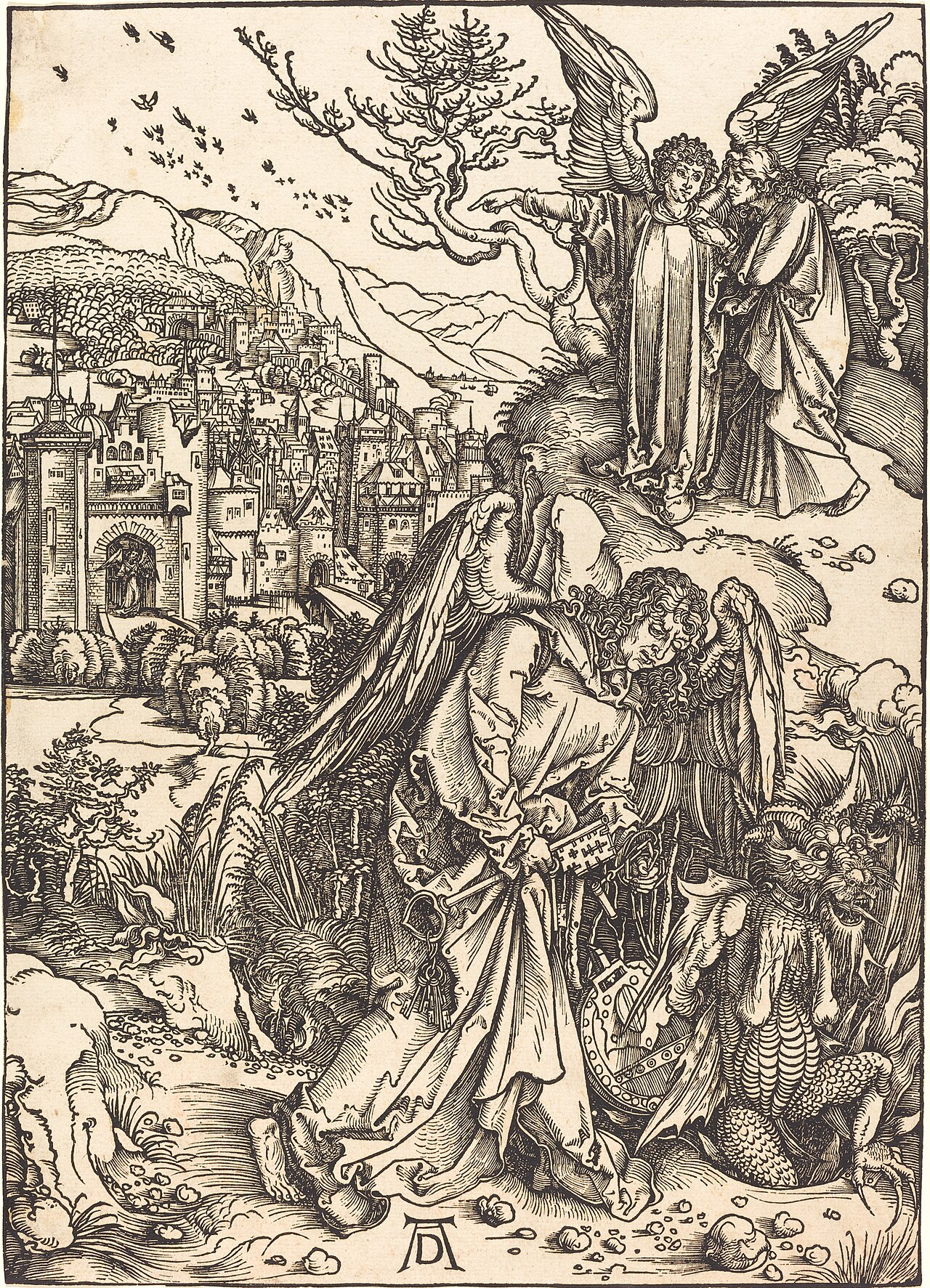
Jehovah's Witnesses teach that the great tribulation will be the worst time of trouble humankind has ever faced, and that it belongs to what the Bible calls "the last days."[1] As of November 2026, the organization's own question-and-answer page sets out the events in order: false religion is destroyed; a coalition of nations attacks those who practise true religion; Jesus judges all humankind; the remaining members of his chosen heavenly rulers are taken to heaven; and the war of Armageddon follows.[1] The page then places two further events after the tribulation: Satan and the demons are confined in an "abyss," which it explains as a symbol of a state like death, and Christ's thousand-year reign begins.[1]
The opening attack on "Babylon the Great"
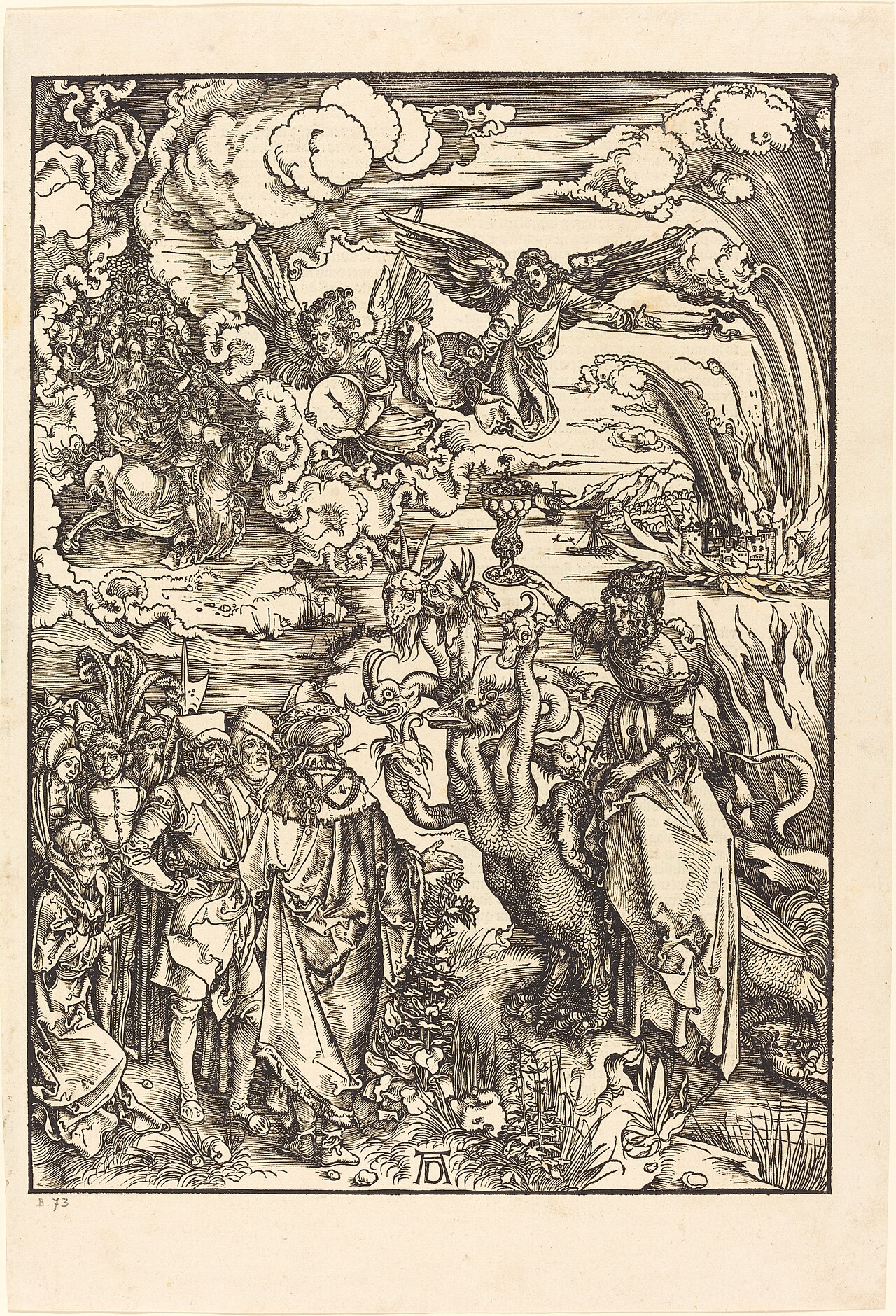
Jehovah's Witnesses teach that the tribulation opens with a sudden attack by the nations on false religion, which their publications call "Babylon the Great."[1][2] A study article in The Watchtower, the organization's main magazine, of 15 July 2013 identified the attacker as the United Nations, which it described as the modern "disgusting thing," and said that the assault would fall on Christendom and the rest of Babylon the Great.[2] The same article stated that this event will be the start of the great tribulation.[2]
Albrecht Dürer's woodcut The Whore of Babylon, from his Apocalypse series of about 1498, showing the figure from the Book of Revelation that Jehovah's Witnesses
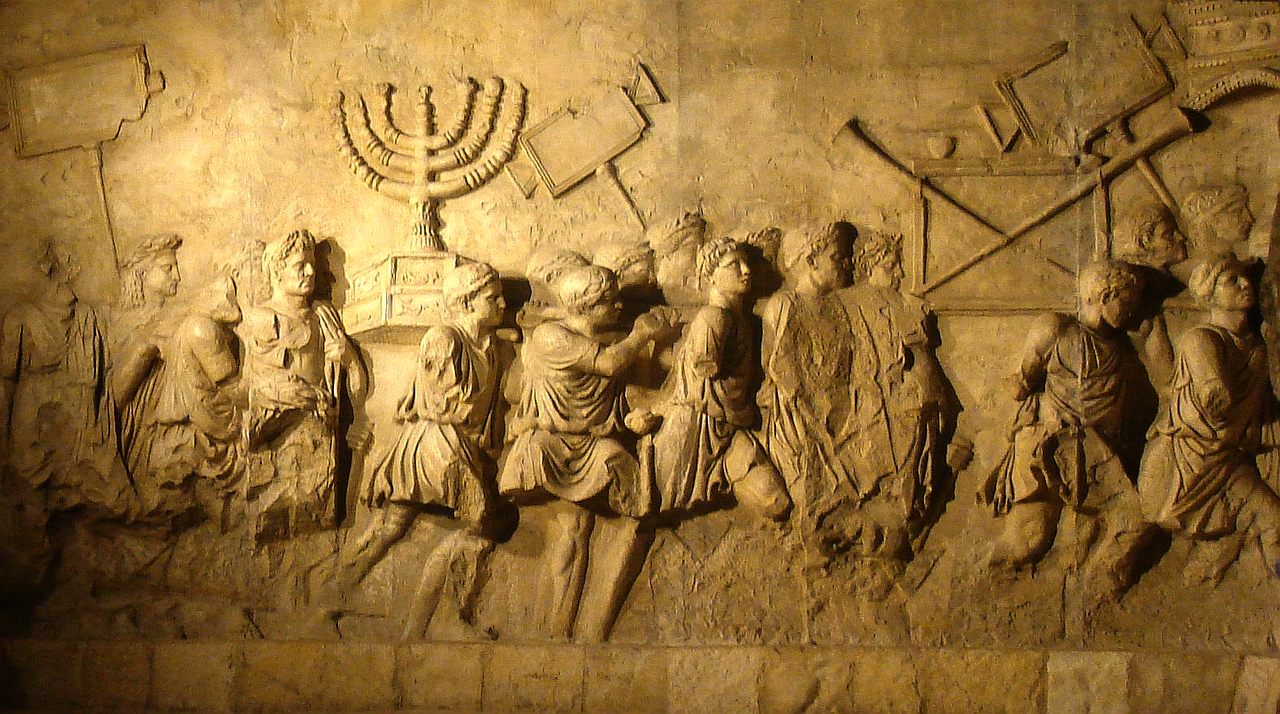
Jehovah's Witnesses teach that the attack will not run its full course. The 2013 article compared it with the Roman army's attack on Jerusalem in 66 C.E., which, it said, was "cut short," and taught that God will likewise cut short the coming attack on religion and will not allow true religion to be destroyed along with false religion.[2]
Testing, judgment and the end at Armageddon
Jehovah's Witnesses teach that a coalition of nations, which they identify with the "Gog of Magog" of Ezekiel 38, will then try to wipe out God's worshippers, and that God will protect them.[1] They teach that Jesus will separate people as a shepherd separates sheep from goats during this period.[1] The 2013 article moved this judgment into the great tribulation; the organization had earlier taught that it would take place throughout the last days from 1914 onward.[2]
The same 2013 article stated that the anointed Christians still on earth after the first part of the tribulation will be raised to heaven before Armageddon begins, and said that this adjusted an answer published in The Watchtower of 15 August 1990.[2] A 2022 study in the journal American Anthropologist, by a scholar at the University of Cambridge's Faculty of Divinity, described this as a limited event that somewhat resembles the "rapture", the taking up of believers that the Protestant Brethren regard as an essential doctrine and that Witnesses otherwise largely reject.[7]
Jehovah's Witnesses teach that Armageddon, the "war of the great day of God the Almighty," is the climax of the tribulation.[1][2] They teach that an uncounted "great crowd" of worshippers will come out of the tribulation alive and see the thousand-year reign begin on earth.[1] The 2022 study notes a distinction in Witness thought between the two kinds of violence involved: the suffering of the tribulation is the work of human wickedness inspired by demons, while Armageddon is a divine act of judgment.[7]
How the timing has been restated
1914 to 1918 as the first part (1920s to 1960s)
Earlier Watch Tower literature placed the beginning of the great tribulation in the past. According to an account in The Watchtower of 15 January 1970, the leading article of the Watch Tower of 1 May 1925 had explained that the tribulation began in 1914, that God cut it short in the middle by stopping the First World War in November 1918, and that its final part would resume at Armageddon.[3] The 1970 article remarked that this explanation had seemed reasonable in 1925, only seven years after the war.[3]
The idea was still being taught in the 1960s. A "Questions From Readers" answer in The Watchtower of 15 December 1964 gave the term two applications: the first to a tribulation that, it said, God brought on Satan and his organization when Christ fought them in heaven from 1914, which was halted in 1918 to allow the gathering of the anointed remnant; and the second to the resumption of that tribulation at Armageddon.[4]
The 1970 restatement
The Watchtower of 15 January 1970 changed this.[3] It noted that if the first part had run from 1914 to 1918, the gap before the final part had already lasted fifty-one years and was not over.[3] The article then stated that, to match the pattern of events between Jesus' ascension in 33 C.E. and Jerusalem's destruction in 70 C.E., the great tribulation did not begin in 1914, and that what happened from 1914 to 1918 was only "a beginning of pangs of distress."[3] It placed the tribulation in the future, as the destruction of the world empire of false religion, including Christendom, followed by Armageddon against false religion's political allies.[3]
A relief inside the Arch of Titus in Rome showing Roman soldiers carrying away spoils from Jerusalem after the city's destruction in 70 C.E.
Via Wikimedia Commons: Arch of Titus Menorah by derivative work: Steerpike ( talk ) ArcdeTriumphcopy.jpg : u, public domain.
The 2013 restatement
The Watchtower of 15 July 2013 again addressed the question.[2] It stated that "for a number of years" the organization had thought the tribulation began with the First World War in 1914 and was cut short in 1918, and that it had been seen as having three phases: a beginning from 1914 to 1918, an interruption from 1918 onward, and a conclusion at Armageddon.[2] The article said that the events beginning in 1914 were not the start of the great tribulation but the "beginning of pangs of distress," and that the tribulation would begin not with a war among nations but with an attack on false religion.[2] It also applied to the future several references to Jesus' "coming" that had earlier been applied to 1918 and 1919.[2] The 2013 article did not give the dates between which the three-phase view was held.[2]
Who can still respond (2015 and 2024)
Later articles restated what may happen to people during the pause after the attack on religion. A Watchtower study article of 15 July 2015 stated that Witnesses could not expect the future interruption in the tribulation to bring an influx of new believers.[5] The Watchtower of May 2024, in a study article titled "What Do We Know About Jehovah's Future Judgments?", said the organization had reconsidered some of what it had said about these events.[6] It stated that the organization had previously taught that, once the tribulation began, no unbeliever could take a stand for God and survive Armageddon, a conclusion drawn from treating the account of the Flood as a prophetic pattern.[6] The 2024 article said that it is possible that some people who see the destruction of Babylon the Great will remember that Jehovah's Witnesses had long spoken of it, and asked whether some might then have a change of heart.[6] It added that anyone who sides with God's people after that destruction will also be tested, and it maintained that outright opposers destroyed at Armageddon will not be resurrected.[6]
Scholarly views
Scholars place the teaching within the wider history of Protestant end-time belief. The 2022 American Anthropologist study, citing a 2016 book on the Witnesses, states that Charles Taze Russell (1852–1916), the movement's founder, built its end-time beliefs by reworking both William Miller's Adventism and the dispensationalist theology of John Nelson Darby (1800–1882).[7] Dispensationalism is the view that history is divided into a series of ages, or "dispensations," in which God deals with humanity in different ways.[9] Citing the same book, the study reports that the order of end-time events affirmed by Witnesses today is very similar to the one held by most of the Brethren, the dispensationalist Protestant group it compares them with.[7]
On the repeated changes of date, a 2010 article in the International Journal for the Study of New Religions argued that, although there have been failures in prophetic speculation, the changing views and dates of Jehovah's Witnesses are better explained by changed understandings of biblical chronology than by failed predictions.[8] It identified 1914, 1918, 1925 and 1975 as the key dates in the Watch Tower Society's calculations about the last days, and concluded that for Witnesses prophecy serves more to discern a divine plan in history than to predict the future.[8] The 2013 and 2024 Watchtower articles present their changes as adjustments to, or reconsiderations of, earlier explanations.[2][6]
Use in other Christian traditions
Other Christian traditions read the same Gospel passages within quite different frameworks. Among premillennialists, who hold that Jesus will return before a thousand-year reign and begin it, the dispensationalist movement shaped by Darby and the Scofield Bible expects the seven years before Christ's coming to be marked by the Rapture and the coming of the Antichrist.[9] The 2022 study gives the order of events held by most Brethren as the present last days, the rapture, the tribulation and the battle of Armageddon, then the millennium; in this scheme the rapture sets off the tribulation.[7] Unlike these groups, Jehovah's Witnesses do not expect the faithful in general to be taken from the earth before the tribulation; they expect a "great crowd" to live through it on earth.[1][7]
A 2021 doctoral thesis at Stellenbosch University groups interpreters of apocalyptic prophecy into three main schools: preterism, which places the fulfilment of such prophecy in the past; futurism, which places it in the future; and historicism, which spreads it across the course of history.[10] Jehovah's Witnesses teach that the main fulfilment of the great tribulation is still in the future, and treat the first-century destruction of Jerusalem as an earlier, smaller pattern of it.[2][3]
Albrecht Dürer's woodcut The Angel with the Key to the Bottomless Pit, from his Apocalypse series, showing an angel locking Satan in the abyss, the event that W
"Tell Us, When Will These Things Be?," The Watchtower (Study Edition), 15 July 2013, pp. 3–8, Watchtower Online Library, Watch Tower Bible and Tract Society of Pennsylvania. wol.jw.org/en/wol/d/r1/lp-e/2013530
"Peace with God amid the 'Great Tribulation,'" The Watchtower, 15 January 1970, pp. 49–56, Watchtower Online Library, Watch Tower Bible and Tract Society of Pennsylvania. wol.jw.org/en/wol/d/r1/lp-e/1970043
"Questions From Readers," The Watchtower, 15 December 1964, p. 768, Watchtower Online Library, Watch Tower Bible and Tract Society of Pennsylvania. wol.jw.org/en/wol/d/r1/lp-e/1964927
"Your Deliverance Is Getting Near!," The Watchtower (Study Edition), 15 July 2015, pp. 14–19, Watchtower Online Library, Watch Tower Bible and Tract Society of Pennsylvania. wol.jw.org/en/wol/d/r1/lp-e/2015523
"What Do We Know About Jehovah's Future Judgments?," The Watchtower (Study Edition), May 2024, pp. 8–13 (Study Article 19), Watchtower Online Library, Watch Tower Bible and Tract Society of Pennsylvania. wol.jw.org/en/wol/d/r1/lp-e/2024405
Joseph Webster, "Anthropology-as-theology: Violent endings and the permanence of new beginnings," American Anthropologist 124, no. 2 (2022): 333–344, Wiley; open-access copy in the University of Cambridge repository (CC BY-NC-ND 4.0). repository.cam.ac.uk/handle/1810/333600 (DOI 10.1111/aman.13705)
George Chryssides, "How Prophecy Succeeds: The Jehovah's Witnesses and Prophetic Expectations," International Journal for the Study of New Religions 1, no. 1 (2010), Equinox Publishing (abstract). journals.equinoxpub.com/index.php/OLDIJSNR/article/viewArticle/8147 (DOI 10.1558/ijsnr.v1i1.27)
"Preterism, futurism or historicism? A theological evaluation of three interpretive schools of Apocalyptic Prophecy within the doctrine of the last things," PhD thesis, Stellenbosch University, 2021 (abstract; author not shown on the repository page). Accessed 25 November 2026. scholar.sun.ac.za/handle/10019.1/109812