Compare versions
Version 1 → Version 3 (current). Removed · Added. This shows the entry's text as it is written, including its formatting marks.
Version 1 · Version 3 (current) · Version history
Side by side · Together
Version 1Version 3 (current)
8 unchanged paragraphs
"Other sheep" is the term Jehovah's Witnesses use, from John 10:16, for all of God's servants, including faithful people of pre-Christian times, who hope to live forever on earth rather than in heaven: a wider group than the "great crowd".[1]
"Other sheep" is the term Jehovah's Witnesses use, from John 10:16, for all of God's servants, including faithful people of pre-Christian times, who hope to live forever on earth rather than in heaven: a wider group than the "great crowd".[1]
## The term
## The term
Jehovah's Witnesses take the phrase from John 10:16, where Jesus says that he has "other sheep" that are "not of this fold" (some translations say "pen"), and that they will become one flock under one shepherd.[2] Witnesses teach that "this fold" holds "the Israel of God", meaning spiritual Israelites, and that the other sheep, being outside that fold, are not counted among the Israel of God.[2]
Jehovah's Witnesses take the phrase from John 10:16, where Jesus says that he has "other sheep" that are "not of this fold" (some translations say "pen"), and that they will become one flock under one shepherd.[2] Witnesses teach that "this fold" holds "the Israel of God", meaning spiritual Israelites, and that the other sheep, being outside that fold, are not counted among the Israel of God.[2]
In Witness teaching the remaining members of the "little flock" of anointed Christians hope for immortal life in heaven, where they will be kings and priests with Christ, while the far more numerous other sheep hope to live forever on a paradise earth.[3] The heavenly group is covered in the entries [144,000](https://micwyn.com/t/3396/144-000) and Anointed, and the earthly hope itself in the entry Paradise earth.
In Witness teaching the remaining members of the "little flock" of anointed Christians hope for immortal life in heaven, where they will be kings and priests with Christ, while the far more numerous other sheep hope to live forever on a paradise earth.[3] The heavenly group is covered in the entries [144,000](https://micwyn.com/t/3396/144-000) and Anointed, and the earthly hope itself in the entry Paradise earth.
## Other sheep and the great crowd
## Other sheep and the great crowd
Witness publications treat "other sheep" and "great crowd" as related but not identical.[1] A "Questions From Readers" column in The Watchtower of 15 April 1995 called "other sheep" the broader term, covering all of God's servants who hope to live forever on earth.[1] It said this includes faithful people of pre-Christian times such as Abraham, Sarah, Noah and Malachi, as well as millions of Christians at the time of writing.[1] The same column defined the "great crowd" more narrowly, as those who come out of, or survive, the [great tribulation](https://micwyn.com/t/3395/great-tribulation).[1] It added that Witnesses should not be critical of others who use the two terms loosely.[1] Witness literature sometimes joins the two phrases, as in "the great crowd of other sheep".[3] The great crowd itself, and the Revelation 7 vision it comes from, are covered in the entry Great crowd.
Witness publications treat "other sheep" and "great crowd" as related but not identical.[1] A "Questions From Readers" column in The Watchtower of 15 April 1995 called "other sheep" the broader term, covering all of God's servants who hope to live forever on earth.[1] It said this includes faithful people of pre-Christian times such as Abraham, Sarah, Noah and Malachi, as well as millions of Christians at the time of writing.[1] The same column defined the "great crowd" more narrowly, as those who come out of, or survive, the [great tribulation](https://micwyn.com/t/3395/great-tribulation).[1] It added that Witnesses should not be critical of others who use the two terms loosely.[1] Witness literature sometimes joins the two phrases, as in "the great crowd of other sheep".[3] The great crowd itself, and the Revelation 7 vision it comes from, are covered in the entry Great crowd.
## Russell-era use
## Russell-era use
The Bible Students led by Charles Taze Russell, from whom Jehovah's Witnesses descend, already read John 10:16 as pointing to a second group.[4] A 1984 Watchtower article says that the Zion's Watch Tower of 15 March 1905 carried an article, "True Shepherd, True Sheep, True Fold", which separated the sheep of "this fold", the Christian congregation gathered during the Gospel age, from the other sheep.[2] According to the 1984 account, the 1905 article said the other sheep would become the Lord's sheep only after the "little flock" was complete, and equated them with the "sheep" of Jesus' parable of the sheep and the goats, a parable then expected to apply during Christ's thousand-year reign.[2]
The Bible Students led by Charles Taze Russell, from whom Jehovah's Witnesses descend, already read John 10:16 as pointing to a second group.[4] A 1984 Watchtower article says that the Zion's Watch Tower of 15 March 1905 carried an article, "True Shepherd, True Sheep, True Fold", which separated the sheep of "this fold", the Christian congregation gathered during the Gospel age, from the other sheep.[2] According to the 1984 account, the 1905 article said the other sheep would become the Lord's sheep only after the "little flock" was complete, and equated them with the "sheep" of Jesus' parable of the sheep and the goats, a parable then expected to apply during Christ's thousand-year reign.[2]
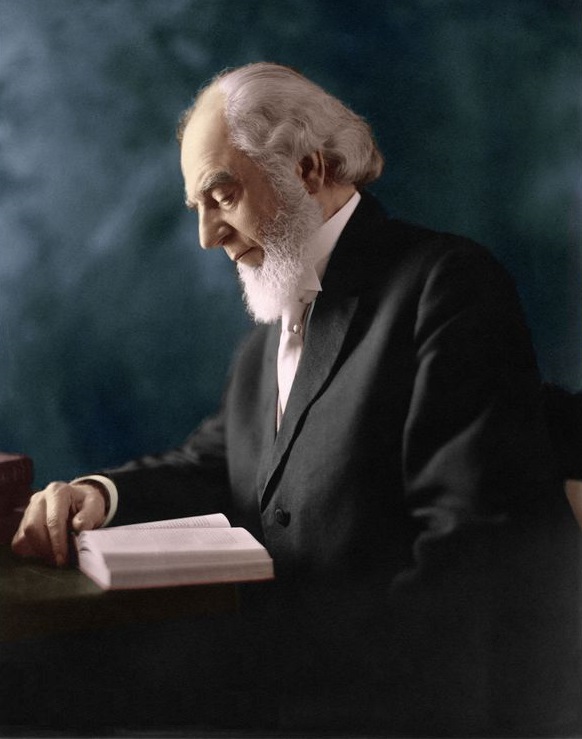
*Via Wikimedia Commons: [Russell Charles Taze 1911](https://commons.wikimedia.org/wiki/File:Russell_Charles_Taze_1911.jpg) by Watchtower, public domain.*
17 unchanged paragraphs
An article titled "Other Sheep Not of This Fold", reprinted in the Watch Tower reprint series (the reprint page shows no issue date), put it the same way: the other sheep were not then part of the flock, were not invited to the heavenly or "divine" nature, and would be invited to an earthly nature and "Paradise restored" during the reign of the Messiah.[5] Russell-era teaching on the earthly hope itself is covered in the entry Paradise earth.
An article titled "Other Sheep Not of This Fold", reprinted in the Watch Tower reprint series (the reprint page shows no issue date), put it the same way: the other sheep were not then part of the flock, were not invited to the heavenly or "divine" nature, and would be invited to an earthly nature and "Paradise restored" during the reign of the Messiah.[5] Russell-era teaching on the earthly hope itself is covered in the entry Paradise earth.
A religion scholar, writing in a 2007 conference paper, notes that Russell's followers saw themselves as anointed members of the 144,000 and that Russell, like other Adventists, spoke of the earthly class as lying outside his own community.[4] (Adventists are Christian groups that expect the return of Christ soon.) A 2001 Watchtower article adds that The Watch Tower of 15 October 1923 described the "sheep" of the parable as people of the nations who are inclined toward righteousness and look for a better time under Christ's reign.[6]
A religion scholar, writing in a 2007 conference paper, notes that Russell's followers saw themselves as anointed members of the 144,000 and that Russell, like other Adventists, spoke of the earthly class as lying outside his own community.[4] (Adventists are Christian groups that expect the return of Christ soon.) A 2001 Watchtower article adds that The Watch Tower of 15 October 1923 described the "sheep" of the parable as people of the nations who are inclined toward righteousness and look for a better time under Christ's reign.[6]
## Development in the early 1930s
## Development in the early 1930s
Witness accounts date the modern understanding of the other sheep to a series of publications between 1931 and 1935.[6] The book Vindication, Book One (1931) discussed Ezekiel chapter 9, and Vindication, Book Three (1932) used the non-Israelite Jehonadab, who joined King Jehu in his chariot, as a picture of people with upright hearts who were not anointed.[6] According to the 2001 Watchtower account, that book said Jehonadab foreshadowed a class of people then living who side with righteousness, whom God would preserve through [Armageddon](https://micwyn.com/t/3390/armageddon) and give everlasting life on earth.[6] In 1934 The Watchtower stated that Christians with an earthly hope should dedicate themselves to Jehovah and be baptized.[6]
Witness accounts date the modern understanding of the other sheep to a series of publications between 1931 and 1935.[6] The book Vindication, Book One (1931) discussed Ezekiel chapter 9, and Vindication, Book Three (1932) used the non-Israelite Jehonadab, who joined King Jehu in his chariot, as a picture of people with upright hearts who were not anointed.[6] According to the 2001 Watchtower account, that book said Jehonadab foreshadowed a class of people then living who side with righteousness, whom God would preserve through [Armageddon](https://micwyn.com/t/3390/armageddon) and give everlasting life on earth.[6] In 1934 The Watchtower stated that Christians with an earthly hope should dedicate themselves to Jehovah and be baptized.[6]
In 1935, at a convention in Washington, D.C., Joseph Rutherford, then president of the Watch Tower Society, presented the modern-day other sheep as identical with the "great crowd" of Revelation 7.[4][6][2] A 1984 Watchtower article says that the gathering of the other sheep belongs to the 20th century rather than the first, and that until the spring of 1935 the remaining anointed had concentrated on gathering the last of the 144,000.[2] The convention itself, and the people invited to it, are described in the entry [144,000](https://micwyn.com/t/3396/144-000).
In 1935, at a convention in Washington, D.C., Joseph Rutherford, then president of the Watch Tower Society, presented the modern-day other sheep as identical with the "great crowd" of Revelation 7.[4][6][2] A 1984 Watchtower article says that the gathering of the other sheep belongs to the 20th century rather than the first, and that until the spring of 1935 the remaining anointed had concentrated on gathering the last of the 144,000.[2] The convention itself, and the people invited to it, are described in the entry [144,000](https://micwyn.com/t/3396/144-000).
The same 1984 article set aside the 1905 timing: it placed the fulfilment of the sheep-and-goats parable in the "conclusion of the system of things" that Witnesses date from 1914, not in the thousand-year reign.[2] The 2007 scholarly paper reads the 1935 change as a shift in where the earthly class stood: where Russell had placed those who would inherit the earth outside his organization, Rutherford placed them inside it, so that everyone to be saved, with a heavenly or an earthly hope, was within the Witness organization.[4]
The same 1984 article set aside the 1905 timing: it placed the fulfilment of the sheep-and-goats parable in the "conclusion of the system of things" that Witnesses date from 1914, not in the thousand-year reign.[2] The 2007 scholarly paper reads the 1935 change as a shift in where the earthly class stood: where Russell had placed those who would inherit the earth outside his organization, Rutherford placed them inside it, so that everyone to be saved, with a heavenly or an earthly hope, was within the Witness organization.[4]
## "One flock, one shepherd"
## "One flock, one shepherd"
Jehovah's Witnesses teach that the anointed and the other sheep are one flock that follows Jesus as its single shepherd, and that the other sheep serve alongside the anointed rather than under them.[7] A January 2020 Watchtower study article applied Zechariah 8:23, in which "ten men" from the nations take hold of the robe of "a Jew", to the two groups: the "ten men" stand for those with an earthly hope, and the one "Jew" for the anointed as a whole.[7] The article said that those who are not anointed serve Jehovah together with the anointed but do not regard them as their leaders, because Jesus is the Leader, and that all must serve God together and be united.[7] How a person comes to be counted among the anointed, and how other Witnesses are told to treat them, is covered in the entry Anointed.
Jehovah's Witnesses teach that the anointed and the other sheep are one flock that follows Jesus as its single shepherd, and that the other sheep serve alongside the anointed rather than under them.[7] A January 2020 Watchtower study article applied Zechariah 8:23, in which "ten men" from the nations take hold of the robe of "a Jew", to the two groups: the "ten men" stand for those with an earthly hope, and the one "Jew" for the anointed as a whole.[7] The article said that those who are not anointed serve Jehovah together with the anointed but do not regard them as their leaders, because Jesus is the Leader, and that all must serve God together and be united.[7] How a person comes to be counted among the anointed, and how other Witnesses are told to treat them, is covered in the entry Anointed.
Witness publications also tie the other sheep's hope to how they treat the anointed. The Watchtower of 15 March 2012 said that the salvation of the other sheep depends on their active support of Christ's anointed "brothers".[3] A 2001 article described the anointed and "their companions, the other sheep" as carrying out the preaching and disciple-making work together.[6]
Witness publications also tie the other sheep's hope to how they treat the anointed. The Watchtower of 15 March 2012 said that the salvation of the other sheep depends on their active support of Christ's anointed "brothers".[3] A 2001 article described the anointed and "their companions, the other sheep" as carrying out the preaching and disciple-making work together.[6]
The share of the other sheep in running the organization has grown over time.[4] The 2007 conference paper describes how, under Nathan Knorr, who followed Rutherford after his death in 1942, the organization stressed the role of the great crowd; how restructuring from the 1970s to the 1990s gave the great crowd more power; and how, after a restructuring in 2000, the Society's president was no longer a member of the anointed class, while the Governing Body (the Witnesses' central governing council) was separated from the legal Board of Directors.[4] A February 2024 Watchtower study article taught that when the last of the anointed on earth are taken to heaven near the end of the great tribulation, the other sheep will not be left without care, and said that men from among the other sheep were already being trained to take the lead.[8]
The share of the other sheep in running the organization has grown over time.[4] The 2007 conference paper describes how, under Nathan Knorr, who followed Rutherford after his death in 1942, the organization stressed the role of the great crowd; how restructuring from the 1970s to the 1990s gave the great crowd more power; and how, after a restructuring in 2000, the Society's president was no longer a member of the anointed class, while the Governing Body (the Witnesses' central governing council) was separated from the legal Board of Directors.[4] A February 2024 Watchtower study article taught that when the last of the anointed on earth are taken to heaven near the end of the great tribulation, the other sheep will not be left without care, and said that men from among the other sheep were already being trained to take the lead.[8]
## Other readings of John 10:16
## Other readings of John 10:16
Many other Christian commentators take the "other sheep" of John 10:16 to mean Gentiles, non-Jews who would come to believe in Jesus.[9][10] Several older commentaries collected on the Bible Hub website read the verse this way: Ellicott's Commentary for English Readers says that among the Gentiles, outside the Jewish fold, Jesus already had sheep; the Cambridge Bible for Schools and Colleges says the verse means Gentiles, not Jews living in heathen lands; Meyer's New Testament Commentary speaks of heathen who have become believers; and the Expositor's Greek Testament identifies the other sheep as the Gentiles.[9] Barnes' Notes reads them more broadly as others who will become members of Christ's redeemed church.[9]
Many other Christian commentators take the "other sheep" of John 10:16 to mean Gentiles, non-Jews who would come to believe in Jesus.[9][10] Several older commentaries collected on the Bible Hub website read the verse this way: Ellicott's Commentary for English Readers says that among the Gentiles, outside the Jewish fold, Jesus already had sheep; the Cambridge Bible for Schools and Colleges says the verse means Gentiles, not Jews living in heathen lands; Meyer's New Testament Commentary speaks of heathen who have become believers; and the Expositor's Greek Testament identifies the other sheep as the Gentiles.[9] Barnes' Notes reads them more broadly as others who will become members of Christ's redeemed church.[9]
A 2014 article in Roczniki Teologiczne, a theology journal of the Catholic University of Lublin in Poland, reads the verse as describing two groups that together make one fold: disciples of Jewish origin, and the "other sheep", Christians of Gentile origin.[10] The article also reads the verse in an ecumenical light (that is, with a view to unity among the separate Christian churches), arguing that becoming one flock is a gradual process that depends on how believers hear the shepherd's voice.[10]
A 2014 article in Roczniki Teologiczne, a theology journal of the Catholic University of Lublin in Poland, reads the verse as describing two groups that together make one fold: disciples of Jewish origin, and the "other sheep", Christians of Gentile origin.[10] The article also reads the verse in an ecumenical light (that is, with a view to unity among the separate Christian churches), arguing that becoming one flock is a gradual process that depends on how believers hear the shepherd's voice.[10]
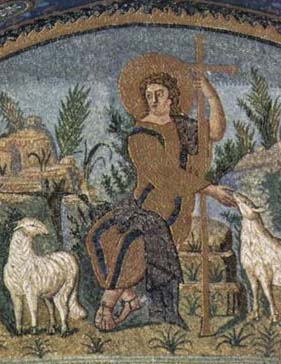

*Via Wikimedia Commons: [Good Shepherd Galla Placidia in Ravenna](https://commons.wikimedia.org/wiki/File:Good_Shepherd_Galla_Placidia_in_Ravenna.jpg), [CC BY-SA 3.0](http://creativecommons.org/licenses/by-sa/3.0/).*
*Via Wikimedia Commons: [Good Shepherd Galla Placidia in Ravenna](https://commons.wikimedia.org/wiki/File:Good_Shepherd_Galla_Placidia_in_Ravenna.jpg), [CC BY-SA 3.0](http://creativecommons.org/licenses/by-sa/3.0/).*
## Sources
## Sources
1. "Questions From Readers". The Watchtower, 15 April 1995, p. 31. Watch Tower Bible and Tract Society. https://wol.jw.org/en/wol/d/r1/lp-e/1995288
2. "The Recent Pen for 'Other Sheep'". The Watchtower, 15 February 1984, pp. 15-20. Watch Tower Bible and Tract Society. https://wol.jw.org/en/wol/d/r1/lp-e/1984124
3. "Rejoicing in Our Hope". The Watchtower (Study Edition), 15 March 2012. Watch Tower Bible and Tract Society. https://www.jw.org/en/library/magazines/w20120315/Rejoicing-in-Our-Hope/
4. George D. Chryssides. "Jehovah's Multinational Organization: Globalization, Theocracy and Jehovah's Witnesses". Paper for the CESNUR 2007 International Conference, Bordeaux, 7-9 June 2007. CESNUR. https://www.cesnur.org/2007/bord_chryssides.htm
5. "Other Sheep Not of This Fold". Zion's Watch Tower, reprint page R4784 (issue date not shown on the reprint page; accessed 25 November 2026). Reprinted by biblestudents.com. https://biblestudents.com/htdbv5/r4784.htm
6. "'Behold! The Great Crowd!'". The Watchtower (Study Edition), 15 May 2001. Watch Tower Bible and Tract Society. https://www.jw.org/en/library/magazines/w20010515/Behold-The-Great-Crowd/
7. "We Will Go With You". The Watchtower (Study Edition), January 2020, pp. 26-31. Watch Tower Bible and Tract Society. https://www.jw.org/en/library/magazines/watchtower-study-january-2020/we-will-go-with-you/
8. "'I Will Never Abandon You'". The Watchtower (Study Edition), February 2024, pp. 2-7. Watch Tower Bible and Tract Society. https://wol.jw.org/en/wol/d/r1/lp-e/2024280
9. "John 10:16" (commentary collection: Ellicott's Commentary for English Readers, Barnes' Notes, Meyer's NT Commentary, Expositor's Greek Testament, Cambridge Bible for Schools and Colleges). Bible Hub. No date shown; accessed 25 November 2026. https://biblehub.com/commentaries/john/10-16.htm
10. Tomasz Siemieniec. "'...There Will Be Only One Fold, One Shepherd'. Relecture of John 10,16 in an Ecumenical Perspective". Roczniki Teologiczne 61, no. 7 (2014), pp. 103-114. Towarzystwo Naukowe KUL and Katolicki Uniwersytet Lubelski Jana Pawła II. https://czasopisma.tnkul.pl/index.php/rt/article/view/3309
