Theodore John "Ted" Kaczynski (1942–2023) was an American former mathematics professor who in 1998 pleaded guilty to federal charges arising from a 17-year bombing campaign, known to investigators as UNABOM, that killed three people.[1][4][7]
Early life and education
Kaczynski was born on 22 May 1942 and grew up in a suburb of Chicago.[9] He skipped grades in school and entered Harvard University at the age of 16.[7][9] According to his official university biography, he received a bachelor's degree from Harvard in 1962 and a doctorate (PhD) from the University of Michigan in 1967, and he worked as a teaching fellow at Michigan from 1962 to 1965.[5]
Mathematics career at Berkeley
The University of California, Berkeley hired Kaczynski as an assistant professor of mathematics for the 1967–68 and 1968–69 academic years.[5] The university's 1968–69 catalog listed him to teach courses that included set theory, general topology and function spaces, and he was the author of six professional papers published between 1965 and 1969.[5] He resigned voluntarily, with effect from 30 June 1969.[5] Associated Press reporting carried by NPR in 2023 said that he found the teaching work difficult and left abruptly.[7]
Life near Lincoln, Montana
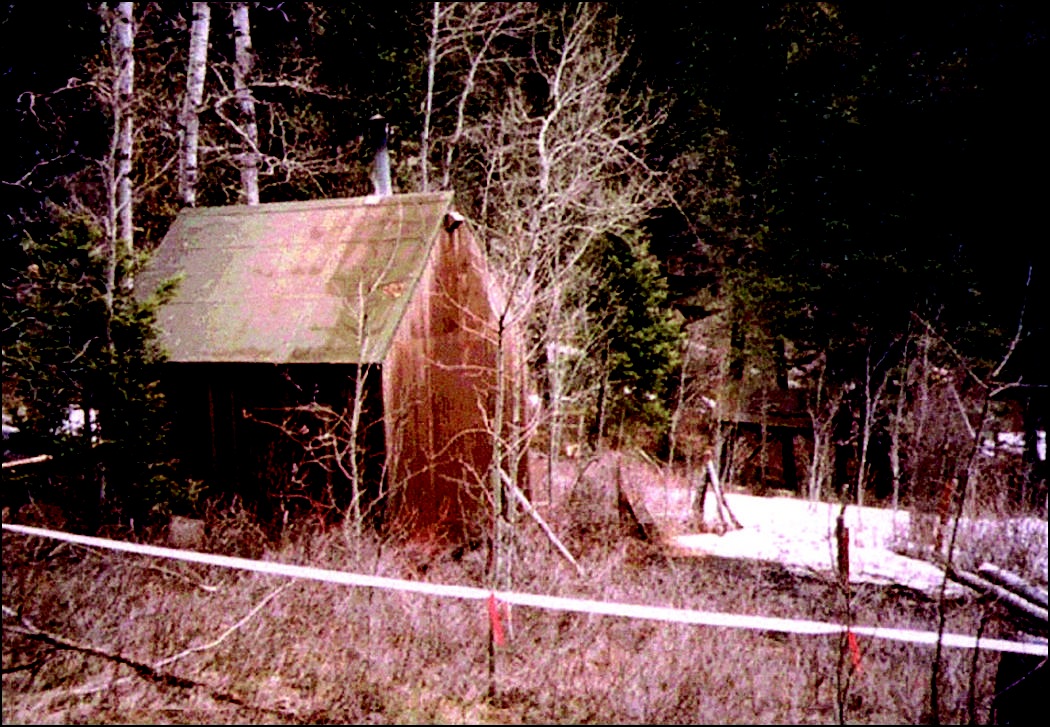
In 1971 Kaczynski built a cabin about four miles outside the small town of Lincoln, Montana.[7][9] The cabin measured about 10 by 14 feet, was built of plywood and tarpaper, and had no electricity, plumbing or heating.[7] The Associated Press described him as having lived there as a recluse.[8]
The cabin from near Lincoln, Montana, in which Ted Kaczynski lived before his 1996 arrest.
Via Wikimedia Commons: Kaczynski cabin by Federal Bureau of Investigation, public domain.
The bombing campaign
Beginning in 1978 and over the following 17 years, Kaczynski mailed or hand-delivered a series of homemade bombs, according to the FBI.[1] He later admitted to 16 bombings between 1978 and 1995.[4][7] The attacks killed three people.[1][7] Sources differ slightly on the number injured: the FBI gives 24, while Associated Press reporting in 2023 gave 23.[1][7][8] The FBI has said that the targets appeared to have been chosen at random, which made the case harder to solve.[1]
The early attacks were aimed mainly at people and places connected with universities and airlines.[1][2] In November 1979 a device was found aboard an American Airlines flight from Chicago to Washington, D.C.; the plane landed safely, and 12 passengers were treated for smoke inhalation.[2] In 1980 an airline executive was injured by a package sent to him.[2] Others injured over the following years included students, faculty members and staff at several universities, a man in a Salt Lake City parking lot in 1987, and, in June 1993, a geneticist in Tiburon, California, and a computer scientist at Yale University.[2]
The three people killed, as the Associated Press and the Legal Information Institute's chronology of the case name them, were:
Hugh Scrutton, the owner of a computer rental store, killed in a parking lot in Sacramento, California, on 11 December 1985.[2][7]
Thomas Mosser, an advertising executive, killed at his home in North Caldwell, New Jersey, on 10 December 1994.[2][7]
Gilbert Murray, president of the California Forestry Association, described by the Associated Press as a timber industry lobbyist, killed in Sacramento on 24 April 1995.[2][7][9]
The UNABOM investigation
In 1979 the FBI formed a task force with the Bureau of Alcohol, Tobacco and Firearms (ATF) and the U.S. Postal Inspection Service, the law-enforcement arm of the U.S. Postal Service.[1] The case was code-named UNABOM, from "university and airline bombing", the targets of the early attacks.[1] The task force grew to more than 150 full-time investigators, analysts and other staff.[1]
According to the FBI, forensic work produced little, because the bomber took care to leave almost no physical evidence.[1] Investigators did conclude, correctly, that the person responsible had grown up in Chicago and later lived in the Salt Lake City and San Francisco areas.[1]
The manifesto
In June 1995 The New York Times and The Washington Post each received a manuscript of about 35,000 words from the bomber.[2] The bomber demanded that one of the two papers print it and threatened to keep sending bombs if it was not published by 24 September 1995.[6] After debate about whether publishing would amount to giving in to a terrorist, FBI Director Louis Freeh and Attorney General Janet Reno approved the task force's recommendation that it be published, citing public safety.[1][6] The Washington Post printed the full text on 19 September 1995 as a separate section, and the two newspapers shared the cost equally.[2][6] The decision was debated among journalists at the time, including over whether it might encourage imitators.[6]
The document was titled "Industrial Society and Its Future".[6][7] The FBI describes it as an essay meant to explain the bomber's motives and his views of the ills of modern society, and Associated Press reporting summarized it as claiming that modern society and technology were producing a sense of powerlessness and alienation.[1][7]
Identification and arrest
Publication brought thousands of suggestions from the public about who the bomber might be.[1] Kaczynski's brother, David Kaczynski, and David's wife, Linda Patrik, recognized similarities between the published text and his writing and contacted the FBI.[7][8] David Kaczynski gave investigators letters and documents his brother had written; analysis of the language led investigators to conclude that the same person had almost certainly written those papers and the manifesto.[1] That analysis, together with facts about the bombings and about Kaczynski's life, supported a search warrant.[1]
Federal agents arrested Kaczynski at his cabin near Lincoln on 3 April 1996.[1][2] In the search that followed, investigators recovered a large amount of evidence, including some 40,000 handwritten journal pages.[1]
Prosecution, plea and sentence
On 18 June 1996 a federal grand jury in the Eastern District of California returned a 10-count indictment against Kaczynski, and on 1 October 1996 a federal grand jury in New Jersey returned a further three-count indictment.[4] (An indictment is a formal charge brought by a grand jury.) The federal case in Sacramento charged him over four of the bombings, although the two sides agreed that the jury could hear evidence about all 16.[3] A jury was selected in December 1997.[3]
Before trial, Kaczynski strongly objected to his lawyers' plan to present evidence about his mental state, and he asked to dismiss them and represent himself; the trial judge refused that request.[3][4] According to the federal appeals court's later opinion, defense experts had diagnosed him with paranoid schizophrenia, a characterization he objected to, and a court-appointed psychiatrist found him competent to stand trial.[4]
On 22 January 1998 Kaczynski pleaded guilty to all counts in both indictments; in return, the government withdrew its notices that it would seek the death penalty, and he gave up his right to appeal.[4] On 4 May 1998 the court sentenced him to four consecutive life sentences plus 30 years, without the possibility of parole, and ordered him to pay $15,026,000 in restitution (compensation to victims).[3][4][7] CBC News, in its report of his death, gave the sentence as eight life terms; the figure given here is the one in the federal appeals court's opinion.[4][9]
In April 1999 Kaczynski asked the trial court to set aside his conviction, arguing that his guilty plea had not been voluntary because he had been denied the chance to represent himself and because of his lawyers' mental-health defense.[4] The trial court denied the request, and in 2001 the U.S. Court of Appeals for the Ninth Circuit upheld that decision, holding that the plea was voluntary; one of the three judges dissented.[4]
Imprisonment and death
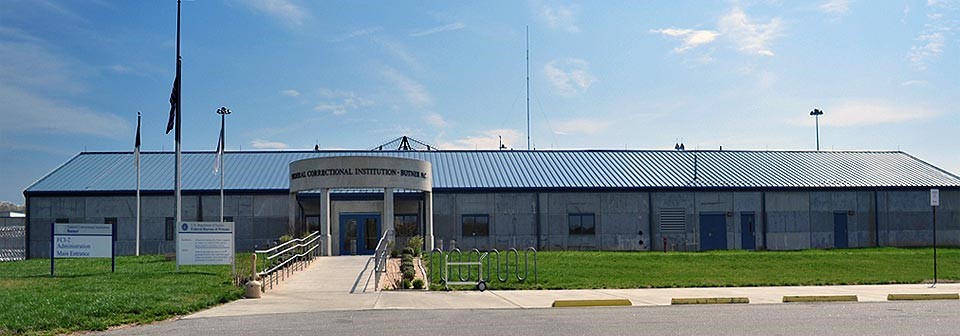
From his sentencing in May 1998, Kaczynski was held at the federal "supermax" (maximum-security) prison in Florence, Colorado.[1][7] In 2021 he was transferred to the Federal Medical Center in Butner, North Carolina, a federal prison medical facility.[8]
On 10 June 2023 Kaczynski, then 81, was found unresponsive in his cell at Butner early in the morning and was pronounced dead at about 8 a.m., a Bureau of Prisons spokesperson told the Associated Press.[7] The bureau did not give a cause of death at the time.[7] The Associated Press, citing four people familiar with the matter, reported the next day that he had died by suicide, and that he had late-stage cancer.[8] An autopsy report from North Carolina's Office of the Chief Medical Examiner, obtained by NBC News through a Freedom of Information Act request (a U.S. law that gives the public access to many government records) and reported in April 2024, gave the manner of death as suicide.[10]
Later attention
At the time of his death, the Associated Press reported that a domestic terrorism researcher described Kaczynski as having become an iconic figure for some people on both the far right and the far left.[8]
Buildings of the federal prison complex at Butner, North Carolina, where Kaczynski died in 2023.
Via Wikimedia Commons: FCI Butner Medium by United States Bureau of Prisons, public domain.
Michael Peil, Legal Information Institute. "A Chronology of the UNABOM Investigation" (UNABOM history). Cornell Law School, last edited 15 December 1997. law.cornell.edu/background/unabom/history.html
Michael Peil, Legal Information Institute. "United States v. Kaczynski: A summary of the legal proceedings." Cornell Law School, last edited 23 January 1998. law.cornell.edu/background/unabom/summary.html
Chris Iorfida, CBC News (with files from the Associated Press). "Notorious, vengeful, reclusive 'Unabomber' Theodore (Ted) Kaczynski dead at 81." CBC. No date shown; accessed 25 November 2026. cbc.ca/1.6872512
Erik Ortiz and Michael Kosnar, NBC News. "'Unabomber' Ted Kaczynski had late-stage rectal cancer and was 'depressed' before prison suicide, autopsy says." NBC News, republished by Yahoo News, updated 17 April 2024. yahoo.com/news/unabomber-ted-kaczynski-had-stage-110000657.html