Compare versions
Version 1 → Version 3 (current). Removed · Added. This shows the entry's text as it is written, including its formatting marks.
Version 1 · Version 3 (current) · Version history
Side by side · Together
In the teaching of Jehovah's Witnesses, a "soul" is a whole living person or animal, or the life that creature has, not an invisible part of a human that lives on after the body dies.[1][2]
## The teaching
[Jehovah's Witnesses](https://micwyn.com/t/1668/jehovah-s-witnesses) teach that the word "soul" in the Bible does not name a separate, immortal element inside a human being. Their reference work *Insight on the Scriptures* (1988) states that the Hebrew word *nephesh* and the Greek word *psyche*, both usually translated "soul", show a soul to be a person, an animal, or the life that a person or an animal has.[1] As of November 2026, the Witnesses' official website, jw.org, explains the two words as meaning "a creature that breathes" or "a living being".[2]
A central passage in their teaching is Genesis 2:7, which describes God forming the first man from dust and the man becoming "a living soul". Witness publications state that Adam was not given a soul but became one, so that a human being is a soul rather than having a soul.[2] *Insight on the Scriptures* adds that the Bible uses *nephesh* and *psyche* for animals as well as for humans, and that what sets humans apart from animals is not that they alone have souls but that humans alone were created in God's image.[1]
Witnesses teach that the soul can die. The jw.org article "What Is the Soul?" answers the question of whether the soul is immortal with "No, the soul can die", and quotes Ezekiel 18:4, "The soul that sinneth, it shall die", in an older English translation.[2] *Insight on the Scriptures* lists texts that, in its words, describe the soul "as mortal and subject to death", and concludes that *psyche* "does not refer to something immortal or indestructible".[1] Because "soul" can also mean the life a creature has, Witness publications treat many Bible phrases about a soul "going out" or being lost as statements about a person's life ending.[1][2]
The same reference work discusses Matthew 10:28, a saying of Jesus about those who "kill the body but cannot kill the soul". *Insight on the Scriptures* reads it as meaning that humans can kill the body but cannot end a person's life "for all time", since God can restore a faithful person to life by resurrection; it also notes that the same verse speaks of God destroying "both soul and body in Gehenna".[1] How Witnesses understand Gehenna, Sheol and Hades is covered in the entry Hell, Hades, Sheol and Gehenna (Jehovah's Witnesses), and their teaching on how and when the dead are raised is covered in Resurrection (Jehovah's Witnesses) (see also [Paradise earth](https://micwyn.com/t/3400/paradise-earth)).
## Soul and spirit
Witness publications draw a line between "soul" and "spirit". The Hebrew *ruach* and the Greek *pneuma*, usually translated "spirit", are explained as having several senses, one of which is the "life-force" active in all living creatures, the force that keeps a body alive.[3] *Insight on the Scriptures* describes this life-force as impersonal and compares it to electricity, which powers many different machines without taking on the character of any of them.[3]
When a person dies, Witnesses teach, the life-force "returns to the true God who gave it", in the words of Ecclesiastes 12:7 as their reference work quotes it, but this does not mean that the person goes to be with God.[3] The same article states that "the personality of the dead individual is not perpetuated in the life-force", so in Witness teaching nothing conscious of the person continues after death.[3]
## Where the immortal-soul idea came from, in Witness publications
Witness publications state that the belief in an immortal soul entered Christianity from ancient Greek philosophy rather than from the Hebrew or Greek Scriptures.[1][2] To support this, the jw.org article quotes the *Encyclopædia Britannica*, and *Insight on the Scriptures* discusses Plato's dialogue *Phaedo* and quotes Greek dictionaries and a scholarly journal.[1][2] The *New Catholic Encyclopedia*, a Catholic reference work, also states that the Hebrew word *nephesh* "never means soul as distinct from the body or the individual person" and that the Old Testament has no division of a human into body and soul.[7]
## History
The teaching that humans are not immortal by nature predates Jehovah's Witnesses. It was held in the 19th century by a number of American Protestants who taught "conditional immortality", the idea that immortality is not part of human nature but a gift God gives only on certain conditions, so that the wicked do not live forever in any state.[4][6]
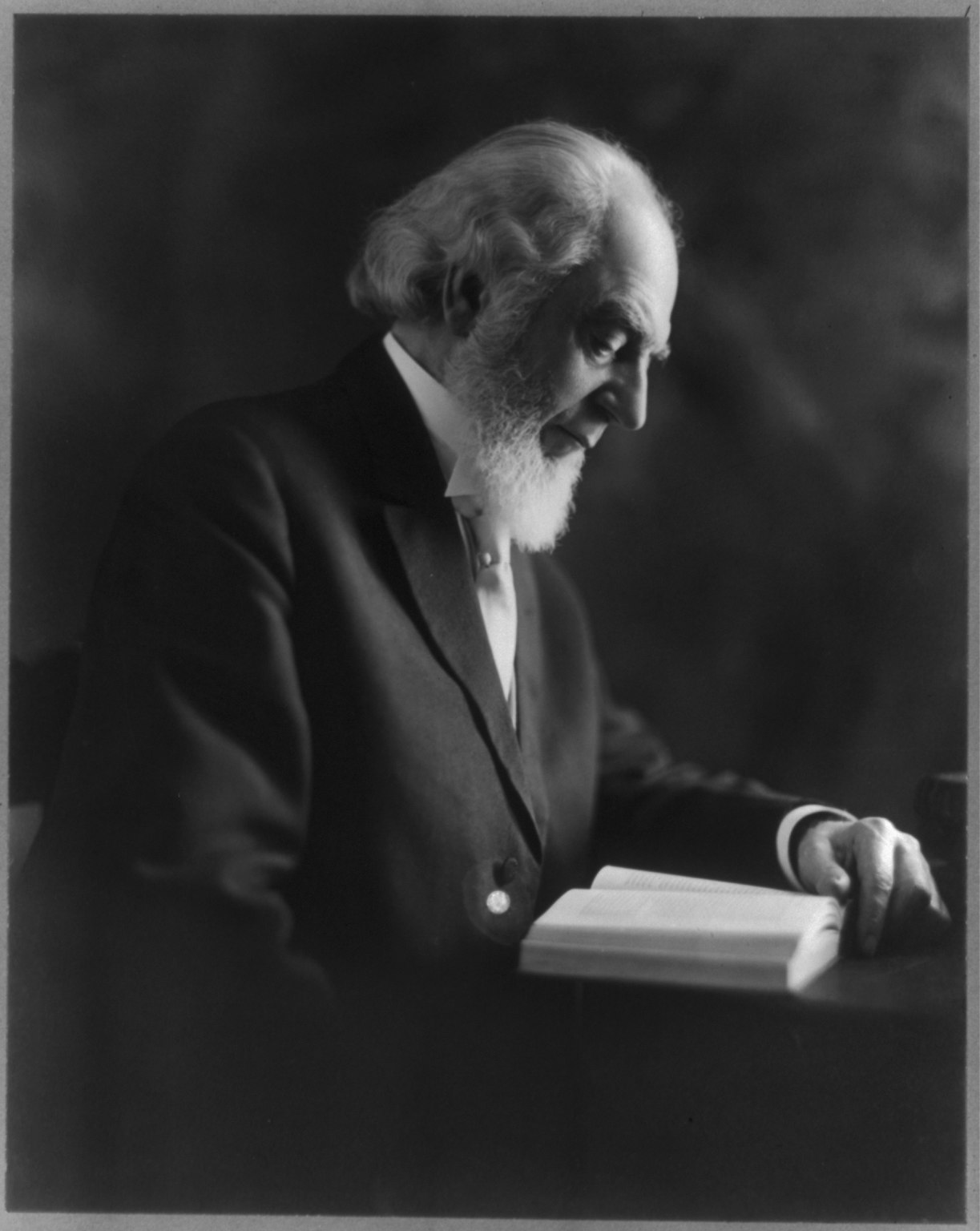
*Via Wikimedia Commons: [Charles Taze Russell, 1852-1916 LCCN2002697640](https://commons.wikimedia.org/wiki/File:Charles_Taze_Russell,_1852-1916_LCCN2002697640.jpg) by Miscellaneous Items in High Demand, PPOC, Library of Congres, public domain.*
One of these was Henry Grew (1781–1862), an English-born Baptist minister who served as a pastor in Hartford, Connecticut, from 1807 to 1811 and later settled in Philadelphia.[6] The Seventh-day Adventist historian LeRoy Edwin Froom, writing in 1965, records that Grew came to accept conditional immortality and set out his views in tracts including *The Intermediate State* (about 1835).[6]
*Via Wikimedia Commons: [GeorgeStorrs](https://commons.wikimedia.org/wiki/File:GeorgeStorrs.jpg) by Unknown author Unknown author, public domain.*
In 1837 a pamphlet by Grew reached George Storrs (1796–1879), then a Methodist preacher.[5][4] According to the *Encyclopedia of Seventh-day Adventists*, Storrs left the Methodist church in 1840, published his *Six Sermons* on the subject in 1842, printing 15,000 copies that December, and in 1843 began the magazine *Bible Examiner*.[5] A Watchtower article of 15 August 2006 summarizes Storrs's reasoning: if immortality is a reward for the faithful, the soul of the wicked cannot be immortal.[4] The Adventist encyclopedia also credits Storrs's views on conditional immortality with steering early Seventh-day Adventism toward one of its key doctrines.[5]
Charles Taze Russell, whose Bible Student movement was the forerunner of Jehovah's Witnesses, came into contact with Storrs.[4][6] The 2006 Watchtower article states that Russell's first article on a Bible subject was published in 1876 in Storrs's *Bible Examiner*, and quotes Russell as saying that Storrs gave him "much assistance, by both word and pen".[4] Froom's history states that Russell learned the teaching of conditional immortality from Storrs, after earlier contact with an Advent Christian preacher, Jonas Wendell, and concludes that among Jehovah's Witnesses this teaching "was derived from the Advent Christian group".[6] After Russell's death, the larger group of Bible Students, led by Joseph Rutherford, took the name Jehovah's Witnesses in 1931.[6]
The teaching that the soul is the living creature itself and is mortal appears in the same terms in the 1988 *Insight on the Scriptures* and in the jw.org article "What Is the Soul?" as it read in November 2026.[1][2]
## Comparison with other churches
The Catholic Church teaches that the soul is immortal. The *Catechism of the Catholic Church* states that every spiritual soul is created directly by God, not produced by the parents, and that it does not perish when it separates from the body at death but will be reunited with the body at the final resurrection.[8] The Catechism also acknowledges that in the Bible "soul" often refers to human life or the entire human person, while teaching that the word also names the innermost spiritual part of a human being; it describes the soul as the "form" of the body, so that body and soul make up a single nature.[8]
The *New Catholic Encyclopedia* also describes a development within the Bible: while saying the Old Testament has no division of body and soul, it states that in the New Testament the Greek *psyche*, "through Hellenistic influence", was set against the body and considered immortal.[7] Witness publications, in contrast, read *psyche* in the New Testament in the same sense as *nephesh*.[1]
Some other Christian groups also reject an immortal soul. The Seventh-day Adventist Church's Fundamental Belief 26, "Death and Resurrection", states that God "alone is immortal" and that until Christ's return "death is an unconscious state for all people".[9] Adventists hold that the righteous dead will be raised at Christ's return and the unrighteous a thousand years later.[9] The Christadelphians' Birmingham Amended Statement of Faith describes the first man as created "a living soul, or natural body of life", and lists among doctrines to be rejected "That man has an immortal soul" and "That man consciously exists in death".[10] Froom's history also identifies the Advent Christians as holders of conditional immortality and as the group from which Russell's followers took it.[6]
## Sources
1. "Soul." *Insight on the Scriptures*, Volume 2, pp. 1004–1007. Watchtower Bible and Tract Society of New York, 1988. Online at jw.org, accessed 25 November 2026. https://www.jw.org/en/library/books/Insight-on-the-Scriptures/Soul/
2. "What Is the Soul?" Bible Questions Answered. Watch Tower Bible and Tract Society of Pennsylvania, jw.org. No date shown; accessed 25 November 2026. https://www.jw.org/en/bible-teachings/questions/what-is-a-soul/
3. "Spirit." *Insight on the Scriptures*, Volume 2, pp. 1017–1027. Watchtower Bible and Tract Society of New York, 1988. Online at jw.org, accessed 25 November 2026. https://www.jw.org/en/library/books/Insight-on-the-Scriptures/Spirit/
4. "Let Us Compare Scripture With Scripture." *The Watchtower* (study edition), 15 August 2006, pp. 12–15. Watch Tower Bible and Tract Society. https://www.jw.org/en/library/magazines/w20060815/compare-scripture-with-scripture/
5. Jonathan Gomide. "Storrs, George (1796–1879)." *Encyclopedia of Seventh-day Adventists*, encyclopedia.adventist.org. No date shown; accessed 25 November 2026. https://encyclopedia.adventist.org/assets/pdf/article-DA8L.pdf
6. LeRoy Edwin Froom. *The Conditionalist Faith of Our Fathers*, Volume 2, pp. 300–301 and 664–666. Review and Herald Publishing Association, 1965. Online at EGW Writings, accessed 25 November 2026. https://m.egwwritings.org/en/book/955.1908 and https://m.egwwritings.org/en/book/955.4548
7. W. E. Lynch. "Soul (in the Bible)." *New Catholic Encyclopedia*, via Encyclopedia.com. No date shown; accessed 25 November 2026. https://encyclopedia.com/religion/encyclopedias-almanacs-transcripts-and-maps/soul-bible
8. *Catechism of the Catholic Church*, paragraphs 362–366. United States Conference of Catholic Bishops online edition. No date shown; accessed 25 November 2026. https://usccb.org/sites/default/files/flipbooks/catechism/95
9. "Death and Resurrection" (Fundamental Belief 26). Seventh-day Adventist Church, adventist.org. No date shown; accessed 25 November 2026. https://www.adventist.org/death-and-resurrection/
10. *A Statement of the Doctrines Forming the Christadelphian Basis of Fellowship* (Birmingham Amended Statement of Faith), clauses IV and V of "Truth to be Received" and 7 and 8 of "Doctrines to be Rejected". Posted by christadelphianvideo.org. No date shown; accessed 25 November 2026. https://christadelphianvideo.org/wp-content/uploads/2017/02/BASF.pdf
