Compare versions
Version 1 → Version 5 (current). Removed · Added. This shows the entry's text as it is written, including its formatting marks.
Version 1 · Version 5 (current) · Version history
Side by side · Together
Apocrypha is the name given to religious writings that stand close to the Bible but outside a given church's or community's list of Scripture, and which books it covers depends on who is using the word.
This entry describes the term and the history of the writings. It does not argue which list of books is right.
## The word
"Apocrypha" comes from the Greek apokryphos, "hidden", and is a plural; a single work is sometimes called an apocryphon.[1] The Catholic Encyclopedia of 1907 suggests that the word at first carried no criticism, meaning a writing with a claim to sacred origin that was thought to have been hidden for generations, and it points to the book called 4 Esdras, in which some books are published openly and others reserved for the wise.[1] Some early Christian writers came to use it to mean "not canonical", that is, outside the canon, the accepted list of sacred books.[1] Athanasius, bishop of Alexandria, used it sharply in a festal letter, calling apocryphal writings an invention of heretics.[2]
## The disputed Old Testament books
The best-known dispute concerns books that circulated with the Greek translation of the Jewish Scriptures, the Septuagint, among them Tobit, Judith, the Wisdom of Solomon, Sirach (also called Ecclesiasticus), Baruch and the books of Maccabees.[3][4] Micwyn has entries on [Tobit](https://micwyn.com/t/3476/book-of-tobit) and [Sirach](https://micwyn.com/t/3477/sirach).
Ancient writers did not all treat them alike. Athanasius listed the Wisdom of Solomon, Sirach, Esther, Judith and Tobit, with two early Christian works, as books outside the canon that were nevertheless appointed to be read by newcomers seeking instruction; he kept them distinct from the writings he called apocryphal.[2] Jerome, who translated Scripture into Latin, wrote that whatever was not on the Hebrew list he gave must be placed among the apocryphal writings, and named Wisdom, Sirach, Judith and Tobit as not in the canon.[5]
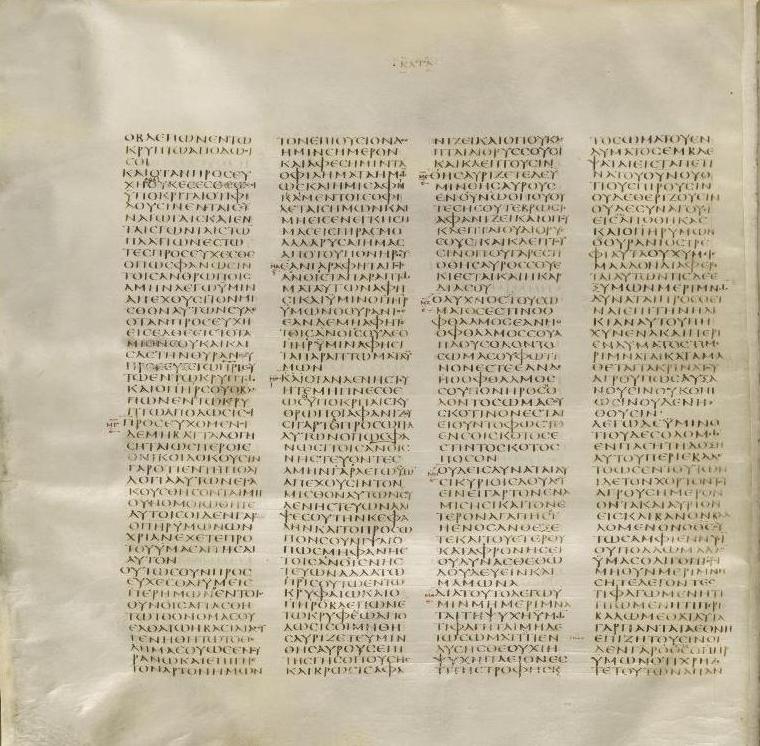
*Via Wikimedia Commons: [Codex Sinaiticus Matthew 6,4-32](https://commons.wikimedia.org/wiki/File:Codex_Sinaiticus_Matthew_6,4-32.JPG) by Unknown author Unknown author, public domain.*
## How churches differ
**Roman Catholic Church.** The Council of Trent, in a decree of 8 April 1546, listed the books the church receives as sacred, including Tobit, Judith, Wisdom, Ecclesiasticus, Jeremiah with Baruch, and two books of Maccabees, and pronounced an anathema, a formal condemnation, on those who would not accept them.[3] Catholics call the disputed books deuterocanonical, meaning of a "second canon", and regard them as fully part of Scripture; they use "apocrypha" for other works.[1][3]
**Orthodox churches.** According to OrthodoxWiki, a community-written reference, the Eastern church used the Septuagint but long had no binding decision about these books.[4] The Synod of Jerusalem of 1672 decreed a canon similar to Trent's.[4] Because that was a regional council, its decree was not binding on all Orthodox churches, though Greek Orthodox editions of the Bible include the books it chose.[4] The Greek tradition also commonly includes Psalm 151, and further books of Maccabees and Esdras.[4]
**Church of England.** The sixth of the Thirty-Nine Articles calls them "the other Books" and says that, following Jerome, the church reads them "for example of life and instruction of manners; but yet doth it not apply them to establish any doctrine".[6]
**Reformed churches.** The Westminster Confession of Faith states that "the books commonly called Apocrypha, not being of divine inspiration, are no part of the Canon of the Scripture", and are to be used only as other human writings.[7]
The Catholic Encyclopedia, writing from the Catholic side, explains that the Protestant Reformers followed Jerome's Old Testament list and so applied the name Apocrypha to the books in the Catholic canon that went beyond it.[1]
## Other apocryphal writings
The word is also used much more widely, for a large body of Jewish and Christian works that are not in the churches' usual Bibles. Many are written in the name of a great figure of the past; the Catholic Encyclopedia notes that this practice was common among Jews in the two centuries before Christ and for some time afterwards.[1] Such works are often called pseudepigrapha, "writings under a false name". Among the Jewish examples are the books of Enoch, the Book of Jubilees, the Assumption of Moses, 4 Esdras and the Apocalypse of Baruch, many of them apocalypses, books presenting visions of the unseen world and the end of the age.[1] Usage differs here too: a work that Protestants file under pseudepigrapha, Catholics have traditionally called apocryphal.[1]
Christian works about Jesus and the apostles are described in the entry on [New Testament apocrypha](https://micwyn.com/t/3481/new-testament-apocrypha). Micwyn also has entries on the [Gospel of Thomas](https://micwyn.com/t/3531/gospel-of-thomas), the [Infancy Gospel of Thomas](https://micwyn.com/t/3409/infancy-gospel-of-thomas), the [Gospel of Mary](https://micwyn.com/t/3478/gospel-of-mary) and the [Gospel of Judas](https://micwyn.com/t/3480/gospel-of-judas).
## Read it
Free to read in the Micwyn Library with a free account:
- W. O. E. Oesterley, [The books of the Apocrypha](https://micwyn.com/read/75434) (1914), a study of these writings
- [The book of Enoch](https://micwyn.com/read/77935), translated by R. H. Charles
- [The book of Enoch the Prophet](https://micwyn.com/read/77815), translated by Richard Laurence
## Sources
1. George J. Reid. "Apocrypha". The Catholic Encyclopedia, vol. 1 (1907). New Advent; accessed 26 November 2026. https://www.newadvent.org/cathen/01601a.htm
2. Athanasius. Letter 39 (festal letter). New Advent, Church Fathers; accessed 26 November 2026. https://www.newadvent.org/fathers/2806039.htm
3. Council of Trent, Fourth Session, 8 April 1546. Papal Encyclicals Online; accessed 26 November 2026. https://www.papalencyclicals.net/councils/trent/fourth-session.htm
4. "Old Testament Canon". OrthodoxWiki; accessed 26 November 2026. https://en.orthodoxwiki.org/Old_Testament_Canon
5. Jerome. Preface to the Books of Samuel and Kings. Christian Classics Ethereal Library (Nicene and Post-Nicene Fathers); accessed 26 November 2026. https://www.ccel.org/ccel/schaff/npnf206.vii.iii.iv.html
6. "The Thirty-Nine Articles", Article 6. Anglicans Online; accessed 26 November 2026. http://anglicansonline.org/basics/thirty-nine_articles.html
7. Westminster Confession of Faith, chapter 1. A Puritan's Mind; accessed 26 November 2026. https://www.apuritansmind.com/westminster-standards/chapter-1/
