Compare versions
Version 11 → Version 17 (current). Removed · Added. This shows the entry's text as it is written, including its formatting marks.
Version 11 · Version 17 (current) · Version history
Side by side · Together
Version 11Version 17 (current)
10 unchanged paragraphs
The United States of America is a federal republic of 50 states and a federal district, the District of Columbia, whose capital is Washington.[2]
The United States of America is a federal republic of 50 states and a federal district, the District of Columbia, whose capital is Washington.[2]
Developing story. This entry is updated as events change; every changing fact is dated.
Developing story. This entry is updated as events change; every changing fact is dated.
## At a glance
## At a glance
- **Government:** federal republic with a president, a two-chamber Congress and a Supreme Court.[3]
- **Capital:** Washington, in the District of Columbia.
- **States:** 50, plus the District of Columbia; Puerto Rico and several other island areas are also under United States rule.[2]
- **Area:** 3,796,742 square miles (9,833,517 square kilometres), land and water, for the states and District.[2]
- **Population:** about 341.8 million residents, estimate for 1 July 2025.[1]
- **Independence declared:** 4 July 1776.[4]
- **Constitution drafted:** 1787.[6]
- **President:** [Donald Trump](https://micwyn.com/t/3542/donald-trump), as of November 2026.[31]
## Land and people
## Land and people
The area figure above includes inland, coastal, Great Lakes and territorial water; land alone accounts for about 3.53 million square miles.[2]
The area figure above includes inland, coastal, Great Lakes and territorial water; land alone accounts for about 3.53 million square miles.[2]
The Census Bureau estimated that the resident population grew by 1.8 million, or 0.5 per cent, in the year to 1 July 2025.[1] It said growth had slowed significantly, largely because net international migration fell from 2.7 million to 1.3 million.[1] All four census regions grew, and the Midwest was the only region where every state gained people. South Carolina grew fastest of any state, by 1.5 per cent.[1]
The Census Bureau estimated that the resident population grew by 1.8 million, or 0.5 per cent, in the year to 1 July 2025.[1] It said growth had slowed significantly, largely because net international migration fell from 2.7 million to 1.3 million.[1] All four census regions grew, and the Midwest was the only region where every state gained people. South Carolina grew fastest of any state, by 1.5 per cent.[1]
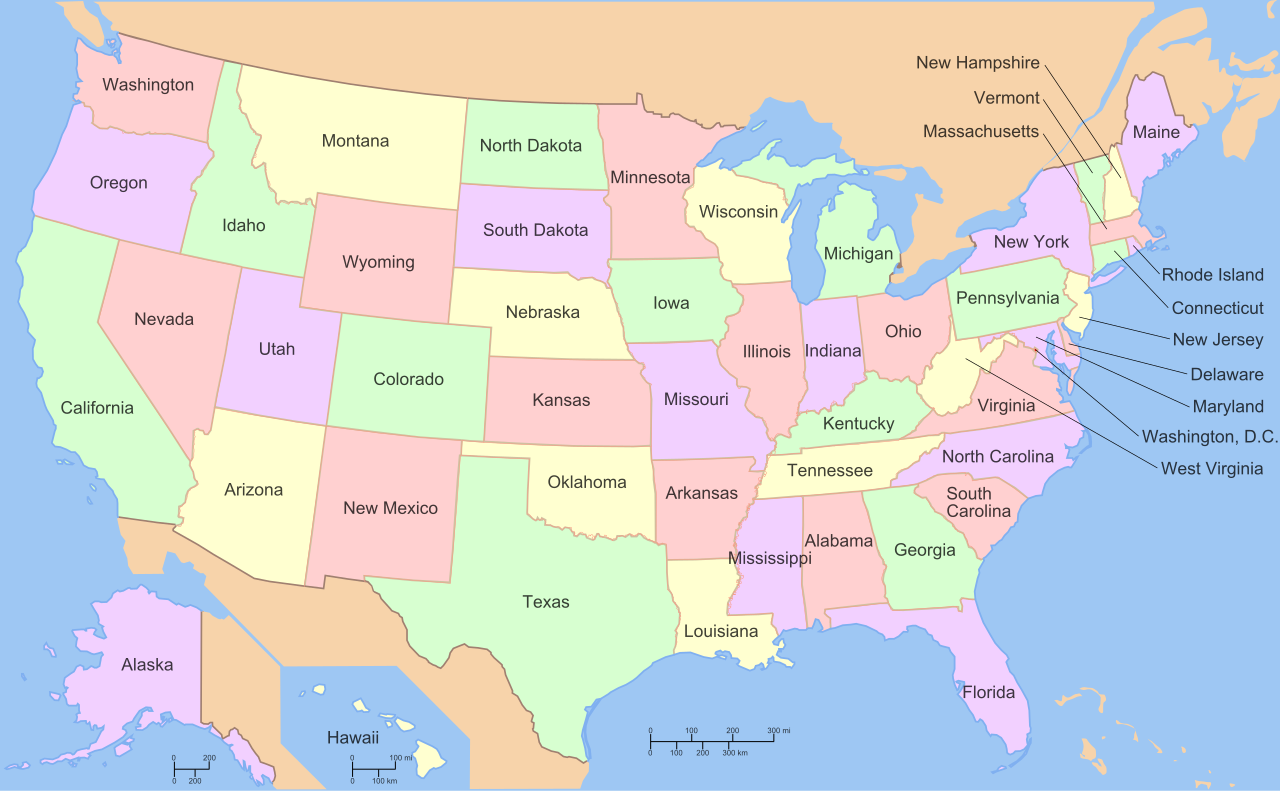

*Via Wikimedia Commons: [Map of USA with state names 2](https://commons.wikimedia.org/wiki/File:Map_of_USA_with_state_names_2.svg) by The original was edited by User:Andrew c to include Nova Sco, [CC BY-SA 3.0](http://creativecommons.org/licenses/by-sa/3.0/).*
*Via Wikimedia Commons: [Map of USA with state names 2](https://commons.wikimedia.org/wiki/File:Map_of_USA_with_state_names_2.svg) by The original was edited by User:Andrew c to include Nova Sco, [CC BY-SA 3.0](http://creativecommons.org/licenses/by-sa/3.0/).*
## Geography
## Geography
### Regions, coasts and lakes
Geologists divide the 48 adjoining states into physiographic provinces, regions that share landforms and geological history.[44] The shoreline is about 95,471 miles (153,646 kilometres) long by the National Oceanic and Atmospheric Administration's figure, which notes that the length varies with how a shoreline is defined.[45] The Census Bureau's area figures include about 60,000 square miles of Great Lakes water, along with inland, coastal and territorial water.[2]
### Heights and depths
### Heights and depths
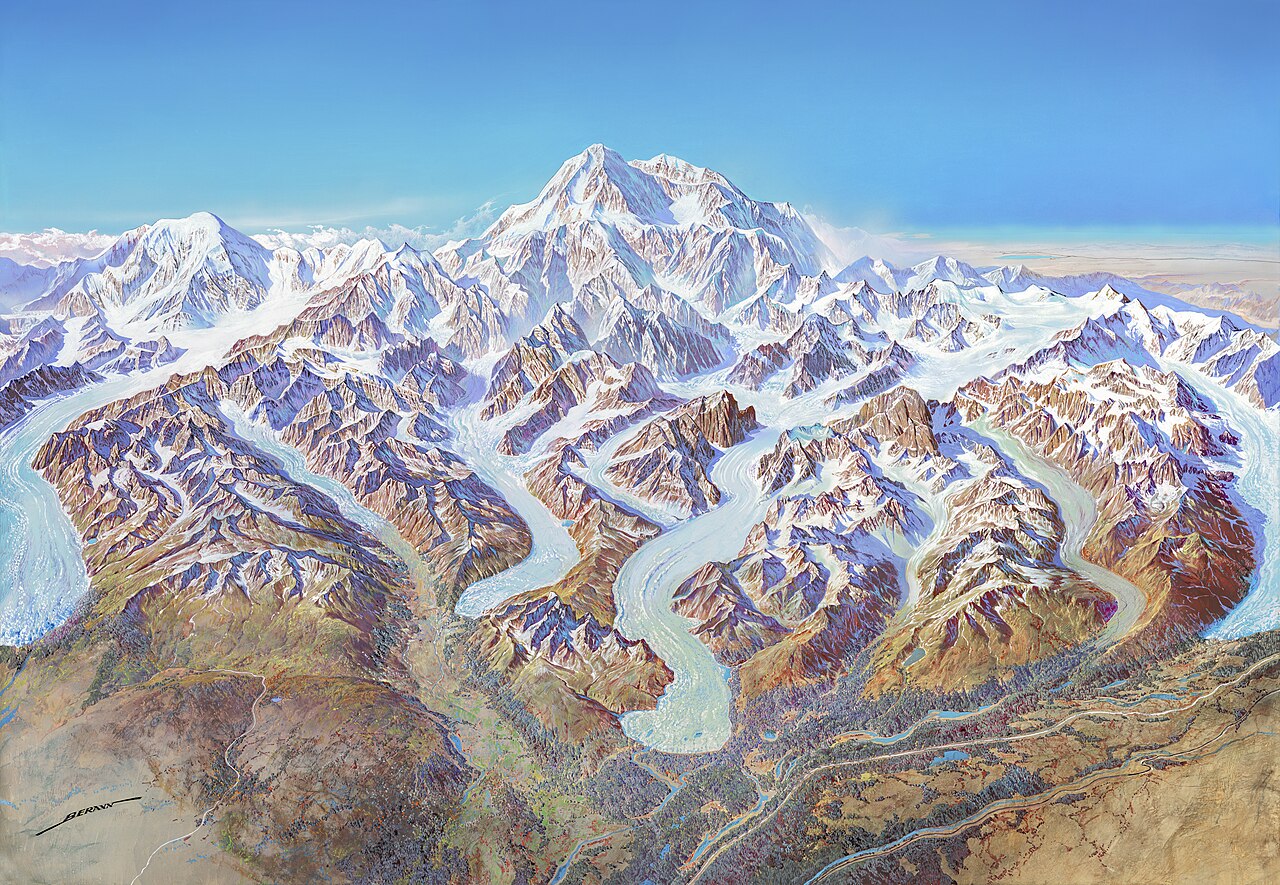
The highest point in the country is Mount McKinley, also called Denali, in Alaska, given as 20,320 feet (6,194 metres) in a United States Geological Survey (USGS) booklet. The lowest is in Death Valley, California, 282 feet (86 metres) below sea level.[32]
The highest point in the country is Mount McKinley, also called Denali, in Alaska, given as 20,320 feet (6,194 metres) in a United States Geological Survey (USGS) booklet. The lowest is in Death Valley, California, 282 feet (86 metres) below sea level.[32]
9 unchanged paragraphs
*Via Wikimedia Commons: [Heinrich Berann NPS Panorama of Denali without labels](https://commons.wikimedia.org/wiki/File:Heinrich_Berann_NPS_Panorama_of_Denali_without_labels.jpg) by Heinrich C. Berann, public domain.*
*Via Wikimedia Commons: [Heinrich Berann NPS Panorama of Denali without labels](https://commons.wikimedia.org/wiki/File:Heinrich_Berann_NPS_Panorama_of_Denali_without_labels.jpg) by Heinrich C. Berann, public domain.*
### Rivers
### Rivers
The Mississippi system is the largest river system in the country by the volume of water it carries. A USGS fact sheet gives an average flow of about 651,000 cubic feet per second, counting the Missouri and other tributary basins and the Atchafalaya channel.[33] In the west, the Colorado River runs 1,450 miles from the Rocky Mountains to the Gulf of California.[34]
The Mississippi system is the largest river system in the country by the volume of water it carries. A USGS fact sheet gives an average flow of about 651,000 cubic feet per second, counting the Missouri and other tributary basins and the Atchafalaya channel.[33] In the west, the Colorado River runs 1,450 miles from the Rocky Mountains to the Gulf of California.[34]
### Climate extremes
### Climate extremes
The country spans very different climates. Death Valley is, according to the National Park Service, the hottest place on earth and the driest in North America: it holds the world record air temperature of 134 degrees Fahrenheit (57 degrees Celsius), measured on 10 July 1913, and averages less than 2 inches of rain a year.[35]
The country spans very different climates. Death Valley is, according to the National Park Service, the hottest place on earth and the driest in North America: it holds the world record air temperature of 134 degrees Fahrenheit (57 degrees Celsius), measured on 10 July 1913, and averages less than 2 inches of rain a year.[35]
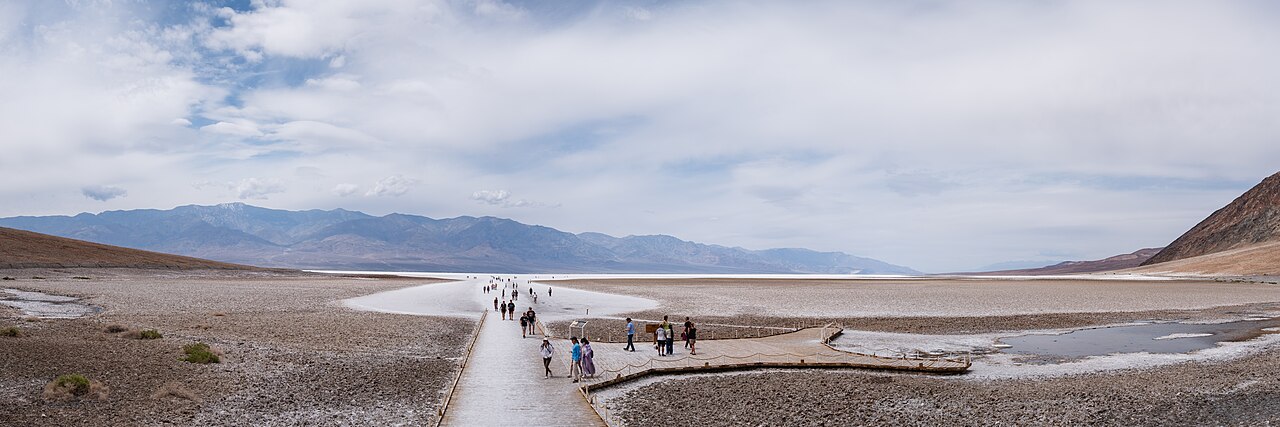

*Via Wikimedia Commons: [Boardwalk at Badwater Basin, Death Valley National Park, California](https://commons.wikimedia.org/wiki/File:Boardwalk_at_Badwater_Basin,_Death_Valley_National_Park,_California.jpg) by Christian David, [CC BY-SA 4.0](https://creativecommons.org/licenses/by-sa/4.0).*
*Via Wikimedia Commons: [Boardwalk at Badwater Basin, Death Valley National Park, California](https://commons.wikimedia.org/wiki/File:Boardwalk_at_Badwater_Basin,_Death_Valley_National_Park,_California.jpg) by Christian David, [CC BY-SA 4.0](https://creativecommons.org/licenses/by-sa/4.0).*
## Native peoples
## Native peoples
American Indians and Alaska Natives lived across the land long before the United States existed. As of November 2026 the Bureau of Indian Affairs counts 575 federally recognised tribes.[36] A recognised tribe has a government-to-government relationship with the United States and certain inherent rights of self-government, known as tribal sovereignty.[36] About 56.2 million acres are held in trust by the United States for tribes and individuals, and there are about 326 Indian land areas administered as reservations; not every recognised tribe has one.[36]
American Indians and Alaska Natives lived across the land long before the United States existed. As of November 2026 the Bureau of Indian Affairs counts 575 federally recognised tribes.[36] A recognised tribe has a government-to-government relationship with the United States and certain inherent rights of self-government, known as tribal sovereignty.[36] About 56.2 million acres are held in trust by the United States for tribes and individuals, and there are about 326 Indian land areas administered as reservations; not every recognised tribe has one.[36]
### Before European contact
Societies had built lasting settlements long before Europeans arrived. At Mesa Verde, in what is now Colorado, the Ancestral Pueblo people lived in places that include large cliff dwellings occupied more than 700 years ago; the national park there preserves nearly 5,000 ancestral sites.[46]
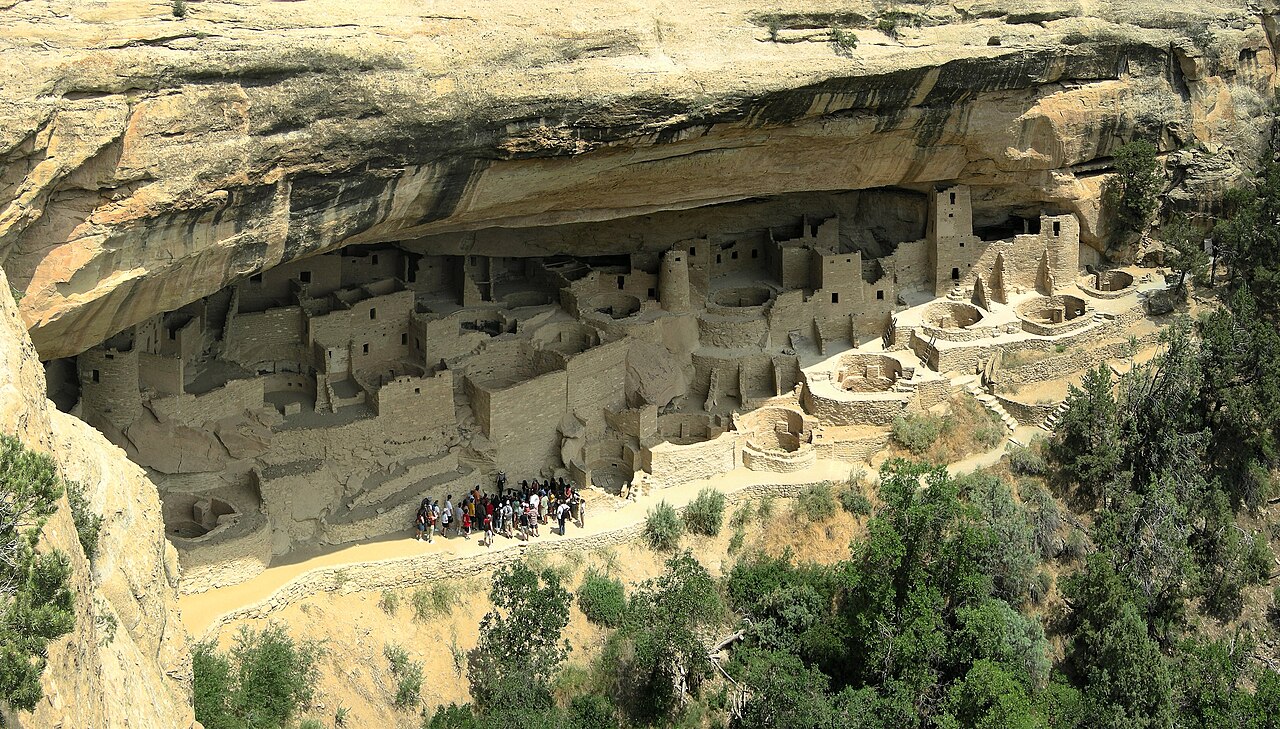
*Via Wikimedia Commons: [Cliff Palace-Colorado-Mesa Verde NP](https://commons.wikimedia.org/wiki/File:Cliff_Palace-Colorado-Mesa_Verde_NP.jpg) by Tobi 87, [CC BY-SA 4.0](https://creativecommons.org/licenses/by-sa/4.0).*
4 unchanged paragraphs
### Removal
### Removal
As demand for Indian land grew, President Andrew Jackson signed the Indian Removal Act on 28 May 1830, authorising treaties to move tribes living east of the Mississippi to land in the west.[37] By the end of his presidency nearly 70 removal treaties had led to the relocation of nearly 50,000 people to what later became eastern Oklahoma, opening 25 million acres to white settlement.[37] Many Cherokee opposed the 1836 Treaty of New Echota, and soldiers under General Winfield Scott were sent when they refused to leave.[37]
As demand for Indian land grew, President Andrew Jackson signed the Indian Removal Act on 28 May 1830, authorising treaties to move tribes living east of the Mississippi to land in the west.[37] By the end of his presidency nearly 70 removal treaties had led to the relocation of nearly 50,000 people to what later became eastern Oklahoma, opening 25 million acres to white settlement.[37] Many Cherokee opposed the 1836 Treaty of New Echota, and soldiers under General Winfield Scott were sent when they refused to leave.[37]
### Allotment and later law
### Allotment and later law
The Dawes Act of 8 February 1887 allowed the president to break up reservation land held in common into small plots for individuals, treating Native Americans as individuals rather than as members of tribes.[38] In 1953 Congress gave certain states criminal jurisdiction over American Indians on reservations.[36]
The Dawes Act of 8 February 1887 allowed the president to break up reservation land held in common into small plots for individuals, treating Native Americans as individuals rather than as members of tribes.[38] In 1953 Congress gave certain states criminal jurisdiction over American Indians on reservations.[36]
### War and boarding schools
Armed conflict accompanied westward expansion. The battle of the Little Bighorn in 1876, in which soldiers of the 7th Cavalry died, is commemorated at a national monument whose interpretation now covers participants on both sides.[47]
A Department of the Interior investigation found that from 1819 to 1969 the federal Indian boarding school system included 408 federal schools in 37 states or territories. The schools sought to assimilate Native children, who were taken from their families; their names were changed to English ones and their hair was cut. Burial sites were identified at about 53 of the schools.[48]
20 unchanged paragraphs
See also [Wampanoag](https://micwyn.com/t/3508/wampanoag).
See also [Wampanoag](https://micwyn.com/t/3508/wampanoag).
## Government
## Government
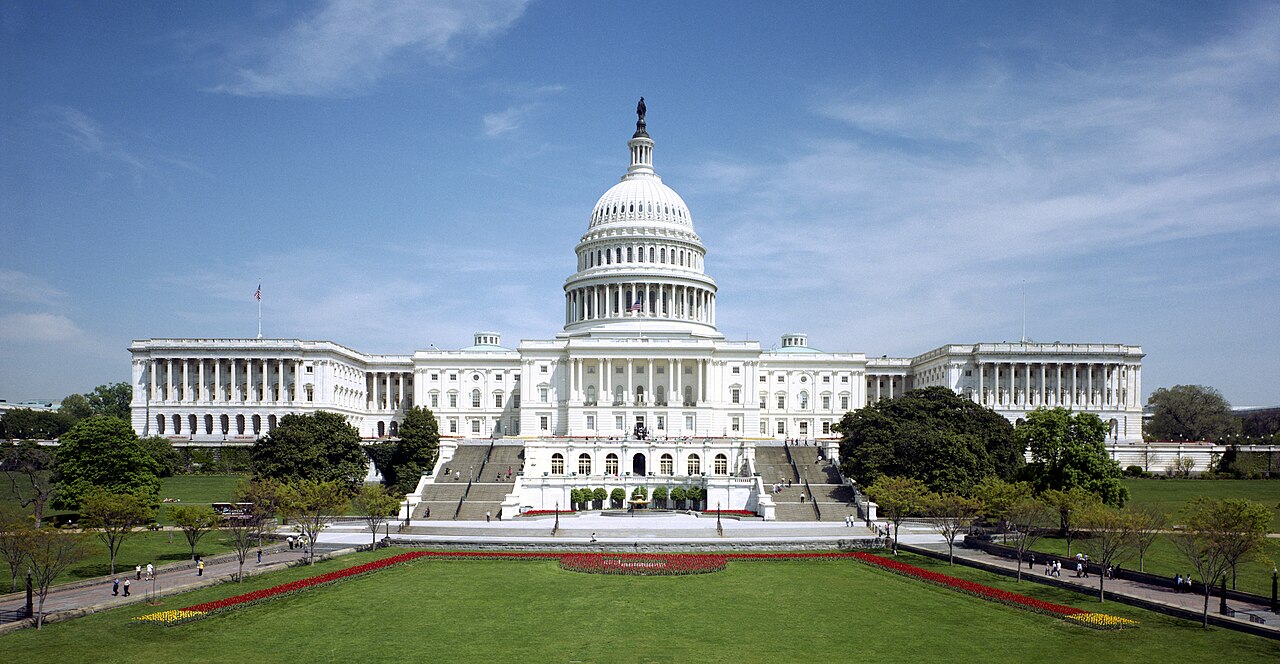

*Via Wikimedia Commons: [United States Capitol - west front](https://commons.wikimedia.org/wiki/File:United_States_Capitol_-_west_front.jpg) by Architect of the Capitol, public domain.*
*Via Wikimedia Commons: [United States Capitol - west front](https://commons.wikimedia.org/wiki/File:United_States_Capitol_-_west_front.jpg) by Architect of the Capitol, public domain.*
The Constitution divides the federal government into three branches so that no person or group holds too much power.[3]
The Constitution divides the federal government into three branches so that no person or group holds too much power.[3]
- **Congress**, made up of the Senate and the House of Representatives, makes law. See [United States Senate](https://micwyn.com/t/3292/united-states-senate).[3]
- **The president** is head of state, leads the executive branch and commands the armed forces, and may veto legislation. The vice president presides over the Senate and breaks tied votes.[3]
- **The courts**, headed by the Supreme Court, can overturn unconstitutional laws. Justices are nominated by the president and confirmed by the Senate.[3]
Power is also divided between the federal government and the states. The Tenth Amendment reserves to the states, or to the people, the powers that the Constitution neither gives to the federal government nor forbids to the states.[7] Each state has its own government, headed by a governor, and there are local governments beneath it.[13]
Power is also divided between the federal government and the states. The Tenth Amendment reserves to the states, or to the people, the powers that the Constitution neither gives to the federal government nor forbids to the states.[7] Each state has its own government, headed by a governor, and there are local governments beneath it.[13]
### The Constitution and its amendments
### The Constitution and its amendments
In September 1789 the First Congress proposed twelve amendments; the ten then ratified became the Bill of Rights.[7] Later amendments abolished slavery, guaranteed equal protection of the laws, extended voting rights and set the voting age at eighteen.[9][14][15][16] The Eighteenth Amendment, which established the prohibition of alcohol, was later repealed.[16]
In September 1789 the First Congress proposed twelve amendments; the ten then ratified became the Bill of Rights.[7] Later amendments abolished slavery, guaranteed equal protection of the laws, extended voting rights and set the voting age at eighteen.[9][14][15][16] The Eighteenth Amendment, which established the prohibition of alcohol, was later repealed.[16]
## History
## History
### Independence and founding
### Independence and founding
The Continental Congress declared the colonies independent of Britain on 4 July 1776.[4] The Treaty of Paris of 3 September 1783 recognised independence and settled boundaries.[5] A convention that met in Philadelphia from May 1787 drafted a new Constitution, which took effect after ratification, with nine states required, following a hard-fought argument between Federalist supporters and Anti-Federalist opponents.[6] [George Washington](https://micwyn.com/t/2851/george-washington) became the first president.
The Continental Congress declared the colonies independent of Britain on 4 July 1776.[4] The Treaty of Paris of 3 September 1783 recognised independence and settled boundaries.[5] A convention that met in Philadelphia from May 1787 drafted a new Constitution, which took effect after ratification, with nine states required, following a hard-fought argument between Federalist supporters and Anti-Federalist opponents.[6] [George Washington](https://micwyn.com/t/2851/george-washington) became the first president.
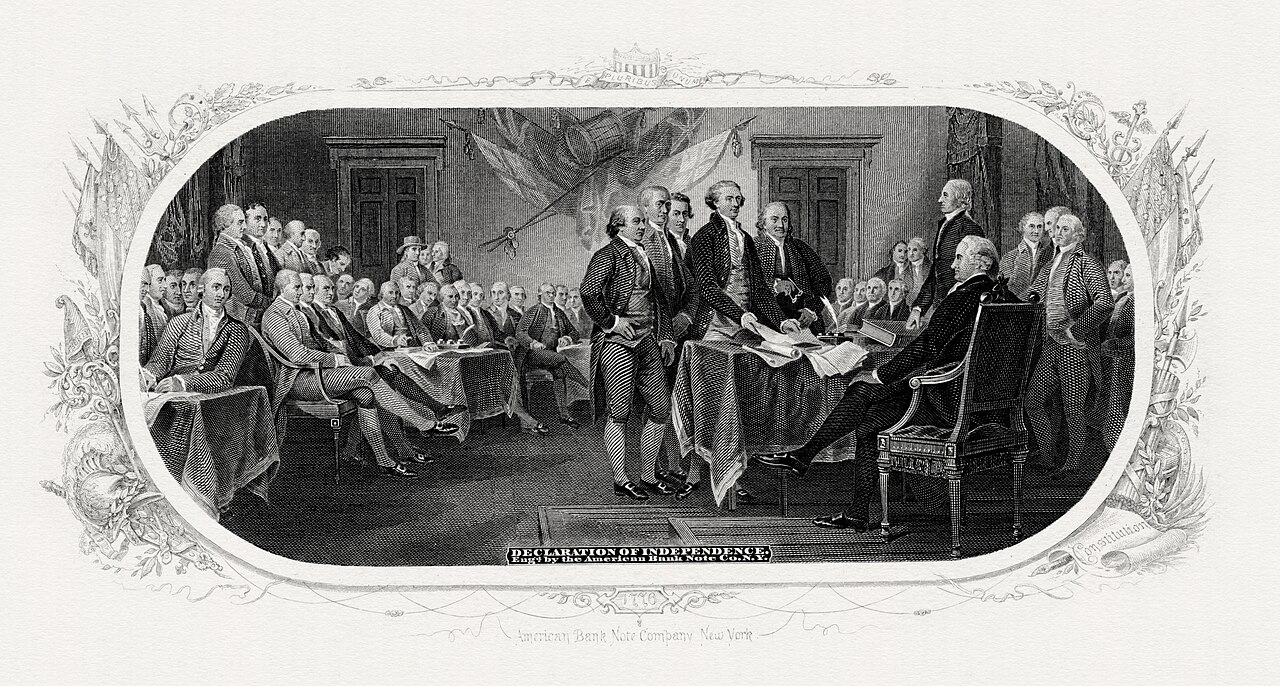

*Via Wikimedia Commons: [BEP-GIRSCH-Declaration of Independence (Trumbull)](https://commons.wikimedia.org/wiki/File:BEP-GIRSCH-Declaration_of_Independence_(Trumbull).jpg) by Frederick Girsch at the American Bank Note Company , for the, public domain.*
*Via Wikimedia Commons: [BEP-GIRSCH-Declaration of Independence (Trumbull)](https://commons.wikimedia.org/wiki/File:BEP-GIRSCH-Declaration_of_Independence_(Trumbull).jpg) by Frederick Girsch at the American Bank Note Company , for the, public domain.*
### Expansion
### Expansion
In 1803 the country bought the Louisiana Territory from France for 15 million dollars, far more than President Thomas Jefferson's envoys had been told to seek to acquire.[8] The Homestead Act of 1862 offered heads of families 160 acres of surveyed public land for a small fee and five years of residence, which sped western settlement.[17] The National Archives notes that few labourers could afford to set up a farm, and that most land under the act went to people from nearby areas.[17]
In 1803 the country bought the Louisiana Territory from France for 15 million dollars, far more than President Thomas Jefferson's envoys had been told to seek to acquire.[8] The Homestead Act of 1862 offered heads of families 160 acres of surveyed public land for a small fee and five years of residence, which sped western settlement.[17] The National Archives notes that few labourers could afford to set up a farm, and that most land under the act went to people from nearby areas.[17]
### Civil war and Reconstruction
### Civil war and Reconstruction
Conflict over slavery led to the [American Civil War](https://micwyn.com/t/2867/american-civil-war), during the presidency of [Abraham Lincoln](https://micwyn.com/t/2842/abraham-lincoln). Three amendments followed as part of Reconstruction, the rebuilding period after the war. The Thirteenth abolished slavery.[9] The Fourteenth, ratified in 1868, gave citizenship to people born or naturalised in the country and required states to provide due process and equal protection of the laws.[14] The Fifteenth, ratified in 1870, gave African American men the right to vote.[15]
Conflict over slavery led to the [American Civil War](https://micwyn.com/t/2867/american-civil-war), during the presidency of [Abraham Lincoln](https://micwyn.com/t/2842/abraham-lincoln). Three amendments followed as part of Reconstruction, the rebuilding period after the war. The Thirteenth abolished slavery.[9] The Fourteenth, ratified in 1868, gave citizenship to people born or naturalised in the country and required states to provide due process and equal protection of the laws.[14] The Fifteenth, ratified in 1870, gave African American men the right to vote.[15]
### Immigration restriction
### Immigration restriction
The Chinese Exclusion Act of 1882 barred Chinese labourers from immigrating for ten years. The National Archives calls it the first significant law restricting immigration to the United States.[18]
The Chinese Exclusion Act of 1882 barred Chinese labourers from immigrating for ten years. The National Archives calls it the first significant law restricting immigration to the United States.[18]
### Railroads, industry and immigration
The Pacific Railway Act of 1 July 1862 offered government bonds and grants of land to build a railway across the continent.[49] As large businesses grew, Congress began to regulate them: the Interstate Commerce Act of 1887 made railroads the first industry under federal regulation, and the Sherman Anti-Trust Act of 1890 was the first federal law to outlaw monopolistic practices.[50][51] From 1892 to 1924 the Ellis Island station in New York harbour, the country's busiest, processed more than 12 million immigrants.[52]
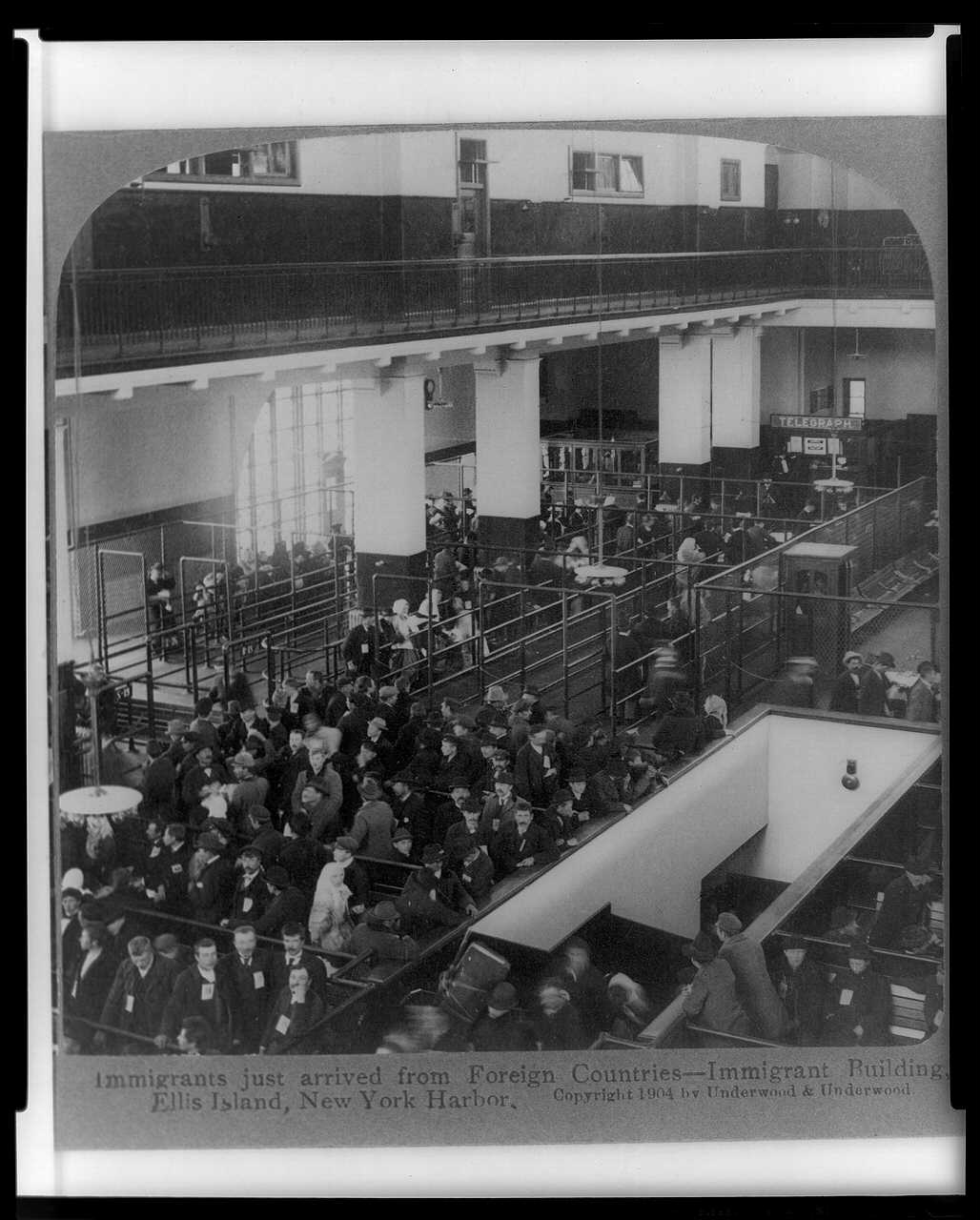
*Via Wikimedia Commons: [Immigrants just arrived from Foreign Countries-Immigrant Building, Ell](https://commons.wikimedia.org/wiki/File:Immigrants_just_arrived_from_Foreign_Countries-Immigrant_Building,_Ellis_Island,_New_York_Harbor_LCCN97501095.jpg) by Underwood & Underwood., public domain.*
7 unchanged paragraphs
### The twentieth century
### The twentieth century
The Nineteenth Amendment, ratified in 1920, gave women the right to vote.[10] The country fought in [World War I](https://micwyn.com/t/2882/world-war-i). Amid the Great Depression, President Franklin D. Roosevelt signed the Social Security Act on 14 August 1935, creating old-age benefits, unemployment insurance and aid for several other groups.[19]
The Nineteenth Amendment, ratified in 1920, gave women the right to vote.[10] The country fought in [World War I](https://micwyn.com/t/2882/world-war-i). Amid the Great Depression, President Franklin D. Roosevelt signed the Social Security Act on 14 August 1935, creating old-age benefits, unemployment insurance and aid for several other groups.[19]
During [World War II](https://micwyn.com/t/2855/world-war-ii), Roosevelt's Executive Order 9066 of 19 February 1942 led to the forced removal and incarceration of Japanese Americans from the West Coast; many lost homes and businesses.[20]
During [World War II](https://micwyn.com/t/2855/world-war-ii), Roosevelt's Executive Order 9066 of 19 February 1942 led to the forced removal and incarceration of Japanese Americans from the West Coast; many lost homes and businesses.[20]
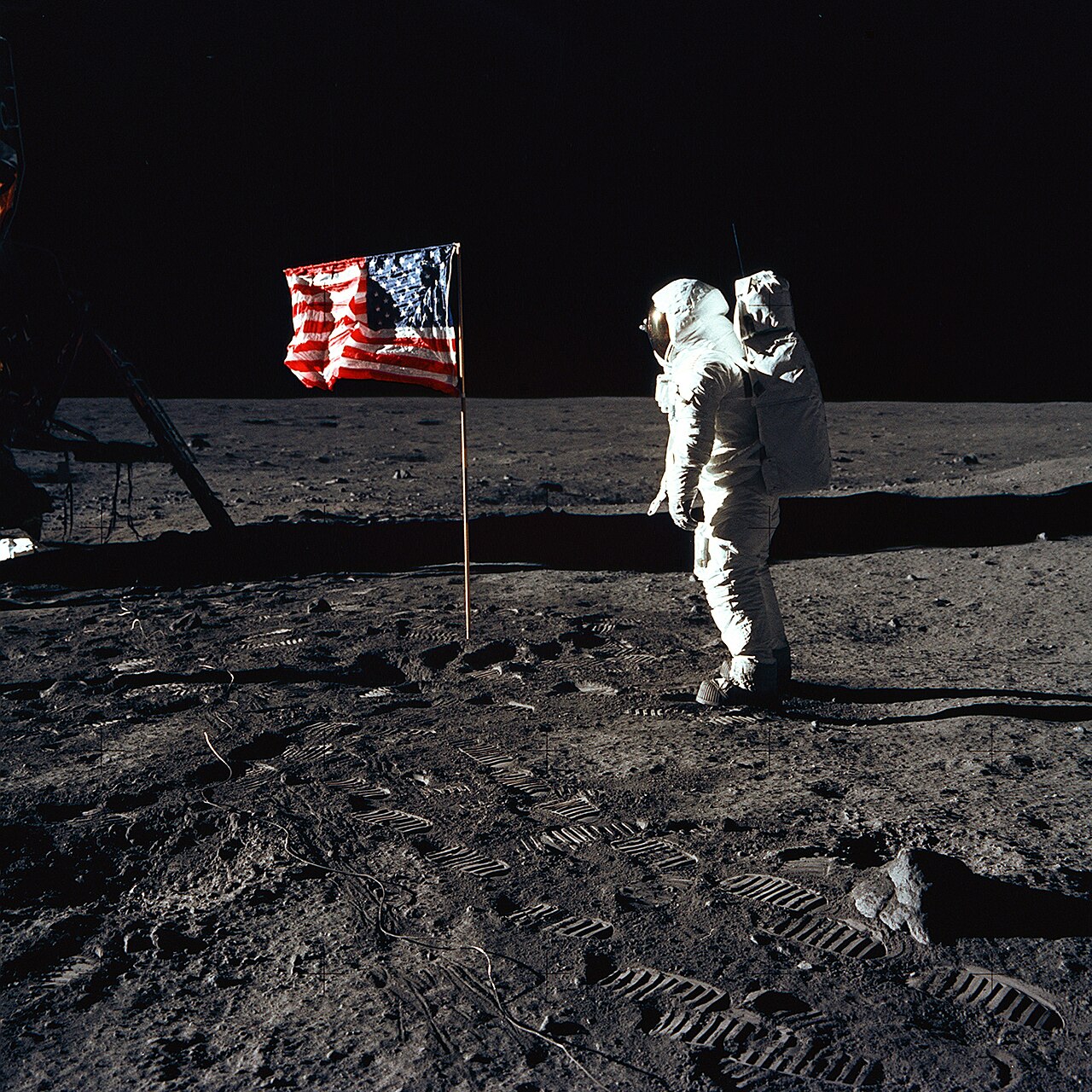

*Via Wikimedia Commons: [Buzz Aldrin and the U.S. Flag on the Moon (9460188482)](https://commons.wikimedia.org/wiki/File:Buzz_Aldrin_and_the_U.S._Flag_on_the_Moon_(9460188482).jpg) by NASA/Apollo 11, public domain.*
*Via Wikimedia Commons: [Buzz Aldrin and the U.S. Flag on the Moon (9460188482)](https://commons.wikimedia.org/wiki/File:Buzz_Aldrin_and_the_U.S._Flag_on_the_Moon_(9460188482).jpg) by NASA/Apollo 11, public domain.*
### Cold War
### Cold War
The Cold War was a long rivalry with the Soviet Union short of direct war between them. Under the Truman Doctrine the United States undertook to support Greece's government against communist forces, reorienting its foreign policy.[21] President Harry Truman signed the Marshall Plan, aid to rebuild Europe's economies, on 3 April 1948.[22] In 1949 the United States, Canada and Western European states created the North Atlantic Treaty Organization (NATO), a mutual defence alliance.[23] The period included the [Vietnam War](https://micwyn.com/t/3310/vietnam-war). In July 1969 American astronauts of Apollo 11 landed on the Moon.[24] The Soviet Union broke up in 1991.[25]
The Cold War was a long rivalry with the Soviet Union short of direct war between them. Under the Truman Doctrine the United States undertook to support Greece's government against communist forces, reorienting its foreign policy.[21] President Harry Truman signed the Marshall Plan, aid to rebuild Europe's economies, on 3 April 1948.[22] In 1949 the United States, Canada and Western European states created the North Atlantic Treaty Organization (NATO), a mutual defence alliance.[23] The period included the [Vietnam War](https://micwyn.com/t/3310/vietnam-war). In July 1969 American astronauts of Apollo 11 landed on the Moon.[24] The Soviet Union broke up in 1991.[25]
### Korean War
War broke out on 25 June 1950 when North Korea attacked the South across the 38th parallel, and the United Nations Security Council condemned the invasion.[53] The United States fought for the South, and China entered the war late in 1950.[53][54] An armistice, an agreement to stop fighting without a peace treaty, was signed on 27 July 1953.[55]
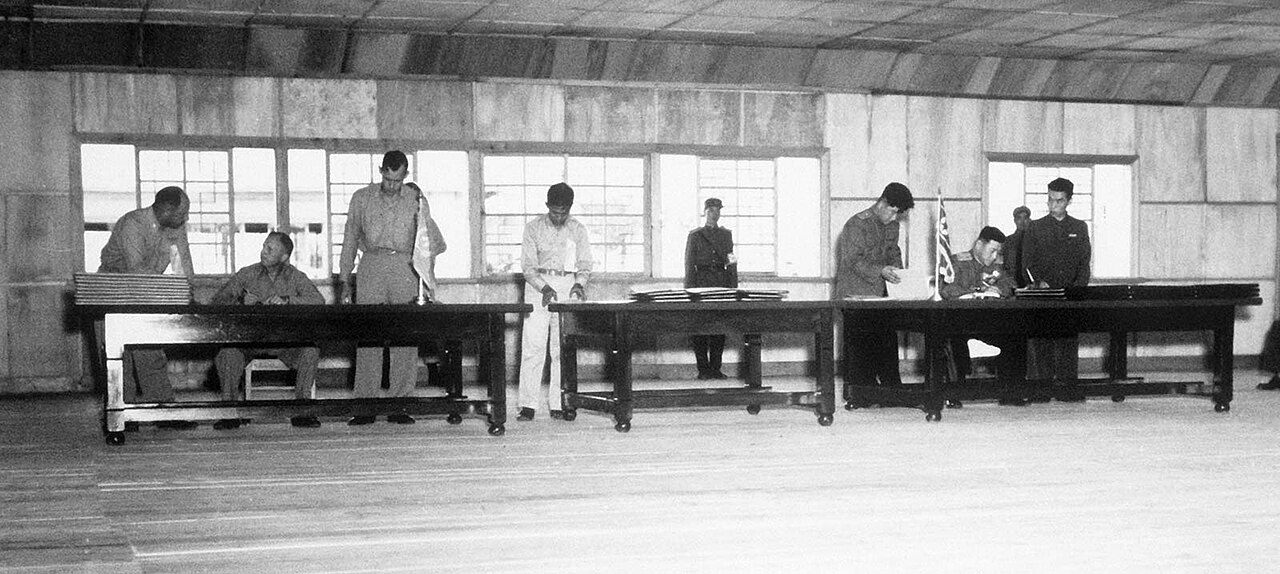
*Via Wikimedia Commons: [Korean War armistice agreement 1953](https://commons.wikimedia.org/wiki/File:Korean_War_armistice_agreement_1953.jpg) by U.S. Department of Defense (F. Kazukaitis. U.S. Navy), public domain.*
9 unchanged paragraphs
### Civil rights
### Civil rights
The Civil Rights Act, signed by President Lyndon Johnson on 2 July 1964, banned discrimination in public places and employment and provided for school integration.[11] Johnson signed the Voting Rights Act on 6 August 1965; the National Archives calls it the most significant change in federal and state relations over voting since Reconstruction.[26] See [Martin Luther King Jr.](https://micwyn.com/t/3374/martin-luther-king-jr)
The Civil Rights Act, signed by President Lyndon Johnson on 2 July 1964, banned discrimination in public places and employment and provided for school integration.[11] Johnson signed the Voting Rights Act on 6 August 1965; the National Archives calls it the most significant change in federal and state relations over voting since Reconstruction.[26] See [Martin Luther King Jr.](https://micwyn.com/t/3374/martin-luther-king-jr)
### Since 2000
### Since 2000
The [September 11 attacks](https://micwyn.com/t/3301/september-11-attacks) of 2001 are covered in their own entry. Recent national elections are covered in the [2016](https://micwyn.com/t/2893/2016-united-states-presidential-election), [2020](https://micwyn.com/t/2892/2020-united-states-presidential-election) and [2024](https://micwyn.com/t/2891/2024-united-states-presidential-election) presidential election entries.
The [September 11 attacks](https://micwyn.com/t/3301/september-11-attacks) of 2001 are covered in their own entry. Recent national elections are covered in the [2016](https://micwyn.com/t/2893/2016-united-states-presidential-election), [2020](https://micwyn.com/t/2892/2020-united-states-presidential-election) and [2024](https://micwyn.com/t/2891/2024-united-states-presidential-election) presidential election entries.
## Culture
## Culture
### Expression and belief
### Expression and belief
The First Amendment protects freedom of speech and of the press and the right to assemble and petition the government, and bars the government from creating or favouring a religion.[39]
The First Amendment protects freedom of speech and of the press and the right to assemble and petition the government, and bars the government from creating or favouring a religion.[39]
### Language
### Language
An executive order of March 2025 designated English as the official language of the United States, saying it had long served as the national language.[40]
An executive order of March 2025 designated English as the official language of the United States, saying it had long served as the national language.[40]
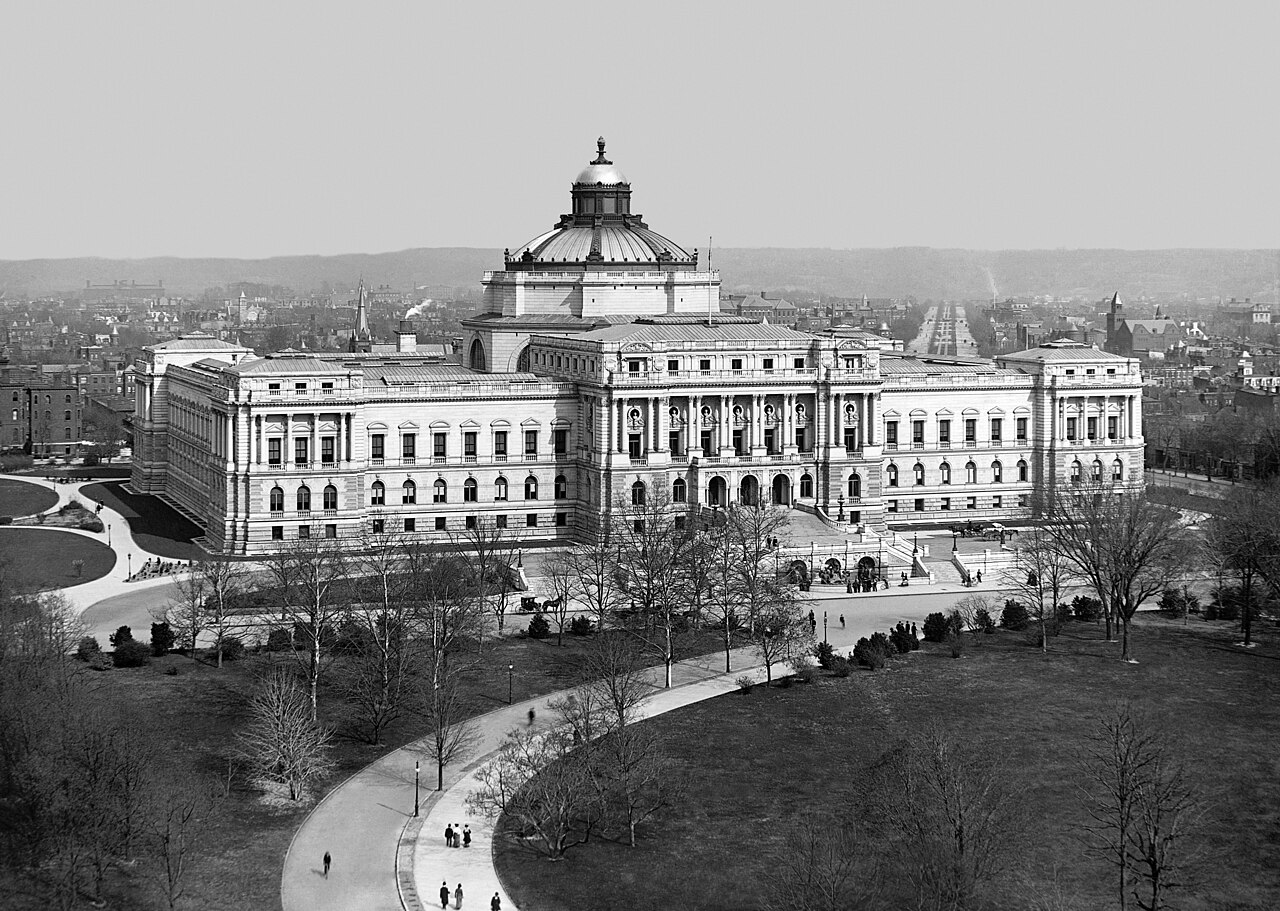
*Via Wikimedia Commons: [Library of Congress, Washington, D.C. - c. 1902](https://commons.wikimedia.org/wiki/File:Library_of_Congress,_Washington,_D.C._-_c._1902.jpg) by William Henry Jackson, public domain.*
### Institutions
### Institutions
The Library of Congress began in 1800 and now holds materials in 470 languages, including what it describes as the world's largest collection of legal materials, films, maps, sheet music and sound recordings.[41] The National Endowment for the Arts, set up by Congress in 1965, is an independent federal agency and describes itself as the largest funder of the arts and arts education in communities across the country.[42] Its Jazz Masters Fellowship, awarded since 1982, is the nation's highest honour for jazz artists.[43]
The Library of Congress began in 1800 and now holds materials in 470 languages, including what it describes as the world's largest collection of legal materials, films, maps, sheet music and sound recordings.[41] The National Endowment for the Arts, set up by Congress in 1965, is an independent federal agency and describes itself as the largest funder of the arts and arts education in communities across the country.[42] Its Jazz Masters Fellowship, awarded since 1982, is the nation's highest honour for jazz artists.[43]
### Religion
In a Pew Research Center survey of 2023–24, 62 per cent of adults identified as Christian, including 40 per cent Protestant and 19 per cent Catholic. Religiously unaffiliated adults made up 29 per cent; 1.7 per cent identified as Jewish, 1.2 per cent as Muslim, 1.1 per cent as Buddhist and 0.9 per cent as Hindu. Pew found that the long decline in the Christian share, from 78 per cent in 2007, may have levelled off.[56]
### Literature and music
American winners of the Nobel Prize in Literature include William Faulkner (the 1949 prize), Toni Morrison (1993) and the songwriter Bob Dylan (2016).[57][58][59] Jazz took root in New Orleans, where, according to the National Park Service, music was a necessity of daily life even before jazz.[60]
9 unchanged paragraphs
### Popular culture and holidays
### Popular culture and holidays
American music, film and sport reach audiences worldwide. Micwyn has entries on [Elvis Presley](https://micwyn.com/t/3297/elvis-presley), [Michael Jackson](https://micwyn.com/t/3412/michael-jackson), [Dolly Parton](https://micwyn.com/t/3405/dolly-parton), [Judy Garland](https://micwyn.com/t/3528/judy-garland), [Marilyn Monroe](https://micwyn.com/t/3305/marilyn-monroe), [Muhammad Ali](https://micwyn.com/t/3304/muhammad-ali), [Kobe Bryant](https://micwyn.com/t/3529/kobe-bryant), [Ansel Adams](https://micwyn.com/t/3380/ansel-adams) and [Star Wars](https://micwyn.com/t/3311/star-wars). Widely kept holidays include [Thanksgiving](https://micwyn.com/t/3386/thanksgiving).
American music, film and sport reach audiences worldwide. Micwyn has entries on [Elvis Presley](https://micwyn.com/t/3297/elvis-presley), [Michael Jackson](https://micwyn.com/t/3412/michael-jackson), [Dolly Parton](https://micwyn.com/t/3405/dolly-parton), [Judy Garland](https://micwyn.com/t/3528/judy-garland), [Marilyn Monroe](https://micwyn.com/t/3305/marilyn-monroe), [Muhammad Ali](https://micwyn.com/t/3304/muhammad-ali), [Kobe Bryant](https://micwyn.com/t/3529/kobe-bryant), [Ansel Adams](https://micwyn.com/t/3380/ansel-adams) and [Star Wars](https://micwyn.com/t/3311/star-wars). Widely kept holidays include [Thanksgiving](https://micwyn.com/t/3386/thanksgiving).
## Economy
## Economy
The Bureau of Economic Analysis measures output as gross domestic product (GDP), the value of goods and services produced. Its second estimate for the third quarter of 2026 showed real GDP, adjusted for inflation, growing at an annual rate of 4.3 per cent, after 2.2 per cent in the second quarter.[12] Such estimates are revised. President Trump has disputed official growth figures published before the 2026 elections.[27]
The Bureau of Economic Analysis measures output as gross domestic product (GDP), the value of goods and services produced. Its second estimate for the third quarter of 2026 showed real GDP, adjusted for inflation, growing at an annual rate of 4.3 per cent, after 2.2 per cent in the second quarter.[12] Such estimates are revised. President Trump has disputed official growth figures published before the 2026 elections.[27]
## Recent events
## Recent events
- **Government shutdown:** a 43-day lapse in federal funding, a record, ended on 12 November 2025.[28]
- **War with Iran:** Israel and the United States attacked Iran on 28 February 2026; later talks and renewed fighting followed.[29]
- **Tariffs:** in February 2026 the Supreme Court ruled against global tariffs imposed under an emergency powers law.[30]
- **Midterm elections:** in November 2026 the Democrats won control of both the House and the Senate from the president's Republican Party.[31]
## What's unsettled
## What's unsettled
As of 26 November 2026, the new Congress had not yet taken office. The outcome of the war with Iran and of disputes over tariffs was open, and economic estimates remained subject to revision. These are the parts of this entry most likely to change.
As of 26 November 2026, the new Congress had not yet taken office. The outcome of the war with Iran and of disputes over tariffs was open, and economic estimates remained subject to revision. These are the parts of this entry most likely to change.
## Sources
## Sources
1. U.S. Census Bureau. "U.S. Population Growth Slows Due to Historic Decline in Net International Migration". 27 January 2026. https://www.census.gov/newsroom/press-releases/2026/population-growth-slows.html
2. U.S. Census Bureau. "State Area Measurements and Internal Point Coordinates". https://www.census.gov/geographies/reference-files/2010/geo/state-area.html
3. USAGov. "Branches of the U.S. government". https://www.usa.gov/branches-of-government
4. National Archives. "Declaration of Independence: A Transcription". https://www.archives.gov/founding-docs/declaration-transcript
5. U.S. Department of State, Office of the Historian. "The Treaty of Paris". https://history.state.gov/milestones/1776-1783/treaty
6. National Archives. "Constitution of the United States: A History". https://www.archives.gov/founding-docs/more-perfect-union
7. National Archives. "The Bill of Rights: A Transcription". https://www.archives.gov/founding-docs/bill-of-rights-transcript
8. Office of the Historian. "Louisiana Purchase, 1803". https://history.state.gov/milestones/1801-1829/louisiana-purchase
9. National Archives. "13th Amendment: Abolition of Slavery (1865)". https://www.archives.gov/milestone-documents/13th-amendment
10. National Archives. "19th Amendment: Women's Right to Vote (1920)". https://www.archives.gov/milestone-documents/19th-amendment
11. National Archives. "Civil Rights Act (1964)". https://www.archives.gov/milestone-documents/civil-rights-act
12. U.S. Bureau of Economic Analysis. "Gross Domestic Product". https://www.bea.gov/data/gdp/gross-domestic-product
13. USAGov. "State and local governments". https://www.usa.gov/state-local-governments
14. National Archives. "14th Amendment: Civil Rights (1868)". https://www.archives.gov/milestone-documents/14th-amendment
15. National Archives. "15th Amendment: Voting Rights (1870)". https://www.archives.gov/milestone-documents/15th-amendment
16. National Archives. "The Constitution: Amendments 11-27". https://www.archives.gov/founding-docs/amendments-11-27
17. National Archives. "Homestead Act (1862)". https://www.archives.gov/milestone-documents/homestead-act
18. National Archives. "Chinese Exclusion Act (1882)". https://www.archives.gov/milestone-documents/chinese-exclusion-act
19. National Archives. "Social Security Act (1935)". https://www.archives.gov/milestone-documents/social-security-act
20. National Archives. "Executive Order 9066 (1942)". https://www.archives.gov/milestone-documents/executive-order-9066
21. Office of the Historian. "The Truman Doctrine". https://history.state.gov/milestones/1945-1952/truman-doctrine
22. National Archives. "Marshall Plan (1948)". https://www.archives.gov/milestone-documents/marshall-plan
23. Office of the Historian. "North Atlantic Treaty Organization (NATO), 1949". https://history.state.gov/milestones/1945-1952/nato
24. NASA. "Apollo 11". https://www.nasa.gov/mission/apollo-11/
25. Office of the Historian. "The Collapse of the Soviet Union". https://history.state.gov/milestones/1989-1992/collapse-soviet-union
26. National Archives. "Voting Rights Act (1965)". https://www.archives.gov/milestone-documents/voting-rights-act
27. PBS News. "Trump calls GDP figures 'fake' and demands an investigation of Commerce Department". November 2026. https://pbs.org/newshour/politics/trump-calls-gdp-figures-fake-and-demands-an-investigation-of-commerce-department
28. Associated Press. "Trump signs government funding bill, ending record 43-day shutdown". PBS News, November 2025. https://www.pbs.org/newshour/politics/trump-signs-government-funding-bill-ending-record-43-day-shutdown
29. PBS News. "Trump frequently announces he's halting strikes in Iran. But they keep happening". 2026. https://www.pbs.org/newshour/politics/trump-frequently-announces-hes-halting-strikes-in-iran-but-they-keep-happening
30. Associated Press. "Supreme Court strikes down Trump's sweeping tariffs". PBS News, February 2026. https://www.pbs.org/newshour/politics/supreme-court-strikes-down-trumps-sweeping-tariffs
31. PBS News. "Democrats win control of U.S. House, in major rebuke to Trump". November 2026. https://www.pbs.org/newshour/politics/democrats-win-control-of-the-u-s-house
32. U.S. Geological Survey. "Elevations and Distances". https://pubs.usgs.gov/gip/Elevations-Distances/elvadist.html
33. U.S. Geological Survey. "Largest Rivers in the United States" (Open-File Report 87-242). https://pubs.usgs.gov/of/1987/ofr87-242/
34. National Park Service. "Park Statistics: Grand Canyon National Park". https://www.nps.gov/grca/learn/management/statistics.htm
35. National Park Service. "Weather: Death Valley National Park". https://www.nps.gov/deva/learn/nature/weather-and-climate.htm
36. Bureau of Indian Affairs. "Frequently Asked Questions". https://www.bia.gov/frequently-asked-questions
37. National Archives. "President Andrew Jackson's Message to Congress 'On Indian Removal' (1830)". https://www.archives.gov/milestone-documents/jacksons-message-to-congress-on-indian-removal
38. National Archives. "Dawes Act (1887)". https://www.archives.gov/milestone-documents/dawes-act
39. National Archives. "The Bill of Rights: What Does it Say?". https://www.archives.gov/founding-docs/bill-of-rights/what-does-it-say
40. The White House. "Designating English as the Official Language of The United States". March 2025. https://www.whitehouse.gov/presidential-actions/2025/03/designating-english-as-the-official-language-of-the-united-states/
41. Library of Congress. "General Information". https://www.loc.gov/about/general-information/
42. National Endowment for the Arts. "What Is the NEA?". https://www.arts.gov/about/what-is-the-nea
43. National Endowment for the Arts. "NEA Jazz Masters Fellowships". https://www.arts.gov/honors/jazz
44. National Park Service. "Physiographic Provinces". https://www.nps.gov/subjects/geology/physiographic-provinces.htm
45. National Oceanic and Atmospheric Administration. "How long is the U.S. shoreline?". https://oceanservice.noaa.gov/facts/shorelength.html
46. National Park Service. "History and Culture: Mesa Verde National Park". https://www.nps.gov/meve/learn/historyculture/index.htm
47. National Park Service. "History and Culture: Little Bighorn Battlefield National Monument". https://www.nps.gov/libi/learn/historyculture/index.htm
48. U.S. Department of the Interior. "Department of the Interior Releases Investigative Report, Outlines Next Steps in Federal Indian Boarding School Initiative". 2022. https://www.doi.gov/pressreleases/department-interior-releases-investigative-report-outlines-next-steps-federal-indian
49. National Archives. "Pacific Railway Act (1862)". https://www.archives.gov/milestone-documents/pacific-railway-act
50. National Archives. "Interstate Commerce Act (1887)". https://www.archives.gov/milestone-documents/interstate-commerce-act
51. National Archives. "Sherman Anti-Trust Act (1890)". https://www.archives.gov/milestone-documents/sherman-anti-trust-act
52. National Park Service. "History and Culture: Ellis Island". https://www.nps.gov/elis/learn/historyculture/index.htm
53. National Archives. "US Enters the Korean Conflict". https://www.archives.gov/education/lessons/korean-conflict
54. U.S. Department of State, Office of the Historian. "The Korean War". https://history.state.gov/milestones/1945-1952/korean-war
55. National Archives. "Armistice Agreement for the Restoration of the South Korean State (1953)". https://www.archives.gov/milestone-documents/armistice-agreement-restoration-south-korean-state
56. Pew Research Center. "Decline of Christianity in the US Has Slowed, May Have Leveled Off". 26 February 2025. https://www.pewresearch.org/religion/2025/02/26/decline-of-christianity-in-the-us-has-slowed-may-have-leveled-off/
57. NobelPrize.org. "The Nobel Prize in Literature 1949". https://www.nobelprize.org/prizes/literature/1949/summary/
58. NobelPrize.org. "The Nobel Prize in Literature 1993". https://www.nobelprize.org/prizes/literature/1993/summary/
59. NobelPrize.org. "The Nobel Prize in Literature 2016". https://www.nobelprize.org/prizes/literature/2016/summary/
60. National Park Service. "History and Culture: New Orleans Jazz National Historical Park". https://www.nps.gov/jazz/learn/historyculture/index.htm
