Compare versions
Version 3 → Version 4. Removed · Added. This shows the entry's text as it is written, including its formatting marks.
Version 3 · Version 4 · Version history
Side by side · Together
Version 3Version 4
17 unchanged paragraphs
Vietnam is a country in Southeast Asia, ruled by the Communist Party of Vietnam.[7][8]
Vietnam is a country in Southeast Asia, ruled by the Communist Party of Vietnam.[7][8]
Developing story. This entry is updated as events change; every changing fact is dated.
Developing story. This entry is updated as events change; every changing fact is dated.
## At a glance
## At a glance
- **Capital:** Hanoi.
- **Government:** one-party state led by the Communist Party.[7]
- **Party leader:** To Lam, general secretary, reappointed in January 2026.[8]
- **Economy:** reclassified by the World Bank as upper-middle-income in July 2026.[1]
- **GDP per person:** 5,066 US dollars in 2025.[1]
- **Goal:** to be a high-income country by 2045.[1]
## History
## History
### Early history
### Early history
The Han dynasty emperor Wudi conquered the kingdom of Nan Yue and divided it into Chinese provinces.[2] The Trung sisters led a revolt against Chinese rule that failed but is remembered as legendary.[2] Ngo Quyen later defeated a Chinese force and ended Chinese political domination, and the Ly dynasty went on to rule a state called Dai Viet from Thang Long, today's Hanoi.[2]
The Han dynasty emperor Wudi conquered the kingdom of Nan Yue and divided it into Chinese provinces.[2] The Trung sisters led a revolt against Chinese rule that failed but is remembered as legendary.[2] Ngo Quyen later defeated a Chinese force and ended Chinese political domination, and the Ly dynasty went on to rule a state called Dai Viet from Thang Long, today's Hanoi.[2]
### Dynasties and independence from China
### Dynasties and independence from China
Le Loi and Nguyen Trai led a revolt against China's Ming dynasty from 1418 to 1428.[2] Later, rival families competed for power, with the Nguyen lords extending Vietnamese influence south.[2] Nguyen Anh defeated the Tay Son rebels, became the Gia Long emperor and moved the capital to Hue.[2]
Le Loi and Nguyen Trai led a revolt against China's Ming dynasty from 1418 to 1428.[2] Later, rival families competed for power, with the Nguyen lords extending Vietnamese influence south.[2] Nguyen Anh defeated the Tay Son rebels, became the Gia Long emperor and moved the capital to Hue.[2]
### French rule
### French rule
France controlled Vietnam from 1862 to 1945, dividing it into three parts.[2] In 1949 Vietnam became an independent state within the French Union.[3] On 7 May 1954 the French stronghold at Dien Bien Phu fell, and the French withdrew from the region.[4] The Geneva Conference of 1954 divided the country into northern and southern halves under separate governments.[4][5]
France controlled Vietnam from 1862 to 1945, dividing it into three parts.[2] In 1949 Vietnam became an independent state within the French Union.[3] On 7 May 1954 the French stronghold at Dien Bien Phu fell, and the French withdrew from the region.[4] The Geneva Conference of 1954 divided the country into northern and southern halves under separate governments.[4][5]
### War and reunification
### War and reunification
In August 1964, after incidents involving United States ships, Congress passed the Gulf of Tonkin Resolution, which opened the way to a large American military commitment.[5] Negotiations led to an agreement in early 1973.[6] A North Vietnamese offensive began in March 1975, and its tanks entered the presidential palace in Saigon on 30 April 1975.[6] See [Vietnam War](https://micwyn.com/t/3310/vietnam-war).
In August 1964, after incidents involving United States ships, Congress passed the Gulf of Tonkin Resolution, which opened the way to a large American military commitment.[5] Negotiations led to an agreement in early 1973.[6] A North Vietnamese offensive began in March 1975, and its tanks entered the presidential palace in Saigon on 30 April 1975.[6] See [Vietnam War](https://micwyn.com/t/3310/vietnam-war).
### Relations with the United States
### Relations with the United States
The United States opened a liaison office in Hanoi on 28 January 1995.[3]
The United States opened a liaison office in Hanoi on 28 January 1995.[3]
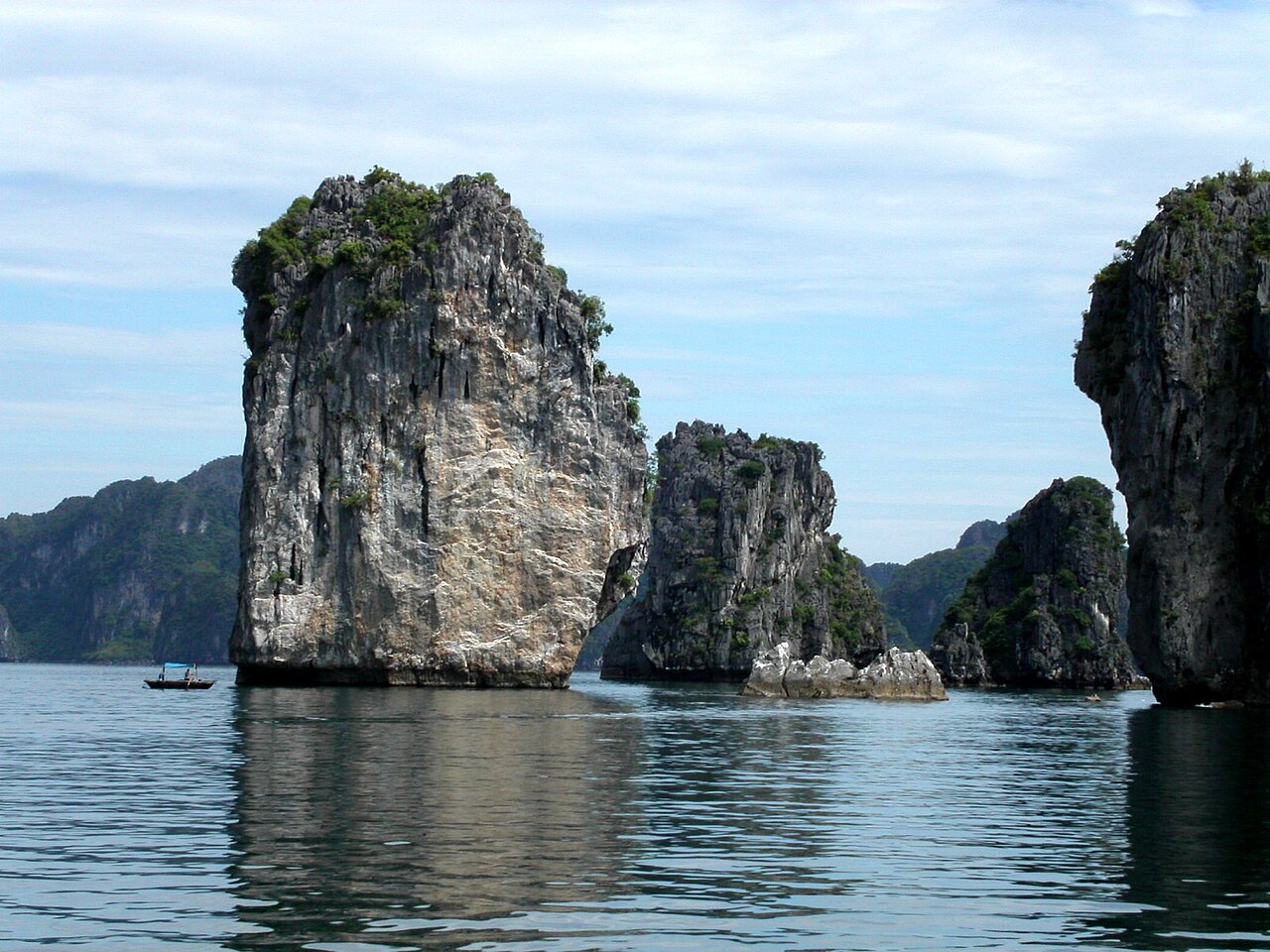

*Via Wikimedia Commons: [Halong Bay in Vietnam](https://commons.wikimedia.org/wiki/File:Halong_Bay_in_Vietnam.jpg) by Thomas Hirsch / User:Ravn, [CC BY-SA 3.0](http://creativecommons.org/licenses/by-sa/3.0/).*
*Via Wikimedia Commons: [Halong Bay in Vietnam](https://commons.wikimedia.org/wiki/File:Halong_Bay_in_Vietnam.jpg) by Thomas Hirsch / User:Ravn, [CC BY-SA 3.0](http://creativecommons.org/licenses/by-sa/3.0/).*
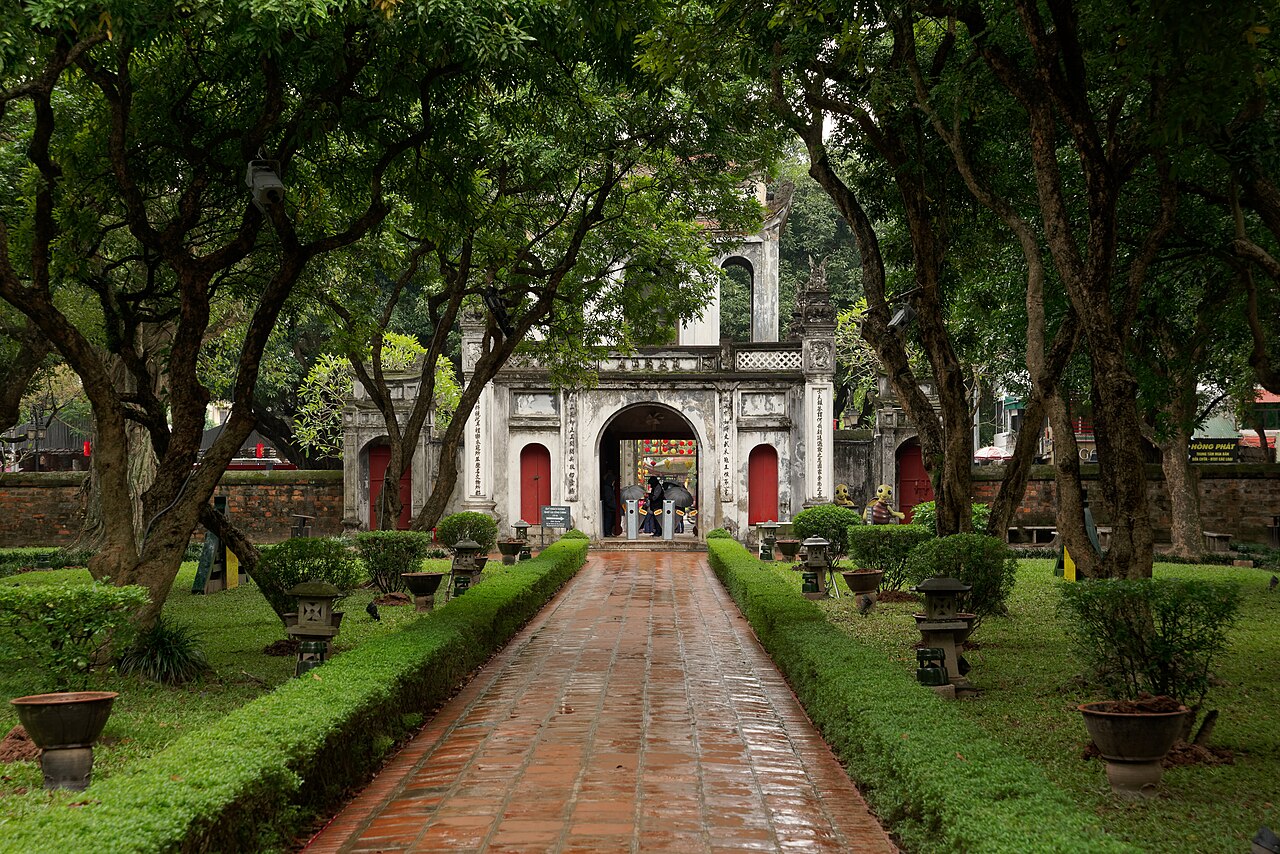
*Via Wikimedia Commons: [Main gate of the Temple of Literature, Hanoi, Vietnam, 20240123 0929 3](https://commons.wikimedia.org/wiki/File:Main_gate_of_the_Temple_of_Literature,_Hanoi,_Vietnam,_20240123_0929_3068.jpg) by Jakub Hałun, [CC BY 4.0](https://creativecommons.org/licenses/by/4.0).*
11 unchanged paragraphs
## Population
## Population
The World Bank puts the population at about 101.6 million in 2025, up from 101.0 million in 2024.[9]
The World Bank puts the population at about 101.6 million in 2025, up from 101.0 million in 2024.[9]
## Economy
## Economy
Economic reforms called Doi Moi, meaning renovation, began in 1986.[1] According to the World Bank, integration into world trade and investment lifted millions out of poverty and improved health, education and living standards; output per person rose from under 500 US dollars in 1986 to 5,066 in 2025, and extreme poverty fell from 14 per cent in 2010 to under 4 per cent in 2025.[1] In July 2026 the Bank reclassified Vietnam as upper-middle-income.[1] It lists an ageing population, shifting trade patterns, automation and climate risks as challenges.[1] Health insurance covered 95 per cent of the population in 2025.[1]
Economic reforms called Doi Moi, meaning renovation, began in 1986.[1] According to the World Bank, integration into world trade and investment lifted millions out of poverty and improved health, education and living standards; output per person rose from under 500 US dollars in 1986 to 5,066 in 2025, and extreme poverty fell from 14 per cent in 2010 to under 4 per cent in 2025.[1] In July 2026 the Bank reclassified Vietnam as upper-middle-income.[1] It lists an ageing population, shifting trade patterns, automation and climate risks as challenges.[1] Health insurance covered 95 per cent of the population in 2025.[1]
## Government and rights
## Government and rights
At its congress in January 2026 the party reappointed To Lam as general secretary, and the government set a target of rapid growth.[8]
At its congress in January 2026 the party reappointed To Lam as general secretary, and the government set a target of rapid growth.[8]
Human Rights Watch, a non-governmental organisation, reports that courts controlled by the party routinely deny defendants due process, that a 2025 restructuring added to the power of the Ministry of Public Security, and that in 2025 Vietnam held more than 160 political prisoners and arrested at least 40 other people for criticising the government.[7]
Human Rights Watch, a non-governmental organisation, reports that courts controlled by the party routinely deny defendants due process, that a 2025 restructuring added to the power of the Ministry of Public Security, and that in 2025 Vietnam held more than 160 political prisoners and arrested at least 40 other people for criticising the government.[7]
## What's unsettled
## What's unsettled
Whether the growth and high-income targets will be met is open,.
Whether the growth and high-income targets will be met is open,.
## Sources
## Sources
1. World Bank. "Viet Nam: Overview". https://www.worldbank.org/en/country/vietnam/overview
2. Asia for Educators, Columbia University. "Timelines: Vietnam". https://afe.easia.columbia.edu/timelines/vietnam_timeline.htm
3. U.S. Department of State, Office of the Historian. "Vietnam: a guide to relations with the United States". https://history.state.gov/countries/vietnam
4. Office of the Historian. "Dien Bien Phu and the Fall of French Indochina, 1954". https://history.state.gov/milestones/1953-1960/dien-bien-phu
5. Office of the Historian. "U.S. Involvement in the Vietnam War: the Gulf of Tonkin and Escalation, 1964". https://history.state.gov/milestones/1961-1968/gulf-of-tonkin
6. Office of the Historian. "Ending the Vietnam War, 1969-1973". https://history.state.gov/milestones/1969-1976/ending-vietnam
7. Human Rights Watch. "World Report 2026: Vietnam". https://www.hrw.org/world-report/2026/country-chapters/vietnam
8. NPR. "Vietnam leader To Lam consolidates power as country targets 10% growth". 23 January 2026. https://www.npr.org/2026/01/23/g-s1-106993/vietnam-leader-to-lam-consolidates-power-as-country-targets-10-growth
9. World Bank. "Population, total" (indicator SP.POP.TOTL). https://data.worldbank.org/indicator/SP.POP.TOTL?locations=VN
