Compare versions
Version 5 → Version 6 (current). Removed · Added. This shows the entry's text as it is written, including its formatting marks.
Version 5 · Version 6 (current) · Version history
Side by side · Together
Version 5Version 6 (current)
17 unchanged paragraphs
The United Kingdom of Great Britain and Northern Ireland is a country made up of England, Scotland, Wales and Northern Ireland. It is a monarchy with a parliamentary government, and its capital is London.[1][2]
The United Kingdom of Great Britain and Northern Ireland is a country made up of England, Scotland, Wales and Northern Ireland. It is a monarchy with a parliamentary government, and its capital is London.[1][2]
Developing story. This entry is updated as events change; every changing fact is dated.
Developing story. This entry is updated as events change; every changing fact is dated.
## At a glance
## At a glance
- **Capital:** London.[1]
- **Nations:** England, Scotland, Wales and Northern Ireland.[3]
- **Head of state:** King Charles III, since September 2022.[4]
- **Prime minister:** Andy Burnham, since 20 July 2026.[5]
- **Parliament:** the House of Commons and the House of Lords.[2]
- **Population:** an estimated 69.5 million in mid-2025.[3]
- **Surface area:** about 243,600 square kilometres.[6]
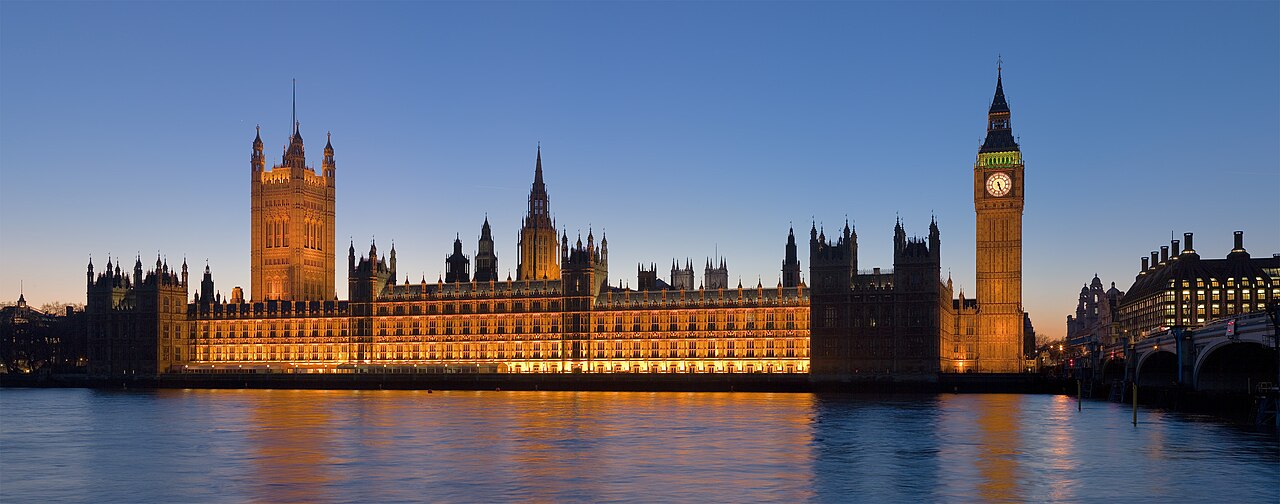

*Via Wikimedia Commons: [Palace of Westminster, London - Feb 2007](https://commons.wikimedia.org/wiki/File:Palace_of_Westminster,_London_-_Feb_2007.jpg) by Diliff, [CC BY-SA 2.5](https://creativecommons.org/licenses/by-sa/2.5).*
*Via Wikimedia Commons: [Palace of Westminster, London - Feb 2007](https://commons.wikimedia.org/wiki/File:Palace_of_Westminster,_London_-_Feb_2007.jpg) by Diliff, [CC BY-SA 2.5](https://creativecommons.org/licenses/by-sa/2.5).*
## Geography
## Geography
Scotland and Wales are the most mountainous parts of the country, and a ridge of hills, the Pennines, runs down the centre of northern England. Most of the country is gently rolling hills with isolated areas of high ground, and many coastal areas are low-lying, especially in the east and south of England.[7] The longest river, the Severn, runs about 338 kilometres from Wales to the Atlantic near Bristol; the Thames flows through Oxford and London.[7]
Scotland and Wales are the most mountainous parts of the country, and a ridge of hills, the Pennines, runs down the centre of northern England. Most of the country is gently rolling hills with isolated areas of high ground, and many coastal areas are low-lying, especially in the east and south of England.[7] The longest river, the Severn, runs about 338 kilometres from Wales to the Atlantic near Bristol; the Thames flows through Oxford and London.[7]
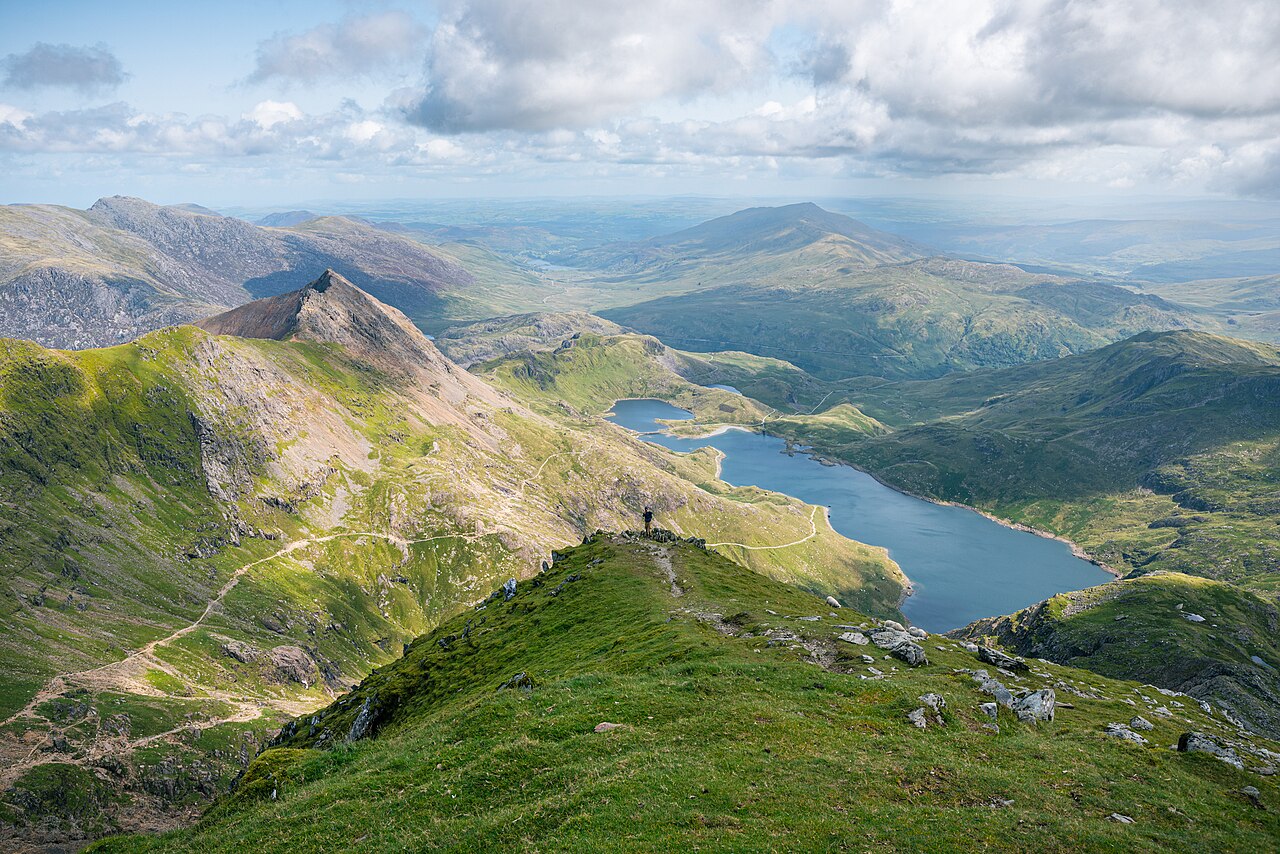

*Via Wikimedia Commons: [Yr Wyddfa towards Llyn Llydaw Crib Goch 2019 01](https://commons.wikimedia.org/wiki/File:Yr_Wyddfa_towards_Llyn_Llydaw_Crib_Goch_2019_01.jpg) by Julian Herzog ( Website ), [CC BY 4.0](https://creativecommons.org/licenses/by/4.0).*
*Via Wikimedia Commons: [Yr Wyddfa towards Llyn Llydaw Crib Goch 2019 01](https://commons.wikimedia.org/wiki/File:Yr_Wyddfa_towards_Llyn_Llydaw_Crib_Goch_2019_01.jpg) by Julian Herzog ( Website ), [CC BY 4.0](https://creativecommons.org/licenses/by/4.0).*
## People
## People
The population reached an estimated 69.5 million in mid-2025. Net international migration, at about 223,000 in the year, was much lower than the year before but remained the main source of growth.[3] About 83 per cent of people live in towns and cities, and life expectancy was about 81 years in 2024.[6]
The population reached an estimated 69.5 million in mid-2025. Net international migration, at about 223,000 in the year, was much lower than the year before but remained the main source of growth.[3] About 83 per cent of people live in towns and cities, and life expectancy was about 81 years in 2024.[6]
The following census figures are from 2021 and cover **England and Wales only**, not the whole country:
The following census figures are from 2021 and cover **England and Wales only**, not the whole country:
- **Ethnic group:** 81.7 per cent identified as White and 9.3 per cent as Asian, Asian British or Asian Welsh.[8]
- **Religion:** 46.2 per cent described themselves as Christian, the first time the share was below half; 37.2 per cent said they had no religion, and 6.5 per cent were Muslim.[9]
- **Ethnic group:** 81.7 per cent identified as White and 9.3 per cent as Asian, Asian British or Asian Welsh.[8]
- **Religion:** 46.2 per cent described themselves as Christian, the first time the share was below half; 37.2 per cent said they had no religion, and 6.5 per cent were Muslim.[9]
In Wales alone, about 538,000 people aged three and over, or 17.8 per cent, said they could speak Welsh.[10]
In Wales alone, about 538,000 people aged three and over, or 17.8 per cent, said they could speak Welsh.[10]
## How the country was formed
## How the country was formed
England and Scotland shared one monarch from 1603, when James VI of Scotland also took the English throne.[11] The Act of Union of 1707 joined their parliaments into one parliament of Great Britain.[11] On 1 January 1801 Great Britain and the Kingdom of Ireland became the United Kingdom of Great Britain and Ireland.[12]
England and Scotland shared one monarch from 1603, when James VI of Scotland also took the English throne.[11] The Act of Union of 1707 joined their parliaments into one parliament of Great Britain.[11] On 1 January 1801 Great Britain and the Kingdom of Ireland became the United Kingdom of Great Britain and Ireland.[12]
Wales was joined to England before that. In north Wales, King Edward I built great castles, including Conwy between 1283 and 1287.[38] Under Henry VIII, Acts of 1536 and 1543 incorporated Wales into England, extending English law there and giving Wales seats in Parliament. They also made English the only language of the law courts and shut those who used Welsh out of public office in Wales; the language provisions were not repealed until 1993.[39][40]
Under the union with Britain, Ireland suffered the Great Famine of 1845 to 1852, when potato blight struck. About one million people died of starvation and related causes, and at least another million left.[41]
Ireland was partitioned in the early 1920s, creating Northern Ireland from six of the island's 32 counties, with a majority of unionists, who wanted to stay in the United Kingdom.[13] The other four-fifths of the island became the Irish Free State in the early 1920s, at first still within the British Commonwealth; it later cut its ties with Britain.[14]
Ireland was partitioned in the early 1920s, creating Northern Ireland from six of the island's 32 counties, with a majority of unionists, who wanted to stay in the United Kingdom.[13] The other four-fifths of the island became the Irish Free State in the early 1920s, at first still within the British Commonwealth; it later cut its ties with Britain.[14]
## History
## History
### Romans and Normans
Julius Caesar tried to invade Britain in 55 BC without success; the Romans conquered it later, beginning under the emperor Claudius, and in the second century built Hadrian's Wall across the north. Contrary to popular belief, the wall has never been the border between England and Scotland.[42] On 14 October 1066 Duke William of Normandy defeated King Harold II, the last Anglo-Saxon king, at the Battle of Hastings, and on Christmas Day he was crowned king of England.[43]
### Magna Carta
In 1215 King John accepted Magna Carta, a charter that grew out of conflict with rebel barons; his son Henry III agreed to a revised version in 1225.[15][16] It dealt mainly with the crown and the nobility, but its principles later extended further and influenced parliamentary democracy.[16]
### Reformation and civil war
Henry VIII's wish to end his first marriage without the pope's approval led to a separate Church of England, and the monasteries were later closed and mostly sold.[44] From 1642 to 1651 supporters of King Charles I and of Parliament fought three civil wars over religion and how England, Scotland and Ireland should be governed. Charles was executed in 1649, and England was a republic for 11 years.[45] Oliver Cromwell ruled as Lord Protector until his death in 1658. His campaign in Ireland included the massacre at Drogheda, and by the Irish surrender in 1652 Catholicism had been banned there and Catholic-owned land confiscated.[46][45]
### Magna Carta and the Glorious Revolution
### The Glorious Revolution
In the Glorious Revolution of 1688, James II fled to France after political leaders invited William of Orange to intervene. Parliament offered the crown to William and Mary, with a Bill of Rights that limited royal power.[17]
4 unchanged paragraphs
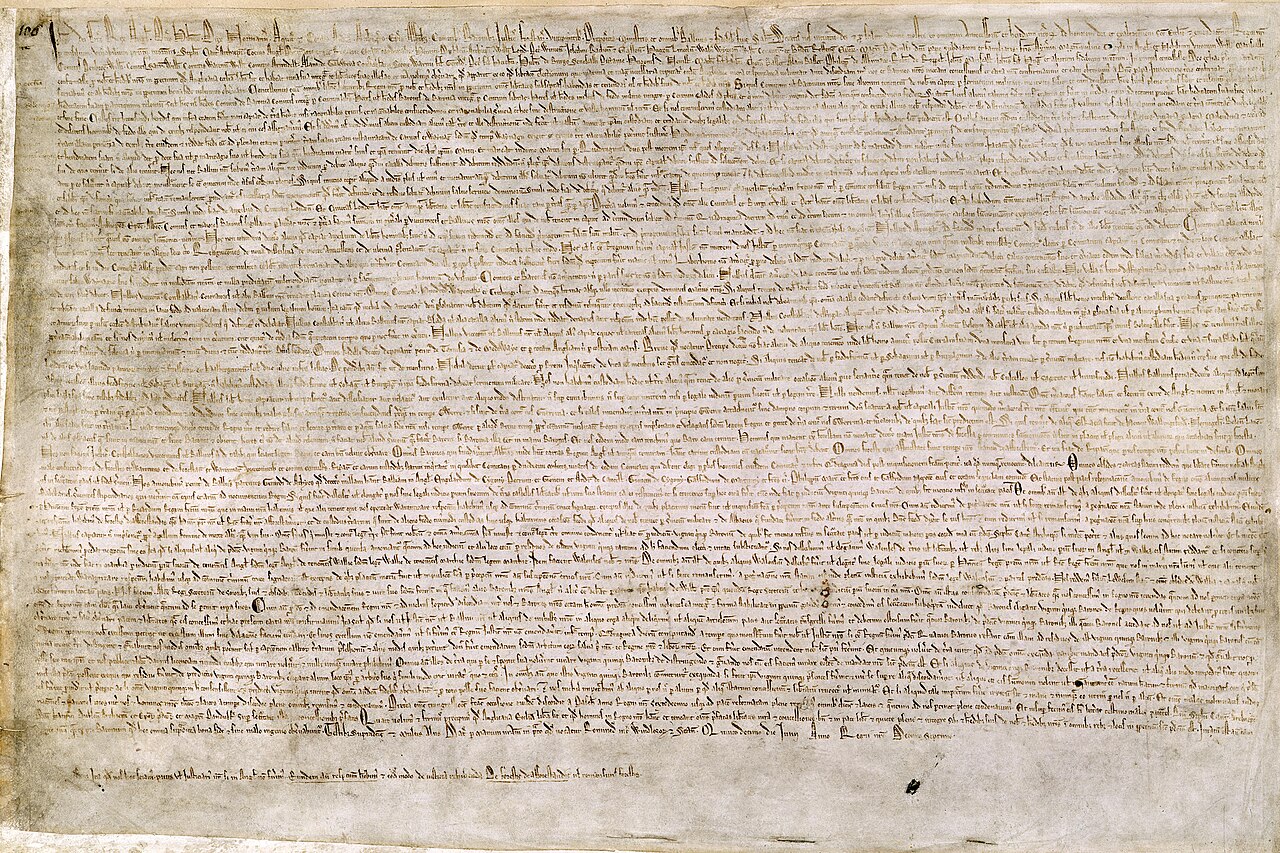

*Via Wikimedia Commons: [Magna Carta (British Library Cotton MS Augustus II.106)](https://commons.wikimedia.org/wiki/File:Magna_Carta_(British_Library_Cotton_MS_Augustus_II.106).jpg) by Original authors were the barons and King John of England ., public domain.*
*Via Wikimedia Commons: [Magna Carta (British Library Cotton MS Augustus II.106)](https://commons.wikimedia.org/wiki/File:Magna_Carta_(British_Library_Cotton_MS_Augustus_II.106).jpg) by Original authors were the barons and King John of England ., public domain.*
### Industry and empire
### Industry and empire
Britain was where the Industrial Revolution took hold first. Thomas Newcomen designed an early steam engine in the early 1700s, and from the 1760s James Watt made it far more efficient. Mechanised textile factories and growing coal and iron production followed, and the colonies of the British Empire provided a captive market for their goods.[18]
Britain was where the Industrial Revolution took hold first. Thomas Newcomen designed an early steam engine in the early 1700s, and from the 1760s James Watt made it far more efficient. Mechanised textile factories and growing coal and iron production followed, and the colonies of the British Empire provided a captive market for their goods.[18]
Britain was also deeply involved in the Atlantic slave trade. British and British colonial ships bought an estimated 3.4 million Africans between 1662 and 1807. An Act of 1807 made the trade illegal, but full emancipation was not achieved until 1838, and none of those freed received compensation.[19]
Britain was also deeply involved in the Atlantic slave trade. British and British colonial ships bought an estimated 3.4 million Africans between 1662 and 1807. An Act of 1807 made the trade illegal.[19] The Abolition of Slavery Act of 1833, for the British colonies, provided compensation to slave owners and made formerly enslaved people over the age of six work on as unpaid "apprentices"; full freedom came in 1838.[47] None of those freed received compensation.[19]
3 unchanged paragraphs
### Votes
### Votes
The Representation of the People Act of 1918 gave the vote to men over 21 and to some women, those over 30 who met a property qualification. Women gained the vote on equal terms with men in 1928.[20]
The Representation of the People Act of 1918 gave the vote to men over 21 and to some women, those over 30 who met a property qualification. Women gained the vote on equal terms with men in 1928.[20]
### The world wars
### The world wars
Britain was one of the Allied powers in the [First World War](https://micwyn.com/t/2882/world-war-i).[21] In the [Second World War](https://micwyn.com/t/2855/world-war-ii), [Winston Churchill](https://micwyn.com/t/2890/winston-churchill) became prime minister in May 1940.[22] From July to October 1940 the Royal Air Force fought the German air force in the Battle of Britain, and from September 1940 to May 1941 German bombing known as the Blitz struck London and other targets.[23] Two months after Germany surrendered in 1945, voters removed Churchill's Conservatives from office.[22]
Britain was one of the Allied powers in the [First World War](https://micwyn.com/t/2882/world-war-i).[21] In September 1914 French and British forces confronted the invading German army at the First Battle of the Marne.[21] In the [Second World War](https://micwyn.com/t/2855/world-war-ii), [Winston Churchill](https://micwyn.com/t/2890/winston-churchill) became prime minister in May 1940.[22] From July to October 1940 the Royal Air Force fought the German air force in the Battle of Britain, and from September 1940 to May 1941 German bombing known as the Blitz struck London and other targets.[23] Two months after Germany surrendered in 1945, voters removed Churchill's Conservatives from office.[22]
6 unchanged paragraphs
### After 1945
### After 1945
Labour won the 1945 election, and the National Health Service started on 5 July 1948, offering a comprehensive service to the whole community.[24] The British Indian Empire was partitioned, and India became independent on 15 August 1947.[25] [Elizabeth II](https://micwyn.com/t/3294/elizabeth-ii) reigned for seven decades until her death in 2022.[4] Margaret Thatcher, the first woman to be prime minister, served from 1979 to 1990; her governments reduced the power of trade unions and privatised some industries, and in 1982 fought Argentina to retake the Falkland Islands.[26]
Labour won the 1945 election, and the National Health Service started on 5 July 1948, offering a comprehensive service to the whole community.[24] The British Indian Empire was partitioned, and India became independent on 15 August 1947.[25] [Elizabeth II](https://micwyn.com/t/3294/elizabeth-ii) reigned for seven decades until her death in 2022.[4] Margaret Thatcher, the first woman to be prime minister, served from 1979 to 1990; her governments reduced the power of trade unions and privatised some industries, and in 1982 fought Argentina to retake the Falkland Islands.[26]
### Northern Ireland: the Troubles and peace
### Northern Ireland: the Troubles and peace
Conflict between republicans, who sought a united Ireland and came largely from Catholic communities, and unionists, largely Protestant, grew into the violence known as the Troubles, in which more than 3,500 people died. The Good Friday Agreement of 1998 brought an end to decades of that violence.[13] It set up government shared between unionists and nationalists. In February 2024, after a two-year unionist boycott, Michelle O'Neill became first minister, the first Irish nationalist to hold the post.[27]
Conflict between republicans, who sought a united Ireland and came largely from Catholic communities, and unionists, largely Protestant, grew into the violence known as the Troubles, in which more than 3,500 people died. The Good Friday Agreement of 1998 brought an end to decades of that violence.[13] It set up government shared between unionists and nationalists. In February 2024, after a two-year unionist boycott, Michelle O'Neill became first minister, the first Irish nationalist to hold the post.[27]
### Leaving the European Union
### Leaving the European Union
On 23 June 2016 voters chose by 52 to 48 per cent to leave the European Union, after more than four decades of membership.[28] The United Kingdom formally left on 31 January 2020 and entered a transition period.[29]
On 23 June 2016 voters chose by 52 to 48 per cent to leave the European Union, after more than four decades of membership.[28] The United Kingdom formally left on 31 January 2020 and entered a transition period.[29]
## The empire and its end
Britain lost thirteen of its North American colonies in the war of 1775 to 1783, which created the [United States](https://micwyn.com/t/3541/united-states).[48] In 1926 Britain and the self-governing Dominions, among them Canada, Australia and New Zealand, agreed that they were equal members of a community within it.[49] After the Second World War it came apart: India became independent in 1947,[25] Ghana on 6 March 1957,[50] and Hong Kong was returned to China in 1997.[51]
The Commonwealth grew out of the empire. The London Declaration of 1949 began its modern form, and it is now a voluntary association of 56 independent and equal countries with about 2.7 billion people.[52]
13 unchanged paragraphs
## Government and politics
## Government and politics
The prime minister leads the government with the Cabinet, and ministers are chosen from members of the Commons and the Lords. Proposed laws must be approved by Parliament and then by the King.[2]
The prime minister leads the government with the Cabinet, and ministers are chosen from members of the Commons and the Lords. Proposed laws must be approved by Parliament and then by the King.[2]
Labour, led by Keir Starmer, won a landslide in the July 2024 general election, ending 14 years of Conservative rule.[30] Starmer announced on 22 June 2026 that he would resign as Labour leader, after heavy losses in local elections and pressure from Labour's own members of Parliament. Burnham, formerly mayor of Greater Manchester, became leader unopposed and took office as prime minister on 20 July.[5][31] He was the seventh prime minister in a little over a decade since the Brexit vote.[5] A change of party leader does not require a general election; the next one need not be held until 2029.[5]
Labour, led by Keir Starmer, won a landslide in the July 2024 general election, ending 14 years of Conservative rule.[30] Starmer announced on 22 June 2026 that he would resign as Labour leader, after heavy losses in local elections and pressure from Labour's own members of Parliament. Burnham, formerly mayor of Greater Manchester, became leader unopposed and took office as prime minister on 20 July.[5][31] He was the seventh prime minister in a little over a decade since the Brexit vote.[5] A change of party leader does not require a general election; the next one need not be held until 2029.[5]
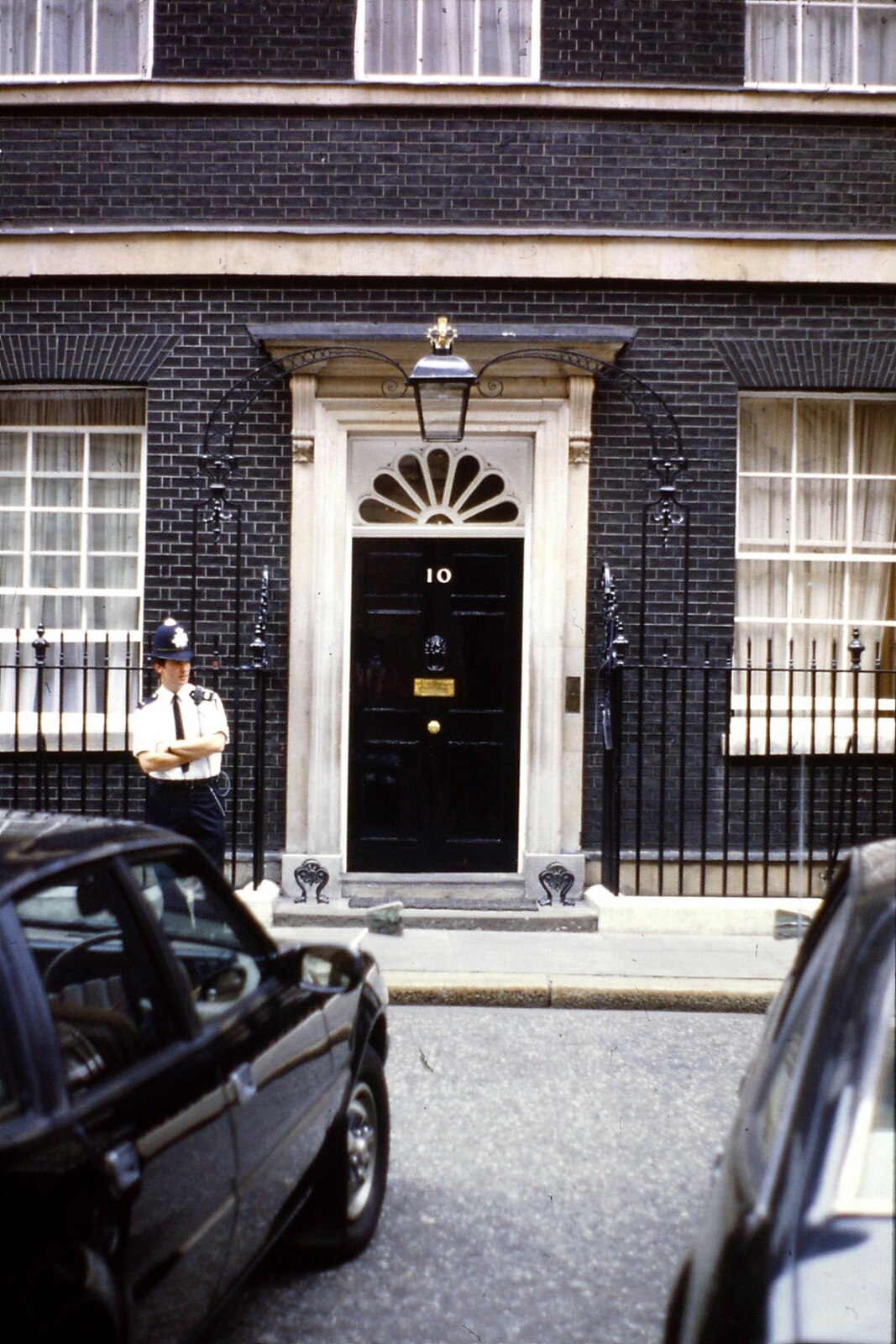

*Via Wikimedia Commons: [10 Downing Street - the famous front door, 1979 - geograph.org.uk - 68](https://commons.wikimedia.org/wiki/File:10_Downing_Street_-_the_famous_front_door,_1979_-_geograph.org.uk_-_6873810.jpg) by Nigel Thompson, [CC BY-SA 2.0](https://creativecommons.org/licenses/by-sa/2.0).*
*Via Wikimedia Commons: [10 Downing Street - the famous front door, 1979 - geograph.org.uk - 68](https://commons.wikimedia.org/wiki/File:10_Downing_Street_-_the_famous_front_door,_1979_-_geograph.org.uk_-_6873810.jpg) by Nigel Thompson, [CC BY-SA 2.0](https://creativecommons.org/licenses/by-sa/2.0).*
## Devolution
## Devolution
Scotland, Wales and Northern Ireland have their own governments, responsible for many domestic matters, with law-making parliaments or assemblies.[2] Voters in Wales narrowly approved an assembly in 1997, with 50.3 per cent in favour, alongside a vote in Scotland, and devolution began in 1999.[32]
Scotland, Wales and Northern Ireland have their own governments, responsible for many domestic matters, with law-making parliaments or assemblies.[2] Voters in Wales narrowly approved an assembly in 1997, with 50.3 per cent in favour, alongside a vote in Scotland, and devolution began in 1999.[32]
In September 2014 Scotland voted against independence by 55.3 to 44.7 per cent, with a turnout of more than 85 per cent.[33]
In September 2014 Scotland voted against independence by 55.3 to 44.7 per cent, with a turnout of more than 85 per cent.[33]
Elections in May 2026 changed the picture. In Scotland the Scottish National Party won the most seats, 58, short of a majority.[34] In Wales, Plaid Cymru won 43 seats and Labour nine, the first time Labour had not been the largest party in the Welsh parliament; Plaid's leader, Rhun ap Iorwerth, leads a minority government.[32]
Elections in May 2026 changed the picture. In Scotland the Scottish National Party won the most seats, 58, short of a majority.[34] In Wales, Plaid Cymru won 43 seats and Labour nine, the first time Labour had not been the largest party in the Welsh parliament; Plaid's leader, Rhun ap Iorwerth, leads a minority government.[32]
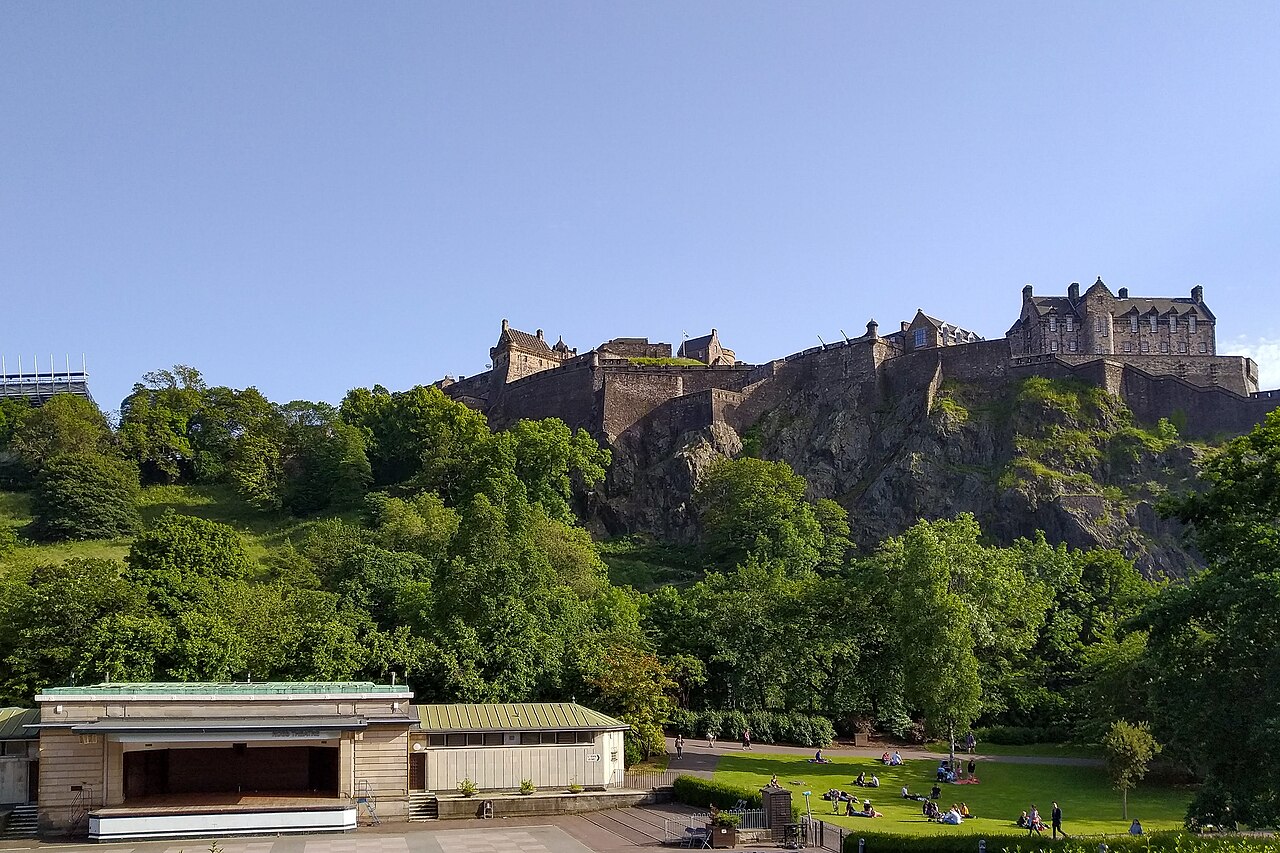

*Via Wikimedia Commons: [Castle, City of Edinburgh (IMG 20190628 180330)](https://commons.wikimedia.org/wiki/File:Castle,_City_of_Edinburgh_(IMG_20190628_180330).jpg) by Matti Blume, [CC BY-SA 4.0](https://creativecommons.org/licenses/by-sa/4.0/deed.en).*
*Via Wikimedia Commons: [Castle, City of Edinburgh (IMG 20190628 180330)](https://commons.wikimedia.org/wiki/File:Castle,_City_of_Edinburgh_(IMG_20190628_180330).jpg) by Matti Blume, [CC BY-SA 4.0](https://creativecommons.org/licenses/by-sa/4.0/deed.en).*
## Economy
## Economy
Output was about 4.0 trillion US dollars in 2025, or about 57,600 dollars per person.[6] The central bank is the [Bank of England](https://micwyn.com/t/1745/bank-of-england).
Output was about 4.0 trillion US dollars in 2025, or about 57,600 dollars per person.[6] The central bank is the [Bank of England](https://micwyn.com/t/1745/bank-of-england).
In the third quarter of 2026 the economy grew by 0.7 per cent on the quarter. Services, up 0.9 per cent, drove most of it; production rose 0.1 per cent and construction fell 0.7 per cent.[53] Consumer prices were 3.6 per cent higher in October 2026 than a year earlier.[54] Between July and September the unemployment rate was 4.6 per cent and 75.4 per cent of people aged 16 to 64 were in work.[55]
The country buys more goods abroad than it sells and makes up part of the gap by selling services. In the third quarter of 2026 the deficit in goods was 61.5 billion pounds and the surplus in services 51.1 billion, leaving an overall deficit of 10.4 billion, excluding precious metals.[56]
On 4 November 2026 the Bank of England's rate-setting committee voted eight to one to raise its main interest rate to 4 per cent.[57] The Bank has said it expects inflation to reach about 5 per cent by the middle of 2027 because of higher energy prices.[58]
London is a long-standing financial centre: the London Stock Exchange traces its origins to a list of prices published at a coffee house in 1698.[59]
## Culture
## Culture
[William Shakespeare](https://micwyn.com/t/3315/william-shakespeare) (1564 to 1616) is regarded as England's national poet; he wrote at least 37 plays and a collection of sonnets.[35] Churchill received the Nobel Prize in Literature in 1953.[36]
[William Shakespeare](https://micwyn.com/t/3315/william-shakespeare) (1564 to 1616) is regarded as England's national poet; he wrote at least 37 plays and a collection of sonnets.[35] Churchill received the Nobel Prize in Literature in 1953.[36]
The National Gallery in London was founded in 1824,[60] and the first Tate gallery, now Tate Britain, opened in 1897.[61] The Edinburgh Festival Fringe, which began in 1947, calls itself the world's largest arts festival.[62] Among later Nobel laureates in literature is the novelist Kazuo Ishiguro (2017), born in Japan and raised in England.[63] In football, England's Premier League began in 1992.[64]
5 unchanged paragraphs
## What's unsettled
## What's unsettled
Relations with the European Union are still being rebuilt. At a summit in Brussels on 20 November 2026 the two sides agreed to remove checks on trade in plant and animal products, to link their carbon trading schemes and to let 100,000 young adults from each side live and work in the other for up to three years. They gave themselves six months to agree on university fees.[37]
Relations with the European Union are still being rebuilt. At a summit in Brussels on 20 November 2026 the two sides agreed to remove checks on trade in plant and animal products, to link their carbon trading schemes and to let 100,000 young adults from each side live and work in the other for up to three years. They gave themselves six months to agree on university fees.[37]
## See also
## See also
- [Queen Victoria](https://micwyn.com/t/3296/queen-victoria)
- [Princess Margaret](https://micwyn.com/t/3530/princess-margaret)
- [Diana, Princess of Wales](https://micwyn.com/t/3300/diana-princess-of-wales)
- [The Beatles](https://micwyn.com/t/3421/the-beatles)
- [John Lennon](https://micwyn.com/t/3369/john-lennon)
- [Canada](https://micwyn.com/t/3568/canada)
- [United States](https://micwyn.com/t/3541/united-states)
## Sources
## Sources
1. World Bank. Country record for the United Kingdom (API). https://api.worldbank.org/v2/country/GBR?format=json
2. GOV.UK. "How government works". https://www.gov.uk/government/how-government-works
3. Office for National Statistics. "Population estimates for the UK, England, Wales, Scotland and Northern Ireland: mid-2025". https://www.ons.gov.uk/peoplepopulationandcommunity/populationandmigration/populationestimates/bulletins/annualmidyearpopulationestimates/mid2025
4. CNN. "September 8, 2022: The death of Queen Elizabeth II". https://www.cnn.com/uk/live-news/queen-elizabeth-health-concerns-intl-gbr/h_a94eebc73726cc5b76edd55045c88824
5. Associated Press. "Why Britain is getting a new prime minister without a general election". PBS News, July 2026. https://www.pbs.org/newshour/world/why-britain-is-getting-a-new-prime-minister-without-a-general-election
6. World Bank. World Development Indicators: surface area, urban share, life expectancy and GDP for the United Kingdom. https://data.worldbank.org/country/united-kingdom
7. Royal Geographical Society. "UK Mountains and Rivers Factsheet". https://www.rgs.org/media/efnlb4dd/theunitedkingdomlesson2ukmountainsandriversfactsheet.pdf
8. Office for National Statistics. "Ethnic group, England and Wales: Census 2021". https://www.ons.gov.uk/peoplepopulationandcommunity/culturalidentity/ethnicity/bulletins/ethnicgroupenglandandwales/census2021
9. Office for National Statistics. "Religion, England and Wales: Census 2021". https://www.ons.gov.uk/peoplepopulationandcommunity/culturalidentity/religion/bulletins/religionenglandandwales/census2021
10. Office for National Statistics. "Welsh language, Wales: Census 2021". https://www.ons.gov.uk/peoplepopulationandcommunity/culturalidentity/language/bulletins/welshlanguagewales/census2021
11. EBSCO Research Starters. "Act of Union (1707)". https://www.ebsco.com/research-starters/history/act-union-1707
12. EBSCO Research Starters. "Act of Union (1800)". https://www.ebsco.com/research-starters/history/act-union-1800
13. CNN. "What is the Good Friday Agreement? How a historic deal ended the Troubles in Northern Ireland". April 2023. https://edition.cnn.com/2023/04/07/uk/good-friday-agreement-explained-intl-cmd-gbr/index.html
14. HISTORY. "Irish Free State declared". https://www.history.com/this-day-in-history/december-6/irish-free-state-declared
15. The National Archives. "Magna Carta 1214-1225". https://www.nationalarchives.gov.uk/education/resources/magna-carta/
16. EBSCO Research Starters. "Magna Carta". https://www.ebsco.com/research-starters/history/magna-carta
17. EBSCO Research Starters. "Glorious Revolution". https://www.ebsco.com/research-starters/history/glorious-revolution
18. HISTORY. "Industrial Revolution: Definition, Inventions & Dates". https://www.history.com/articles/industrial-revolution
19. Royal Museums Greenwich. "How did the slave trade end in Britain?". https://www.rmg.co.uk/stories/topics/how-did-slave-trade-end-britain
20. The National Archives. "Women's suffrage". https://www.nationalarchives.gov.uk/explore-the-collection/explore-by-topic/democracy-and-protest/womens-suffrage/
21. HISTORY. "World War I: Summary, Causes & Facts". https://www.history.com/articles/world-war-i-history
22. HISTORY. "Winston S. Churchill". https://www.history.com/articles/winston-churchill
23. HISTORY. "Battle of Britain". https://www.history.com/articles/battle-of-britain-1
24. The National Archives. "The foundation of the NHS". https://www.nationalarchives.gov.uk/explore-the-collection/stories/the-foundation-of-the-nhs/
25. Library of Congress Country Studies. "India: Political Impasse and Independence". https://countrystudies.us/india/21.htm
26. HISTORY. "Margaret Thatcher". https://www.history.com/articles/margaret-thatcher
27. NPR. "For the first time, an Irish nationalist leads Northern Ireland's government". 3 February 2024. https://www.apr.org/2024-02-03/for-the-first-time-an-irish-nationalist-leads-northern-irelands-government
28. NPR. "Britain left the EU 10 years ago. Its politics has been an unruly mess". June 2026. https://www.npr.org/2026/06/23/nx-s1-5867281/brexit-10-years-later
29. NPR. "Great Britain Set To Leave European Union Tonight". 31 January 2020. https://www.npr.org/2020/01/31/801687640/great-britain-set-to-leave-european-union-tonight
30. CNN. "Starmer pledges to 'reset' Britain as Labour takes over after 14 years of Conservative rule". 5 July 2024. https://edition.cnn.com/2024/07/05/uk/uk-election-labour-win-gbr-intl
31. NPR. "Andy Burnham becomes U.K. prime minister". KPBS, 20 July 2026. https://www.kpbs.org/news/international/2026/07/20/keir-starmer-resigns-andy-burnham-becomes-u-k-prime-minister
32. Institute for Government. "Welsh elections 2026: Senedd Cymru (Welsh parliament)". https://www.instituteforgovernment.org.uk/article/explainer/senedd-cymru-welsh-parliament
33. NPR. "As Scotland Rejects Independence, Cameron Promises More Autonomy". 19 September 2014. https://www.npr.org/sections/thetwo-way/2014/09/19/349782976/as-scotland-rejects-independence-cameron-promises-more-autonomy
34. Scottish Parliament. "SB 26-26: The result". May 2026. https://www.parliament.scot/chamber-and-committees/research-prepared-for-parliament/research-briefings/2026/5/12/sb-2626/the-result
35. HISTORY. "William Shakespeare". https://www.history.com/articles/william-shakespeare
36. NobelPrize.org. "Winston Churchill: Facts". https://www.nobelprize.org/prizes/literature/1953/churchill/facts/
37. Associated Press. "U.K. and EU agree deals on trade and youth movement". CP24, 20 November 2026. https://www.cp24.com/news/world/2026/11/20/the-uk-and-eu-hold-a-rare-summit-to-strengthen-ties-as-burnham-seeks-to-mend-brexit-damage/
38. Cadw. "Conwy Castle". https://cadw.gov.wales/visit/places-to-visit/conwy-castle
39. legislation.gov.uk. "Laws in Wales Act 1535 (repealed)". https://www.legislation.gov.uk/aep/Hen8/27/26/1991-02-01
40. Welsh Icons. "Laws in Wales Acts 1535-1542" (text drawn from Wikipedia). https://welshicons.org/html/laws_in_wales_acts_1535-1542.php
41. HISTORY. "Irish Potato Famine". https://www.history.com/articles/irish-potato-famine
42. HISTORY. "Hadrian's Wall". https://www.history.com/articles/hadrians-wall
43. HISTORY. "The Battle of Hastings". https://www.history.com/this-day-in-history/october-14/the-battle-of-hastings
44. HISTORY. "Henry VIII". https://www.history.com/articles/henry-viii
45. HISTORY. "English Civil Wars". https://www.history.com/articles/english-civil-wars
46. HISTORY. "Oliver Cromwell". https://www.history.com/articles/oliver-cromwell
47. The National Archives. "The 1833 Abolition of Slavery Act and compensation claims". https://www.nationalarchives.gov.uk/explore-the-collection/explore-by-time-period/georgians/1833-abolition-of-slavery-act-and-compensation-claims/
48. HISTORY. "Revolutionary War". https://www.history.com/articles/american-revolution-history
49. The Commonwealth. "Our history". https://thecommonwealth.org/history
50. Library of Congress Country Studies. "Ghana: Independent Ghana". https://countrystudies.us/ghana/14.htm
51. CNN. "China's Xi Jinping claims Hong Kong handover marked 'beginning of true democracy'". 1 July 2022. https://www.cnn.com/2022/07/01/asia/hong-kong-china-anniversary-day-intl-hnk
52. The Commonwealth. "About us". https://thecommonwealth.org/about-us
53. Office for National Statistics. "GDP first quarterly estimate, UK: July to September 2026". https://www.ons.gov.uk/economy/grossdomesticproductgdp/bulletins/gdpfirstquarterlyestimateuk/julytoseptember2026
54. Office for National Statistics. "Consumer price inflation, UK: October 2026". https://www.ons.gov.uk/economy/inflationandpriceindices/bulletins/consumerpriceinflation/october2026
55. Office for National Statistics. "Labour market overview, UK: November 2026". https://www.ons.gov.uk/employmentandlabourmarket/peopleinwork/employmentandemployeetypes/bulletins/uklabourmarket/november2026
56. Office for National Statistics. "UK trade: September 2026". https://www.ons.gov.uk/economy/nationalaccounts/balanceofpayments/bulletins/uktrade/september2026
57. Bank of England. "Bank Rate increased to 4%: November 2026 Monetary Policy Summary and Minutes". https://www.bankofengland.co.uk/monetary-policy-summary-and-minutes/2026/november-2026
58. Bank of England. "Interest rates and Bank Rate". https://www.bankofengland.co.uk/monetary-policy/the-interest-rate-bank-rate
59. London Stock Exchange. "Our Story: History and Legacy". https://www.londonstockexchange.com/discover/lseg/our-history
60. National Gallery. "Our history". https://www.nationalgallery.org.uk/about-us/history
61. Tate. "History of Tate". https://www.tate.org.uk/about-us/history-tate
62. Edinburgh Festival Fringe. "Welcome to the new edfringe.com". https://www.edfringe.com/about-us/history
63. NobelPrize.org. "Kazuo Ishiguro: Facts". https://www.nobelprize.org/prizes/literature/2017/ishiguro/facts/
64. Premier League. "Premier League History". https://www.premierleague.com/history
