The Indian Premier League (IPL) is a professional Twenty20 cricket league in India, set up by the Board of Control for Cricket in India (BCCI), in which city-based franchise teams play an annual tournament.[1]
Overview
Twenty20, often written T20, is a short form of cricket in which each side has a limited number of overs. The IPL was established in 2008 and is played as a round-robin league stage followed by knockout playoff games.[1] Teams are owned by companies, investors and entertainment figures, who bid for players at auctions organised by the league.[1] The league's success led the BCCI to start a women's competition, the Women's Premier League, which played its first season in March 2023.[1]
Founding
The BCCI launched its plans on 13 September 2007 at an event in Delhi, where it presented a new international Twenty20 club competition, the Champions Twenty20 League, run by the boards of India, England, Australia and South Africa.[2] Indian teams were to qualify for it through a domestic franchise competition, the BCCI Indian Premier League, planned for April 2008 over 44 days with 59 matches.[2] Each squad was to have at least 16 players, including four international players.[2] A governing council was named to run the IPL, with Lalit Modi, then a BCCI vice-president, as its convenor.[2] At the time, ESPNcricinfo noted that the new competition had official sanction, unlike the rival Indian Cricket League.[2]
On 24 January 2008, eight city franchises were sold at auction for a total of US$723.59 million, against a combined base price of US$400 million.[3] The Mumbai franchise, bought by Mukesh Ambani's Reliance group, was the most expensive at US$111.9 million, followed by Bangalore, bought by Vijay Mallya's UB group, at US$111.6 million.[3] The other founding owners were Deccan Chronicle (Hyderabad), India Cements (Chennai), the GMR Group (Delhi), a group including Preity Zinta and Ness Wadia (Mohali), Shah Rukh Khan's Red Chillies Entertainment (Kolkata), and a consortium led by Emerging Media (Jaipur), whose US$67 million bid was the lowest.[3] The first season was due to begin on 18 April 2008, with teams playing each other home and away.[3]
Format
The league stage is a round-robin competition, and the top four teams reach the playoffs, where the format gives a team that loses its first playoff match a second chance to reach the final.[1] Britannica describes the ten-team league as split into two groups of five.[1] The 2026 season had 70 league-stage matches, beginning on 28 March 2026 with the defending champions, Royal Challengers Bengaluru, hosting Sunrisers Hyderabad at the M. Chinnaswamy Stadium in Bengaluru, and the league stage ended on 24 May 2026.[4] Wisden listed 13 venues for that season, with Raipur hosting IPL matches for the first time as a second home ground for Royal Challengers Bengaluru.[4] At the player auction before the 2026 season, all ten teams filled their squads to the limit of 25 players, including eight overseas players each.[5]
The 2025 season was interrupted when the IPL was suspended for a week on 9 May 2025 amid hostilities between India and Pakistan.[6] It resumed on 17 May 2025, with the remaining league matches played across six venues, and the final, first planned for May, was moved to 3 June 2025.[6]
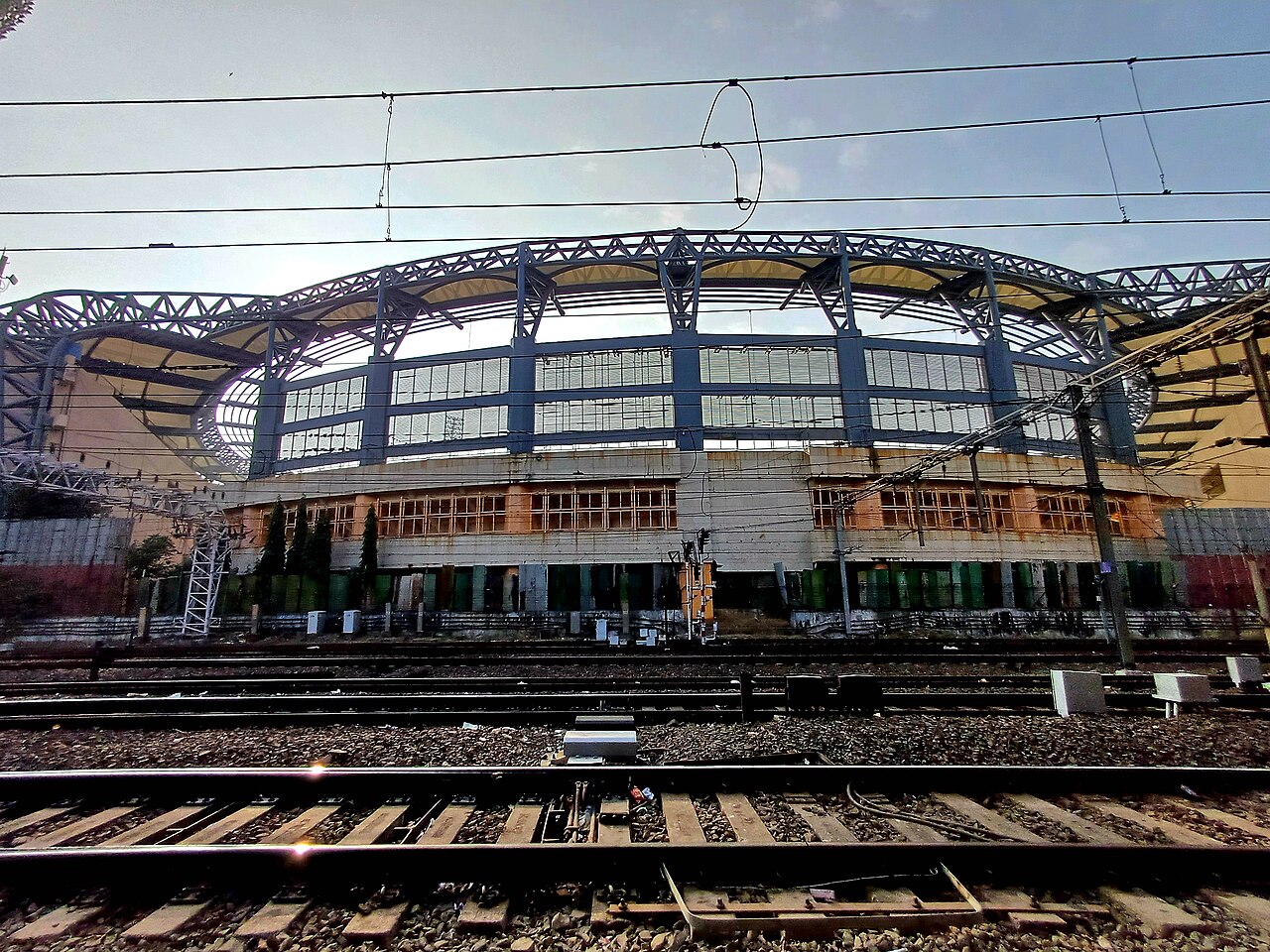
Wankhede Stadium in Mumbai, seen from Marine Lines across railway tracks, in January 2024.
The league began in 2008 with eight franchises, including Mumbai Indians, Chennai Super Kings and Royal Challengers Bangalore.[1] Two teams, Pune Warriors India and Kochi Tuskers Kerala, joined in 2011; Kochi Tuskers Kerala played only one season.[1] Deccan Chargers, the 2009 champions, were replaced by Sunrisers Hyderabad in 2013.[1] Some teams have changed their names: Delhi Daredevils became Delhi Capitals and Kings XI Punjab became Punjab Kings.[1]
For the 2016 and 2017 seasons, two temporary teams based in Pune and Rajkot took the places of Chennai Super Kings and Rajasthan Royals, which were then suspended (see Corruption and betting cases below).[7] The New Rising consortium, linked to Sanjiv Goenka, took the Pune team and the smartphone maker Intex the Rajkot team, under a reverse-bidding process in which the bidder asking the least from the league's central revenue won.[7] The Pune side was named Rising Pune Supergiants and the Rajkot side Gujarat Lions.[7]
On 25 October 2021, at an auction in Dubai, the BCCI awarded two new franchises: Lucknow to the RP Sanjiv Goenka Group for INR 7,090 crore (about US$940 million) and Ahmedabad to CVC Capital Partners for INR 5,625 crore (about US$750 million), against a base price of INR 2,000 crore (about US$270 million).[8] (A crore is a unit of the Indian numbering system.) The winners pay the amount over ten years.[8] The two teams, Lucknow Super Giants and Gujarat Titans, first played in 2022.[1]
As of the 2026 season, the ten teams were Chennai Super Kings, Delhi Capitals, Gujarat Titans, Kolkata Knight Riders, Lucknow Super Giants, Mumbai Indians, Punjab Kings, Rajasthan Royals, Royal Challengers Bengaluru and Sunrisers Hyderabad.[1][4][5]
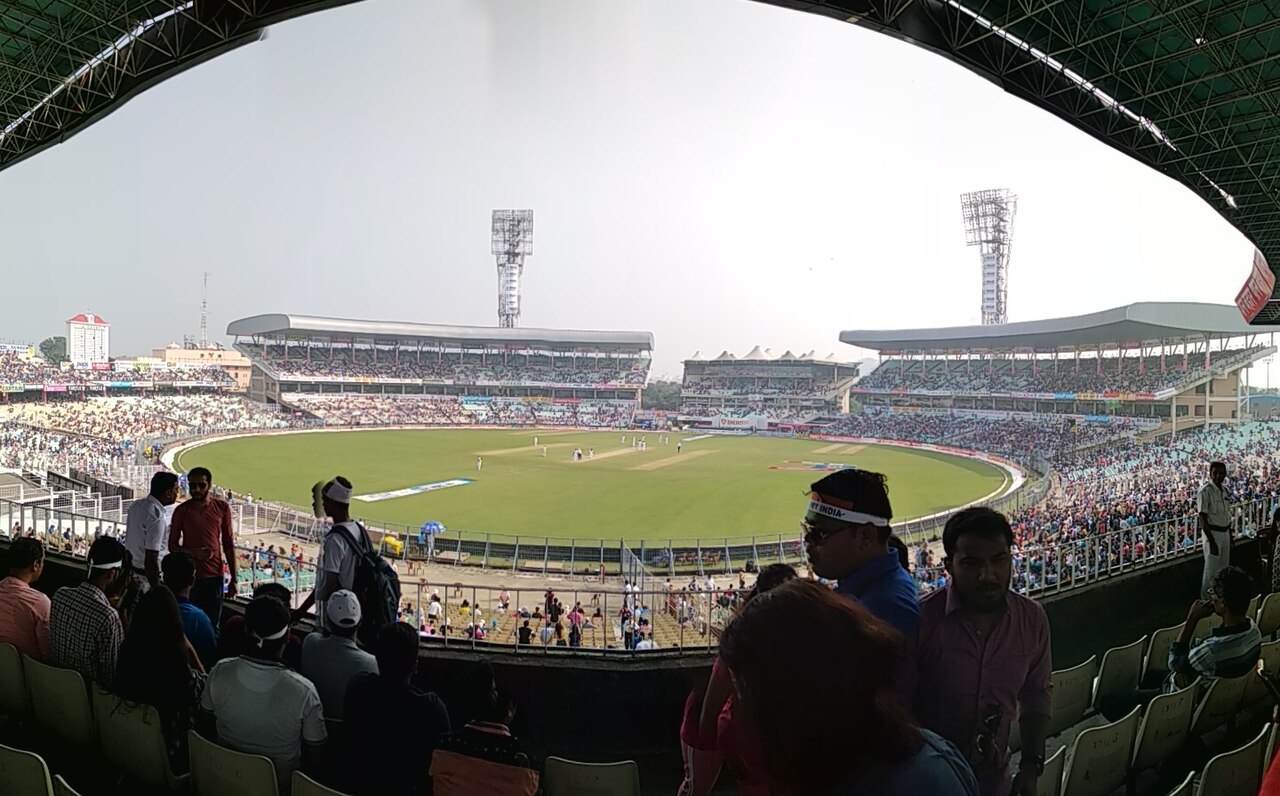
The ground and stands of Eden Gardens in Kolkata during a match, photographed on 24 November 2019.
The table lists each season's champion and the team it beat in the final. Results for 2008 to 2024 are as given by Britannica; 2025 and 2026 are from match reports of those finals.
Season
Champion
Runner-up
2008
Rajasthan Royals
Chennai Super Kings
2009
Deccan Chargers
Royal Challengers Bangalore
2010
Chennai Super Kings
Mumbai Indians
2011
Chennai Super Kings
Royal Challengers Bangalore
2012
Kolkata Knight Riders
Chennai Super Kings
2013
Mumbai Indians
Chennai Super Kings
2014
Kolkata Knight Riders
Kings XI Punjab
2015
Mumbai Indians
Chennai Super Kings
2016
Sunrisers Hyderabad
Royal Challengers Bangalore
2017
Mumbai Indians
Rising Pune Supergiant
2018
Chennai Super Kings
Sunrisers Hyderabad
2019
Mumbai Indians
Chennai Super Kings
2020
Mumbai Indians
Delhi Capitals
2021
Chennai Super Kings
Kolkata Knight Riders
2022
Gujarat Titans
Rajasthan Royals
2023
Chennai Super Kings
Gujarat Titans
2024
Kolkata Knight Riders
Sunrisers Hyderabad
2025
Royal Challengers Bengaluru
Punjab Kings
2026
Royal Challengers Bengaluru
Gujarat Titans
Sources for the table: 2008 to 2024[1]; 2025[9]; 2026[10][11].
Gujarat Titans won the title in their first season, 2022.[1] In the 2025 final in Ahmedabad on 3 June 2025, Royal Challengers Bengaluru made 190 for 9 and beat Punjab Kings by six runs, winning the title in their fourth final after losing the previous three.[9] In the 2026 final at the Narendra Modi Stadium in Ahmedabad, covered in Outlook's dispatch for 31 May 2026, Royal Challengers Bengaluru beat Gujarat Titans by five wickets to retain the title.[10] Gujarat Titans made 155 for 8, and Royal Challengers Bengaluru reached 161 for 5 in 18 overs, with Virat Kohli scoring 75 not out from 42 balls.[11] Outlook noted that the winning captain, Rajat Patidar, joined MS Dhoni and Rohit Sharma as captains who had defended an IPL title.[10]
Player auctions
Franchises build their squads mainly through player auctions run by the league.[1] In the 2008 player auction, Chennai Super Kings paid US$1.5 million for MS Dhoni, and Kolkata Knight Riders later paid US$2.4 million for Gautam Gambhir for the 2011 season.[1]
Record bids have risen since then. At the 2024 auction, Kolkata Knight Riders paid INR 24.75 crore for the Australian fast bowler Mitchell Starc.[12] At the mega-auction held in Jeddah ahead of the 2025 season, Punjab Kings bought Shreyas Iyer for INR 26.75 crore, and Lucknow Super Giants then bought Rishabh Pant for INR 27 crore (about US$3.21 million), which ESPN described as the highest price in IPL history.[12] At the smaller auction held in Abu Dhabi before the 2026 season, Kolkata Knight Riders bought the Australian all-rounder Cameron Green for INR 25.20 crore, a record for an overseas player, and the Sri Lankan fast bowler Matheesha Pathirana for INR 18 crore.[5] Deccan Herald reported that 77 players, 32 of them from overseas, were signed at that auction.[5]
Outlook reported on 26 October 2026 that the auction for the 2027 season was set for 16 December 2026 in Goa, citing ESPNcricinfo.[13] The news agency ANI reported on 2 November 2026 that the deadline for franchises to submit lists of retained and released players had been extended by two days to 17 November 2026.[14]
Broadcasting
The BCCI announced on 15 June 2022 that an electronic auction held from 12 to 14 June 2022 had sold the media rights for the 2023 to 2027 seasons for a cumulative INR 48,390.32 crore, subject to final documentation.[15] Britannica describes the deal as a record total of about US$6 billion, shared between Viacom18 and Disney-owned Star India, and more than double the previous five-year cycle.[1]
The broadcaster JioStar, which showed the 2026 season on its JioHotstar streaming service and Star Sports Network, said in June 2026 that the season reached more than 1.2 billion viewers, up 7% on the previous year, with 870 billion minutes of watch-time.[16] JioStar said the 2026 final reached more than 400 million viewers across screens, making it the most-watched IPL match.[16] For 2025, the consultancy Brand Finance reported more than 384.6 billion minutes of online watch-time, which it called a record.[17]
Business
Valuations of the league vary with the method used. The investment bank Houlihan Lokey said on 29 July 2026 that the IPL's business enterprise value had reached US$20.6 billion, up 11.4% year on year, and that the stand-alone IPL brand was worth US$4.3 billion, up 10.3%.[18] Brand Finance, measuring a wider "ecosystem value", reported on 9 December 2025 that this figure had fallen 20%, from US$12.0 billion in 2024 to US$9.6 billion in 2025, which it linked to regional geopolitical tensions and uncertainty after the mega-auction.[17] In that study, Mumbai Indians was the most valuable team brand at US$108 million and Royal Challengers Bengaluru second at US$105 million, while Chennai Super Kings was rated the strongest brand.[17]
Two franchises agreed sales in 2026. Reuters reported on 24 March 2026 that United Spirits, the Indian arm of Diageo, had agreed to sell Royal Challengers Bengaluru, including its Women's Premier League team, to a consortium of the Aditya Birla Group, the Times of India Group, Bolt Ventures and Blackstone for US$1.78 billion, subject to approval by the BCCI and the Competition Commission of India.[19] Reuters also reported that the franchise had revenue of US$56 million in 2024–25.[19] On 4 May 2026, Sri Lanka's Daily FT, citing the Economic Times, reported a deal of about US$1.65 billion for the Mittal family and Adar Poonawalla to take a controlling stake in Rajasthan Royals, together with its sister teams Paarl Royals and Barbados Royals, from Manoj Badale and his consortium, with completion expected in the third quarter of 2026 subject to approvals including those of the BCCI and the IPL Governing Council.[20]
Corruption and betting cases
Two sets of decisions by official bodies followed the 2013 season.
In the first, the BCCI's disciplinary committee banned the fast bowler S. Sreesanth for life on 13 September 2013 over the 2013 IPL corruption and spot-fixing scandal, after he and two other Rajasthan Royals players had been arrested by Delhi Police.[21] (Spot-fixing means arranging a specific event within a match, rather than its result.) In the separate criminal case brought by Delhi Police, Additional Sessions Judge Neena Bansal Krishna discharged Sreesanth and 35 other accused on 25 July 2015.[22] Sreesanth said after the ruling: "God willing, I will be able to return to cricket. I have no regrets, no complaints."[22] The BCCI kept its ban in place, saying that disciplinary and criminal proceedings were different.[23] Delhi Police appealed to the Delhi High Court in September 2015, arguing that the trial court had "erroneously interpreted the law pertaining to MCOCA", the organised-crime law under which the accused had been charged.[24] In May 2018 the Supreme Court asked the High Court to decide that appeal by the end of July 2018.[25]
Sreesanth also challenged the ban itself in court. In August 2017 a single judge of the Kerala High Court ordered it lifted, finding a violation of natural justice, but on 17 October 2017 a division bench headed by Chief Justice Navniti Prasad Singh allowed the BCCI's appeal and restored the ban, holding that the court could not judicially review it.[26][27] Sreesanth called that ruling "the worst decision ever".[27] In March 2019 the Supreme Court of India set aside the life ban and asked the BCCI to reconsider its length.[21] The BCCI ombudsman, retired judge D. K. Jain, then cut the ban to seven years, backdated to 13 September 2013 and ending on 13 September 2020, citing mitigating factors.[21] Sreesanth had maintained throughout that the allegations were false and that he was innocent, and after the ombudsman's decision he said he was very happy with it and hoped to return to the Kerala team.[28]
In the second, a committee headed by former Chief Justice of India R. M. Lodha, appointed by the Supreme Court, ruled on 14 July 2015 on betting during the 2013 season.[7][29] It suspended India Cements, owner of Chennai Super Kings, and Jaipur IPL, owner of Rajasthan Royals, for two years, and banned Gurunath Meiyappan, a former Chennai Super Kings team official, and Raj Kundra, a former Rajasthan Royals co-owner, for life from involvement in cricket.[29] Kundra responded on Twitter that the ruling contained "many inaccuracies" and that he was shocked and disappointed, and the then BCCI president, Jagmohan Dalmiya, said the board would respect judicial decisions.[29] Before the ruling, Meiyappan's advocate, K. V. Vishwanathan, had argued for leniency, saying among other things that Meiyappan had not gained from betting but had lost 60 lakh rupees; the committee did not accept those arguments.[30]
In August 2015 a petition was filed in the Madras High Court against the suspension of Chennai Super Kings; LiveLaw described it as brought by India Cements, and ESPNcricinfo as brought by Chennai Super Kings Cricket Ltd.[31][32] It argued that the ruling breached natural justice and the right to a fair hearing, and that Meiyappan had been found guilty of betting rather than of spot-fixing or match-fixing.[31] The BCCI argued that Chennai Super Kings Cricket Ltd was only a brand name of the franchise owned by India Cements.[33] On 20 January 2016 Chief Justice Sanjay Kishan Kaul and Justice P. S. Sivagnanam dismissed the petition, holding that the petitioner "was nowhere in the picture as on 22nd January, 2015" and noting that the franchise had been transferred to it only on 20 February 2015.[34] In October 2016 the Supreme Court dismissed a related petition by the politician Subramanian Swamy challenging the suspension, saying the committee's findings had become final.[35] Both suspended teams were replaced for the 2016 and 2017 seasons by the Pune and Rajkot sides.[7]
Bengaluru stampede of 2025
On 4 June 2025, eleven people died in stampede-like conditions around the M. Chinnaswamy Stadium in Bengaluru as crowds gathered to celebrate Royal Challengers Bengaluru's first IPL title.[36] Karnataka's Chief Minister, Siddaramaiah, ordered a magisterial inquiry with 15 days to report.[36] Royal Challengers Bengaluru said it was deeply anguished, mourned the deaths, offered condolences to the families and said it had changed its programme as the situation developed.[36]
Police registered a case of alleged criminal negligence naming the Karnataka State Cricket Association (KSCA), Royal Challengers Bengaluru and the event company DNA Entertainment.[37] The KSCA distanced itself from the event's logistical lapses and placed the blame on the state government, Royal Challengers Bengaluru and DNA.[37] Police arrested Royal Challengers Bengaluru's marketing head and three DNA employees, and the Karnataka High Court ordered their interim release, as reported on 13 June 2025.[38] Royal Challengers Bengaluru's owning company asked the High Court to quash the case, saying it had been falsely implicated, that it had posted that only limited passes were available, and that the gates had actually been opened only at 3 pm; DNA attributed the crush to a failure of crowd management by the police.[39]
In a status report to the High Court in July 2025, the state government said Royal Challengers Bengaluru had acted unilaterally and without consultation or permission from the Bangalore City Police, and that the team, DNA and the KSCA had failed to coordinate effectively.[40] A judicial commission led by retired Justice John Michael D'Cunha submitted its report on 11 July 2025.[41] It found policing failure to be the main cause but also faulted the KSCA, Royal Challengers Bengaluru and DNA, judged the stadium's design and structure unsuitable and unsafe for mass gatherings, and recommended action against officials of the three organisations and against five police officers.[41][42] The KSCA's office-bearers resigned, citing moral responsibility.[42] On 21 November 2025 the High Court dismissed DNA's petition against the commission's report.[43]
Several police officers were suspended after the stampede.[44] On 1 July 2025 the Central Administrative Tribunal revoked the suspension of one of them, the IPS officer Vikash Kumar Vikash, remarking that "the entire tragedy was the creation of RCB"; Royal Challengers Bengaluru disputed that remark.[45][46] According to The News Minute, the state later reinstated the three IPS officers and two policemen it had suspended.[44]
In July 2025 the High Court directed that police should not file charge sheets in the case without its permission.[47] Before the court in March 2026, Royal Challengers Bengaluru's counsel argued that the organisations should not be held accountable for events beyond their control.[48] As of 28 March 2026, The News Minute reported that investigators had been unable to file the charge sheet because of the High Court's interim directions, and that petitions to quash the cases were listed for hearing on 15 April 2026.[44] The same report said Royal Challengers Bengaluru had announced a memorial to the 11 victims and enhanced compensation of Rs 25 lakh for each family, and that the KSCA had been cleared on 16 March 2026 to host IPL 2026 matches after safety upgrades.[44]
Nagraj Gollapudi. "Lucknow and Ahmedabad become home to the two newest IPL franchises". ESPNcricinfo, 25 October 2021. espncricinfo.com/print/story/1285125
Nagraj Gollapudi. "Sreesanth's ban reduced to seven years, to end in September 2020". ESPNcricinfo, 20 August 2019. espncricinfo.com/print/story/1198130