Compare versions
Version 1 → Version 2 (current). Removed · Added. This shows the entry's text as it is written, including its formatting marks.
Version 1 · Version 2 (current) · Version history
Side by side · Together
Version 1Version 2 (current)
22 unchanged paragraphs
Iran, officially the Islamic Republic of Iran and formerly known as Persia, is a mountainous, largely arid country in southwestern Asia whose capital is Tehran.[1][2]
Iran, officially the Islamic Republic of Iran and formerly known as Persia, is a mountainous, largely arid country in southwestern Asia whose capital is Tehran.[1][2]
Developing story. This entry is updated as events change; every changing fact is dated.
Developing story. This entry is updated as events change; every changing fact is dated.
## Geography
## Geography
Iran covers about 1,630,848 square kilometres (629,670 square miles), according to Britannica.[1] It is bounded to the north by Azerbaijan, Armenia, Turkmenistan and the Caspian Sea, to the east by Pakistan and Afghanistan, to the south by the Persian Gulf and the Gulf of Oman, and to the west by Turkey and Iraq.[2] About a third of its land and sea boundary of roughly 7,680 kilometres is coastline, and Iran controls about a dozen islands in the Persian Gulf.[2]
Iran covers about 1,630,848 square kilometres (629,670 square miles), according to Britannica.[1] It is bounded to the north by Azerbaijan, Armenia, Turkmenistan and the Caspian Sea, to the east by Pakistan and Afghanistan, to the south by the Persian Gulf and the Gulf of Oman, and to the west by Turkey and Iraq.[2] About a third of its land and sea boundary of roughly 7,680 kilometres is coastline, and Iran controls about a dozen islands in the Persian Gulf.[2]
Much of the country is a central desert plateau ringed by high mountain ranges, crossed by passes that give access to the interior.[2] Most people live around the edges of this dry interior.[2] Tehran lies at the southern foot of the Elburz (Alborz) Mountains in the north.[2] Britannica notes that Iran's position and its natural resources, above all petroleum, made the country a prize in colonial and superpower rivalries.[2]
Much of the country is a central desert plateau ringed by high mountain ranges, crossed by passes that give access to the interior.[2] Most people live around the edges of this dry interior.[2] Tehran lies at the southern foot of the Elburz (Alborz) Mountains in the north.[2] Britannica notes that Iran's position and its natural resources, above all petroleum, made the country a prize in colonial and superpower rivalries.[2]
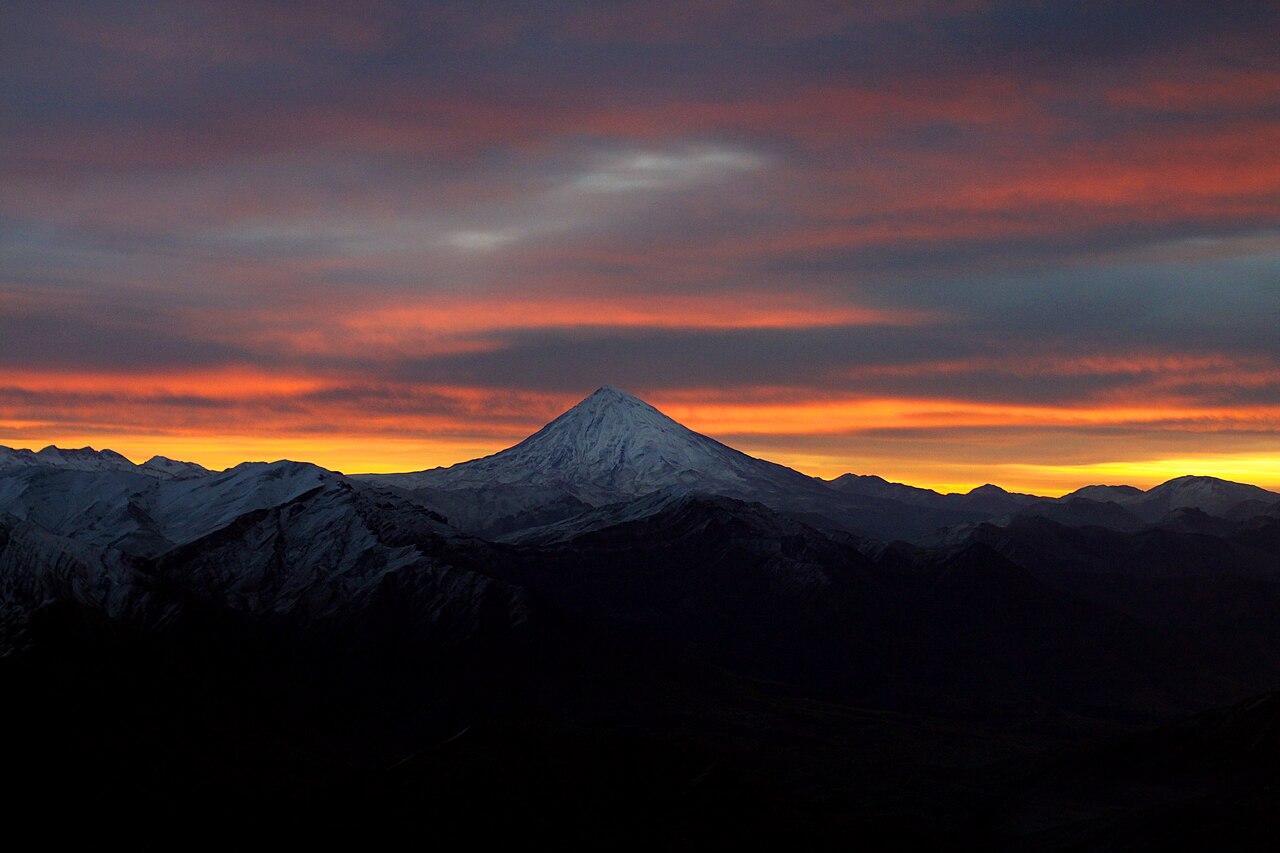

*Via Wikimedia Commons: [Mount Damavand in sunrise - view from Tochal summit, Iran 2017](https://commons.wikimedia.org/wiki/File:Mount_Damavand_in_sunrise_-_view_from_Tochal_summit,_Iran_2017.jpg) by Safa.daneshvar, [CC BY-SA 4.0](https://creativecommons.org/licenses/by-sa/4.0).*
*Via Wikimedia Commons: [Mount Damavand in sunrise - view from Tochal summit, Iran 2017](https://commons.wikimedia.org/wiki/File:Mount_Damavand_in_sunrise_-_view_from_Tochal_summit,_Iran_2017.jpg) by Safa.daneshvar, [CC BY-SA 4.0](https://creativecommons.org/licenses/by-sa/4.0).*
## Population
## Population
Britannica gives an estimated population of about 87.5 million for 2024.[1] The largest group are native speakers of Persian.[3] Other peoples include Azerbaijanis, the largest Turkic-speaking group, in the northwest; Kurds in the western mountains; Lurs and the closely related Bakhtiari in the Zagros Mountains; Baloch in the southeast near Pakistan; Qashqai and Turkmen; Arabs in Khuzestan and on the Persian Gulf islands; and smaller communities of Armenians, Assyrians, Georgians and Jews.[3]
Britannica gives an estimated population of about 87.5 million for 2024.[1] The largest group are native speakers of Persian.[3] Other peoples include Azerbaijanis, the largest Turkic-speaking group, in the northwest; Kurds in the western mountains; Lurs and the closely related Bakhtiari in the Zagros Mountains; Baloch in the southeast near Pakistan; Qashqai and Turkmen; Arabs in Khuzestan and on the Persian Gulf islands; and smaller communities of Armenians, Assyrians, Georgians and Jews.[3]
Persian (Farsi) is the official language.[1] Britannica lists many others in use, among them Azerbaijani and other Turkic languages, Kurdish, Luri, Bakhtiari, Baluchi and Arabic.[3]
Persian (Farsi) is the official language.[1] Britannica lists many others in use, among them Azerbaijani and other Turkic languages, Kurdish, Luri, Bakhtiari, Baluchi and Arabic.[3]
## Religion
## Religion
Islam is the official religion, and most Iranians are Shia Muslims.[1] Shia Islam has been the established faith since 1501, when Shah Ismail I, founder of the Safavid dynasty, proclaimed it the religion of his realm.[4] The constitution names Zoroastrians, Jews and Christians as the only recognized religious minorities, and five of the 290 seats in parliament are reserved for them: two for Armenian Christians, one for Assyrian and Chaldean Christians, one for Jews and one for Zoroastrians.[5] Writing in 2013, the Iran Primer of the United States Institute of Peace described the Baha'is, numbering up to 350,000, as the country's largest religious minority, not recognized by the constitution or protected by law, and regarded by the government as apostates.[5]
Islam is the official religion, and most Iranians are Shia Muslims.[1] Shia Islam has been the established faith since 1501, when Shah Ismail I, founder of the Safavid dynasty, proclaimed it the religion of his realm.[4] The constitution names Zoroastrians, Jews and Christians as the only recognized religious minorities, and five of the 290 seats in parliament are reserved for them: two for Armenian Christians, one for Assyrian and Chaldean Christians, one for Jews and one for Zoroastrians.[5] Writing in 2013, the Iran Primer of the United States Institute of Peace described the Baha'is, numbering up to 350,000, as the country's largest religious minority, not recognized by the constitution or protected by law, and regarded by the government as apostates.[5]
## Government and politics
## Government and politics
Iran has been an Islamic republic since 1979.[1] Its system combines elected bodies with appointed and clerical ones, as the newspaper The National set out on 25 February 2026.[6]
Iran has been an Islamic republic since 1979.[1] Its system combines elected bodies with appointed and clerical ones, as the newspaper The National set out on 25 February 2026.[6]
- **The Leader** (often called the Supreme Leader) is commander-in-chief of the armed forces, sets the broad direction of foreign and domestic policy and appoints key officials, including the head of the judiciary.[6]
- **The Assembly of Experts**, a body of 88 clerics elected by the public every eight years, formally chooses the Leader and can in theory remove him.[6]
- **The Guardian Council** has 12 members: six Islamic jurists appointed by the Leader and six nominated by the judiciary and approved by parliament. It reviews all laws for conformity with Islamic law and the constitution and screens candidates for elections, including those for president, parliament and the Assembly of Experts.[6]
- **The Majlis** (parliament) has 290 members elected for four-year terms; it passes laws, approves the budget and can impeach ministers.[6]
- **The President**, elected every four years, heads the executive branch and the cabinet but has no authority over military policy and cannot override the Leader.[6]
- **The Islamic Revolutionary Guard Corps (IRGC)**, founded after the 1979 revolution to protect the Islamic system, has its own ground, naval, air and missile forces and intelligence services, controls major parts of the economy, and answers to the Leader. Its Quds Force runs operations abroad. The Basij militia, part of the IRGC, handles internal security, including policing protests and dress codes.[6]
Britannica describes a system that was meant to be a parliamentary democracy but has drifted toward what it calls theocratic authoritarianism.[2]
Britannica describes a system that was meant to be a parliamentary democracy but has drifted toward what it calls theocratic authoritarianism.[2]
### Office holders
### Office holders
Ali Khamenei was Leader from 1989 until he was killed in a strike on 28 February 2026, the first day of the war with the United States and Israel (see below), in an attack that also killed about 40 other senior officials, CBS News reported.[7][6] On 8 March 2026 Iranian state media announced that the Assembly of Experts had chosen his son, Mojtaba Khamenei, then 57, as the third Leader since the 1979 revolution.[7] CBS News reported that he had never held elected office or given a public speech, had studied theology in Qom and served in the Iran-Iraq war, and was regarded by many analysts as a hard-liner.[7] On 4 June 2026, Euronews reported that he had not appeared in public since the war began and had communicated only through written statements; one was read out at a ceremony that day marking the anniversary of Khomeini's death.[8]
Ali Khamenei was Leader from 1989 until he was killed in a strike on 28 February 2026, the first day of the war with the United States and Israel (see below), in an attack that also killed about 40 other senior officials, CBS News reported.[7][6] On 8 March 2026 Iranian state media announced that the Assembly of Experts had chosen his son, Mojtaba Khamenei, then 57, as the third Leader since the 1979 revolution.[7] CBS News reported that he had never held elected office or given a public speech, had studied theology in Qom and served in the Iran-Iraq war, and was regarded by many analysts as a hard-liner.[7] On 4 June 2026, Euronews reported that he had not appeared in public since the war began and had communicated only through written statements; one was read out at a ceremony that day marking the anniversary of Khomeini's death.[8]
Masoud Pezeshkian, a long-serving member of parliament described by the Associated Press (AP) as a reformist, won the presidency in a runoff on 5 July 2024 against the hard-liner Saeed Jalili, with 16.3 million votes to 13.5 million on an official turnout of 49.6%.[9] The election was called early after President Ebrahim Raisi died in a helicopter crash that May, and the first round had the lowest turnout in the Islamic Republic's history, AP reported.[9] Dawn identified Pezeshkian as president on 14 May 2026, when he praised Iranians' unity during what he called the "forty-day war".[10] He was recorded as President of Iran in the official photo record of the United Nations Biodiversity Conference (COP 17) on 16 October 2026.[11] Office holders may have changed since these dates.
Masoud Pezeshkian, a long-serving member of parliament described by the Associated Press (AP) as a reformist, won the presidency in a runoff on 5 July 2024 against the hard-liner Saeed Jalili, with 16.3 million votes to 13.5 million on an official turnout of 49.6%.[9] The election was called early after President Ebrahim Raisi died in a helicopter crash that May, and the first round had the lowest turnout in the Islamic Republic's history, AP reported.[9] Dawn identified Pezeshkian as president on 14 May 2026, when he praised Iranians' unity during what he called the "forty-day war".[10] He was recorded as President of Iran in the official photo record of the United Nations Biodiversity Conference (COP 17) on 16 October 2026.[11] Office holders may have changed since these dates.
## History
## History
### Ancient and medieval Iran
### Ancient and medieval Iran
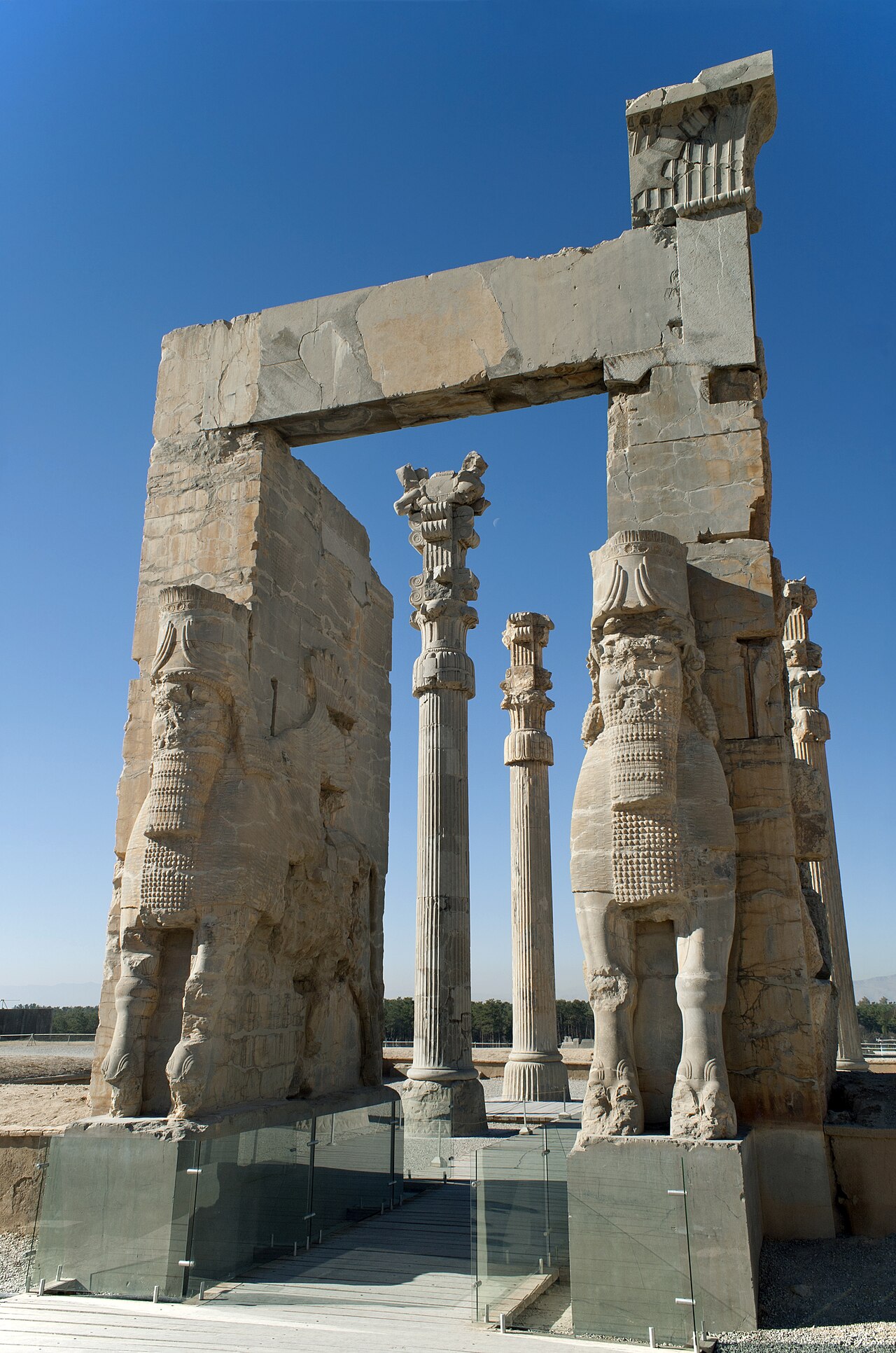
People have lived in Iran for about 100,000 years, and its recorded history begins with the Elamites around 3000 BCE.[1] The Medes flourished from about 728 BCE until the Persians overthrew them in 550 BCE, the start of the Achaemenid period from which Britannica traces the country's long cultural continuity.[1][2] Alexander the Great conquered the Persian empire in the 4th century BCE.[1] The Parthian empire ruled from 247 BCE to 226 CE, when the Sasanian dynasty took power.[1] The Sasanians fell to the Arab conquest in the mid-7th century, after which a series of Muslim dynasties ruled.[12][1]
People have lived in Iran for about 100,000 years, and its recorded history begins with the Elamites around 3000 BCE.[1] The Medes flourished from about 728 BCE until the Persians overthrew them in 550 BCE, the start of the Achaemenid period from which Britannica traces the country's long cultural continuity.[1][2] Alexander the Great conquered the Persian empire in the 4th century BCE.[1] The Parthian empire ruled from 247 BCE to 226 CE, when the Sasanian dynasty took power.[1] The Sasanians fell to the Arab conquest in the mid-7th century, after which a series of Muslim dynasties ruled.[12][1]

46 unchanged paragraphs
*Via Wikimedia Commons: [20101229 Gates of the nations Persepolis Iran](https://commons.wikimedia.org/wiki/File:20101229_Gates_of_the_nations_Persepolis_Iran.jpg) by User:Ggia, [CC BY-SA 3.0](https://creativecommons.org/licenses/by-sa/3.0).*
*Via Wikimedia Commons: [20101229 Gates of the nations Persepolis Iran](https://commons.wikimedia.org/wiki/File:20101229_Gates_of_the_nations_Persepolis_Iran.jpg) by User:Ggia, [CC BY-SA 3.0](https://creativecommons.org/licenses/by-sa/3.0).*
In 1501 Ismail I took the city of Tabriz and proclaimed himself shah, founding the Safavid dynasty, which ruled until 1736.[4][1] In 1514 an army of the [Ottoman Empire](https://micwyn.com/t/3372/ottoman-empire) invaded northwestern Iran and defeated Ismail's forces.[4] The Qajar dynasty ruled from 1796, and in the 19th century Russia and Britain controlled much of the economy.[1]
In 1501 Ismail I took the city of Tabriz and proclaimed himself shah, founding the Safavid dynasty, which ruled until 1736.[4][1] In 1514 an army of the [Ottoman Empire](https://micwyn.com/t/3372/ottoman-empire) invaded northwestern Iran and defeated Ismail's forces.[4] The Qajar dynasty ruled from 1796, and in the 19th century Russia and Britain controlled much of the economy.[1]
### The Pahlavi era
### The Pahlavi era
Reza Khan seized power in a coup in 1921.[1] After British and [Soviet](https://micwyn.com/t/3314/soviet-union) forces occupied Iran and forced him into exile, his son Mohammad Reza Pahlavi became shah on 16 September 1941.[13] In 1951 the nationalist Mohammad Mosaddegh won passage of a law nationalizing British oil interests and became prime minister.[13] In August 1953 the shah tried and failed to dismiss him and fled the country; days later Mosaddegh's opponents, with covert support from the United States and the United Kingdom, restored the shah to power.[13] The shah's development programme, carried out with United States help, built roads, dams and industry and redistributed land, but his autocratic rule, corruption and the secret police, SAVAK, which suppressed dissent, drew growing opposition.[13]
Reza Khan seized power in a coup in 1921.[1] After British and [Soviet](https://micwyn.com/t/3314/soviet-union) forces occupied Iran and forced him into exile, his son Mohammad Reza Pahlavi became shah on 16 September 1941.[13] In 1951 the nationalist Mohammad Mosaddegh won passage of a law nationalizing British oil interests and became prime minister.[13] In August 1953 the shah tried and failed to dismiss him and fled the country; days later Mosaddegh's opponents, with covert support from the United States and the United Kingdom, restored the shah to power.[13] The shah's development programme, carried out with United States help, built roads, dams and industry and redistributed land, but his autocratic rule, corruption and the secret police, SAVAK, which suppressed dissent, drew growing opposition.[13]
### The 1979 revolution
### The 1979 revolution
The cleric Ruhollah Khomeini, jailed in 1963 after inspiring riots against the government, was exiled on 4 November 1964 and lived mainly in Najaf, Iraq, and later near Paris.[14] The shah left Iran on 16 January 1979, and Khomeini returned to Tehran on 1 February to a huge welcome.[13][14] After a national referendum showed overwhelming support, Iran was declared an Islamic republic on 1 April 1979.[15] A new constitution, approved by referendum in December 1979, created a religious government based on Khomeini's doctrine of velayat-e faqih (rule by a senior Islamic jurist) and gave sweeping powers to the Leader; Khomeini held that post for life.[15][14] The shah died in exile in Cairo on 27 July 1980.[13]
The cleric Ruhollah Khomeini, jailed in 1963 after inspiring riots against the government, was exiled on 4 November 1964 and lived mainly in Najaf, Iraq, and later near Paris.[14] The shah left Iran on 16 January 1979, and Khomeini returned to Tehran on 1 February to a huge welcome.[13][14] After a national referendum showed overwhelming support, Iran was declared an Islamic republic on 1 April 1979.[15] A new constitution, approved by referendum in December 1979, created a religious government based on Khomeini's doctrine of velayat-e faqih (rule by a senior Islamic jurist) and gave sweeping powers to the Leader; Khomeini held that post for life.[15][14] The shah died in exile in Cairo on 27 July 1980.[13]
On 4 November 1979 militants seized the United States embassy in Tehran and took 66 Americans hostage; 52 of them were held for more than a year, until 20 January 1981.[16]
On 4 November 1979 militants seized the United States embassy in Tehran and took 66 Americans hostage; 52 of them were held for more than a year, until 20 January 1981.[16]
### War with Iraq and after
### War with Iraq and after
In September 1980 Iraq invaded the Iranian province of Khuzestan after a border dispute, starting a war that lasted eight years.[15] On 20 July 1988 Khomeini accepted a United Nations resolution calling on both sides to withdraw to their borders, and a ceasefire took effect in August 1988.[15] Britannica describes the war as ending in stalemate.[1] Khomeini died in Tehran on 3 June 1989, and Ali Khamenei became Leader that year.[14][6]
In September 1980 Iraq invaded the Iranian province of Khuzestan after a border dispute, starting a war that lasted eight years.[15] On 20 July 1988 Khomeini accepted a United Nations resolution calling on both sides to withdraw to their borders, and a ceasefire took effect in August 1988.[15] Britannica describes the war as ending in stalemate.[1] Khomeini died in Tehran on 3 June 1989, and Ali Khamenei became Leader that year.[14][6]
In the decades that followed, Britannica describes a contest between reformers, who sought more open politics and an end to Iran's isolation, and conservative clergy, with the IRGC gaining influence throughout government and society in the 21st century.[2]
In the decades that followed, Britannica describes a contest between reformers, who sought more open politics and an end to Iran's isolation, and conservative clergy, with the IRGC gaining influence throughout government and society in the 21st century.[2]
The presidents after 1989 were Akbar Hashemi Rafsanjani (1989–1997), Mohammad Khatami (1997–2005), Mahmoud Ahmadinejad (2005–2013), Hassan Rouhani (2013–2021) and Ebrahim Raisi (2021–2024).[42]
The presidents after 1989 were Akbar Hashemi Rafsanjani (1989–1997), Mohammad Khatami (1997–2005), Mahmoud Ahmadinejad (2005–2013), Hassan Rouhani (2013–2021) and Ebrahim Raisi (2021–2024).[42]
## The nuclear programme
## The nuclear programme
As of November 2026, Iran maintained that its nuclear programme is for civilian purposes.[17] In 2015 Iran and world powers reached an agreement aimed at preventing Iran from developing the capability to build nuclear weapons in exchange for the lifting of international sanctions; in 2018, during his first term, United States President Donald Trump withdrew the United States from it, saying it did not do enough to curb Iran's nuclear ambitions.[18][19]
As of November 2026, Iran maintained that its nuclear programme is for civilian purposes.[17] In 2015 Iran and world powers reached an agreement aimed at preventing Iran from developing the capability to build nuclear weapons in exchange for the lifting of international sanctions; in 2018, during his first term, United States President Donald Trump withdrew the United States from it, saying it did not do enough to curb Iran's nuclear ambitions.[18][19]
### The June 2025 war
### The June 2025 war
On 13 June 2025 Israel launched strikes on Iran, and on 22 June United States forces struck the nuclear sites at Fordow, Natanz and Isfahan in an operation named Midnight Hammer.[20][21] A ceasefire brokered by the United States took effect on 24 June.[21] As of 25 June, Iran's health ministry had reported 606 people killed and 5,332 injured, and Israel's ambulance service, Magen David Adom, confirmed 28 deaths in Israel.[21] On 30 June an Iranian judiciary spokesman put the death toll in Iran at 935, based on forensic data, Reuters reported; Iran's foreign ministry said Israel had committed "many war crimes".[20] After the strikes, Iran suspended its cooperation with the International Atomic Energy Agency (IAEA), the United Nations nuclear watchdog.[22]
On 13 June 2025 Israel launched strikes on Iran, and on 22 June United States forces struck the nuclear sites at Fordow, Natanz and Isfahan in an operation named Midnight Hammer.[20][21] A ceasefire brokered by the United States took effect on 24 June.[21] As of 25 June, Iran's health ministry had reported 606 people killed and 5,332 injured, and Israel's ambulance service, Magen David Adom, confirmed 28 deaths in Israel.[21] On 30 June an Iranian judiciary spokesman put the death toll in Iran at 935, based on forensic data, Reuters reported; Iran's foreign ministry said Israel had committed "many war crimes".[20] After the strikes, Iran suspended its cooperation with the International Atomic Energy Agency (IAEA), the United Nations nuclear watchdog.[22]
### UN sanctions restored, 2025
### UN sanctions restored, 2025
On 28 August 2025 the United Kingdom, France and Germany, known as the E3, triggered the 2015 agreement's "snapback" mechanism, which opened a 30-day window after which UN sanctions would return unless the Security Council decided otherwise.[18] Russia's foreign ministry said it "strongly" condemned the move, China called it "not constructive", and Iran's foreign minister, Abbas Araghchi, said it lacked any legal basis.[18] On 26 September 2025 the Security Council rejected a resolution from Russia and China to delay the sanctions; only Russia, China, Pakistan and Algeria voted for it.[19] The restored measures refroze Iranian assets abroad, banned arms deals with Iran and penalized work on ballistic missiles, AP reported.[19] Araghchi said the United States had "betrayed diplomacy" and the E3 had "buried it".[19] In November 2025 AP reported that the UN had reactivated six earlier Security Council resolutions, and that Iran had halted an inspection agreement reached with the IAEA in Cairo in September.[22]
On 28 August 2025 the United Kingdom, France and Germany, known as the E3, triggered the 2015 agreement's "snapback" mechanism, which opened a 30-day window after which UN sanctions would return unless the Security Council decided otherwise.[18] Russia's foreign ministry said it "strongly" condemned the move, China called it "not constructive", and Iran's foreign minister, Abbas Araghchi, said it lacked any legal basis.[18] On 26 September 2025 the Security Council rejected a resolution from Russia and China to delay the sanctions; only Russia, China, Pakistan and Algeria voted for it.[19] The restored measures refroze Iranian assets abroad, banned arms deals with Iran and penalized work on ballistic missiles, AP reported.[19] Araghchi said the United States had "betrayed diplomacy" and the E3 had "buried it".[19] In November 2025 AP reported that the UN had reactivated six earlier Security Council resolutions, and that Iran had halted an inspection agreement reached with the IAEA in Cairo in September.[22]
### IAEA findings
### IAEA findings
On 20 November 2025 the IAEA's Board of Governors passed a resolution, sponsored by France, the United Kingdom, Germany and the United States, urging Iran to cooperate fully; 19 members voted for it, Russia, China and Niger voted against, and 12 abstained.[22] The agency said Iran held 440.9 kilograms of uranium enriched to 60%, a short technical step from weapons-grade, which the IAEA Director General, Rafael Grossi, said could in theory yield up to 10 bombs, while stressing that this did not mean Iran had a weapon.[22] The IAEA had been unable to verify the stockpile since June 2025.[22] On 10 March 2026, during the 2026 war, Grossi said the material was probably still in a tunnel complex at Isfahan, which held a little over 200 kilograms at the last inspection, that Iran had not told the agency the status or whereabouts of its highly enriched uranium since June 2025, and that the only solution was diplomacy.[23] As of 1 November 2026, Al Jazeera reported that Iran's security chief, Mohsen Rezaei, had said Tehran was weighing a change to its nuclear doctrine, which bans nuclear weapons, while Trump said Iran must never be allowed to acquire one.[17] The state of inspections and of the stockpile may have changed since these dates.
On 20 November 2025 the IAEA's Board of Governors passed a resolution, sponsored by France, the United Kingdom, Germany and the United States, urging Iran to cooperate fully; 19 members voted for it, Russia, China and Niger voted against, and 12 abstained.[22] The agency said Iran held 440.9 kilograms of uranium enriched to 60%, a short technical step from weapons-grade, which the IAEA Director General, Rafael Grossi, said could in theory yield up to 10 bombs, while stressing that this did not mean Iran had a weapon.[22] The IAEA had been unable to verify the stockpile since June 2025.[22] On 10 March 2026, during the 2026 war, Grossi said the material was probably still in a tunnel complex at Isfahan, which held a little over 200 kilograms at the last inspection, that Iran had not told the agency the status or whereabouts of its highly enriched uranium since June 2025, and that the only solution was diplomacy.[23] As of 1 November 2026, Al Jazeera reported that Iran's security chief, Mohsen Rezaei, had said Tehran was weighing a change to its nuclear doctrine, which bans nuclear weapons, while Trump said Iran must never be allowed to acquire one.[17] The state of inspections and of the stockpile may have changed since these dates.
## The 2026 war
## The 2026 war
### Outbreak
### Outbreak
On 28 February 2026 Israel and the United States launched strikes on Iran, while the United States and Iran were holding nuclear talks in Geneva.[24][25] The United States military called its operation Epic Fury and said it hit more than 1,000 targets in its first 24 hours; Reuters reported that civilian sites were also hit, including a girls' school.[25] Iran fired missiles at Israel and at bases used by United States forces in Jordan, the United Arab Emirates, Bahrain, Kuwait, Qatar and Saudi Arabia.[25] Iranian state media confirmed the death of Ali Khamenei.[25][26] On 17 March Ali Larijani, head of the Supreme National Security Council, was killed in an Israeli strike, and in mid-March United States forces struck Kharg Island, in the Persian Gulf.[26] The Strait of Hormuz, the narrow sea passage out of the Persian Gulf, became a major flashpoint, and the United Nations said in March that up to 3.2 million people in Iran had been displaced.[26] The fighting spread to Lebanon, where Lebanese authorities said on 24 March that Israeli strikes since 2 March had killed 1,072 people.[27]
On 28 February 2026 Israel and the United States launched strikes on Iran, while the United States and Iran were holding nuclear talks in Geneva.[24][25] The United States military called its operation Epic Fury and said it hit more than 1,000 targets in its first 24 hours; Reuters reported that civilian sites were also hit, including a girls' school.[25] Iran fired missiles at Israel and at bases used by United States forces in Jordan, the United Arab Emirates, Bahrain, Kuwait, Qatar and Saudi Arabia.[25] Iranian state media confirmed the death of Ali Khamenei.[25][26] On 17 March Ali Larijani, head of the Supreme National Security Council, was killed in an Israeli strike, and in mid-March United States forces struck Kharg Island, in the Persian Gulf.[26] The Strait of Hormuz, the narrow sea passage out of the Persian Gulf, became a major flashpoint, and the United Nations said in March that up to 3.2 million people in Iran had been displaced.[26] The fighting spread to Lebanon, where Lebanese authorities said on 24 March that Israeli strikes since 2 March had killed 1,072 people.[27]
### Ceasefire, blockade and renewed fighting
### Ceasefire, blockade and renewed fighting
Pakistan announced a ceasefire on 8 April 2026, after diplomacy led largely by Pakistan, with Turkey and Egypt also involved and a de-escalation plan proposed by Pakistan and China.[26] A memorandum of understanding signed in June extended the ceasefire and set out plans for talks.[24] By mid-July fighting had resumed: on 16 July Al Jazeera reported a new wave of United States strikes on Iranian command centres and air-defence, missile and coastal sites, which United States Central Command said were meant to reduce Iran's ability to disrupt shipping through the strait, and Iranian missile and drone attacks on United States facilities in Kuwait, Bahrain and Jordan.[24] A United States blockade of Iranian ports was in force by then.[24] Each side accused the other of breaking the agreement.[24] Al Jazeera reported on 1 November 2026 that the June memorandum had collapsed in August.[17]
Pakistan announced a ceasefire on 8 April 2026, after diplomacy led largely by Pakistan, with Turkey and Egypt also involved and a de-escalation plan proposed by Pakistan and China.[26] A memorandum of understanding signed in June extended the ceasefire and set out plans for talks.[24] By mid-July fighting had resumed: on 16 July Al Jazeera reported a new wave of United States strikes on Iranian command centres and air-defence, missile and coastal sites, which United States Central Command said were meant to reduce Iran's ability to disrupt shipping through the strait, and Iranian missile and drone attacks on United States facilities in Kuwait, Bahrain and Jordan.[24] A United States blockade of Iranian ports was in force by then.[24] Each side accused the other of breaking the agreement.[24] Al Jazeera reported on 1 November 2026 that the June memorandum had collapsed in August.[17]
### Casualties
### Casualties
Casualty counts for the war differ widely, and Reuters said it could not independently verify them.[27] Reuters reported on 24 March 2026 that the Human Rights Activists News Agency (HRANA), a United States-based rights group, had counted 3,268 people killed in Iran, including 1,443 civilians, while Iranian state media gave 1,270 deaths and Iran's ambassador to the UN had said on 6 March that at least 1,332 had been killed.[27] On 20 April, the head of Iran's Legal Medicine Organization put the toll at no fewer than 3,375, a figure that did not separate civilians from members of the security forces.[28] In the same Reuters tally of 24 March, Israel's ambulance service said Iranian missiles had killed 16 people in Israel, and 13 United States service members had been killed, six of them in the crash of a refuelling aircraft over Iraq.[27] Iran's health ministry said on 16 July that at least 35 people had been killed in Iran since fighting resumed the week before.[24] Later totals may differ.
Casualty counts for the war differ widely, and Reuters said it could not independently verify them.[27] Reuters reported on 24 March 2026 that the Human Rights Activists News Agency (HRANA), a United States-based rights group, had counted 3,268 people killed in Iran, including 1,443 civilians, while Iranian state media gave 1,270 deaths and Iran's ambassador to the UN had said on 6 March that at least 1,332 had been killed.[27] On 20 April, the head of Iran's Legal Medicine Organization put the toll at no fewer than 3,375, a figure that did not separate civilians from members of the security forces.[28] In the same Reuters tally of 24 March, Israel's ambulance service said Iranian missiles had killed 16 people in Israel, and 13 United States service members had been killed, six of them in the crash of a refuelling aircraft over Iraq.[27] Iran's health ministry said on 16 July that at least 35 people had been killed in Iran since fighting resumed the week before.[24] Later totals may differ.
### Status, November 2026
### Status, November 2026
As of 11 November 2026, in the ninth month of the war, Al Jazeera and Reuters reported that the Strait of Hormuz remained closed by Iran, that maritime monitors had recorded at least 37 attacks on ships near the strait in October, and that Iran was waiting for a United States reply to seven conditions for peace talks.[29] Iranian officials said these included lifting sanctions and the naval blockade and ending fighting on all fronts, in particular Israel's attacks on Lebanon; Rezaei denied that negotiations were under way, while Araghchi said the strait could reopen within two days if the demands were met.[29] Trump said he saw "positive momentum" and that new attacks on Iran were unnecessary, and Secretary of State Marco Rubio said there was "no need for major combat operations" because of the United States' economic pressure.[29] On 1 November, Israeli Prime Minister Benjamin Netanyahu had described a "historic, one-time opportunity" to remove what he called the Iranian threat, and Qatar's prime minister was acting as a key mediator.[17][29] Al Jazeera reported that the war had disrupted oil and gas supplies and pushed up world prices.[29] The situation may have changed since these reports.
As of 11 November 2026, in the ninth month of the war, Al Jazeera and Reuters reported that the Strait of Hormuz remained closed by Iran, that maritime monitors had recorded at least 37 attacks on ships near the strait in October, and that Iran was waiting for a United States reply to seven conditions for peace talks.[29] Iranian officials said these included lifting sanctions and the naval blockade and ending fighting on all fronts, in particular Israel's attacks on Lebanon; Rezaei denied that negotiations were under way, while Araghchi said the strait could reopen within two days if the demands were met.[29] Trump said he saw "positive momentum" and that new attacks on Iran were unnecessary, and Secretary of State Marco Rubio said there was "no need for major combat operations" because of the United States' economic pressure.[29] On 1 November, Israeli Prime Minister Benjamin Netanyahu had described a "historic, one-time opportunity" to remove what he called the Iranian threat, and Qatar's prime minister was acting as a key mediator.[17][29] Al Jazeera reported that the war had disrupted oil and gas supplies and pushed up world prices.[29] The situation may have changed since these reports.
## Human rights
## Human rights
### "Woman, Life, Freedom", 2022
### "Woman, Life, Freedom", 2022
Mahsa Amini, a 22-year-old Iranian Kurdish woman, died in hospital on 16 September 2022, three days after the morality police arrested her for allegedly breaking the rules requiring women to wear a headscarf.[30][31] Her death set off nationwide protests led largely by women and girls under the slogan "Woman, Life, Freedom".[30] In March 2024 a fact-finding mission set up by the UN Human Rights Council found that she had been subjected to physical violence in custody that led to her death, that the authorities had obscured the truth about it rather than investigating properly, that security forces had killed at least 551 protesters, and that many violations in the crackdown, including murder, imprisonment, torture, rape and other sexual violence, persecution and enforced disappearance, amounted to crimes against humanity.[31][30] Iran refused to take part in the investigation and denied responsibility; foreign ministry spokesman Nasser Kanaani called the report "baseless" and "biased" and said it had been prepared by Israel, the United States and some Western countries.[31][30]
Mahsa Amini, a 22-year-old Iranian Kurdish woman, died in hospital on 16 September 2022, three days after the morality police arrested her for allegedly breaking the rules requiring women to wear a headscarf.[30][31] Her death set off nationwide protests led largely by women and girls under the slogan "Woman, Life, Freedom".[30] In March 2024 a fact-finding mission set up by the UN Human Rights Council found that she had been subjected to physical violence in custody that led to her death, that the authorities had obscured the truth about it rather than investigating properly, that security forces had killed at least 551 protesters, and that many violations in the crackdown, including murder, imprisonment, torture, rape and other sexual violence, persecution and enforced disappearance, amounted to crimes against humanity.[31][30] Iran refused to take part in the investigation and denied responsibility; foreign ministry spokesman Nasser Kanaani called the report "baseless" and "biased" and said it had been prepared by Israel, the United States and some Western countries.[31][30]
### Protests of 2025 and 2026
### Protests of 2025 and 2026
Protests over Iran's struggling economy began on 28 December 2025 and spread across the country; authorities blocked internet access from 8 January 2026, AP reported.[32] Ali Khamenei said the unrest had left "several thousand" dead and blamed the United States, whose president told protesters that help was "on the way".[32] On 27 January 2026 AFP reported that HRANA had confirmed 6,126 deaths, including 5,777 protesters, 86 minors, 214 members of the security forces and 49 bystanders, was investigating 17,091 more possible deaths, and had counted at least 41,880 arrests.[33] The government gave an official toll of 3,117, mostly security forces and bystanders, which it blamed on rioters, and described the unrest as a "terror operation" backed by the United States and Israel that followed initially peaceful economic protests.[33]
Protests over Iran's struggling economy began on 28 December 2025 and spread across the country; authorities blocked internet access from 8 January 2026, AP reported.[32] Ali Khamenei said the unrest had left "several thousand" dead and blamed the United States, whose president told protesters that help was "on the way".[32] On 27 January 2026 AFP reported that HRANA had confirmed 6,126 deaths, including 5,777 protesters, 86 minors, 214 members of the security forces and 49 bystanders, was investigating 17,091 more possible deaths, and had counted at least 41,880 arrests.[33] The government gave an official toll of 3,117, mostly security forces and bystanders, which it blamed on rioters, and described the unrest as a "terror operation" backed by the United States and Israel that followed initially peaceful economic protests.[33]
### Executions
### Executions
The monitoring groups Iran Human Rights (IHR) and Together Against the Death Penalty (ECPM) counted at least 1,639 executions in Iran in 2025, the highest number since 1989 and a figure they called an absolute minimum.[34] Amnesty International counted 2,159, more than double the 2024 figure and the most it had recorded in Iran since 1981, and said authorities had intensified the use of the death penalty as a tool of political repression, especially after the June 2025 war.[35] By April 2026 the judiciary had announced the executions of two men involved in the January protests.[34]
The monitoring groups Iran Human Rights (IHR) and Together Against the Death Penalty (ECPM) counted at least 1,639 executions in Iran in 2025, the highest number since 1989 and a figure they called an absolute minimum.[34] Amnesty International counted 2,159, more than double the 2024 figure and the most it had recorded in Iran since 1981, and said authorities had intensified the use of the death penalty as a tool of political repression, especially after the June 2025 war.[35] By April 2026 the judiciary had announced the executions of two men involved in the January protests.[34]
Al Jazeera reported in May 2026 that the authorities said the judicial process had been greatly speeded up for people arrested over the protests but remained legal, with executions carried out after approval by Supreme Court judges; they rejected charges that prisoners were not given fair trials.[43] In July 2026 it reported that they also rejected findings by Amnesty International and other rights groups that security forces had carried out "mass unlawful killings" during an internet shutdown.[44]
Al Jazeera reported in May 2026 that the authorities said the judicial process had been greatly speeded up for people arrested over the protests but remained legal, with executions carried out after approval by Supreme Court judges; they rejected charges that prisoners were not given fair trials.[43] In July 2026 it reported that they also rejected findings by Amnesty International and other rights groups that security forces had carried out "mass unlawful killings" during an internet shutdown.[44]
## Economy
## Economy
Iran has abundant natural resources, especially petroleum, according to Britannica, and Euronews in June 2026 listed international sanctions among the long-standing causes of the country's high inflation.[2][36] The World Bank estimated in April 2026 that real gross domestic product (GDP, the total value of goods and services produced, adjusted for inflation) fell by 2.7% in the fiscal year ending 20 March 2026, and said that "exceptionally high uncertainty" kept it from publishing later forecasts, Reuters reported.[37] According to Euronews on 30 June 2026, the Statistical Centre of Iran reported consumer prices 88.6% higher than a year earlier for the month to 21 June, while the Central Bank of Iran gave 83.1%.[36] The International Monetary Fund (IMF) projected average inflation of about 68.9% for 2026 and a contraction of about 6.1% in real GDP.[36] On Tehran's open market the rial fell from about 1.35 million to the United States dollar at the start of 2026 to a record low of about 1.9 million, and Euronews cited sanctions, budget deficits and the conflict among the causes of inflation.[36] On 11 November 2026 Rubio described United States policy as an economic campaign against Iran.[29]
Iran has abundant natural resources, especially petroleum, according to Britannica, and Euronews in June 2026 listed international sanctions among the long-standing causes of the country's high inflation.[2][36] The World Bank estimated in April 2026 that real gross domestic product (GDP, the total value of goods and services produced, adjusted for inflation) fell by 2.7% in the fiscal year ending 20 March 2026, and said that "exceptionally high uncertainty" kept it from publishing later forecasts, Reuters reported.[37] According to Euronews on 30 June 2026, the Statistical Centre of Iran reported consumer prices 88.6% higher than a year earlier for the month to 21 June, while the Central Bank of Iran gave 83.1%.[36] The International Monetary Fund (IMF) projected average inflation of about 68.9% for 2026 and a contraction of about 6.1% in real GDP.[36] On Tehran's open market the rial fell from about 1.35 million to the United States dollar at the start of 2026 to a record low of about 1.9 million, and Euronews cited sanctions, budget deficits and the conflict among the causes of inflation.[36] On 11 November 2026 Rubio described United States policy as an economic campaign against Iran.[29]
## Foreign relations
## Foreign relations
Iran's partners include [Russia](https://micwyn.com/t/3639/russia): on 17 January 2025 Presidents Vladimir Putin and Pezeshkian signed a 20-year "comprehensive strategic partnership" treaty in Moscow, reportedly without a mutual defence clause; Western governments have said Iranian-made drones were supplied to Russia for its war in Ukraine, while Iran describes itself as neutral in that war.[38] Russia and China opposed the IAEA resolution of November 2025 and the return of UN sanctions.[22][19]
Iran's partners include [Russia](https://micwyn.com/t/3639/russia): on 17 January 2025 Presidents Vladimir Putin and Pezeshkian signed a 20-year "comprehensive strategic partnership" treaty in Moscow, reportedly without a mutual defence clause; Western governments have said Iranian-made drones were supplied to Russia for its war in Ukraine, while Iran describes itself as neutral in that war.[38] Russia and China opposed the IAEA resolution of November 2025 and the return of UN sanctions.[22][19]
Iran's rivalry with Saudi Arabia eased on 10 March 2023, when the two countries agreed in Beijing, with Chinese mediation, to restore diplomatic relations broken off in 2016 after protesters stormed Saudi diplomatic posts in Iran.[39] AP reported that the deal lowered the risk of conflict between them, both directly and in proxy conflicts such as the war in Yemen, where a Saudi-led coalition had fought the Houthi movement since 2015.[39] In the 2026 war, Iran fired missiles at Gulf states hosting United States forces, and Pakistan, Qatar, Turkey, Egypt and China were among the countries that pursued mediation.[25][26][29]
Iran's rivalry with Saudi Arabia eased on 10 March 2023, when the two countries agreed in Beijing, with Chinese mediation, to restore diplomatic relations broken off in 2016 after protesters stormed Saudi diplomatic posts in Iran.[39] AP reported that the deal lowered the risk of conflict between them, both directly and in proxy conflicts such as the war in Yemen, where a Saudi-led coalition had fought the Houthi movement since 2015.[39] In the 2026 war, Iran fired missiles at Gulf states hosting United States forces, and Pakistan, Qatar, Turkey, Egypt and China were among the countries that pursued mediation.[25][26][29]
Iran has long supported armed groups across the region that call themselves the "Axis of Resistance", Reuters reported in April 2024: Hamas, Lebanon's Hezbollah (set up by the IRGC in 1982), Yemen's Houthis, Shia armed groups in Iraq and, at that time, Syria under President Bashar al-Assad.[40] The United States and other governments list Hezbollah as a terrorist organisation; the Houthis deny being an Iranian proxy, and Iran has denied involvement in Houthi attacks.[40]
Iran has long supported armed groups across the region that call themselves the "Axis of Resistance", Reuters reported in April 2024: Hamas, Lebanon's Hezbollah (set up by the IRGC in 1982), Yemen's Houthis, Shia armed groups in Iraq and, at that time, Syria under President Bashar al-Assad.[40] The United States and other governments list Hezbollah as a terrorist organisation; the Houthis deny being an Iranian proxy, and Iran has denied involvement in Houthi attacks.[40]
## Society and culture
## Society and culture
Britannica describes Iranian culture as a synthesis of Persian tradition and Shia Islam, and dates a reawakening of Persian literary culture to the late 8th century.[2] The poet Ferdowsi completed the national epic, the Shahnameh ("Book of Kings"), in 1010; its nearly 60,000 couplets, written in Persian with very little Arabic, tell the history of Iran from mythical times to the fall of the Sasanians, and modern Iranians can still read it with ease.[12] As of November 2026, UNESCO lists 30 properties in Iran on its World Heritage List; Iran accepted the World Heritage Convention on 26 February 1975.[41]
Britannica describes Iranian culture as a synthesis of Persian tradition and Shia Islam, and dates a reawakening of Persian literary culture to the late 8th century.[2] The poet Ferdowsi completed the national epic, the Shahnameh ("Book of Kings"), in 1010; its nearly 60,000 couplets, written in Persian with very little Arabic, tell the history of Iran from mythical times to the fall of the Sasanians, and modern Iranians can still read it with ease.[12] As of November 2026, UNESCO lists 30 properties in Iran on its World Heritage List; Iran accepted the World Heritage Convention on 26 February 1975.[41]
## Sources
## Sources
1. Encyclopaedia Britannica, "A brief history of Iran" (summary). No date shown; accessed 28 November 2026. https://www.britannica.com/summary/Iran
2. Encyclopaedia Britannica, "Iran". No date shown; accessed 28 November 2026. https://www.britannica.com/place/Iran
3. Encyclopaedia Britannica, "Iran: People" (ethnic groups and languages). No date shown; accessed 28 November 2026. https://www.britannica.com/place/Iran/People
4. Encyclopaedia Britannica, "Ismāʿīl I". No date shown; accessed 28 November 2026. https://www.britannica.com/biography/Ismail-I-shah-of-Iran
5. Bijan DaBell, "Iran Minorities 1: Diverse Religions", The Iran Primer, United States Institute of Peace, 3 September 2013. https://iranprimer.usip.org/blog/2013/sep/03/iran-minorities-1-diverse-religions
6. The National, "Who runs Iran? The layers of power that enforce regime's ideology", 25 February 2026 (updated 28 February 2026). https://www.thenationalnews.com/news/mena/2026/02/25/who-runs-iran-the-layers-of-power-that-enforce-regimes-ideology
7. Imtiaz Tyab, with Claire Day, "Iran names new supreme leader, Mojtaba Khamenei, Iranian state media reports", CBS News, updated 9 March 2026. https://www.cbsnews.com/news/mojtaba-khamenei-iran-new-supreme-leader
8. Peter Barabas, Aleksandar Brezar and Babak Kamiar, "Ayatollah says Iran delivered decisive blow to malicious enemy", Euronews, 4 June 2026. https://www.euronews.com/2026/06/04/ayatollah-says-iran-delivered-decisive-blow-to-malicious-enemy
9. Jon Gambrell and Amir Vahdat (Associated Press), "Reformist Pezeshkian elected president of Iran in runoff vote, defeating hard-liner Jalili", PBS NewsHour, 6 July 2024. https://www.pbs.org/newshour/world/reformist-pezeshkian-elected-president-of-iran-in-runoff-vote-defeating-hard-liner-jalili
10. Dawn, "Iran's Pezeshkian says national solidarity is 'the way to overcome challenges'", 14 May 2026. https://www.dawn.com/news/amp/2000244
11. Earth Negotiations Bulletin (IISD), photo page "Masoud Pezeshkian, President of Iran", 2026 United Nations Biodiversity Conference (CBD COP 17), 16 October 2026. https://enb.iisd.org/media/masoud-pezeshkian-president-iran-cbd-cop17-16oct2026-photo
12. Encyclopaedia Britannica, "Ferdowsī". No date shown; accessed 28 November 2026. https://www.britannica.com/biography/Ferdowsi
13. Encyclopaedia Britannica, "Mohammad Reza Shah Pahlavi". No date shown; accessed 28 November 2026. https://www.britannica.com/biography/Mohammad-Reza-Shah-Pahlavi
14. Encyclopaedia Britannica, "Ruhollah Khomeini". No date shown; accessed 28 November 2026. https://www.britannica.com/biography/Ruhollah-Khomeini
15. Encyclopaedia Britannica, "Iran: The Islamic republic". No date shown; accessed 28 November 2026. https://www.britannica.com/place/Iran/The-Islamic-republic
16. Encyclopaedia Britannica, "Iran hostage crisis". No date shown; accessed 28 November 2026. https://www.britannica.com/event/Iran-hostage-crisis
17. Al Jazeera Staff, "Mediators continue US-Iran negotiations amid war rhetoric: What we know", Al Jazeera, 1 November 2026. https://www.aljazeera.com/news/2026/11/1/mediators-continue-us-iran-negotiations-amid-war-rhetoric-what-we-know
18. Al Jazeera and news agencies, "Russia, China slam European nations over Iran 'snapback' sanctions move", Al Jazeera, 29 August 2025. https://www.aljazeera.com/news/2025/8/29/russia-china-slam-european-nations-over-iran-snapback-sanctions-move
19. Farnoush Amiri, Stephanie Liechtenstein and Edith M. Lederer (Associated Press), "UN Security Council rejects Russia and China's resolution to delay sanctions on Iran", PBS NewsHour, 26 September 2025. https://www.pbs.org/newshour/world/un-security-council-rejects-russia-and-chinas-resolution-to-delay-sanctions-on-iran
20. Reuters, "Iran says 935 killed in Israeli air strikes, new forensic data reveals", The Express Tribune, 30 June 2025. https://tribune.com.pk/story/2553464/iran-says-935-killed-in-israeli-air-strikes-new-forensic-data-reveals
21. Sakina Fatima, "At least 606 killed in Iran, 28 in Israel as ceasefire halts 12-day war", The Siasat Daily, 25 June 2025. https://www.siasat.com/at-least-606-killed-in-iran-28-in-israel-as-ceasefire-halts-12-day-war-3238277
22. Associated Press, "UN atomic agency board urges Iran to provide full information about its nuclear stockpile", The Washington Times, 20 November 2025. https://m.washingtontimes.com/news/2025/nov/20/un-atomic-agency-board-urges-iran-provide-full-info-nuclear-stockpile/
23. Sunniva Rose, "Iran's uranium stockpile likely intact in Isfahan, IAEA's Grossi says", The National, 10 March 2026 (updated 11 March 2026). https://www.thenationalnews.com/news/europe/2026/03/10/irans-uranium-stockpile-likely-intact-in-isfahan-iaeas-grossi-says
24. Caolán Magee, "US launches new attacks on Iran as Tehran targets Gulf sites", Al Jazeera, 16 July 2026. https://www.aljazeera.com/news/2026/7/16/us-launches-new-attacks-on-iran-as-tehran-targets-gulf-sites
25. Uday Rana, "A closer look at the Iran war's 1st 3 days — and where things stand now", Global News, 2 March 2026. https://globalnews.ca/news/11713036/iran-war-timeline-what-you-need-to-know
26. Dawn (News Desk), "Diplomacy pays off: A timeline of events leading up to the ceasefire between US and Iran", 8 April 2026. https://www.dawn.com/news/1989782
27. Reuters, "How many people have been killed in the US-Israeli war on Iran?", Arab News Pakistan, 24 March 2026 (updated 25 March 2026). https://www.arabnews.pk/node/2637548
28. Asharq Al-Awsat, "Over 3,300 People Have Died in Iran During War", 20 April 2026. https://english.aawsat.com/world/5264469-over-3300-people-have-died-iran-during-war
29. Al Jazeera Staff and Reuters, "Iran denies talks with US, says Hormuz will stay shut until demands are met", Al Jazeera, 11 November 2026. https://www.aljazeera.com/news/2026/11/11/iran-denies-talks-with-us-says-hormuz-will-stay-shut-until-demands-are-met
30. NBC News, report on the UN fact-finding mission's findings on the death of Mahsa Amini, published in March 2024 (no headline or exact date shown on the page as read); accessed 28 November 2026. https://www.nbcnews.com/news/world/iran-blame-violence-killed-mahsa-amini-un-finds-rcna142504
31. News agencies, "Iran condemns UN experts' report on protest crackdown as 'false', 'biased'", Al Jazeera, 9 March 2024. https://www.aljazeera.com/news/2024/3/9/iran-condemns-un-experts-report-on-protest-crackdown-as-false-biased
32. Elena Becatoros (Associated Press), "U.S.-based activist agency says it has verified 3,919 deaths from Iran protests", PBS NewsHour, 18 January 2026. https://www.pbs.org/newshour/amp/world/u-s-based-activist-agency-reports-at-least-3766-deaths-from-iran-protests
33. AFP, "A US-based rights group claims confirmed Iran protest toll over 6,000", Ahram Online, 27 January 2026. https://english.ahram.org.eg/News/561245.aspx
34. The National, "Sharp rise in executions by Iran in 2025, monitors report", 13 April 2026. https://www.thenationalnews.com/news/mena/2026/04/13/sharp-rise-in-executions-by-iran-in-2025-monitors-report
35. AFP, "'Staggering' Iran toll drives up global executions: Amnesty", Arab News Pakistan, 17 May 2026 (updated 18 May 2026). https://www.arabnews.pk/node/2643983
36. Alain Chandelier, "Iran's inflation spiral deepens as rial slides and tensions rise", Euronews, 30 June 2026. https://www.euronews.com/business/2026/06/30/irans-inflation-spiral-deepens-as-rial-slides-and-tensions-rise
37. Reuters, "World Bank cuts Middle East growth forecast after energy sector turmoil", Dawn, 9 April 2026. https://www.dawn.com/news/1990040
38. RFE/RL's Radio Farda, "Amid Biting Sanctions, Russia And Iran Sign Pact To Deepen Ties", Radio Free Europe/Radio Liberty, 17 January 2025. https://www.rferl.org/a/iran-russia-putin-pezeshkian-treaty-ukraine-shahed-drones/33278795.html
39. Jon Gambrell (Associated Press), "Iran and Saudi Arabia agree to resume ties with China's help after years of hostility", PBS NewsHour, 10 March 2023. https://www.pbs.org/newshour/world/iran-and-saudi-arabia-agree-to-resume-ties-with-chinas-help-after-years-of-hostilit
40. Timour Azhari and Tom Perry (Reuters), "Explainer: What is Iran's 'axis of resistance'?", RNZ, 14 April 2024. https://www.rnz.co.nz/news/world/514220/explainer-what-is-iran-s-axis-of-resistance
41. UNESCO World Heritage Centre, "Iran (Islamic Republic of)". No date shown; accessed 28 November 2026. https://whc.unesco.org/en/statesparties/ir/
42. Jewish Virtual Library. "Iran: Rulers of Iran (1957 - Present)". https://www.jewishvirtuallibrary.org/rulers-of-iran-1957-present
43. Maziar Motamedi. "Iran's judiciary vows action against 'enemy's mercenaries' amid executions". Al Jazeera, 5 May 2026. https://www.aljazeera.com/news/2026/5/5/irans-judiciary-vows-action-against-enemys-mercenaries-amid-executions
44. Maziar Motamedi. "Iran's judiciary warns against 'infiltrators', announces new executions". Al Jazeera, 22 July 2026. https://www.aljazeera.com/news/2026/7/22/irans-judiciary-warns-against-infiltrators-announces-new-executions
