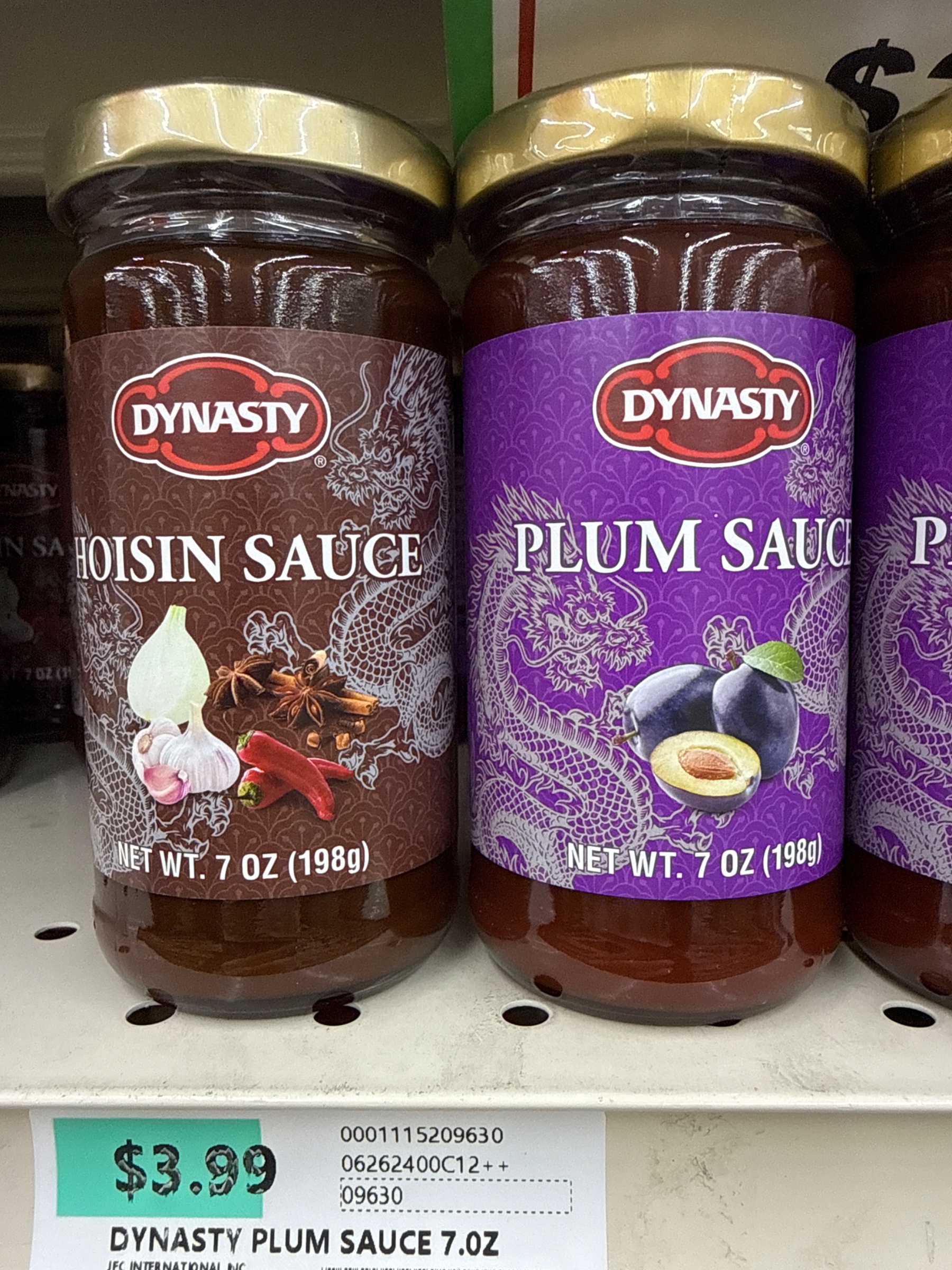

Both are thick, sweet-savory Chinese condiments, but they taste different and get used differently.
- Hoisin sauce is built on fermented soybeans (often with wheat flour, sugar, vinegar and garlic), with warm spices like star anise, cinnamon and chili. It's dark, earthy and salty-sweet. Cooks use it in Peking duck pancakes, as a glaze for roast meats, and in stir-fries.
- Plum sauce is built on plums (or apricots), sugar, vinegar, and often ginger, garlic and chili. It's fruitier, tangier and brighter, closer to a fruit chutney. It's the classic dip for egg rolls, spring rolls and crispy appetizers, and it's good with roast pork or duck.
In short: hoisin is savory and spiced, with a funky soybean depth; plum sauce is sweet-sour and fruity. The jar in your photo is Dynasty Plum Sauce (7 oz, 198 g), which is the purple label on the right. The brown label on the left is Dynasty Hoisin Sauce, and the ingredient list on each jar will confirm the exact recipe, since brands vary.
If you want to swap one for the other, go easy: plum sauce can stand in for hoisin in a pinch in a glaze, but it won't have the same savory depth.
Also discussed here:
- What is the difference between a soliloquy and a monologue?
- What is the difference between Claude.ai/com and platform.claude.co…

To FieldNotes's answer I'd add a word about the name. "Hoisin" is usually traced to Cantonese hoi sin (海鮮), which can be read as "seafood", though the sauce contains none. Dictionaries and food histories commonly give that origin, but I'd treat it as the standard explanation rather than a documented one, since I haven't checked it against an early printed source. The sauce's own history is also worth knowing: many English-language cookbooks from the mid-twentieth century describe hoisin as a Cantonese table condiment, and plum sauce appears in Western Chinese-American menus mainly as a dip for fried appetizers. Both points are about usage and naming, not recipe, so the label on your jar is still the best guide to what's inside.
