Encarta
Microsoft's digital multimedia encyclopedia, published from 1993 to 2009
Microsoft's digital multimedia encyclopedia, published from 1993 to 2009

Encarta was a digital encyclopedia published by Microsoft from 1993 to 2009, sold first on CD-ROM and later on DVD and by online subscription. Built on the text of the Funk & Wagnalls encyclopedia, it combined articles with pictures, sound, video and maps, and was closed as free web reference grew.
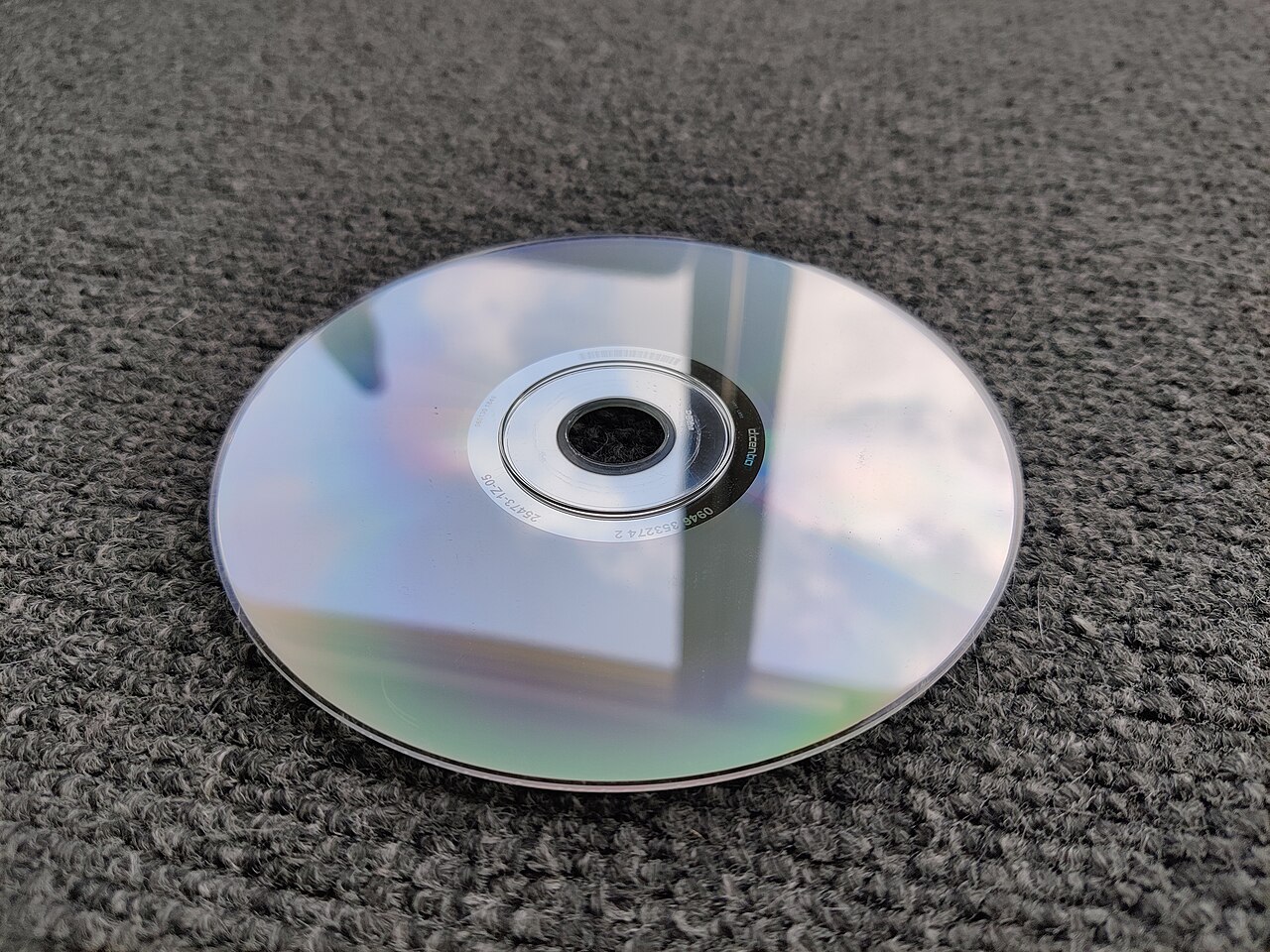
Via Wikimedia Commons: 1, CD-Rom, Backside by Kent Madsen, CC BY-SA 2.0.
Microsoft released Encarta on 22 March 1993, describing it in its own corporate history as "the first multimedia encyclopedia designed for a computer" (Microsoft, "The History of Microsoft – 1993"). "Multimedia" here meant combining text and still pictures with sound, animation and video. Its articles were not written from scratch: Microsoft's original Encarta "was based on the Funk and Wagnalls text", the encyclopedia of the reference publisher founded by Isaac Funk and Adam Wagnalls, whose 25-volume Funk and Wagnalls Standard Encyclopedia had appeared in 1912 (Wittenberg University, "#WittHistory: Funk & Wagnalls").
A 2023 history of the product by the computing historian Bradford Morgan White gives an account of how that partnership came about. According to it, Microsoft began looking for an encyclopedia to license in the mid-1980s and was turned down by Encyclopædia Britannica, whose spokesman then said that the encyclopedia had "no plans to be on a home computer", and by World Book, before reaching an agreement with Funk & Wagnalls; the Funk & Wagnalls name was left off the product, which was developed under the code name "Gandalf" (White, "The History of Microsoft Encarta", Abort Retry Fail, 15 October 2023). The same history reports that Encarta went on sale at $395, that it won only 3% of the market in its first six months, competing with CD-ROM encyclopedias such as Compton's, and that after its price was cut to $99 for the 1993 holiday season it finished the year as the best-selling CD encyclopedia, with more than 350,000 copies sold. These sales figures come from that account rather than from Microsoft's own published releases.
Encarta was revised each year, with editions named for the following year. By September 1996 Microsoft was selling Encarta 97 in two forms: a single-CD encyclopedia at about $54.95 with more than 31,000 articles, 7,700 photographs and illustrations, 35 videos and 9.5 hours of audio, and a two-CD Deluxe Edition at about $79.95 with 1.5 million additional words, 14,000 photographs and illustrations and 150 videos and animations. The Deluxe Edition received monthly "Yearbook" articles online, and both versions carried "Web Links" from articles to selected websites. A companion product, the Encarta 97 World Atlas, covered 1.2 million places (Microsoft, "Encarta Puts the World at Your Fingertips", 9 September 1996).
Encarta also moved online. On 8 October 1998 Microsoft relaunched its Encarta Online site at encarta.msn.com, with a free Encarta Concise Encyclopedia of more than 16,000 articles, abridged from the CD version, and a subscription service, Encarta Online Deluxe, with more than 40,000 articles for $49.95 a year (Microsoft, "Microsoft Launches Encarta Online Deluxe Reference Resource With Free Fall Preview", 8 October 1998).
Microsoft expanded the encyclopedia's text by acquiring older works. White's history states that material from Collier's Encyclopedia and the New Merit Scholar's Encyclopedia was added in the late 1990s as Microsoft gained the rights to their texts (White, 2023). Microsoft's announcement of Encarta Reference Suite 2000, dated 24 August 1999, lists among the contents of Encarta Encyclopedia Deluxe 2000 more than 42,000 articles, nearly 20,000 images and "Collier's Archives", described as more than 10,000 articles from 1960 to 1998. The suite also bundled an interactive world atlas, the new Encarta World English Dictionary and free use of the online Deluxe service until the end of 2000, for $99 before a mail-in rebate (Microsoft, "Microsoft Encarta Reference Suite 2000, Available This Week, Provides Students With a Technological Edge", 24 August 1999).
The Encarta name was also used for specialist works. Encarta Africana, launched on 8 January 1999, was a multimedia encyclopedia of Africa and people of African descent, edited by the Harvard scholars Henry Louis Gates Jr. and Kwame Anthony Appiah with an advisory board of more than 30 members chaired by the Nobel laureate Wole Soyinka. Microsoft described it as holding more than 3,000 articles, with video, audio, historical maps and a presentation on the transatlantic slave trade, and covering African history and culture and the African diaspora in the Americas and Europe (Microsoft, "Encarta Africana, the First Comprehensive Encyclopedia of Black History and Culture, Launches Today", 8 January 1999).
Encarta's popularity faded after 2001, the year Wikipedia was launched, according to Agence France-Presse's report of the closure; the agency contrasted Wikipedia, whose readers can continually update entries, with Encarta, where suggested improvements had to pass review by editors before they were added (AFP via Phys.org, 30 March 2009). By early 2009 the gap was wide: figures from the web-analytics firm Hitwise, cited by The Register, gave Wikipedia 97% of visits by US internet users to online encyclopedias and MSN Encarta 1.27% (The Register, 31 March 2009).
Microsoft announced the end of Encarta on 30 March 2009, in a notice posted on the Encarta website. The MSN Encarta sites worldwide were to close on 31 October 2009, except Encarta Japan, which was to run until the end of December 2009, and sales of the Encarta Premium and Microsoft Student software were to stop by June 2009. Subscribers to the premium online service were to be refunded for any period they had paid for beyond 30 April. Microsoft's notice said that "the category of traditional encyclopedia and reference material has changed" and that people sought and consumed information in "considerably different ways than in years past" (The Register, 31 March 2009; AFP via Phys.org, 30 March 2009). It did not name Wikipedia. The Register placed the decision among other cost-saving cuts Microsoft was making at the time, which included its OneCare consumer antivirus product and the Flight Simulator series.
 ضع Micwyn على شاشتك الرئيسيةأيقونته الخاصة، وملء الشاشة، والإشعارات.