Silicosis
An incurable scarring lung disease caused by breathing in crystalline silica dust
An incurable scarring lung disease caused by breathing in crystalline silica dust

Silicosis is a lung disease caused by breathing in fine dust of crystalline silica, a mineral in sand, rock, concrete and engineered stone.[1] The dust scars the lungs, and the damage cannot be reversed, though the disease can be prevented.[1][2]
Silicosis is one of the oldest described lung diseases and is still counted among the most lethal occupational diseases.[2] It belongs to the pneumoconioses, the group of lung diseases caused by inhaled dust, and an analysis of the Global Burden of Disease study describes it as the leading cause of the disease burden from pneumoconiosis.[8] The U.S. Occupational Safety and Health Administration (OSHA) calls it "an incurable lung disease that can lead to disability and death".[3]
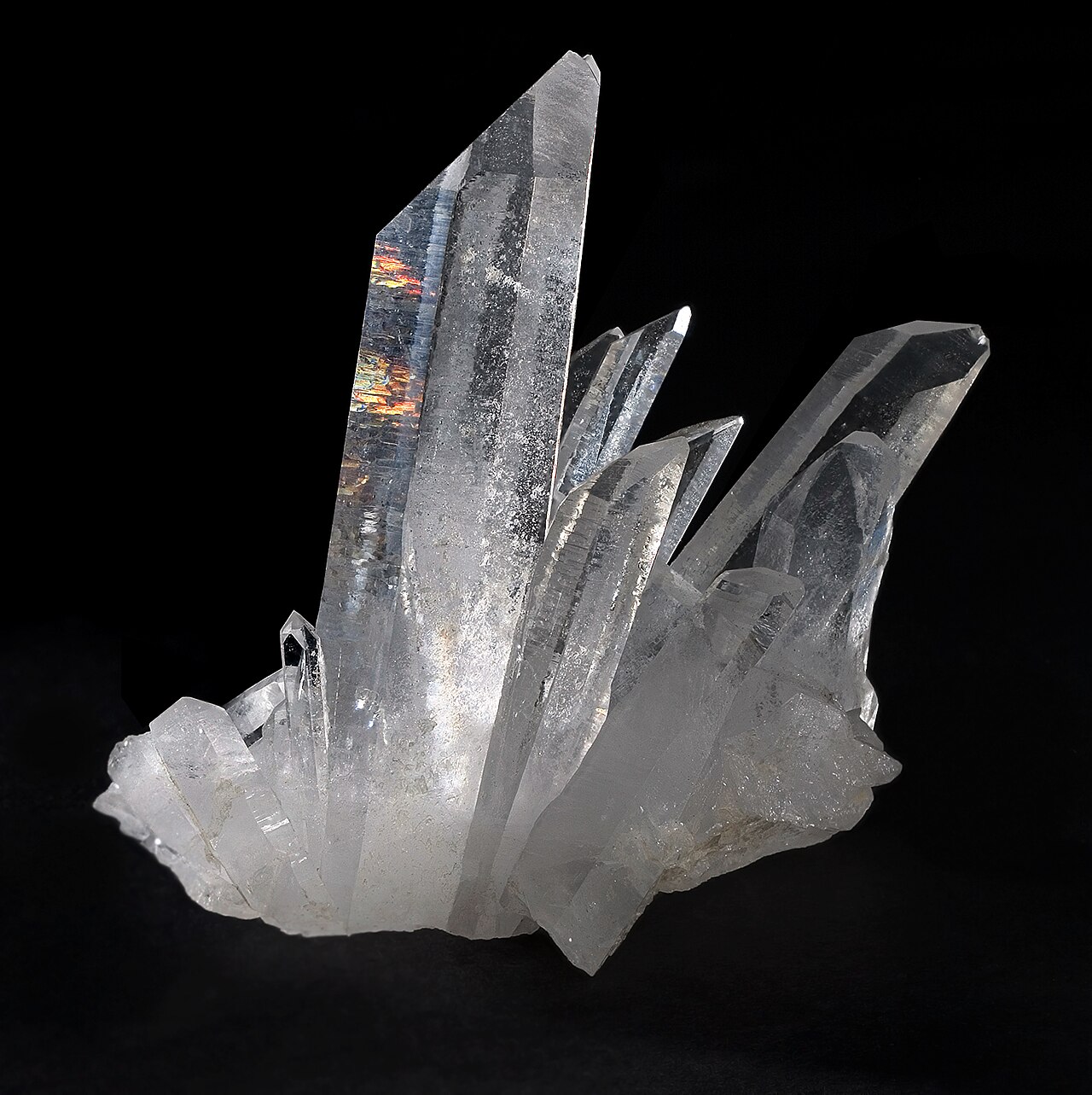
Via Wikimedia Commons: Quartz, Tibet by JJ Harrison ( jjharrison.com.au/ ), CC BY-SA 2.5.
Silica is the chemical compound silicon dioxide (SiO2), and crystalline silica is silica whose molecules are arranged in a crystal structure.[1] The National Institute for Occupational Safety and Health (NIOSH) names quartz as the most common natural form; two other forms, cristobalite and tridymite, occur less often, mainly in volcanic rock and in foundries and kilns.[1] Of the many forms of silica, the crystalline forms are the most harmful to the lungs.[5]
The particles that cause silicosis are called respirable crystalline silica: particles small enough to be breathed deep into the lungs.[1] OSHA describes them as far finer than ordinary sand, and notes that they are created when stone, rock, concrete, brick, block or mortar is cut, sawed, ground, drilled or crushed.[3] NIOSH lists cutting, grinding, polishing, drilling, abrasive blasting, stonecutting, quarry work, tunnelling, hydraulic fracturing and the making of glass, pottery, ceramics, bricks, concrete and stone as activities that can release it.[1]
NIOSH names construction, mining, oil and gas extraction, stone countertop fabrication, foundries and other manufacturing, and dentistry.[1] The UK's National Health Service adds stonemasonry (especially with sandstone), demolition, worktop fitting, pottery, glass-making and sandblasting.[4] A 2022 review in Respirology led by Ryan Hoy notes that silica, as the main mineral of the earth's crust, reaches sectors from mining and construction to dental prostheses, farming, kitchen benchtops and stone-washed jeans.[2] The same review points out that workers in insecure jobs, often immigrants working in small businesses, tend to face more intense exposure than skilled workers in stable employment, because they have fewer regulatory protections.[2]
The body's first line of defence, the mucus and tiny hairs lining the airways, does not stop particles smaller than about 10 micrometres, which can travel down to the smallest airways and air sacs (alveoli).[5] There they are swallowed by alveolar macrophages, the immune cells that normally clear debris from the lungs.[5] Silica is highly toxic to these cells.[5] A 2021 review in the International Journal of Molecular Sciences by Jana Adamčáková and Daniela Mokrá describes a vicious cycle in which macrophages take up the particles and release them again, and this cycle sets off inflammation, the formation of nodules and permanent scarring (fibrosis).[5]
The review sets out several mechanisms that are thought to act together: the direct toxic effect of silica on macrophages, the bursting of the cell compartments that hold the particles, the production of reactive oxygen molecules, and the activation of an immune sensor inside cells called the NLRP3 inflammasome, which releases inflammatory signalling proteins.[5] These signals stimulate fibroblasts, the cells that make connective tissue, to lay down collagen and other materials, and the result is silicotic nodules, scarred tissue and less lung surface for exchanging oxygen.[5] The authors state that the process is complex and not completely understood.[5] They also describe how silica-induced cell death can supply material that prompts the body to make autoantibodies, setting off an autoimmune response.[5]
Silicosis is usually divided into three forms according to how heavy the exposure was and how quickly disease followed.[5][6]
The NHS lists the main symptoms as a persistent cough, persistent shortness of breath, and weakness and tiredness.[4] It states that silicosis usually develops after 10 to 20 years of exposure, sometimes after 5 to 10 years, and occasionally after only a few months of very heavy exposure.[4] Symptoms often appear only after exposure has stopped and can keep worsening without further exposure.[4] According to the NHS, progression can be very slow, over many years, but in advanced cases walking or climbing stairs can become very difficult, and the disease can be fatal through respiratory failure or its complications.[4]
NIOSH lists lung cancer, chronic obstructive pulmonary disease (COPD), certain autoimmune diseases and chronic kidney failure as other diseases caused by excessive exposure.[1] The NHS adds tuberculosis and other chest infections, pulmonary hypertension and heart failure among the complications whose risk silicosis raises.[4]
The Hoy review states that identified case numbers are a substantial underestimate, because reporting systems and workplace health surveillance are deficient in many countries.[2] Estimates also differ between rounds of the Global Burden of Disease (GBD) study.[2][8] Using the 2017 round, the Hoy review gives 23,695 new cases worldwide that year, 39% of all new cases of pneumoconiosis.[2] A 2023 analysis of the GBD 2019 round by Xin Liu and colleagues gives 138,965 new cases in 2019, up from 84,821 in 1990, while the age-standardised incidence rate fell by an average of 0.5% a year over the same period.[8] That analysis found the heaviest burden in regions of middle and high-middle sociodemographic index, and found that the burden had shifted towards older people between 1990 and 2019.[8]
The same pattern of falling rates in some places and persistent or rising cases in others appears region by region in the Hoy review:[2]
The disease was documented as early as ancient Egypt.[6] Its name was coined in 1871, but it reached medical consensus only at the International Labour Organization (ILO) conference in Johannesburg in 1930, which led to an ILO convention in 1934.[2] In 1958 an ILO agreement defined how the disease appears on chest X-rays, and in 1995 the ILO and the World Health Organization set up a Global Programme for the Elimination of Silicosis.[2] The Hoy review judges that global silicosis policies have generally been disappointing and more limited than envisaged.[2]
The Johannesburg conference came at the same time as outbreaks among British scouring-powder makers, South African gold miners and the workers of the Hawks Nest Tunnel in the United States.[6] Construction of the Hawks Nest Tunnel, a three-mile tunnel through Gauley Mountain in West Virginia meant to carry river water to a hydroelectric plant, began in 1930.[9] The rock contained high levels of silica, and the U.S. National Park Service states that at least 764 tunnel workers died of silicosis; at least two-thirds of the workers recruited were African American, as were a majority of those who died.[9] According to the 2025 review by Jane Fazio and colleagues, outbreaks of this period prompted the U.S. Secretary of Labor's Stop Silicosis campaign and, in time, the creation of OSHA and legal limits on silica dust.[6]
Engineered stone, also called artificial or agglomerate stone and sold as "quartz" countertops, is a manufactured material for kitchen and bathroom worktops that typically contains more than 90% silica by weight, compared with at most 40–50% for granite and under 10% for marble.[6] Silicosis among the workers who cut and finish it was first described in the early 2010s in Spain, Italy and Israel, and since then hundreds of cases have emerged in countries including China, Australia, the United States, the United Kingdom and Belgium.[6] Cases have been notable for the young age of the workers, their short exposure and the often rapid progression of their disease.[2] The Fazio review reports diagnosis on average after 7 to 19 years of work, at a median age between 33 and 55, often among people from marginalised or immigrant communities, with high rates of lung transplantation and death.[6]
Even with wet cutting and exhaust ventilation, air sampling has frequently found exposures above safe levels when engineered stone is cut, according to the Fazio review.[6]
There is no cure; the NHS states that lung damage cannot be reversed and that treatment aims to relieve symptoms, with lung transplantation an option only in very severe cases.[4] Prevention therefore rests on limiting exposure. NIOSH ranks the methods in order of preference: removing or substituting the material (for example, stone with little or no crystalline silica), engineering controls such as ventilation or wet cutting, administrative controls such as training and changed procedures, and finally personal protective equipment such as respirators.[1]
Exposure limits. An occupational exposure limit is the highest airborne concentration a worker may be exposed to over a set period, usually an eight-hour shift.[2] As of the Hoy review in 2022, limits for respirable crystalline silica ranged between countries from 0.025 to 0.35 milligrams per cubic metre (mg/m³), there was no international agreement on a protective limit, and most low- and middle-income countries had no legislated limit.[2]
This entry explains; it is not medical advice. Ask a doctor or pharmacist about your own health.
 Get Micwyn on your home screenIts own icon, full screen, and notifications.