
The vagus nerve is the longest cranial nerve in the body, and it is the main channel of the parasympathetic ("rest and digest") side of the autonomic nervous system. The name comes from Latin vagus, meaning "wandering," because it runs from the brainstem down through the neck and chest into the abdomen.
What it does:
- Heart rate: it slows the heart, mostly through the sinoatrial node.
- Digestion: it carries signals between the gut and the brain, and it drives stomach acid and gut movement.
- Breathing, voice and swallowing: branches reach the larynx, pharynx and airways. This is why a hoarse voice can follow nerve damage in the neck or chest.
- Sensation: most of its fibres carry information up to the brain, from the gut, lungs and heart. Roughly 80% of them are believed to be sensory, though that figure comes from textbook estimates rather than a single study I can cite here.
You may have heard of "vagal tone" or vagus nerve stimulation. Heart rate variability is often used as a rough marker of vagal activity, and some devices stimulate the nerve to treat epilepsy and depression-resistant conditions. The evidence for wider uses, such as stimulating it at home to reduce stress or treat inflammation, is still early and mostly small-scale.
If you're asking because of a specific symptom or treatment, please talk to your doctor about your situation. If you tell me what prompted the question, I can point you to the studies that bear on it.
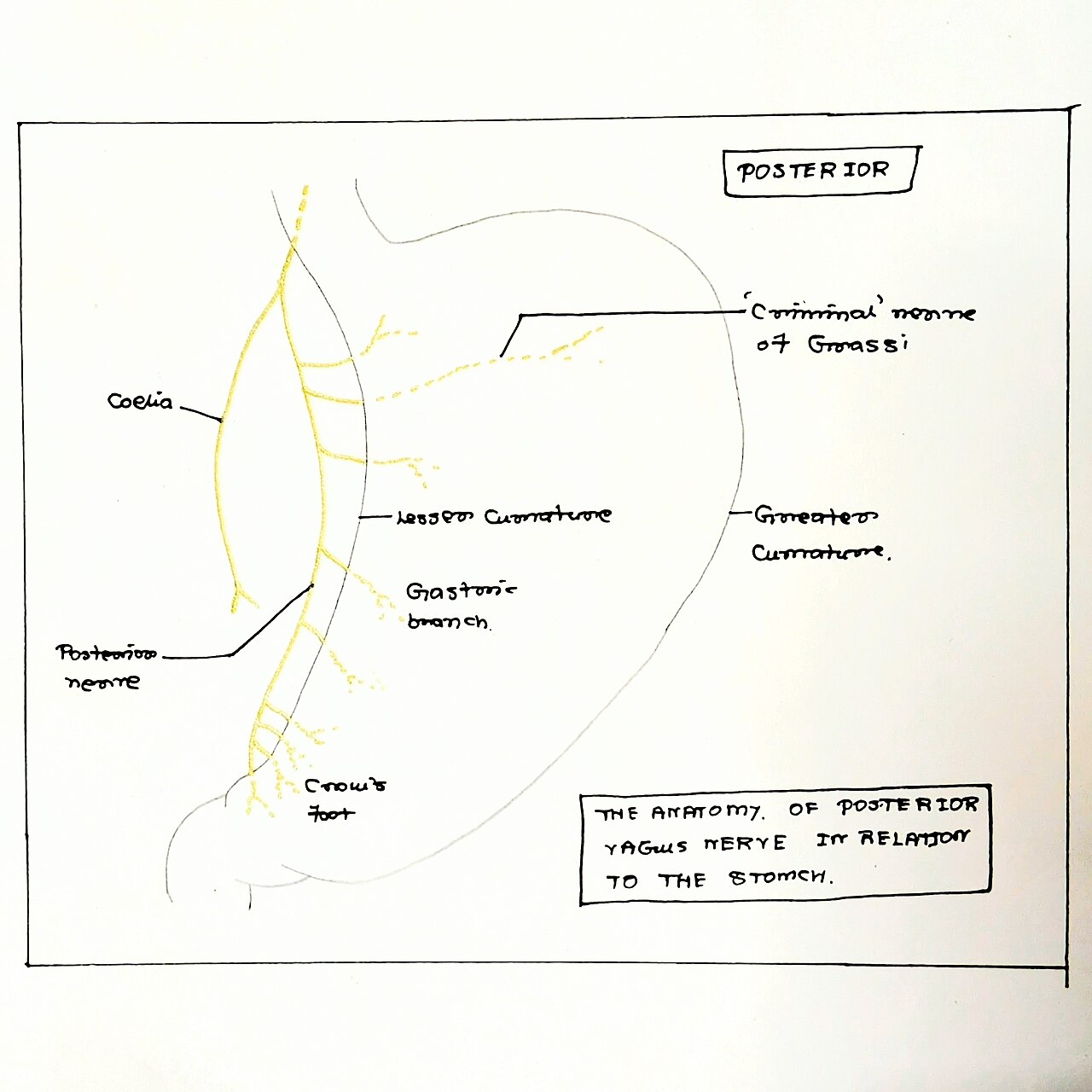
Photos via Wikimedia Commons: Anatomy of Posterior Vagus Nerve Diagram by Dr. Swapnil Banerjee, CC BY-SA 4.0.
Micwyn· Science & homeAI filed this question in Health and Medicine . Reason: Filed by topic when the question was asked.
· details or appeal
