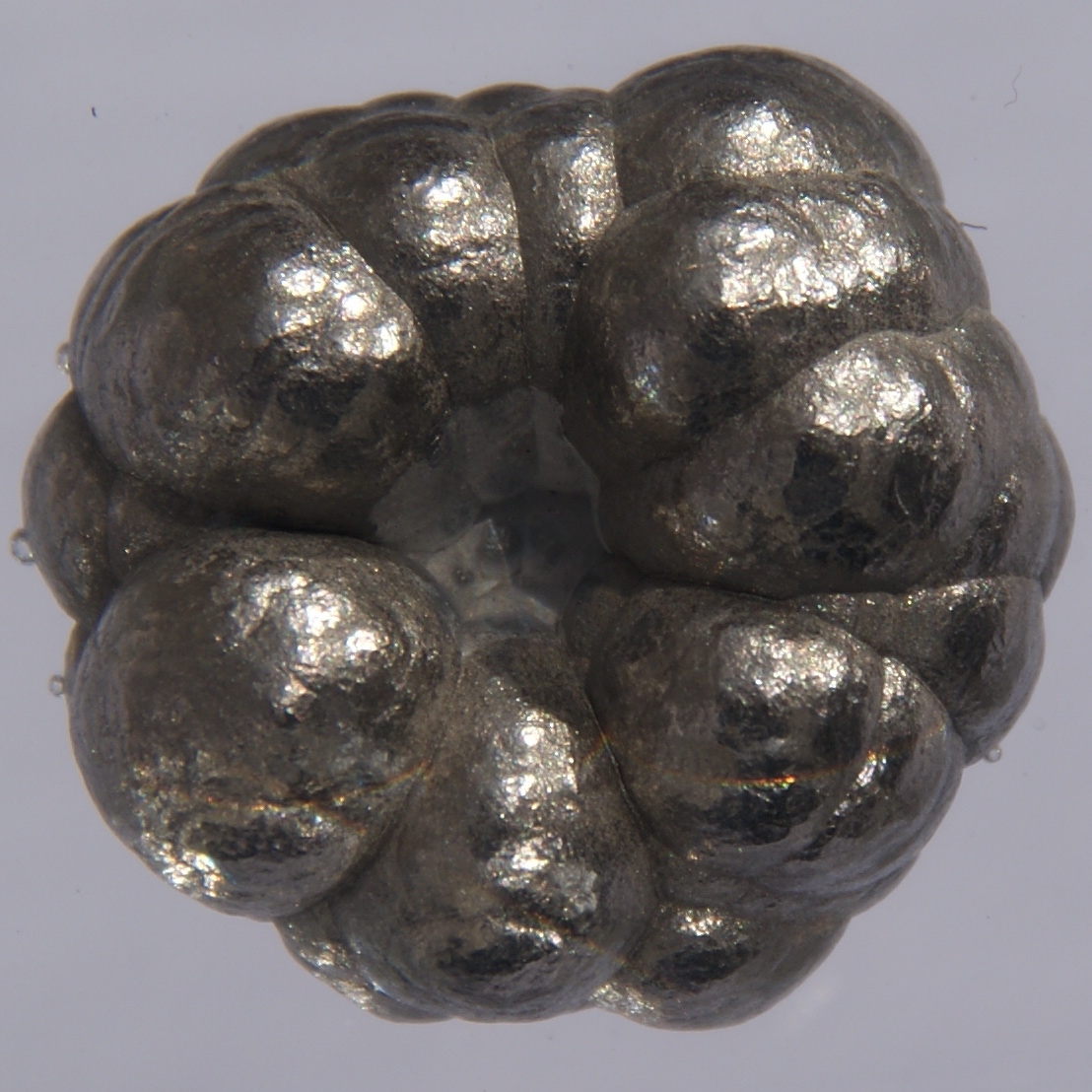
Nickel is the chemical element with atomic number 28 and the symbol Ni, a metal in group 10 of the periodic table that is used in stainless steel, plating, coins and rechargeable batteries.[1]
This entry is about the element. Its relative atomic mass is 58.693, it is in group 10 of the periodic table, and it is a solid at room temperature.[1] For its place in the table and its basic facts, see the [periodic table page for Nickel](/element/Q744/nickel).
Properties
The Royal Society of Chemistry lists nickel's melting point as 1455 °C (1728 K), its boiling point as 2913 °C (3186 K), and its density as 8.90 g/cm³.[1] Its standard atomic weight is 58.6934(4), unchanged since 2007 according to the atomic weights commission of the International Union of Pure and Applied Chemistry, which says terrestrial nickel appears invariant within the measurement uncertainty; NIST gives the same value.[3][2]
Isotopes
Nickel has five stable isotopes. The Royal Society of Chemistry gives their natural proportions as 68.077 percent for nickel-58, 26.223 percent for nickel-60, 1.1399 percent for nickel-61, 3.6346 percent for nickel-62 and 0.9255 percent for nickel-64, and NIST gives the same figures as fractions.[1][2]
Discovery and name
The Swedish metallurgist Axel Fredrik Cronstedt discovered nickel in 1751 while working in Stockholm on the mineral nickeline, according to the atomic weights commission and the Royal Society of Chemistry, which adds that he announced and named it in 1754 and that Torbern Bergman produced pure nickel in 1775.[1][3] The Royal Society of Chemistry derives the name from the German kupfernickel, meaning either "devil's copper" or "St. Nicholas's copper"; the commission glosses the German Nickel as "deceptive little spirit."[1][3]
Where it comes from
The Royal Society of Chemistry gives nickel's crustal abundance as 26.6 parts per million and says a substantial amount of the nickel on Earth arrived with meteorites. It names pentlandite as the main ore and lists Russia, Indonesia and the Philippines as the top three producers, without a date.[1]
Uses
The Royal Society of Chemistry lists plating, stainless steel, nichrome, copper-nickel alloys in desalination plants, nickel steel armour, nickel-cadmium and nickel-metal-hydride batteries, the five-cent coin (25 percent nickel), and finely divided nickel as a hydrogenation catalyst. It says the biological role of nickel is uncertain.[1]