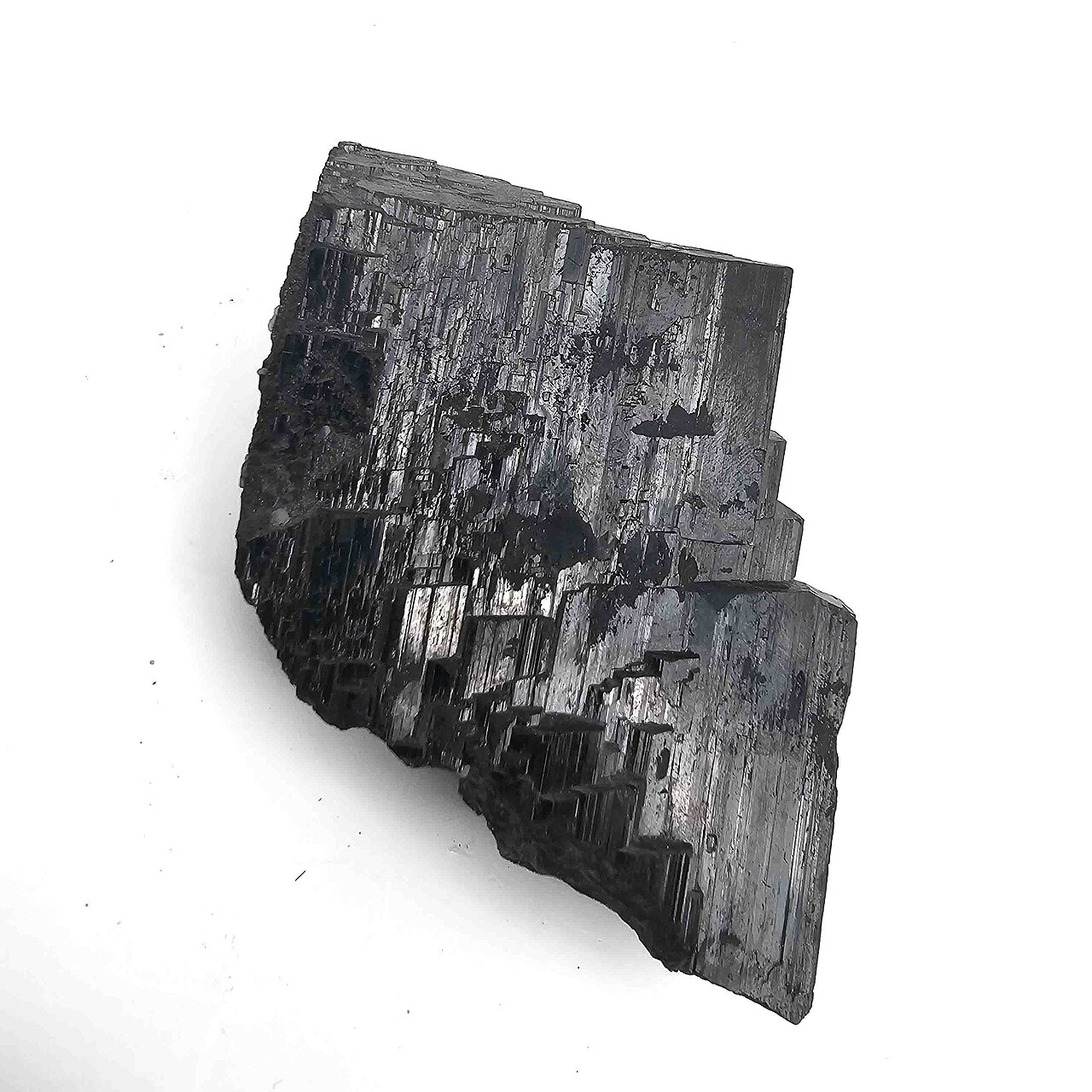
Tungsten is the chemical element with atomic number 74 and the symbol W, a metal in group 6 of the periodic table that melts at 3414 °C and is used in tungsten carbide cutting tools and high-temperature alloys.[1]
This entry is about the element. Its relative atomic mass is 183.84, it is in group 6 of the periodic table, and it is a solid at room temperature.[1] For its place in the table and its basic facts, see the [periodic table page for Tungsten](/element/Q743/tungsten).
Properties
The Royal Society of Chemistry lists tungsten's melting point as 3414 °C, its boiling point as 5555 °C, and its density as 19.3 g/cm³.[1] Its standard atomic weight is 183.84(1), unchanged since 1991 according to the atomic weights commission of the International Union of Pure and Applied Chemistry; NIST gives the same value.[3][2]
Isotopes
Tungsten has five naturally occurring isotopes. The Royal Society of Chemistry gives their proportions as 0.12 percent for tungsten-180, 26.5 percent for tungsten-182, 14.31 percent for tungsten-183, 30.64 percent for tungsten-184 and 28.43 percent for tungsten-186, and NIST gives the same figures as fractions.[1][2]
Discovery and name
The Royal Society of Chemistry says the Swedish mineral now called scheelite was examined by Woulfe in 1779, that Carl Wilhelm Scheele isolated an acidic white oxide in 1781, and that the brothers Juan and Fausto Elhuyar produced the same oxide in 1783 at the Seminary at Vergara, Spain, and reduced it to the metal with carbon. The atomic weights commission credits the Swedish pharmacist and chemist Scheele with the discovery in 1781 and the Spanish chemists Fausto Elhuyar and his brother Juan José with first isolating the metal in 1783.[1][3] The name comes from the Swedish tung sten, "heavy stone," and the symbol W from the German wolfram.[1][3]
Where it comes from
The Royal Society of Chemistry says tungsten is found in the minerals scheelite and wolframite, and that the metal is made by reducing the oxide with hydrogen or carbon.[1]
Uses
The Royal Society of Chemistry lists filaments in incandescent bulbs, now phased out in many countries, alloys, arc-welding electrodes, heating elements in high-temperature furnaces, tungsten carbide for cutting and drilling tools, and calcium and magnesium tungstates in fluorescent lighting. It calls tungsten the heaviest metal known to have a biological role, noting that some bacteria use it in an enzyme.[1]