Abraham Lincoln (1809–1865) was the 16th president of the United States, elected in 1860, who was in office when the American Civil War began in 1861 and was assassinated in April 1865.[1]
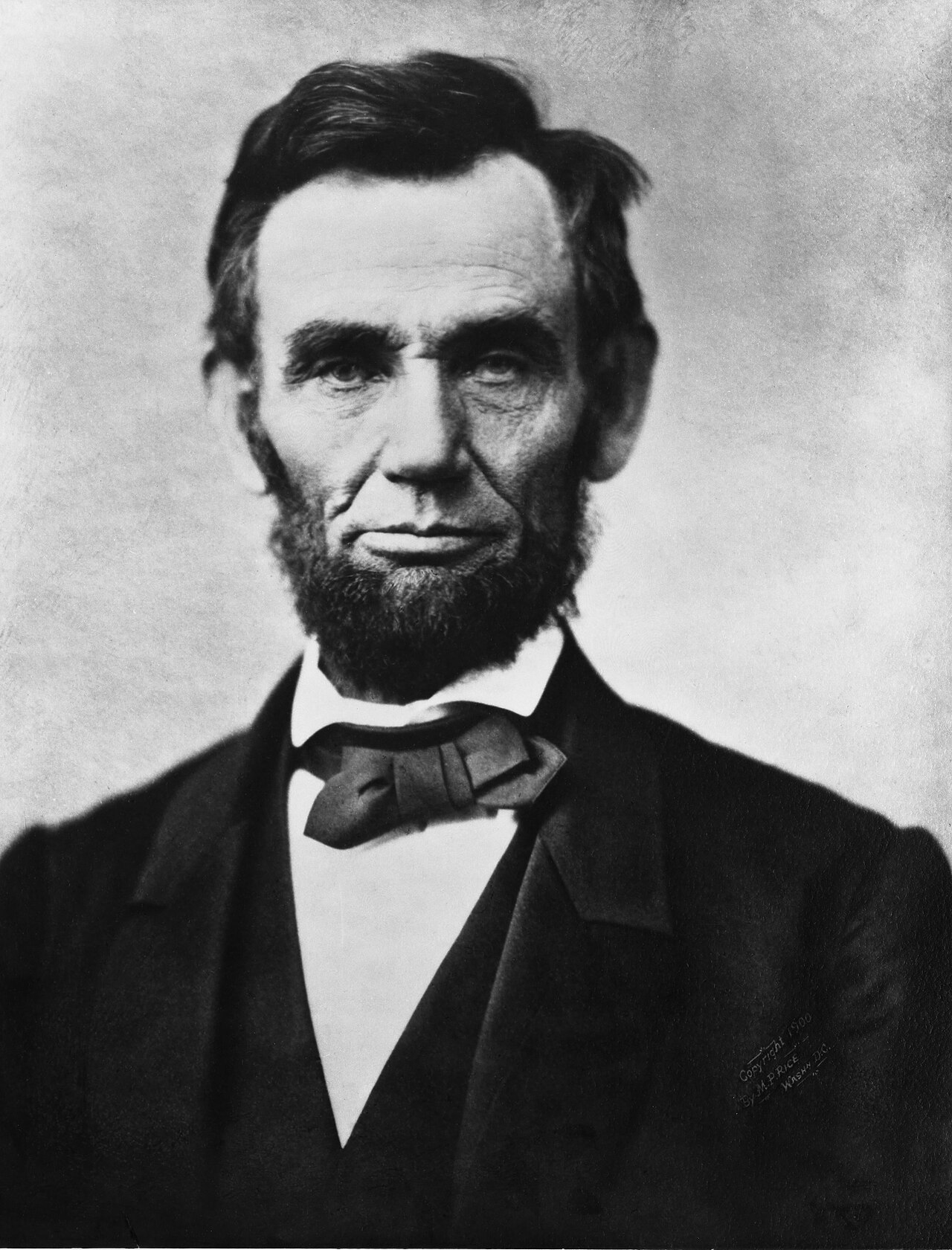
A studio portrait photograph of Abraham Lincoln, taken in November 1863.
Lincoln was born on February 12, 1809, in a one-room log cabin near what is now Hodgenville, Kentucky, the son of Thomas Lincoln and Nancy Hanks Lincoln.[1][4] The family moved to a farm on Knob Creek in 1811 and, in December 1816, to Indiana. His mother died on October 5, 1818.[1] In March 1830 the family moved to Illinois and settled in Macon County, and in July 1831, aged 22, Lincoln left to live in New Salem. There he worked as a store clerk, became part owner of a store that eventually failed, and served as a postmaster and a surveyor.[1] The Abraham Lincoln Presidential Library sums up the geography of his life this way: he was born in Kentucky, grew up in Indiana, spent most of his adult life in Illinois, and died in the District of Columbia.[8]
In April 1832 he enlisted in the Illinois militia after the governor called for troops at the outbreak of the Black Hawk War. He served 51 days, saw no action, and was elected captain by his fellow militiamen.[1] That August he ran for the Illinois General Assembly as a Whig and finished eighth in a field of thirteen.[1]
Lawyer and Illinois legislator
Lincoln was elected to the Illinois General Assembly for the first time on August 4, 1834, representing Sangamon County, and was re-elected in 1836, 1838 and 1840.[1] He was a member of the "Long Nine," a group of nine Whigs from Sangamon County noted for their height, who worked successfully to move the state capital from Vandalia to Springfield.[1] The White House Historical Association sums up the period as eight years in the Illinois legislature plus many years riding the circuit of courts.[4]
The Illinois Supreme Court licensed him to practice law on September 9, 1836.[1] He arrived in Springfield on April 15, 1837, with his belongings in two saddlebags, and became the junior law partner of John Todd Stuart. That partnership ended in April 1841, when he partnered with Stephen T. Logan; by 1844 he had set up his own practice with William H. Herndon as junior partner.[1] From September 1839 he traveled the Eighth Judicial Circuit, and he continued to ride it until he was elected president.[1]
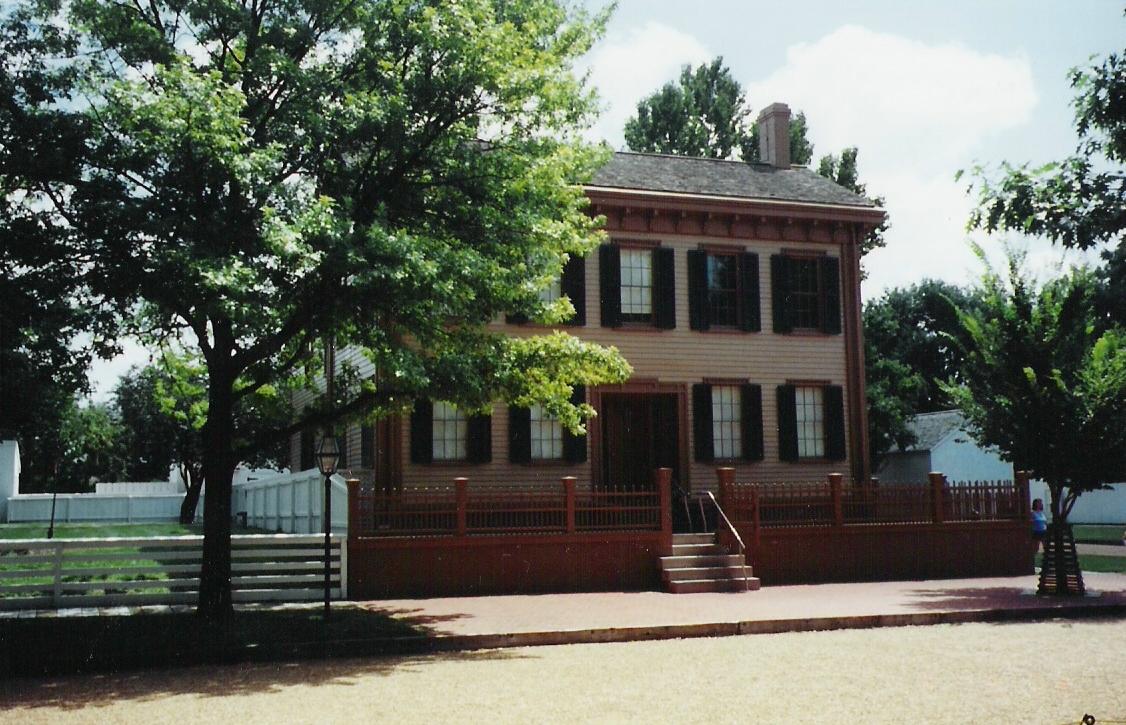
Lincoln married Mary Todd on November 4, 1842.[1] They had four sons, Robert, Eddy, Willie and Tad, and only Robert lived to adulthood.[8] In January 1844 he bought the Springfield house that was his first and only home.[1]
Congress and the return to politics
On August 3, 1846, Lincoln was elected to the U.S. House of Representatives as a Whig, for the Thirtieth Congress. It was the only seat in Congress he ever held.[1] He took his seat on December 6, 1847.[1] In 1849 he proposed legislation in the House to begin abolishing slavery in the District of Columbia.[1]
The Kansas-Nebraska Act, passed on May 30, 1854, brought him back into politics.[1] He was re-elected to the Illinois legislature that November but withdrew twenty days later to pursue a seat in the U.S. Senate; he lost that bid on February 8, 1855.[1]
The 1858 Senate race and the 1860 election
On June 16, 1858, after the Illinois Republican convention unanimously chose him as its Senate candidate, Lincoln delivered his "House Divided" speech.[1] His campaign against Stephen Douglas produced seven debates: at Ottawa (August 21), Freeport (August 27), Jonesboro (September 15), Charleston (September 18), Galesburg (October 7), Quincy (October 13) and Alton (October 15), all in 1858.[1]
Lincoln lost the race on November 2, 1858. Republicans received about 125,000 votes and Democrats about 121,000, but because of legislative apportionment and thirteen holdover senators, Democrats held the majority in the state legislature, which then chose Douglas over Lincoln by 54 votes to 46.[1] The White House Historical Association says the debates gave him a national reputation that won him the Republican presidential nomination in 1860.[4] The party's convention in Chicago chose him, and the nomination was announced on May 18, 1860.[1]
On November 6, 1860, Lincoln was elected the 16th president, defeating Douglas (Northern Democrat), John C. Breckinridge (Southern Democrat) and John Bell (Constitutional Union), with Hannibal Hamlin of Maine as vice president.[1] South Carolina became the first state to secede on December 20, 1860.[1] Lincoln gave a farewell address in Springfield on February 11, 1861, traveled for twelve days to Washington, and was inaugurated on March 4, 1861.[1]
The Civil War
Confederate forces fired the first shots of the Civil War at Fort Sumter, South Carolina, at 4:30 a.m. on April 12, 1861.[6] The fort surrendered on April 14, and on April 15 Lincoln called for 75,000 volunteers.[1][4]
Emancipation
Lincoln issued a preliminary Emancipation Proclamation on September 22, 1862, and the final proclamation on January 1, 1863.[1][2] The National Archives notes that it applied only to states that had seceded, leaving slavery untouched in the loyal border states, and that the freedom it promised depended on Union military victory.[2] It also announced the acceptance of Black men into the Union Army and Navy.[2] Sources differ on how many served: the National Archives says almost 200,000 Black soldiers and sailors fought for the Union, the White House Historical Association says more than 200,000, and the Abraham Lincoln Presidential Library says 190,000 enlisted.[2][4][8]
Gettysburg
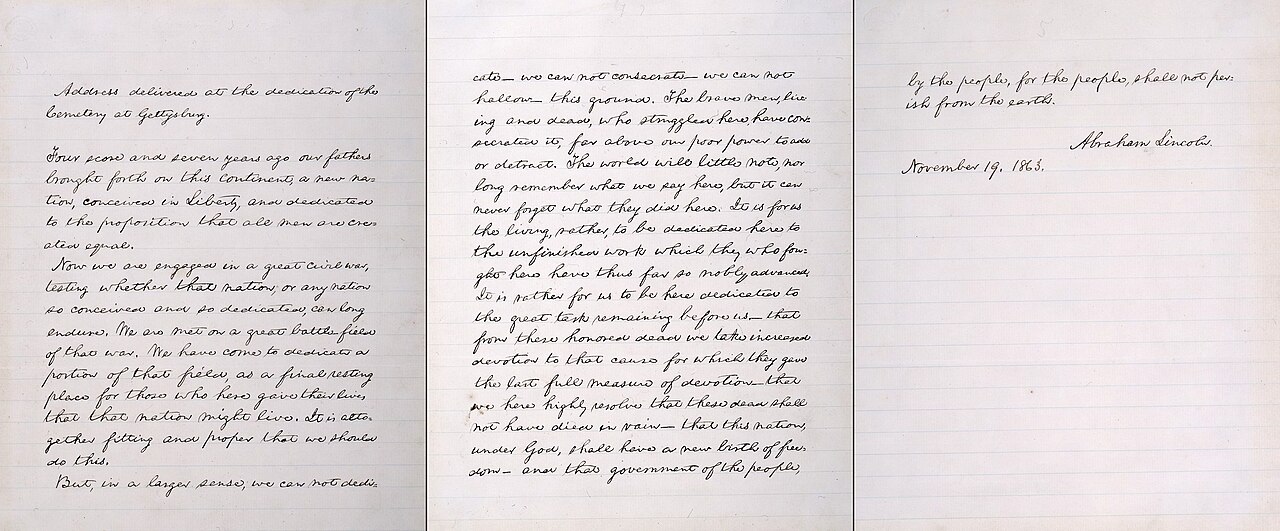
The Battle of Gettysburg was fought on July 1–3, 1863.[1] On November 19, 1863, at the dedication of the Soldiers' National Cemetery there, Lincoln was the second speaker, following the orator Edward Everett, who spoke for two hours.[5] Lincoln's address closed with the hope "that government of the people, by the people, for the people, shall not perish from the earth."[4] The Library of Congress holds two manuscript copies of the address.[5]
A handwritten manuscript copy of the Gettysburg Address.
The National Union Party, a temporary name for the Republican Party, nominated Lincoln for re-election on February 22, 1864. Union forces took Atlanta on September 1, and on November 8 Lincoln was re-elected, defeating General George B. McClellan; his vice president was Andrew Johnson.[1]
The Senate passed the Thirteenth Amendment in April 1864, but the House initially did not; it passed on January 31, 1865, by 119 to 56, and the National Archives says Lincoln took an active role in getting it through Congress.[3] He approved the joint resolution submitting it to the states on February 1, 1865.[3] It was ratified on December 6, 1865, after his death, and abolished slavery in the United States.[3] The Abraham Lincoln Presidential Library also records that before his death Lincoln advocated giving African-American veterans the right to vote.[8]
The Second Inaugural and the war's end
Lincoln delivered his Second Inaugural Address on March 4, 1865; it includes the words "With malice toward none; with charity for all; with firmness in the right," and it is inscribed on one wall of the Lincoln Memorial in Washington.[1][4] On April 9, General Robert E. Lee surrendered the Army of Northern Virginia to General Ulysses S. Grant at Appomattox Court House, Virginia.[1]
Assassination and death
On the evening of Good Friday, April 14, 1865, the actor John Wilkes Booth shot Lincoln in the back of the head with a .44 Derringer pistol during a performance of the play Our American Cousin at Ford's Theatre in Washington, at about 10:15 p.m.[4][7] Lincoln died the next morning, April 15, at 7:22 a.m., at the Petersen House, aged 56.[1][4][7] The Abraham Lincoln Presidential Library describes him as the first president to be assassinated in office.[8] Funeral services were held in the White House on April 19, and on April 21 a funeral train carrying his remains left Washington on a twelve-day journey to Springfield, Illinois.[1]
The two-story frame house in Springfield, Illinois, where Lincoln lived before becoming president.
National Park Service, Fort Sumter and Fort Moultrie National Historical Park. "History & Culture" (last updated January 28, 2023). nps.gov/fosu/learn/historyculture/index.htm