Compare versions
Version 1 → Version 2. Removed · Added. This shows the entry's text as it is written, including its formatting marks.
Version 1 · Version 2 · Version history
Side by side · Together
Version 1Version 2
15 unchanged paragraphs
California is a state of the United States, admitted to the Union as the 31st state on 9 September 1850, with Sacramento as its capital.[3][6]
California is a state of the United States, admitted to the Union as the 31st state on 9 September 1850, with Sacramento as its capital.[3][6]
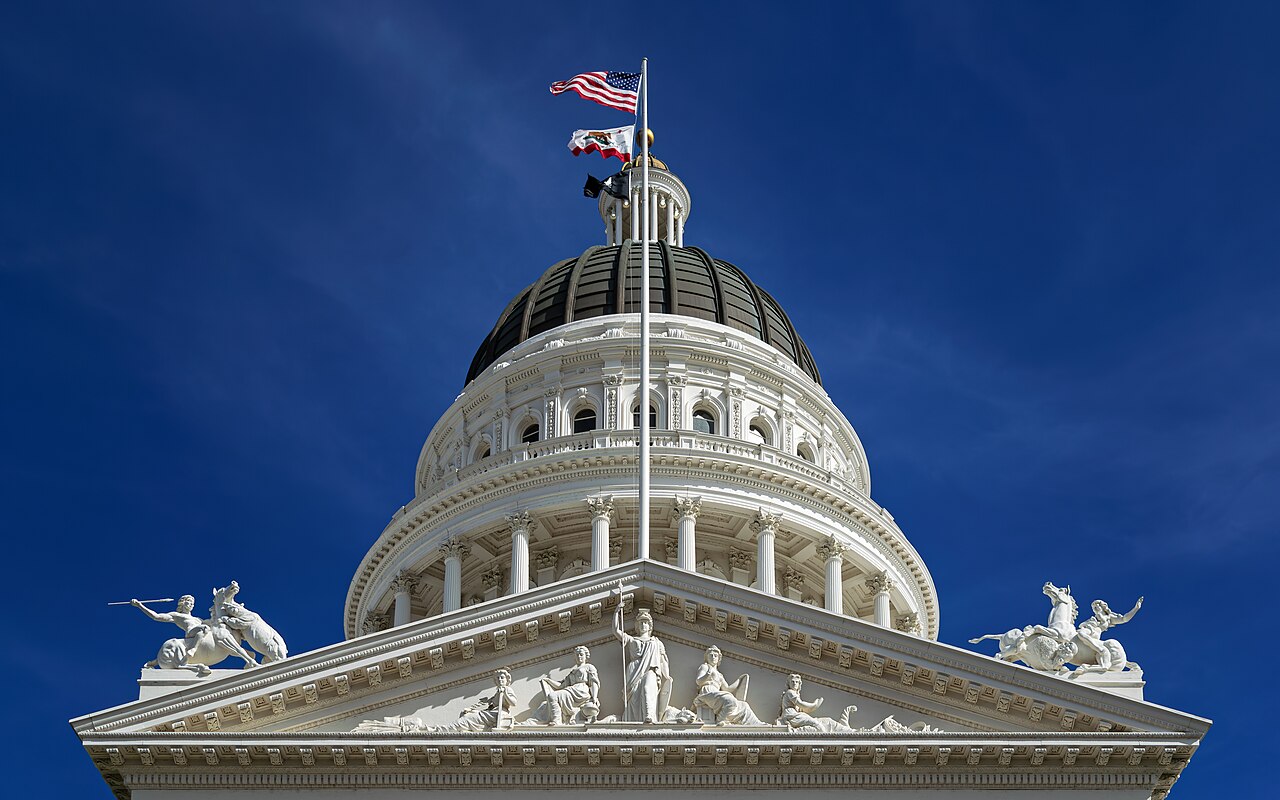

*Via Wikimedia Commons: [California State Capitol (top), NW view up](https://commons.wikimedia.org/wiki/File:California_State_Capitol_(top),_NW_view_up.jpg) by Photograph: Radomianin, public domain.*
*Via Wikimedia Commons: [California State Capitol (top), NW view up](https://commons.wikimedia.org/wiki/File:California_State_Capitol_(top),_NW_view_up.jpg) by Photograph: Radomianin, public domain.*
## From Mexican territory to statehood
## From Mexican territory to statehood
On 24 January 1848, the carpenter James W. Marshall found gold in the American River while working at John Sutter's sawmill near Coloma, California.[2] Nine days later, on 2 February 1848, the United States and Mexico signed the [Treaty of Guadalupe Hidalgo](https://www.archives.gov/milestone-documents/treaty-of-guadalupe-hidalgo). Under it Mexico ceded about 55 percent of its territory, including present-day California, and the United States agreed to pay $15 million.[1]
On 24 January 1848, the carpenter James W. Marshall found gold in the American River while working at John Sutter's sawmill near Coloma, California.[2] Nine days later, on 2 February 1848, the United States and Mexico signed the [Treaty of Guadalupe Hidalgo](https://www.archives.gov/milestone-documents/treaty-of-guadalupe-hidalgo). Under it Mexico ceded about 55 percent of its territory, including present-day California, and the United States agreed to pay $15 million.[1]
The Census Bureau describes the discovery as the start of "the first of several large-scale westward migrations in American history", with thousands of miners, entrepreneurs and families travelling to California by land and sea between 1849 and 1855.[2] The 1850 census counted 92,597 people in the state, and the population rose by more than 300 percent between 1850 and 1860.[2]
The Census Bureau describes the discovery as the start of "the first of several large-scale westward migrations in American history", with thousands of miners, entrepreneurs and families travelling to California by land and sea between 1849 and 1855.[2] The 1850 census counted 92,597 people in the state, and the population rose by more than 300 percent between 1850 and 1860.[2]
Californians sought statehood in 1849.[3] After heated debate over slavery, Congress accepted California as a free-labor state under the Compromise of 1850, and it became the 31st state on 9 September 1850.[3][4]
Californians sought statehood in 1849.[3] After heated debate over slavery, Congress accepted California as a free-labor state under the Compromise of 1850, and it became the 31st state on 9 September 1850.[3][4]
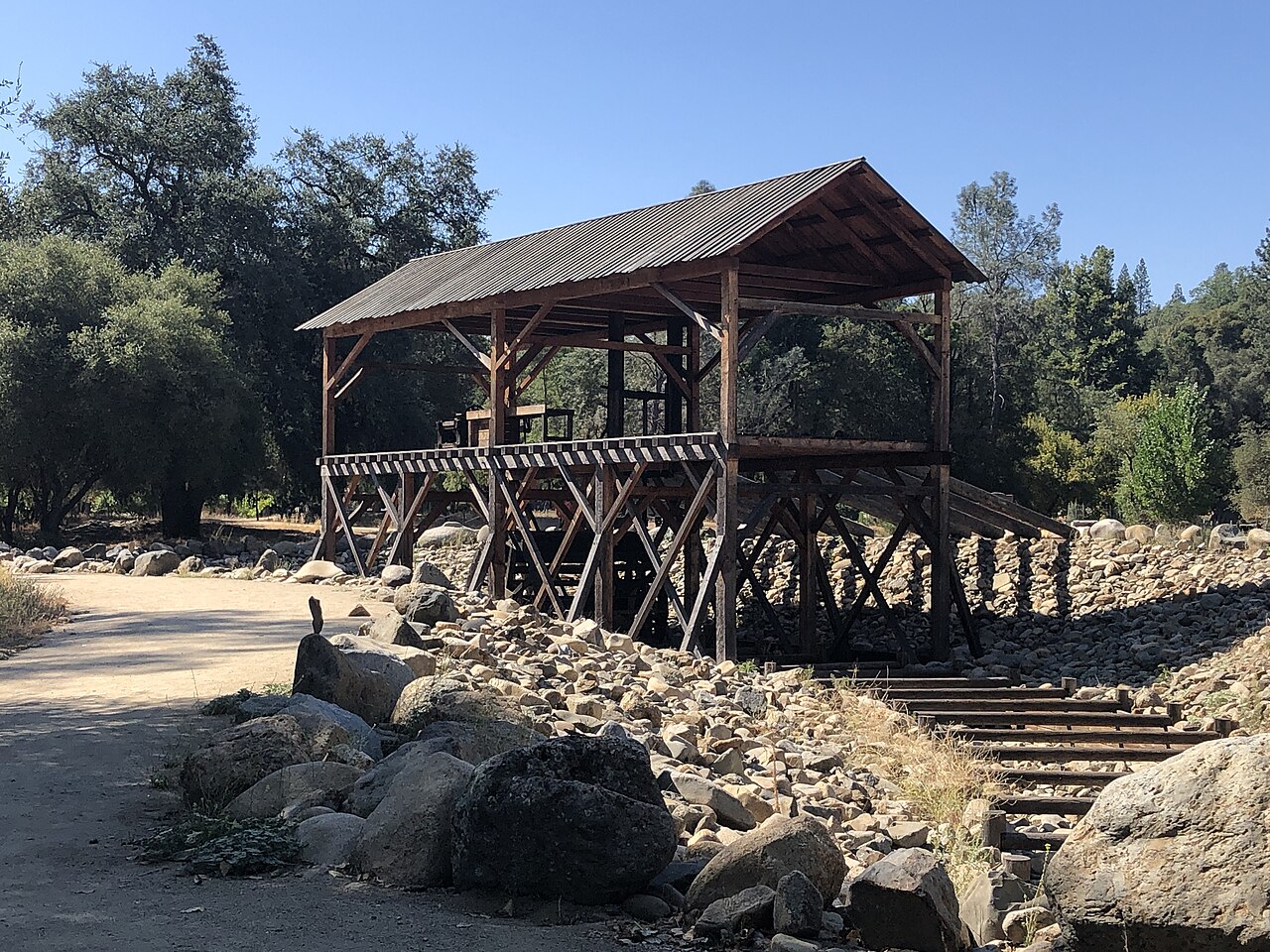

*Via Wikimedia Commons: [Marshall Gold Discovery State Historic Park - Aug 2019 - Stierch 11](https://commons.wikimedia.org/wiki/File:Marshall_Gold_Discovery_State_Historic_Park_-_Aug_2019_-_Stierch_11.jpg) by Missvain, [CC BY 4.0](https://creativecommons.org/licenses/by/4.0).*
*Via Wikimedia Commons: [Marshall Gold Discovery State Historic Park - Aug 2019 - Stierch 11](https://commons.wikimedia.org/wiki/File:Marshall_Gold_Discovery_State_Historic_Park_-_Aug_2019_-_Stierch_11.jpg) by Missvain, [CC BY 4.0](https://creativecommons.org/licenses/by/4.0).*
## The capital
## The capital
According to California State Parks, San Jose was the first capital, but it lacked suitable facilities, and the wet winter of 1850-1851 left its roads muddy. The legislature met in Vallejo for one week in 1852 and for a month in 1853, then moved to Benicia, where a brick statehouse was built but the site proved too small to expand. The capital moved to Sacramento in 1854.[3]
According to California State Parks, San Jose was the first capital, but it lacked suitable facilities, and the wet winter of 1850-1851 left its roads muddy. The legislature met in Vallejo for one week in 1852 and for a month in 1853, then moved to Benicia, where a brick statehouse was built but the site proved too small to expand. The capital moved to Sacramento in 1854.[3]
## Population
## Population
The 2020 Census counted 39,538,223 residents in California as of 1 April 2020, up 6.1 percent from 37,253,956 in 2010.[5] The state's number of seats in the U.S. House of Representatives fell from 53 to 52 on the 2020 apportionment, which the Census Bureau released on 26 April 2021.[5]
The 2020 Census counted 39,538,223 residents in California as of 1 April 2020, up 6.1 percent from 37,253,956 in 2010.[5] The state's number of seats in the U.S. House of Representatives fell from 53 to 52 on the 2020 apportionment, which the Census Bureau released on 26 April 2021.[5]
## Area
## Area
As of the 2010 Census, California's land area was 155,779.2 square miles, the third largest of any state.[6]
As of the 2010 Census, California's land area was 155,779.2 square miles, the third largest of any state.[6]
## The Legislature
California's Legislature has two chambers. The Assembly has 80 members and the Senate has 40, and each Assembly or Senate district chooses one member.[7] Under Article IV, Section 2 of the state constitution, as reproduced by FindLaw with a currency note of 1 January 2026, Senators serve four-year terms, with half elected every two years, and Assembly members serve two-year terms.[8] The same section limits a person to 12 years of service in the Senate, the Assembly, or both, for members first elected after the limit took effect.[8] Because FindLaw warns that its copy may not reflect the latest law, these provisions should be checked against the legislature's own text.[8]
## Sources
## Sources
1. [Treaty of Guadalupe Hidalgo (1848)](https://www.archives.gov/milestone-documents/treaty-of-guadalupe-hidalgo), Milestone Documents, U.S. National Archives.
2. [History and the Census: The 1848 California Gold Rush](https://www.census.gov/about/history/stories/monthly/2018/january-2018.html), U.S. Census Bureau, January 2018.
3. [California statehood and capital history](https://www.parks.ca.gov/?page_id=23856), California State Parks.
4. [California becomes the 31st state in record time](https://www.history.com/this-day-in-history/september-9/california-becomes-the-31st-state-in-record-time), HISTORY.
5. [2020 Census demographics](http://dof.ca.gov/forecasting/demographics/2020-census-demographics/), California Department of Finance, with the Census Bureau's 2020 apportionment counts released 26 April 2021.
6. [California state and local geography guide, 2010](https://www.census.gov/geographies/reference-files/2010/geo/state-local-geo-guides-2010/california.html), U.S. Census Bureau.
7. [Assembly & Senate](https://capitolmuseum.ca.gov/learn/history-and-government/assembly-and-senate), California State Capitol Museum.
8. [California Constitution, Article IV, Section 2](https://codes.findlaw.com/ca/constitution-of-the-state-of-california-1879/ca-const-art-iv-sect-2/), FindLaw, current as of 1 January 2026.
