Entomology is the branch of zoology devoted to the scientific study of insects, covering their structure, physiology, behaviour, ecology and classification as well as the ways they harm or benefit human activity.[1]
Name and scope
The word comes from the Greek entomon, meaning "notched", a reference to the segmented body of an insect.[1] Encyclopaedia Britannica describes the field as spanning genetics, taxonomy (the naming and classification of organisms), morphology (the study of form and structure), physiology, behaviour and ecology, together with economic entomology, which deals with the ways insects harm or benefit human activity.[1] The Entomological Society of America (ESA) groups its members into five sections: formal and informal teaching; medical, urban and veterinary entomology; physiology, biochemistry and toxicology; plant-insect ecosystems; and systematics, evolution and biodiversity.[2] The biology of insects themselves is treated in a separate entry, "Insect".
History
Ancient and Renaissance writers
In the 4th century BCE the Greek philosopher Aristotle described the anatomy of insects, work that Britannica treats as the foundation of the later science.[1] The Roman author Pliny the Elder extended Aristotle's list of known kinds.[1] In 1602 the Italian naturalist Ulisse Aldrovandi published De Animalibus Insectis, a treatise devoted to insects.[1]
In the 17th century the Dutch naturalist Jan Swammerdam (1637–1680) used the newly developed microscope to examine the fine structure of many insects.[1][3] Britannica calls him the most accurate of the classical microscopists.[3] During his research on insects between 1667 and 1673 he produced A General History of Insects and the Bible of Nature.[3] He showed that the wings of a butterfly are already present in a caterpillar that is about to pupate, that is, to enter the pupa, the resting stage between larva and adult.[3] He also sorted insects into four major groups according to the kind and degree of metamorphosis (the change in body form between young and adult), and three of those divisions are still broadly used in classification.[3]
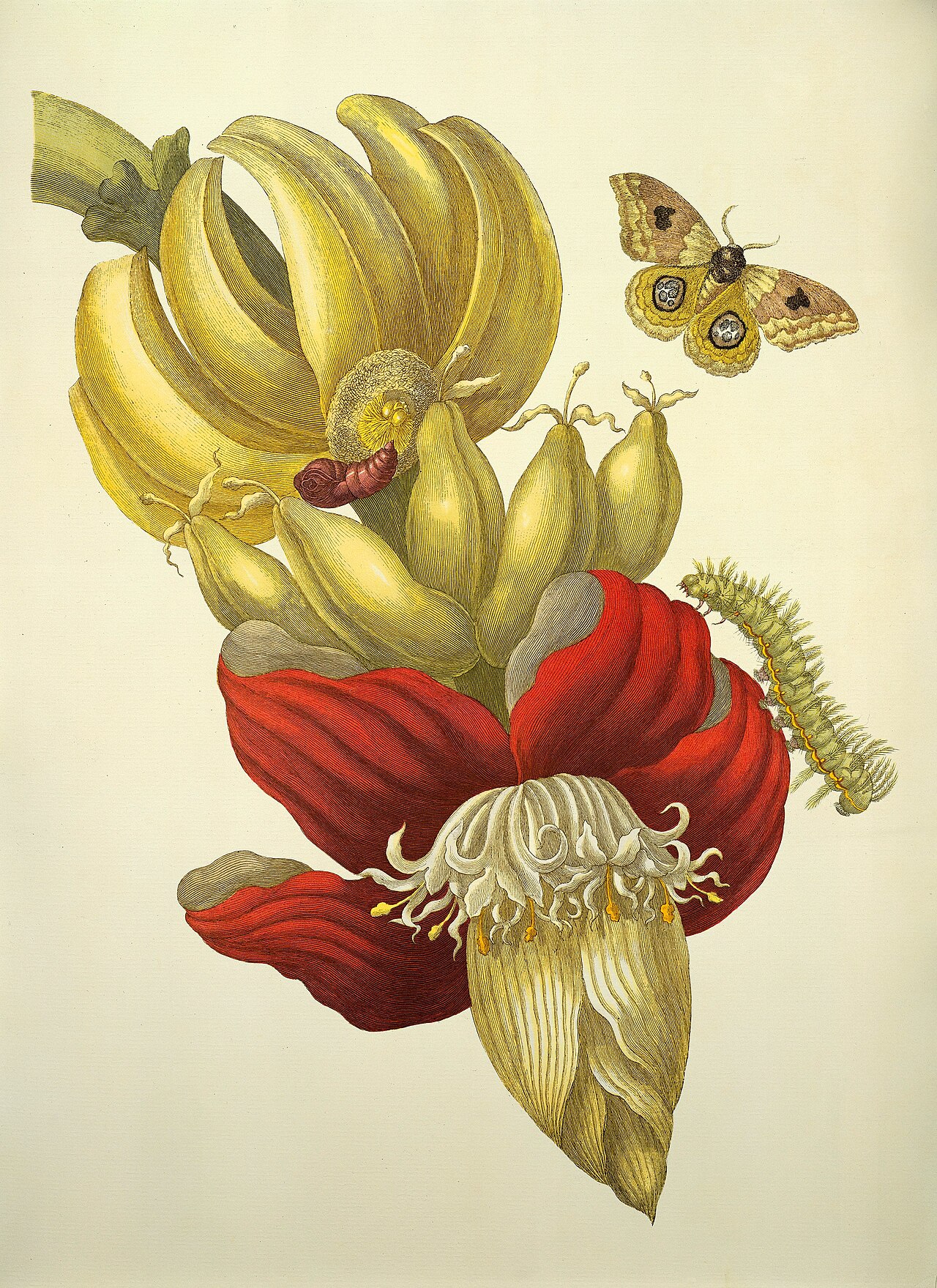
The German-born artist and naturalist Maria Sibylla Merian (1647–1717) travelled to Suriname in 1699 with her youngest daughter, Dorothea Graff, to study insects there.[4] The result, Metamorphosis insectorum Surinamensium, was published in Amsterdam in 1705 with 60 hand-coloured plates of caterpillars, butterflies and spiders.[4] Her plates showed the pupal stage and the plants on which the insects lived, and the Rijksmuseum credits her as the first person to record the transformation of a caterpillar into a butterfly in its natural habitat.[4] The museum also notes that her work drew on the knowledge of enslaved people and of Suriname's original inhabitants.[4]
A hand-coloured plate from Maria Sibylla Merian's 1705 book showing a caterpillar, pupa and adult on their food plant.
From 1734 the French scientist René-Antoine Ferchault de Réaumur published Mémoires pour servir à l'histoire des insectes, the first of six volumes.[1] In 1758 the Swedish naturalist Carl Linnaeus applied binomial nomenclature, the two-part scientific naming system of genus plus species, to insects in the 10th edition of Systema Naturae.[1]
A distinct science
Britannica dates the emergence of entomology as a separate field to the early 19th century, marked by John Curtis's eight-volume British Entomology (1824–1839) and by the founding of entomological societies in Paris and London.[1]
In England, the clergyman William Kirby (1759–1850), who served as a minister for 58 years, is called the "Father of Entomology" in that country.[5] Kirby met the writer William Spence in 1808, and in 1815 the two published the first volume of An Introduction to Entomology, described by the University of Nebraska State Museum as the first popular book on insects in English.[5] Kirby also classified the Strepsiptera, a group of small parasitic insects, as a separate order.[6]
The Société entomologique de France was officially founded on 29 February 1832, after a constituent assembly on 14 February attended by 35 members, most of them amateurs rather than professionals.[7] The assembly elected Pierre-André Latreille (1762–1833), who led the insect department of the French national natural history museum, as honorary president.[7] The society describes itself as the oldest entomological society in the world.[7]
In London, a founding meeting at the British Museum on 3 May 1833 created the Entomological Society of London, with John George Children as its first president and Kirby as honorary life president.[6] The society saw itself as the successor to several short-lived societies dating back to 1745, and admitted women with the same rights as men from the start.[6] Its Transactions first appeared in November 1834, and Charles Darwin and Alfred Russel Wallace were among its early contributors.[6] It received a Royal Charter in 1885, became the Royal Entomological Society of London in 1933, and dropped "of London" from its name in 1991.[6]
Economic entomology in the United States
In the late 19th century the British-born Charles Valentine Riley (1843–1895) advanced the systematic study of economically important insects in the United States.[8] Riley became Missouri's state entomologist in 1868, chaired the U.S. Entomological Commission formed in 1876 to study the Rocky Mountain locust, and served as entomologist of the U.S. Department of Agriculture from 1878 to 1894 with one brief interruption.[8] Under his direction, arsenic-based insecticides, kerosene emulsions and other means of controlling crop pests were developed.[8] The ESA traces its roots to the American Association of Economic Entomologists, founded in 1889; the Entomological Society of America itself was founded in 1907, and the two bodies operated side by side until they merged in 1953.[9] As of November 2026 the ESA's website described it as having more than 7,000 members, including professional entomologists, students and hobbyists.[2]
Branches
Entomology is commonly divided by the setting in which insects matter to people. The Royal Entomological Society lists, among others, agricultural, forest and horticultural entomology; medical and veterinary entomology; domestic pest control; insect farming; ecological consulting and biological recording; conservation; taxonomy; museum curation; and forensic entomology.[10]
Agricultural entomology
Agricultural, forest and horticultural entomologists manage insect pests of crops and trees using chemical, biological and environmental methods.[10] One widely used approach is integrated pest management, which combines chemical, biological, cultural and sanitation measures rather than relying on a single method.[1] Another is the sterile insect technique, described below under methods.[11]
Medical entomology
Medical entomology deals with insects that cause or carry disease in people.[10] Such carriers of disease are called vectors.[12] In 1897 the British doctor Ronald Ross found the malaria parasite inside an Anophelesmosquito; he later showed, using infected birds, that a mosquito bite passes malaria from an infected bird to a healthy one, and he received the 1902 Nobel Prize in Physiology or Medicine for his work on malaria.[13] In 2014 the World Health Organization named mosquitoes, flies, ticks and water snails among the carriers of diseases such as malaria, dengue, leishmaniasis, Lyme disease, schistosomiasis and yellow fever, and estimated that vector-borne diseases infected more than one billion people and killed more than one million each year.[12]
Veterinary entomology
Veterinary entomology applies the same concerns to animals, diagnosing and managing insects that cause or carry disease in livestock, pets and other animals.[10] The ESA places medical, urban and veterinary entomology together in a single membership section.[2]
Forensic entomology
Forensic entomology is the collection and analysis of insect evidence for use in legal investigations.[14] Its main application is estimating the minimum time since death in suspicious deaths.[14] Two approaches are used: estimating the age of the oldest necrophagous (corpse-feeding) insects that developed on the body, and analysing which species are present, since different species colonise a body at different stages of decomposition.[14] Toxicological and molecular analysis of insects from a body can also help to establish a cause of death or a victim's identity.[14] In living people or animals, flies that cause myiasis (infestation of living tissue by fly larvae) can indicate how long the person or animal was neglected.[14] Britannica notes that forensic entomologists work in a wide variety of legal situations.[1]
Urban entomology
Urban entomology is the study of arthropods and other pests of the urban environment.[15] A 2024 review in the Annual Review of Entomology associates its origin with Walter Ebeling's 1975 book Urban Entomology, and attributes its growth to a combination of urbanisation, invasive pests, rising demand for pest-management services and changes in legislation during the 1970s.[15] According to the same review, the discipline gained national and international recognition within about two decades.[15]
Other fields
Insects are also used in basic research: studies of the vinegar fly Drosophila melanogaster laid the foundation for much of modern genetics.[1] Aquatic insects such as mayflies, caddisflies and stoneflies serve as biotic indicators, organisms whose presence or absence reveals the quality of fresh water.[1] The Royal Entomological Society also lists insect farming for protein and honeybee keeping, conservation of rare species, science communication, and engineering inspired by insects as areas of work.[10]
Methods
Collecting
Field entomologists collect insects with nets and traps.[16] Aerial nets are used to catch flying insects, while sweep nets are swung through standing crops such as alfalfa, wheat and soybeans to sample pests, with the net swung a set number of times over a given distance so that sampling stays consistent.[16] Pitfall traps are containers buried level with the soil surface that catch ground-dwelling animals such as ground beetles and springtails.[16] Light traps work unattended and draw night-flying moths, flies and beetles; ultraviolet ("black") light attracts more insects than white light.[16]
Preserving
Specimens for a collection can be killed in a jar charged with ethyl acetate, whose fumes kill small insects within minutes and larger ones within about half an hour or more; freezing is an alternative.[16] Insects are ideally pinned on the day they are collected, and specimens that have stiffened can be softened for two to three days in a humid "relaxing jar" before mounting.[16] Museum curators collect and preserve specimens so that they remain available for research.[10]
Rearing
Some pest-control programmes rear insects in very large numbers.[11] In the sterile insect technique, first developed in the United States, a target pest is mass-reared, sterilised with gamma rays or X-rays, and released by air over defined areas; the sterile males mate with wild females that then produce no offspring, so the pest population declines.[11] The International Atomic Energy Agency states that the method does not involve genetic engineering and has been used for more than 60 years on six continents.[11]
Identification
Traditional identification relies on morphology and requires specialist knowledge, which makes it slow for large samples.[17] Taxonomists describe new species and work out their evolutionary relationships.[10] DNA barcoding identifies species from a short, standardised stretch of DNA; for animals the standard marker is part of the mitochondrial gene COI (cytochrome c oxidase subunit I), chosen because it varies little within a species but considerably between species.[17] A 2019 review in Forest Research Papers describes the method as fast, accurate and suitable for automation, and especially useful for small insects, rare species and cryptic species that look alike but are genetically distinct.[17]
Key figures
Aristotle (4th century BCE): early descriptions of insect anatomy.[1]
Jan Swammerdam (1637–1680): microscopic studies of insect structure and metamorphosis.[3]
Maria Sibylla Merian (1647–1717): illustrated insect life cycles in Suriname.[4]
René-Antoine Ferchault de Réaumur: six-volume history of insects begun in 1734.[1]
Carl Linnaeus: applied binomial names to insects in 1758.[1]
Pierre-André Latreille (1762–1833): first honorary president of the Société entomologique de France.[7]
William Kirby (1759–1850): co-author of An Introduction to Entomology and honorary life president of the London society.[5][6]
Charles Valentine Riley (1843–1895): leading figure in economic entomology in the United States.[8]
Ronald Ross (1857–1932): linked malaria to Anopheles mosquitoes.[13]
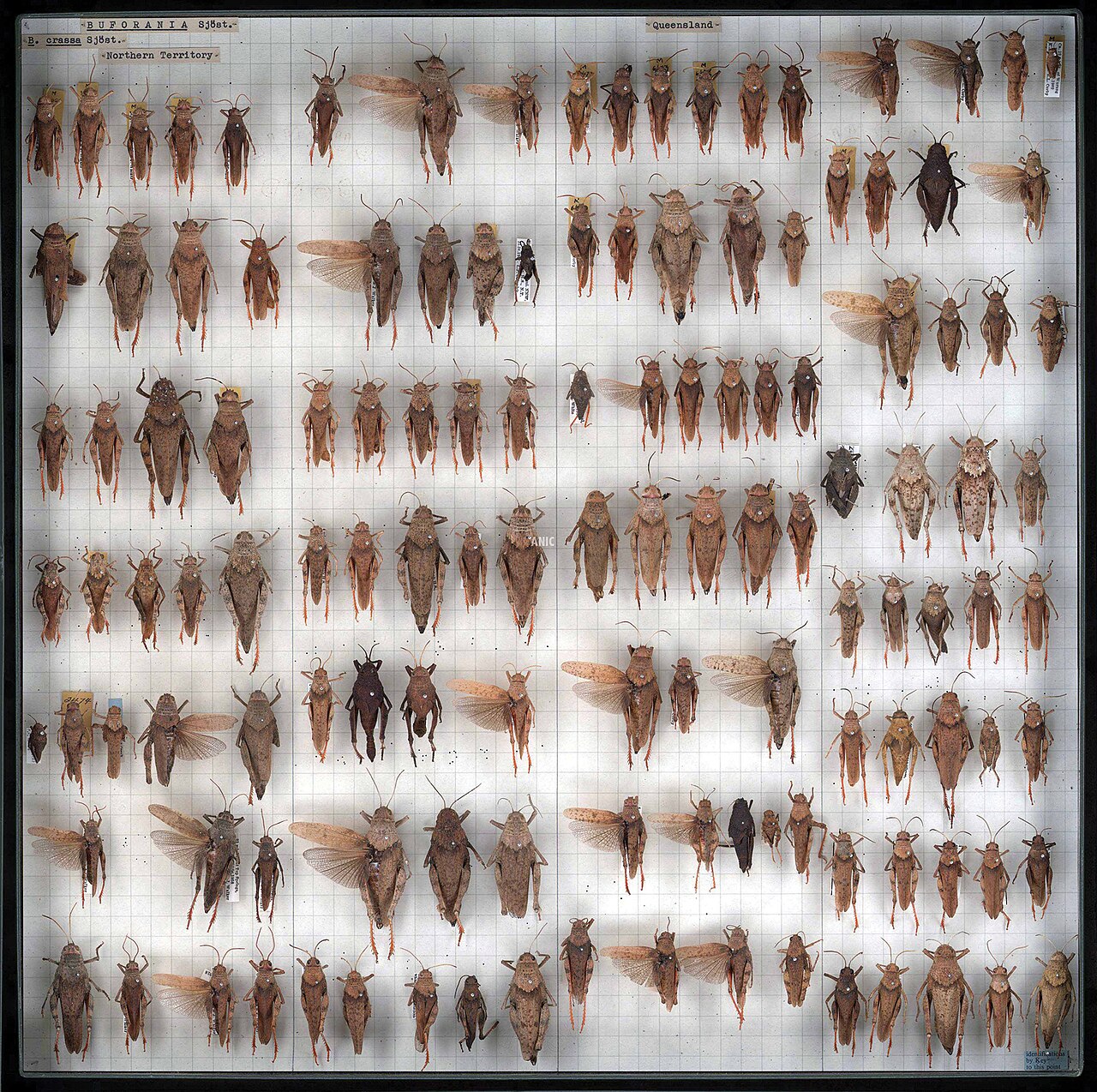
A museum drawer of pinned and labelled insect specimens.
Encyclopaedia Britannica. "Entomology". Encyclopaedia Britannica. No date shown; accessed 24 November 2026. britannica.com/science/entomology
Entomological Society of America. "Career resources for entomologists". Entomological Society of America. No date shown; accessed 24 November 2026. entsoc.org/career-resources-entomologists
University of Nebraska State Museum, Division of Entomology. "William Kirby 1759-1850". University of Nebraska-Lincoln. No date shown; accessed 24 November 2026. unsm-ento.unl.edu/workers/WKirby.htm
Royal Entomological Society. "History". Royal Entomological Society. No date shown; accessed 24 November 2026. royensoc.co.uk/about-us/history/
Société entomologique de France. History of the society. Société entomologique de France. No date shown; accessed 24 November 2026. lasef.org/?p=152
Entomological Society of America. "ESA Archives". Entomological Society of America. No date shown; accessed 24 November 2026. entsoc.org/archive-search
Encyclopaedia Britannica. "Sir Ronald Ross". Encyclopaedia Britannica. No date shown; accessed 24 November 2026. britannica.com/biography/Ronald-Ross
Amendt, J., Richards, C. S., Campobasso, C. P., et al. "Forensic entomology: applications and limitations". Forensic Science, Medicine, and Pathology 7: 379–392, 2011. link.springer.com/doi/10.1007/s12024-010-9209-2
Rust, M. K., Lee, C.-Y., Bennett, G. W., Robinson, W. H. "The Emergence and Sustainability of Urban Entomology". Annual Review of Entomology 69: 59–79, 2024 (abstract on PubMed). pubmed.gov/37562050/