The Legend of Zelda is a Nintendo video game series of fantasy adventures that began in Japan in 1986 and usually follows the hero Link through the land of Hyrule, often alongside Princess Zelda.[1][3][5]
Developing story. This entry is updated as events change; every changing fact is dated.
Origins
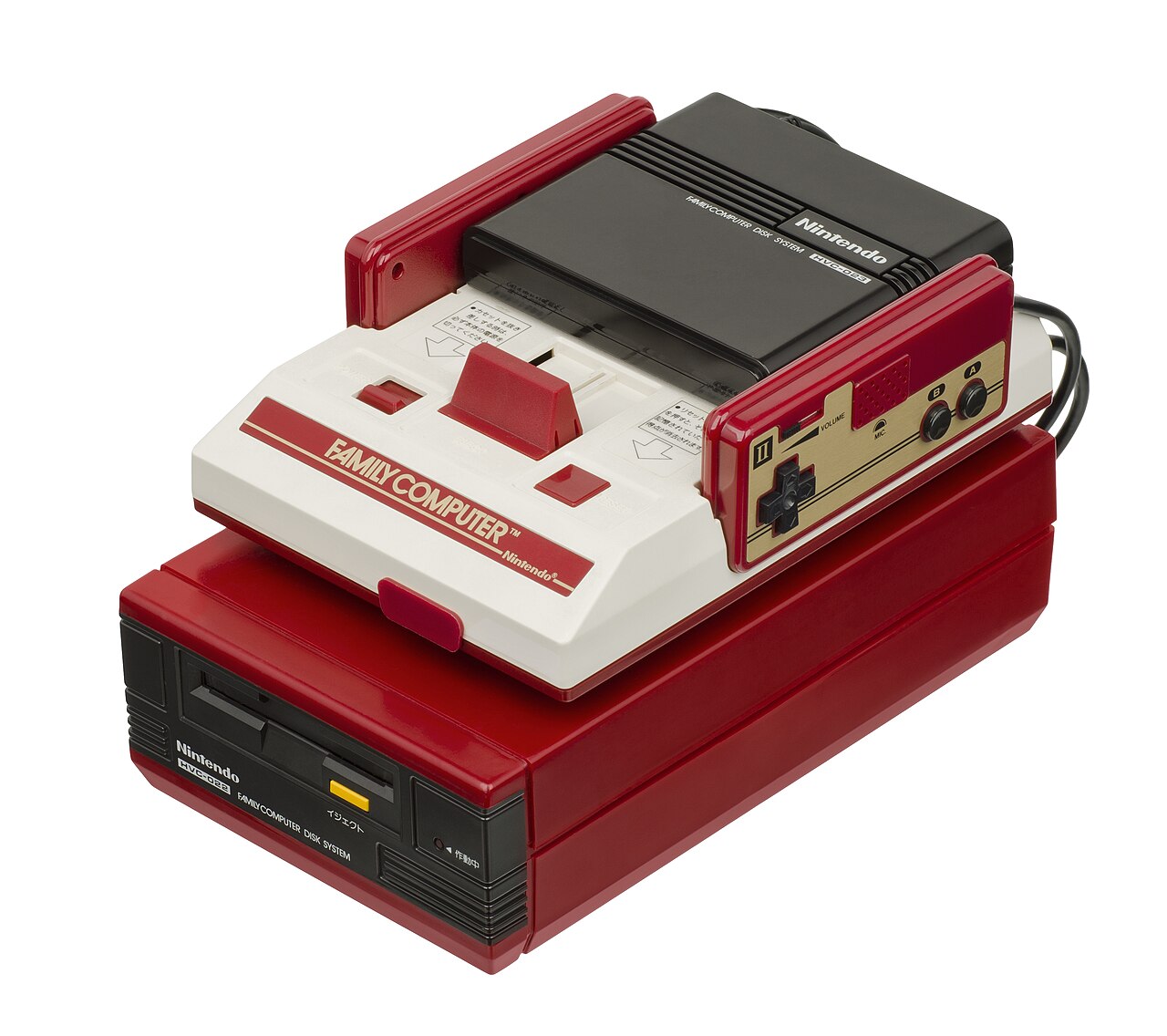
The first game, The Legend of Zelda, was released in Japan on 21 February 1986, the same day as the Famicom Disk System.[1] The Famicom Disk System was a Japan-only addition to Nintendo's Family Computer (Famicom) console that played games from floppy disks; Nintendo has explained that these disks held more data than ROM cartridges (the read-only memory chips used in ordinary game cartridges) and allowed players to save their progress.[2] Nintendo describes the game as having been released at the same time as the disk system, and The Strong National Museum of Play calls it a flagship game for that hardware.[2][3]
The Famicom Disk System, the Japan-only floppy-disk add-on for Nintendo's Family Computer on which The Legend of Zelda first appeared in 1986.
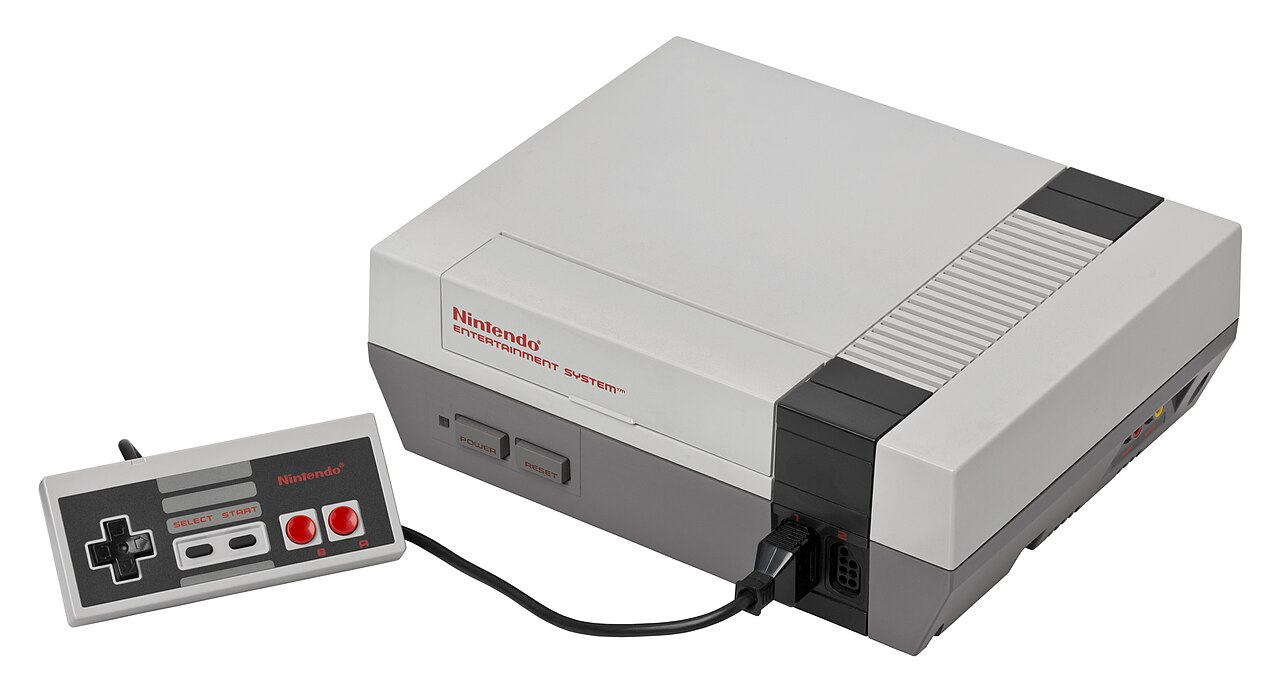
Outside Japan, the game came out on a cartridge.[2] Nintendo of Europe gives its European release date for the Nintendo Entertainment System (NES) as 15 November 1987.[4] According to The Strong National Museum of Play, it was the first console game sold in North America with a battery inside the cartridge to keep saved games.[3]
Shigeru Miyamoto and Takashi Tezuka, the Nintendo developers who made the game, discussed its creation in a 2016 interview published by Nintendo.[1][2] In it, Miyamoto said he decided to make an adventure game built around treasure-hunting, and that he wanted to bring the sense of adventure of films of the time, such as the Indiana Jones films, to a video game.[2] Tezuka said in the same interview that the team had documents showing it worked on The Legend of Zelda and Super Mario Bros. at the same time.[2] Nintendo Life credits Tezuka with the game's story of good overcoming evil, and both Nintendo Life and the Strong museum link the design to Miyamoto's childhood exploration of woods and caves.[1][3] Miyamoto also said the team chose the name Hyrule because it sounded right for the name of a region.[2]
The Strong museum notes that players had no set path and could explore Hyrule in whatever order they chose.[3] Nintendo Life contrasts this open structure with Super Mario Bros., which moves the player along a fixed course.[1] The museum inducted The Legend of Zelda into its World Video Game Hall of Fame in 2016.[3]
A Nintendo Entertainment System console with controller, the system on which The Legend of Zelda was released outside Japan in 1987.
Via Wikimedia Commons: NES-Console-Set by Evan-Amos, public domain.
Main games
Nintendo of Europe's 40th-anniversary game history lists 20 games in the series from 1987 to 2024, with each date given as the European release date.[4] Among them:
The Legend of Zelda: NES, 15 November 1987 (first released in Japan on 21 February 1986).[1][4]
Zelda II: The Adventure of Link: NES, 26 September 1988.[4]
The Legend of Zelda: A Link to the Past: Super NES, 24 September 1992.[4]
The Legend of Zelda: Link's Awakening: Game Boy, 18 November 1993.[4]
The Legend of Zelda: Ocarina of Time: Nintendo 64, 12 December 1998.[4]
The Legend of Zelda: Majora's Mask: Nintendo 64, 17 November 2000.[4]
The Legend of Zelda: The Wind Waker: Nintendo GameCube, 2 May 2003.[4]
The Legend of Zelda: Twilight Princess: Wii and Nintendo GameCube, 8 December 2006 (the Wii release date).[4]
The Legend of Zelda: Skyward Sword: Wii, 18 November 2011.[4]
The Legend of Zelda: A Link Between Worlds: Nintendo 3DS, 22 November 2013.[4]
The Legend of Zelda: Breath of the Wild: Nintendo Switch and Wii U, 3 March 2017.[4]
The Legend of Zelda: Tears of the Kingdom: Nintendo Switch, 12 May 2023.[4]
The Legend of Zelda: Echoes of Wisdom: Nintendo Switch, 26 September 2024.[4]
The same list also includes smaller handheld and multiplayer games: Oracle of Ages and Oracle of Seasons (Game Boy Color, 5 October 2001), A Link to the Past & Four Swords (Game Boy Advance, 28 March 2003), The Minish Cap (Game Boy Advance, 12 November 2004), Four Swords Adventures (Nintendo GameCube, 7 January 2005), Phantom Hourglass (Nintendo DS, 19 October 2007), Spirit Tracks (Nintendo DS, 11 December 2009) and Tri Force Heroes (Nintendo 3DS, 23 October 2015).[4]
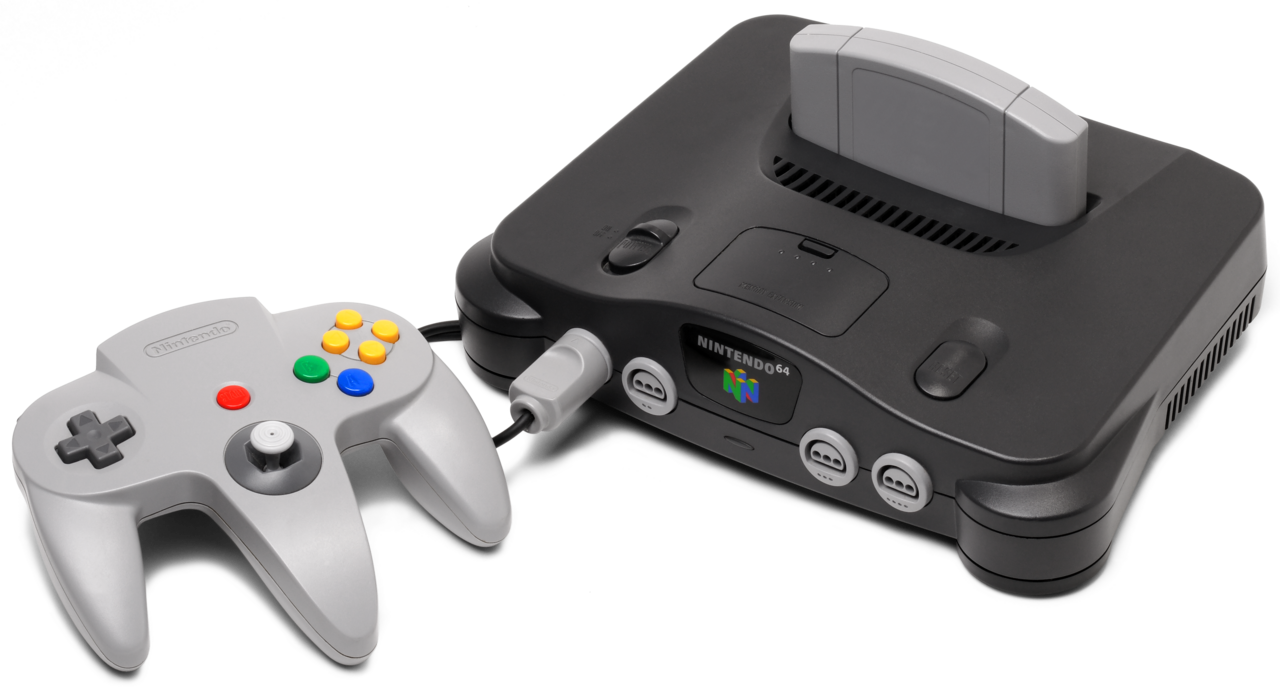
A Nintendo 64 console, the system for which Ocarina of Time and Majora's Mask were first released.
Via Wikimedia Commons: N64-Console-Set by Evan-Amos, public domain.
On 9 September 2026, Nintendo announced a remake of Ocarina of Time for Nintendo Switch 2, due to launch on 5 November 2026.[7] A remake is a new version of an older game rebuilt for newer hardware; Nintendo said this one has completely overhauled visuals and fully voiced cutscenes (the non-interactive story scenes between play), and that the game was shown by series producer Eiji Aonuma.[7]
Characters and setting
Link is the hero of the first game and of most of those that followed.[5] Nintendo's own summary of the first game describes him as a young boy who must travel to Death Mountain and defeat the pig-like monster Ganon, and the Strong museum describes the first game as the story of Link's quest to rescue Princess Zelda from Ganon.[5][3] The museum also calls the game a coming-of-age story for Link.[3]
Princess Zelda appears throughout the series. In Nintendo's summary of A Link to the Past, a young Link is woken by a telepathic message from her, and Nintendo describes Echoes of Wisdom as a game in which Zelda, left alone, must save her kingdom herself.[5]
The series' main villain appears under the name Ganon in Nintendo's summary of the first game and as Ganondorf in its summary of Ocarina of Time, in which Ganondorf has taken the Triforce and seized control of Hyrule.[5] The Triforce, a recurring object in the stories, also appears in Nintendo's summary of Zelda II, in which a teenage Link sets out to wake a sleeping Zelda and learn where the Triforce came from.[5]
The stories change from game to game. Nintendo describes The Wind Waker as a sea voyage in which Link tries to rescue his sister Aryll, who has been carried off by a giant bird; Skyward Sword as beginning on Skyloft, a floating island; and Breath of the Wild as the story of a Link who wakes after a 100-year sleep and explores a vast, dangerous land to recover his memories.[5]
Sales
Nintendo publishes worldwide sales for its best-selling games as life-to-date figures, meaning all units sold since launch, consolidated across the Nintendo group; the totals include downloads and copies bundled with hardware.[6] Packaged copies of Nintendo Switch 2 Edition versions are counted under Nintendo Switch 2, while their downloadable versions are counted under Nintendo Switch.[6]
As of 30 September 2026 (Nintendo's latest figures when checked at 18:10 UTC on 25 November 2026), Nintendo reported that The Legend of Zelda: Breath of the Wild had sold 34.28 million units on Nintendo Switch, fourth on its list of best-selling Switch software.[6] On the same date, Nintendo reported 22.90 million units for The Legend of Zelda: Tears of the Kingdom, eighth on the same list.[6] These figures cover Nintendo Switch software only.[6]
40th anniversary
The series reached its 40th anniversary on 21 February 2026, forty years after the first game's Japanese release.[1] In its announcement of 9 September 2026, Nintendo also said a Nintendo Switch 2 console in a The Legend of Zelda 40th Anniversary Edition would be available from 29 October 2026, that amiibo (collectible figures that unlock content in games) of the young Link and young Zelda would follow in 2027, and that a 40th-anniversary concert series would tour in 2027.[7]
Live-action film
On 8 November 2023, Nintendo announced that development of a live-action film of The Legend of Zelda had begun, produced by Shigeru Miyamoto of Nintendo and Avi Arad of Arad Productions and directed by Wes Ball.[8] Nintendo said the film would be co-financed by Nintendo and Sony Pictures Entertainment, with Nintendo providing more than half of the money, and that Sony Pictures Entertainment would handle worldwide distribution to cinemas.[8] Nintendo presented the film as part of its effort to reach audiences beyond its game consoles by making visual content based on its games.[8]
Engadget reported that on 9 June 2025 Nintendo moved the film's planned release from March 2027, a date announced earlier that year, to 7 May 2027, giving production reasons and saying it would use the extra time to make the film as good as it could be.[9] The same report named T.S. Nowlin as the screenwriter.[9]
In a news release dated 8 September 2026, Nintendo announced that the film would be titled The Legend of Zelda and that Sony Pictures Entertainment planned to release it in cinemas worldwide on 30 April 2027.[10] The release named Bo Bragason as Zelda and Benjamin Evan Ainsworth as Link, and repeated that the film is co-financed by Nintendo and Sony Pictures Entertainment and distributed worldwide by Sony Pictures Entertainment.[10] Nintendo's 9 September 2026 anniversary announcement gave the same worldwide release date.[7]
As of 18:10 UTC on 25 November 2026, the most recent official Nintendo statements found gave 30 April 2027 as the film's worldwide release date and named Bo Bragason and Benjamin Evan Ainsworth as its two leads.[7][10]
"History - The Legend of Zelda", Nintendo Australia. No date shown; accessed 25 November 2026. nintendo.com/au/zelda/history/
"IR Information: Sales Data - Top Selling Title Sales Units - Nintendo Switch Software", Nintendo Co., Ltd. Figures as of 30 September 2026; accessed 25 November 2026. nintendo.co.jp/ir/en/finance/software/switch.html
"The Legend of Zelda 40th anniversary: The Legend of Zelda: Ocarina of Time for the Nintendo Switch 2 will launch on 5 November. Anniversary edition Nintendo Switch 2 console and accessories, and more on the way.", Nintendo (Malaysia), 9 September 2026. nintendo.com/my/news/article/3Uvp2H1iPLLLSnR4MJgmq1
"The Live-Action Film of The Legend of Zelda, Releasing on April 30, 2027, Will Be Titled The Legend of Zelda", news release, Nintendo Co., Ltd., 8 September 2026. nintendo.co.jp/corporate/release/en/2026/260908.html