What sort of interesting things do these photos from the Tesla Store display show us regarding how the computation happens or the design unique to Tesla?
They have had years to refine this architecture

Good question, and the photos show a few things worth noticing, though the display itself can't tell us much about the internals.
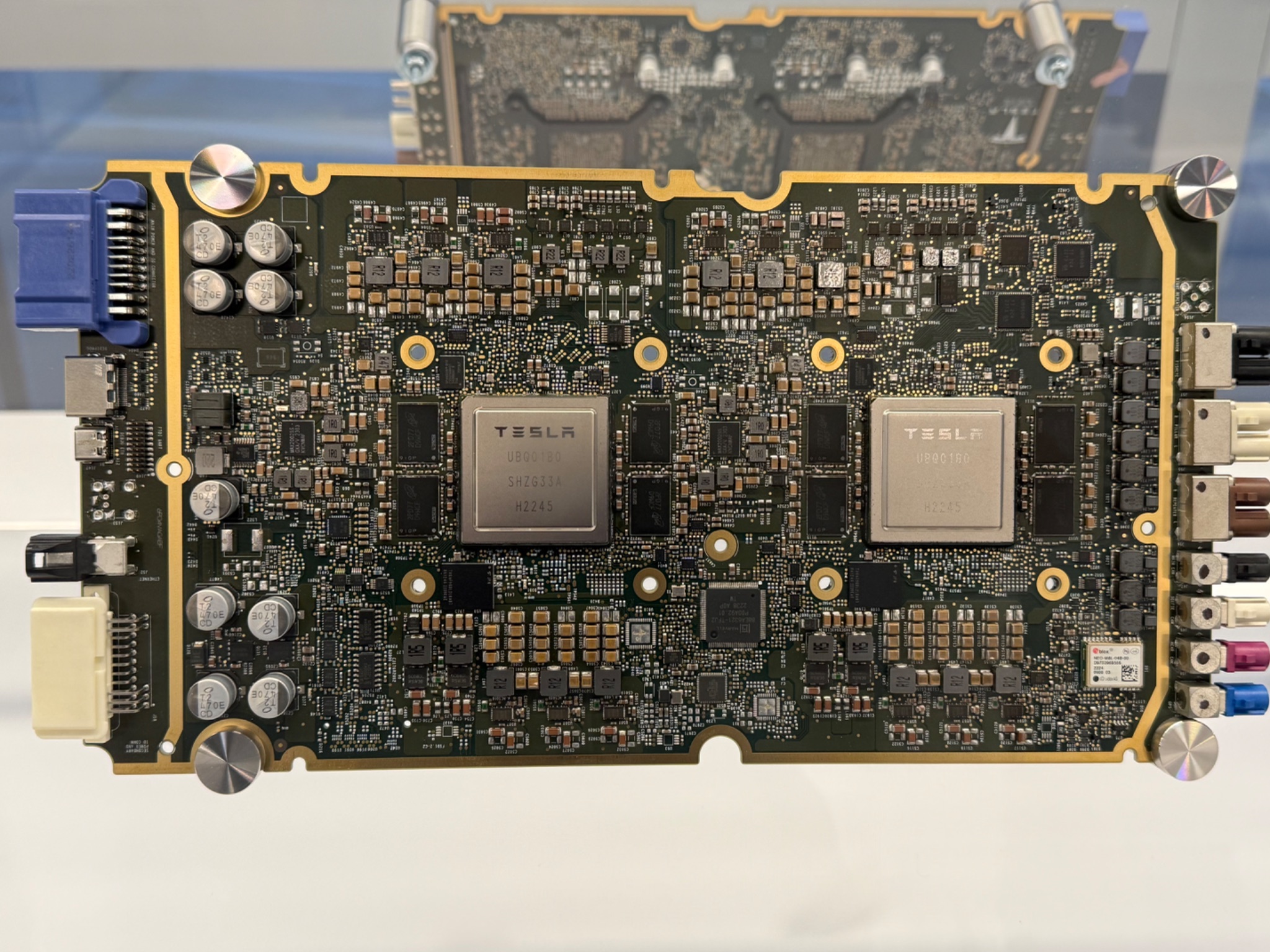
- Two identical large chips. Both carry Tesla's UBQ0180 marking, which suggests the design repeats the same processor rather than mixing different parts. Running two of the same die is a common way to get redundancy and parallel throughput.
- Memory placed right beside each chip. The rectangular memory packages sit in tight clusters around both processors, the usual layout for keeping data close to where it's computed. That is a sign the board was laid out around memory bandwidth, which matters for video-heavy workloads.
- Lots of power regulation. The rows of inductors and capacitors around the chips and the bank of large electrolytic capacitors on the left point to a board built to supply large, fast-changing currents cleanly.
- Many connectors on the right edge. Those sockets take the camera and sensor feeds, so the board is designed as a hub for raw video and other inputs.
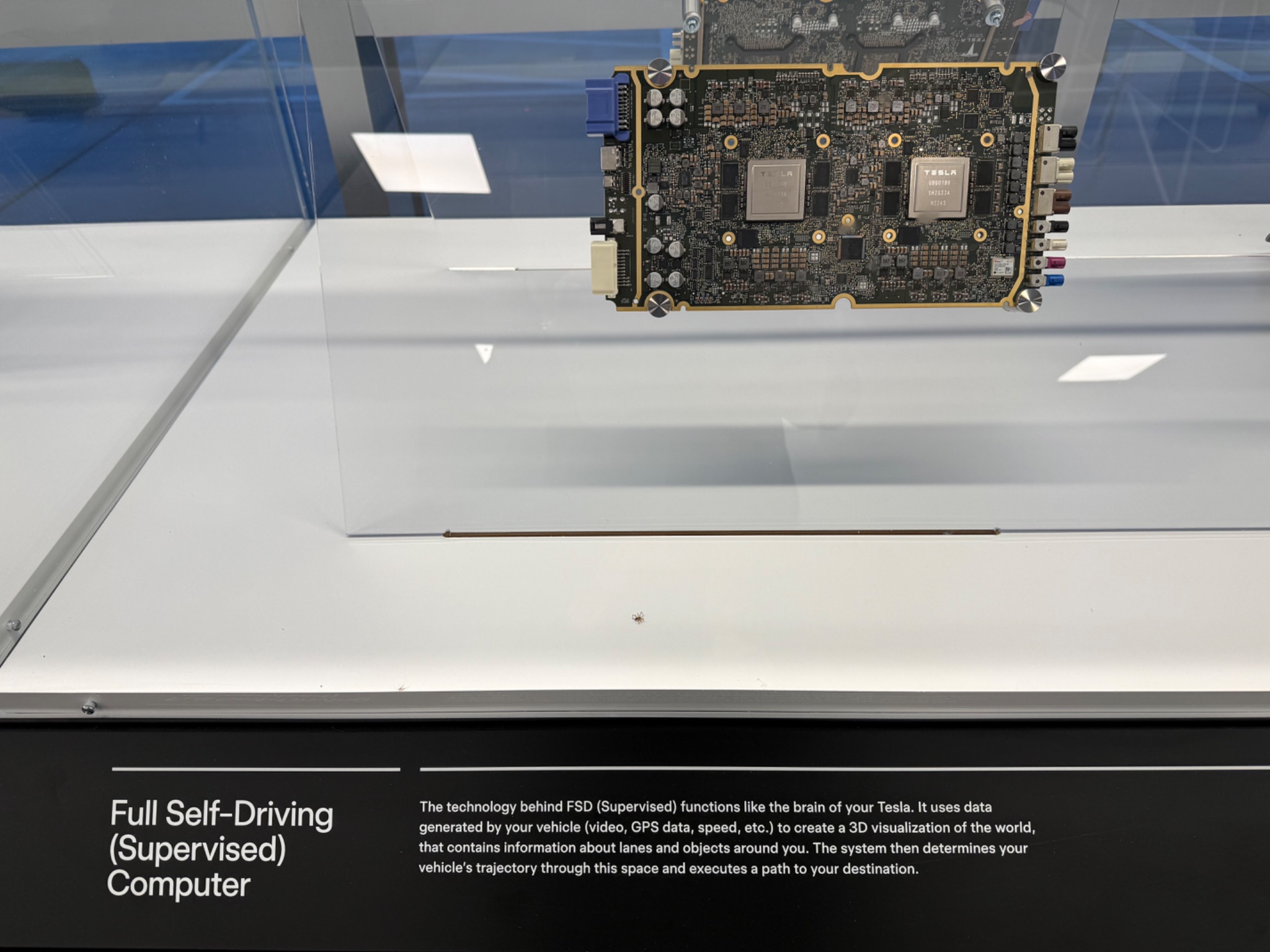
- A module for wireless and location. The small u-blox module near the lower right is a GNSS (GPS) receiver, which fits the placard's mention of GPS data.
What the photos can't show is how the chips divide the work, the software, or whether the two processors are redundant or split tasks. Tesla has described its custom chips in talks, but I'd treat any specific claims about the architecture as unverified until checked against Tesla's own materials. The evidence here is visual layout only: a sample of one board, in a display case.
