Social media service owned by Meta, launched in 2004
Facebook is a social media service, launched at Harvard University in February 2004 by Mark Zuckerberg, and owned by the company now called Meta.
Developing story. This entry is updated as events change; every changing fact is dated.
Launch
On 4 February 2004 Zuckerberg, then a Harvard student, launched the site as thefacebook.com, after about a week of writing its code.[1][2] A "facebook" was a printed or online directory of students; the new site combined that idea with detailed profiles that let students look each other up by course, social organisation and residence.[1] The Harvard Crimson reported a few days later that more than 650 students had registered.[1] History.com says more than a thousand people had signed up by the day after launch; the two accounts differ.[2]
Growth
In October 2012 Zuckerberg announced that more than one billion people were using Facebook actively each month, a company figure.[3]

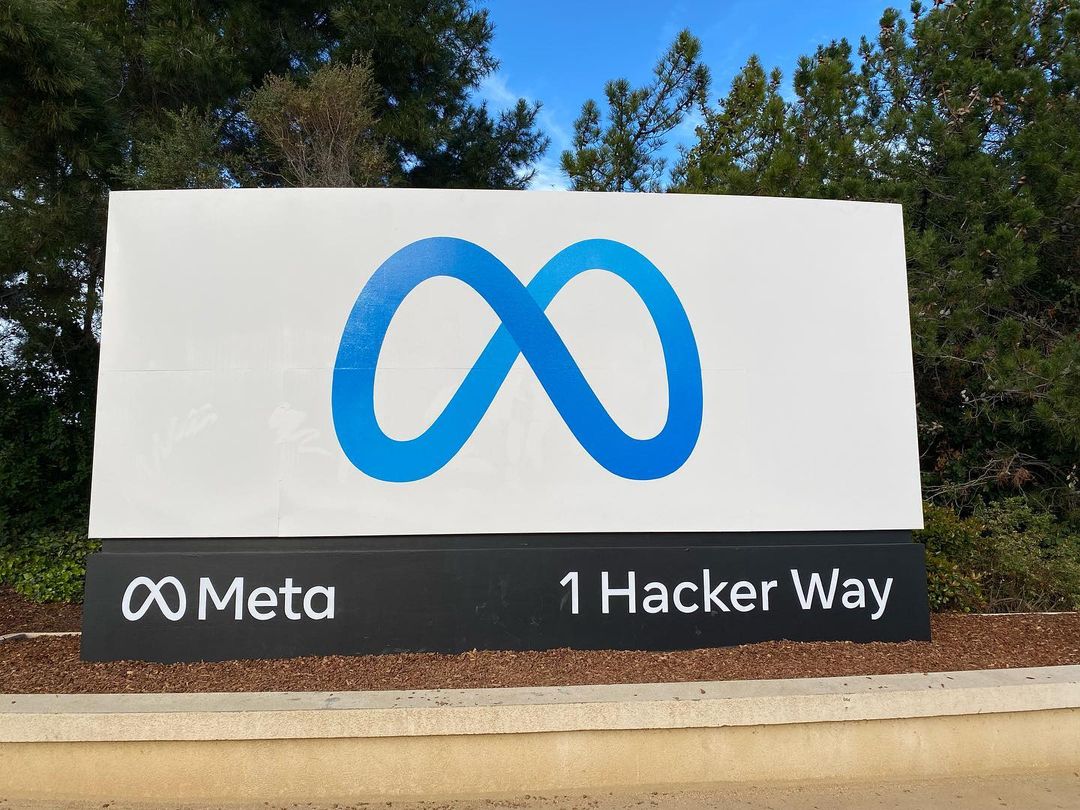
Via Wikimedia Commons: Meta Headquarters Sign by Nokia621, CC BY-SA 4.0.
From Facebook to Meta
In October 2021 the company announced a new corporate brand, Meta, to bring together its apps and technologies, with a focus on what it called the metaverse, a set of shared immersive online spaces.[4] It said its corporate structure was not changing, but that from the fourth quarter of 2021 it would report results in two segments, Family of Apps and Reality Labs.[4] Meta's other services include Messenger, Instagram and WhatsApp.[5]
Privacy
In July 2019 the United States Federal Trade Commission (FTC) announced a settlement under which Facebook would pay a 5 billion dollar penalty over its privacy practices.[6] CNN described the penalty as unprecedented, and reported that the settlement followed years of damaging admissions, among them the exposure of up to 87 million users' information to the political analysis firm Cambridge Analytica.[6]
Antitrust case
In December 2020 the FTC sued Meta, then called Facebook, alleging that it had illegally maintained a monopoly in personal social networking by buying Instagram in 2012 and WhatsApp in 2014.[7] On 18 November 2025, after a bench trial of about six weeks, Judge James E. Boasberg of the federal district court in Washington ruled that the FTC had failed to prove that Meta currently held monopoly power, whatever its position when it made those purchases.[7] The court found that Meta now competed with services including TikTok and YouTube.[7] Micwyn has separate entries on YouTube and Google.
Sources
- "Hundreds Register for New Facebook Website". The Harvard Crimson, 9 February 2004. thecrimson.com/article/2004/2/9/hundreds-register-for-new-facebook-…
- History.com. "Facebook launches". This Day in History, 4 February; accessed 26 November 2026. history.com/this-day-in-history/february-4/facebook-launches-mark-z…
- Mark Zuckerberg. "One Billion People on Facebook". Meta Newsroom, October 2012. about.fb.com/news/2012/10/one-billion-people-on-facebook/
- Meta. "The Facebook Company Is Now Meta". 28 October 2021. about.fb.com/news/2021/10/facebook-company-is-now-meta/
- Meta. "Company Info". Accessed 26 November 2026. about.meta.com/company-info/
- CNN Business. "Facebook fine: Company to pay an unprecedented $5 billion over privacy breaches". 24 July 2019. cnn.com/2019/07/24/tech/facebook-ftc-settlement
- Sullivan & Cromwell. "Meta Prevails in FTC's Antitrust Case Challenging Instagram and WhatsApp Acquisitions". December 2025. sullcrom.com/insights/memo/2025/December/Meta-Prevails-FTC-Monopoli…