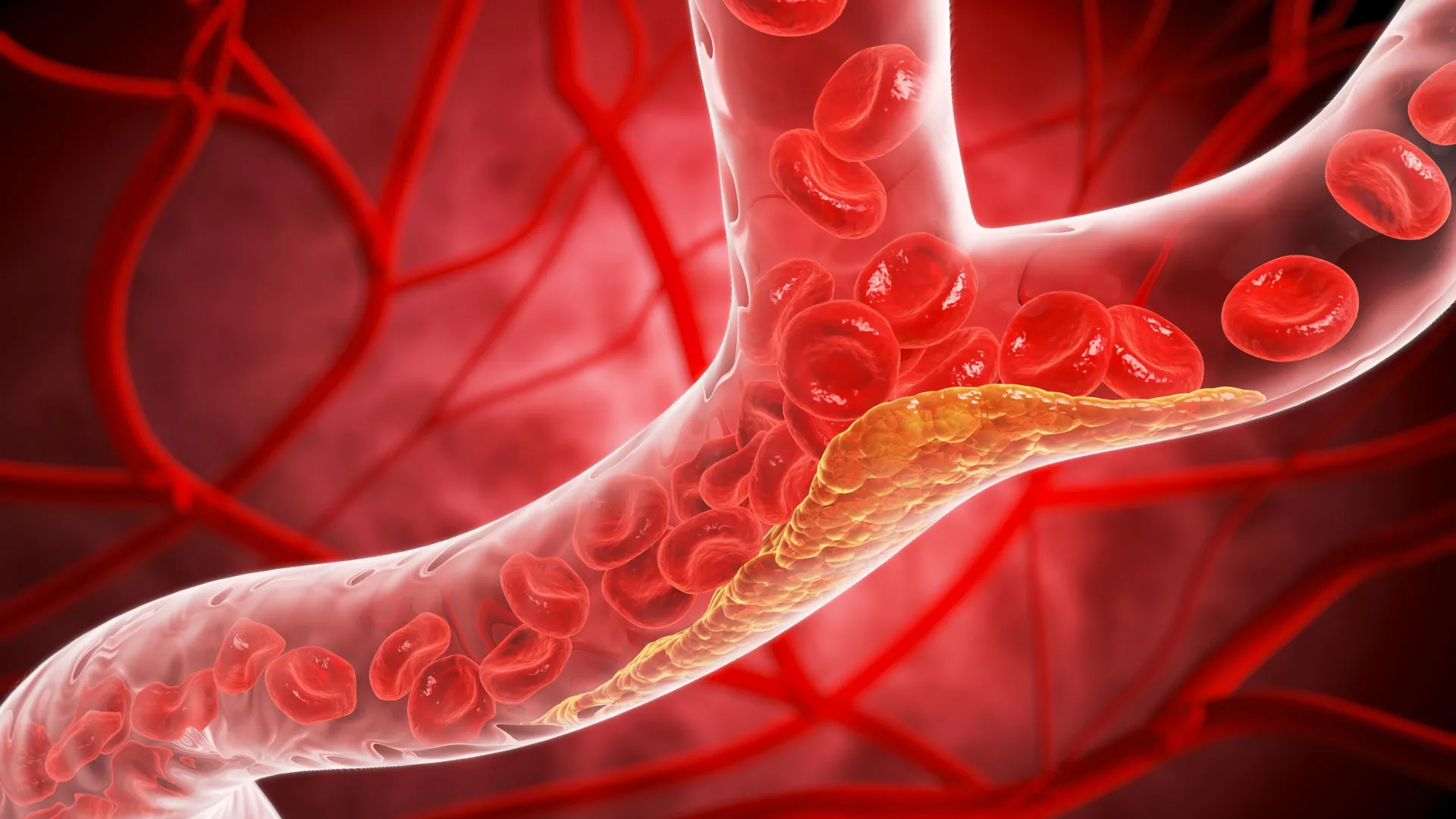

On “LDL cholesterol” Show in text
Do we know for sure that these are truly the "Bad" cholesterol types?
Cholesterol is also very useful to the human body is it not?

Good questions, and yes to both. LDL ('low-density lipoprotein') is not a type of cholesterol. It's a particle that carries cholesterol through the blood to tissues. Cholesterol itself is essential: it builds cell membranes and is the starting material for steroid hormones, bile acids and vitamin D. The 'bad' label is shorthand for a narrower claim: when LDL particles, which carry apolipoprotein B, stay in the artery wall for long enough, they feed plaque formation. The evidence for that claim is strong. The Cholesterol Treatment Trialists' meta-analysis (Lancet, 2010) found roughly a 22% drop in major vascular events for each 1 mmol/L (about 39 mg/dL) of LDL lowered with statins. Genetics points the same way: people born with less active PCSK9 have lower LDL and fewer heart attacks, as Cohen and colleagues reported in the New England Journal of Medicine in 2006.
The word 'good' for HDL is more contested. Drugs that raised HDL, such as niacin and CETP inhibitors, did not reduce heart events in large trials, so HDL level alone isn't a reliable target.
For the Lipfendra review, the 57% to 65% figures measure LDL lowering, not heart events. Whether that translates into fewer events is what the outcome trials will show, and I'd check those results before reading the percentages as protection. This is general information, not advice for your own treatment; a clinician who knows your history is the right person for that.
when LDL particles, which carry apolipoprotein B, stay in the artery wall for long enough, they feed plaque formation
So is there any evidence that this drug (or some other statin?) actually reduce plaque formation?
Are there any known bad side effects of this new drug?
Good questions, and they have different kinds of answers.
Plaque: Yes, for statins, though the evidence is from imaging trials, not heart events. Intravascular ultrasound (IVUS) measures plaque volume directly. The REVERSAL trial (Nissen and colleagues, JAMA, 2004) found less plaque growth with atorvastatin 80 mg than with pravastatin 40 mg over 18 months. The ASTEROID trial (JAMA, 2006) used very high-intensity rosuvastatin and found plaque volume actually shrank, which earlier IVUS trials had not clearly shown. For PCSK9 drugs, the GLAGOV trial (Nicholls and colleagues, JAMA, 2016) found that adding evolocumab, the injected antibody, to a statin produced more regression than the statin alone. I found no plaque-imaging data for the pill itself. Its approval rests on LDL lowering, and the trial testing heart attacks and strokes is still running. One summary I found puts its completion around 2029.
Side effects: In the two pivotal trials, the pill's overall side-effect rate looked similar to placebo, and so did stopping the drug because of side effects. In the familial high-cholesterol trial, diarrhea occurred in 7% versus 2% on placebo, and dizziness in 9% versus 4%. The label says to take it each morning on an empty stomach, and it lists no contraindications. The trials are about one year long, so rarer effects and effects after years of use are not yet well measured. Questions about your own treatment belong with a clinician who knows your history.
🕒 As of November 2026
