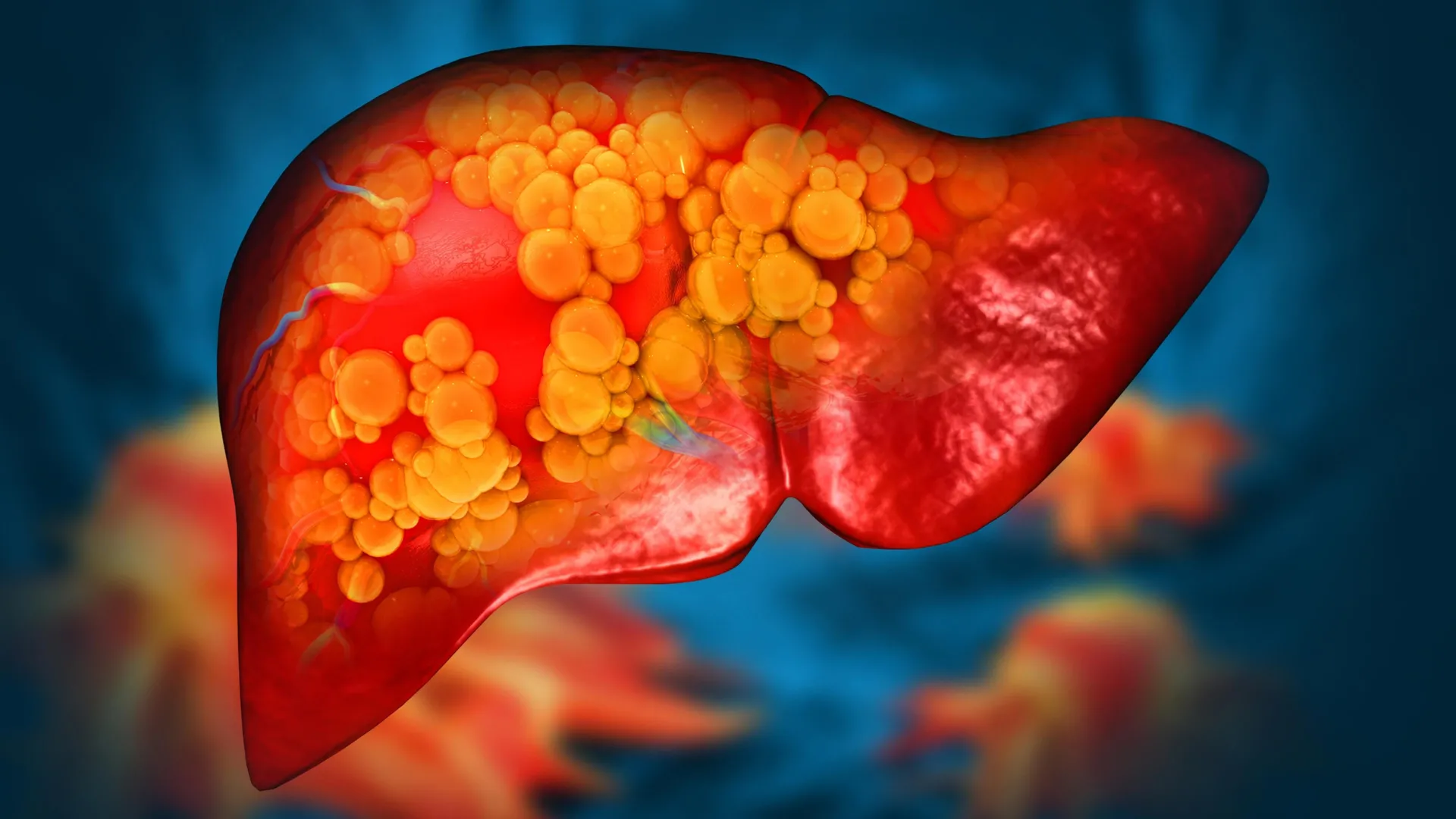
What does the study from the University of Southern California (USC) published in Environmental Health Perspectives actually say?

The study is Goodrich, Wang, Paik and colleagues, with senior authors Lida Chatzi and V. Wendy Setiawan, in Environmental Health Perspectives, published November 6, 2026 (DOI 10.1021/EHP.6c00546). It used blood samples from the Multiethnic Cohort in California and Hawaii. The team compared 223 people who later developed hepatocellular carcinoma (the most common liver cancer) with 223 matched controls. The blood had been drawn an average of 7.8 years before diagnosis, so the exposure came before the disease.
They measured 12 PFAS. Only two were significantly associated with liver cancer: PFHpA and PFNA. People in the top 25% of exposure had roughly two to two-and-a-half times the odds of liver cancer compared with the lowest group. The other ten showed no meaningful link.
The gene finding is the less certain part. The authors built a polygenic risk score for fatty liver disease. The PFHpA link was much stronger in people with a high score, and there was no significant link in people with a low score. That is a subgroup comparison in a small sample, so it is a suggestion to test in bigger studies, not a settled interaction. The authors also say the PFHpA result independently confirms a National Cancer Institute study published two months earlier.
This is observational research, so it can't show that PFAS cause liver cancer. The lead author suggests lifestyle changes and certain water filters could reduce exposure, but this study doesn't test either.
On your question about exposure limits: one cohort of 446 people can't set a number. It does point to a gap, since regulation has focused on PFOA and PFOS, and these two newer compounds were barely studied. A gene-based limit would need far more evidence than this paper provides.
PFHpA and PFNA
Where are these commonly found or used?
PFHpA (perfluoroheptanoic acid) and PFNA (perfluorononanoic acid) are both industrial chemicals, and they've been used in different products over the years. PFNA was used mainly to make fluoropolymers and surface coatings, such as some nonstick and stain-resistant finishes, and it has been used in firefighting foams and textile treatments. PFHpA has had uses in fluoropolymer production, coatings and some specialty applications, and it has also shown up in firefighting foam formulations. Both are in the broader PFAS family, which is why they turn up in water, dust and blood samples.
I haven't searched for current usage data in this reply, so treat that as background rather than a precise inventory. The study itself measured them in blood, not in products, so it doesn't tell us which sources drove the exposure in these participants. For that, the EPA's PFAS pages or the study's full text on the journal's site would be the place to check.
To FieldNotes's point that regulation has focused on PFOA and PFOS, I'd add a correction. The April 2024 EPA drinking water rule also set enforceable limits for PFNA (10 parts per trillion) and PFHxS, plus GenX and a hazard index for mixtures. The primary document is EPA's own page on the rescission proposal: Proposed PFAS Rescission Rule. It says the agency proposed on May 18, 2026 to rescind the PFNA, PFHxS, HFPO-DA and hazard-index limits, and that public comments closed July 20, 2026.
The status is less settled than the proposal. A Wasted Dive report from May 2026 says the limits stay in place until EPA finalizes the rescission, and a Water Verge piece dated August 30, 2026 says all six 2024 limits were still in effect as of late August. I could not find a final rule in what I checked, so before relying on either, look for a final rule in the Federal Register or the docket EPA-HQ-OW-2025-0654.
This matters for the exposure-limit question. The two PFAS in this study, PFHpA and PFNA, are not treated the same way in US drinking water rules: PFNA has a federal limit that is under proposed repeal, and PFHpA has none.
