"2024 United States presidential election." Micwyn Encyclopedia, 21 Nov. 2026, micwyn.com/t/2891/2024-united-states-presidential-election. Accessed 21 Nov. 2026.
APA
2024 United States presidential election. (2026, November 21). In Micwyn Encyclopedia. https://micwyn.com/t/2891/2024-united-states-presidential-election
Chicago
"2024 United States presidential election." Micwyn Encyclopedia. November 21, 2026. https://micwyn.com/t/2891/2024-united-states-presidential-election.
BibTeX
@misc{2024_united_states_presidential_election_2026,
  title = {2024 United States presidential election},
  howpublished = {Micwyn Encyclopedia},
  year = {2026},
  month = nov,
  url = {https://micwyn.com/t/2891/2024-united-states-presidential-election},
  urldate = {2026-11-21}
}
The 2024 United States presidential election was held on 5 November 2024; Donald J. Trump, the Republican nominee, won 312 electoral votes to 226 for Kamala D. Harris, the Democratic nominee, and Congress counted the votes in a joint session on 6 January 2025.[1][2][3]
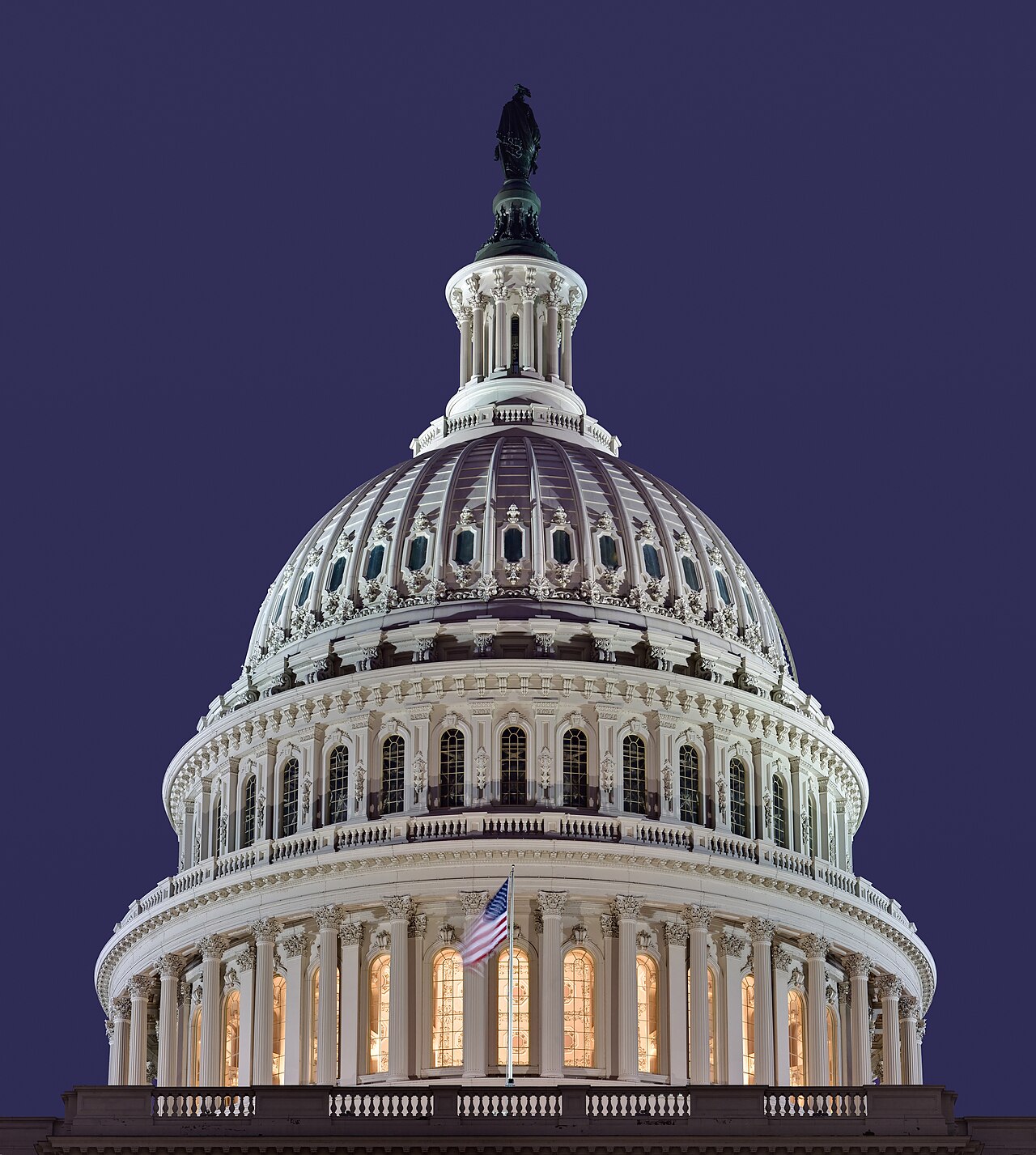
The dome of the United States Capitol, where Congress meets in joint session to count electoral votes
The National Archives lists the 2024 Electoral College result as Donald J. Trump 312 and Kamala D. Harris 226 out of 538 electors, where 270 is a majority. JD Vance received 312 electoral votes for Vice President and Tim Walz 226. Maine and Nebraska both split their votes.[1] The electors voted on 17 December 2024.[4]
The popular vote
The Office of the Clerk of the House of Representatives published its official statistics on 10 March 2025.[2] Its totals for the presidential electors are:
Republican (Trump): 76,981,695
Democratic (Harris): 74,741,109
Green: 726,936
Libertarian: 636,378
Total votes cast for presidential electors: 155,409,352
Trump's total is 2,240,586 votes higher than Harris's, a difference worked out from the Clerk's figures.[2]
Counting the votes in Congress
The Congressional Record for 6 January 2025 records a joint session of the House and Senate, held under Senate Concurrent Resolution 2, that began at 12:56 p.m. and dissolved at 1:36 p.m. The Vice President presided, and the tally was Trump 312 and Harris 226 for President, Vance 312 and Walz 226 for Vice President. No objection appears in the text of the record. The Vice President's announcement was to be a sufficient declaration of the persons elected for the term beginning 20 January 2025.[3]
The 2022 change in the counting rules
Congress changed the process in the Electoral Count Reform Act of 2022, which Senator Collins's statement in the Congressional Record on 21 December 2022 says was included in the Consolidated Appropriations Act for fiscal year 2023. Her statement describes these changes: electors are appointed under state laws enacted before election day; the governor issues the certificate of ascertainment at least six days before the electors meet, unless state law names another executive; a candidate can seek expedited federal court review; electors meet on the first Tuesday after the second Wednesday in December; the Vice President's role is described as ministerial; and the objection threshold rises to one-fifth of the members of each chamber.[5][6] The National Archives says there are only two acceptable grounds for objection.[6]
Still needs a source
These points have not been checked against a page we could read, so the entry makes no claims about them:
The Public Law number and the date the 2022 act was signed.
Turnout as a share of eligible voters.
The inauguration ceremony on 20 January 2025 (the date comes from the National Archives key-dates page, which does not describe the ceremony).