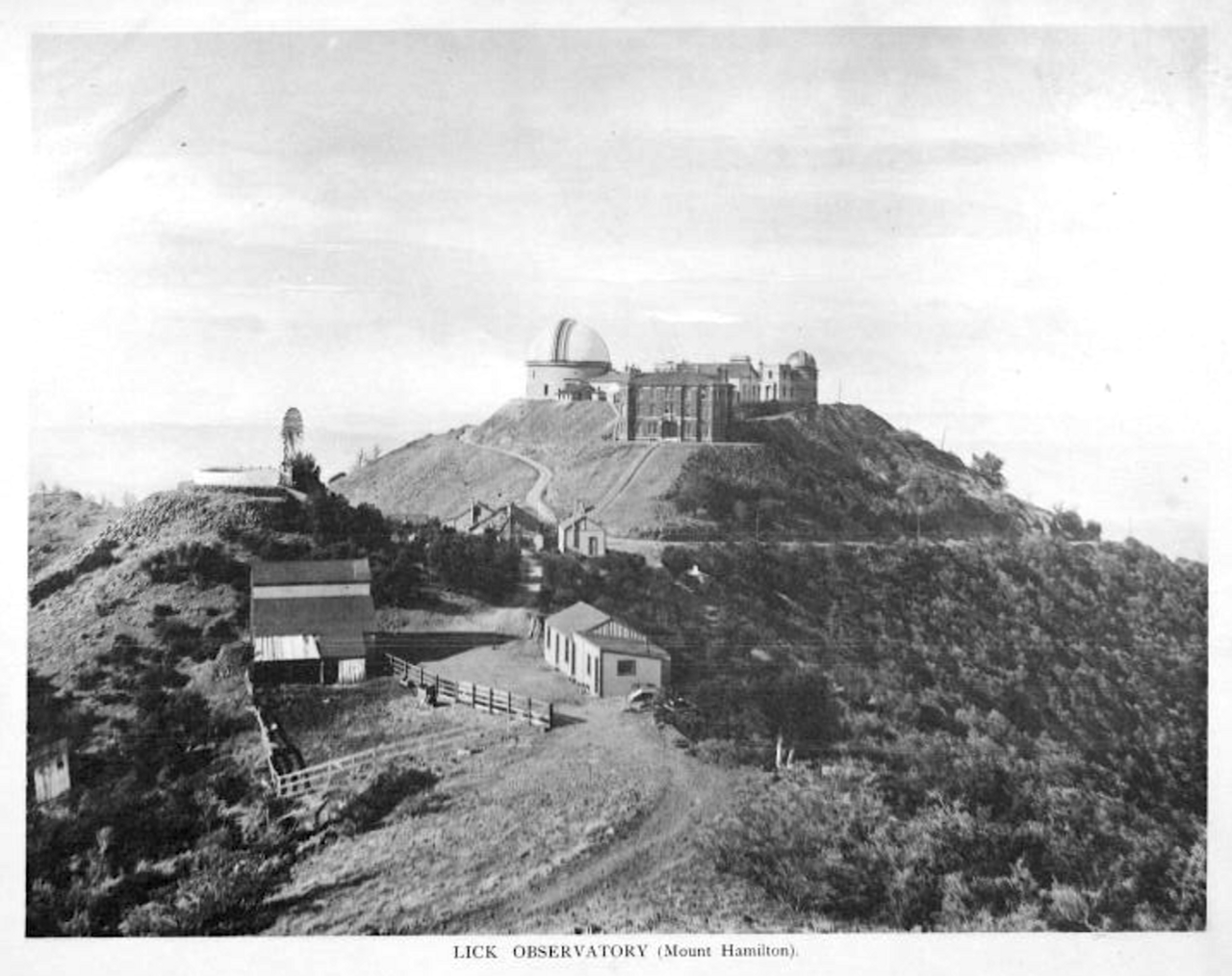
Sinope is an outer moon of Jupiter with a mean radius of about 19 kilometres, generally counted in the Pasiphae group of backwards-orbiting moons, though NASA says it may have begun as an independent asteroid.[1] It was discovered on 21 July 1914 by Seth Barnes Nicholson at Lick Observatory in California.[1]
Size and orbit
NASA gives Sinope a mean radius of 19 kilometres (11.8 miles), assuming an albedo of 0.04.[1] NASA's Jovian Satellite Fact Sheet lists the same 19 kilometres, a mass of about 0.0008 × 10²⁰ kilograms and an albedo of 0.05.[2]
NASA puts Sinope at a mean distance of about 23.9 million kilometres (14.8 million miles) from Jupiter and says it takes about 759 Earth days to orbit.[1] The fact sheet gives a semi-major axis of 23,939 thousand kilometres (334.9 Jovian radii), a retrograde period of 724.5 days, an inclination of 158.1 degrees and an eccentricity of 0.250.[2] The two NASA sources therefore disagree on the orbital period, 759 against 724.5 days, and the entry does not reconcile them. The inclination above 90 degrees reflects the backwards motion. NASA says none of the Pasiphae group is massive enough to pull itself into a sphere, so they are probably all irregularly shaped.[1]
Is Sinope part of the Pasiphae group?
NASA says Sinope is generally considered a member of the Pasiphae group, whose moons all orbit retrograde on eccentric, highly inclined paths, which supports the idea that they began as captured asteroids.[1] The common-origin picture is that one asteroid was captured by Jupiter's gravity and then broke apart in a collision, with the bulk surviving as Pasiphae.[1]
NASA states that confidence in a single origin is lower for this group than for Jupiter's others, because members differ in colour (from red to gray) and in eccentricity and inclination, and that Sinope in particular is suspected of starting out as an independent asteroid. Sinope and Pasiphae are both locked in secular resonances with Jupiter, in which Jupiter's gravity tugs at them at regular intervals and can change their orbits over time, which could account for the differences.[1] If Sinope is not in the group, Pasiphae retains 99 percent of the original asteroid's mass; if it is, 87 percent.[1] See Pasiphae for the group's largest member.
Nicholson found Sinope on photographic plates taken with Lick Observatory's 36-inch (0.9-metre) telescope.[1] The discovery listing of NASA's Jet Propulsion Laboratory gives the same year and discoverer.[3]
Sinope is named for a nymph who, in Greek mythology, outsmarted Zeus, the Greek equivalent of the Roman god Jupiter. NASA says he offered her anything she wanted to win her favour, and she asked to remain a virgin; she is said to have outsmarted Apollo in the same way.[1]