In the teaching of Jehovah's Witnesses, the anointed are Christians whom God is said to have selected by his holy spirit to go to heaven and rule with Christ, a group the Witnesses identify with the 144,000 of the Book of Revelation.[2][6][7]
Meaning in Witness teaching
Jehovah's Witnesses teach that God selects some Christians to go to heaven to rule as kings and priests, and that this selection "is not the norm".[2] Most Witnesses instead hope to live forever on earth (see the entries Other sheep, Great crowd and Paradise earth).[10] Witness publications and outside writers use "anointed", "anointed ones" or "anointed Christians" for the heavenly group, and "the anointed remnant" for those of the 144,000 who are still alive on earth.[3][7] The number itself, and the question of whether it is literal, are covered in the 144,000 entry.
Jehovah's Witnesses teach that anointing is not a reward a person earns or keeps automatically. The January 2016 Study Edition of The Watchtower, the movement's main magazine, says a Christian who receives this "token" of the spirit does not have a guaranteed future in heaven, and that whether he receives the reward "depends on his proving faithful to his calling".[2]
How a person is said to know
Jehovah's Witnesses teach that the anointing comes from God, not from the person's own choice or wish. The Watchtower (January 2016) says that, by means of holy spirit, God "makes it clear" to a person that he or she is invited, and it quotes Romans 8:16: "The spirit itself bears witness with our spirit that we are God's children."[2] The same article says that those who receive this invitation "do not need another witness from any other source", meaning that no other person confirms it for them.[2]
The article names the passages the Witnesses rely on, including Romans 8:15 and 16 and Ephesians 1:13 and 14, which speak of being "sealed" with the spirit as "a token in advance".[2] It describes the experience as what Jesus called being "born again", and says it brings "a profound change in the thinking, outlook, and hope" of the person.[2] It adds that the anointed have not lost interest in life on earth, that their conviction does not come from "emotional stress or turmoil", and that some of them question their own worthiness.[2] It also says that those who are not invited are not "unworthy or deficient".[2]
The earlier belief that the heavenly calling had closed in the 1930s is covered in the 144,000 entry. The Watchtower of 1 May 2007 said that the Bible "does not reveal a precise answer" to when the calling ends, and that "we cannot set a specific date".[4]
Memorial partaking
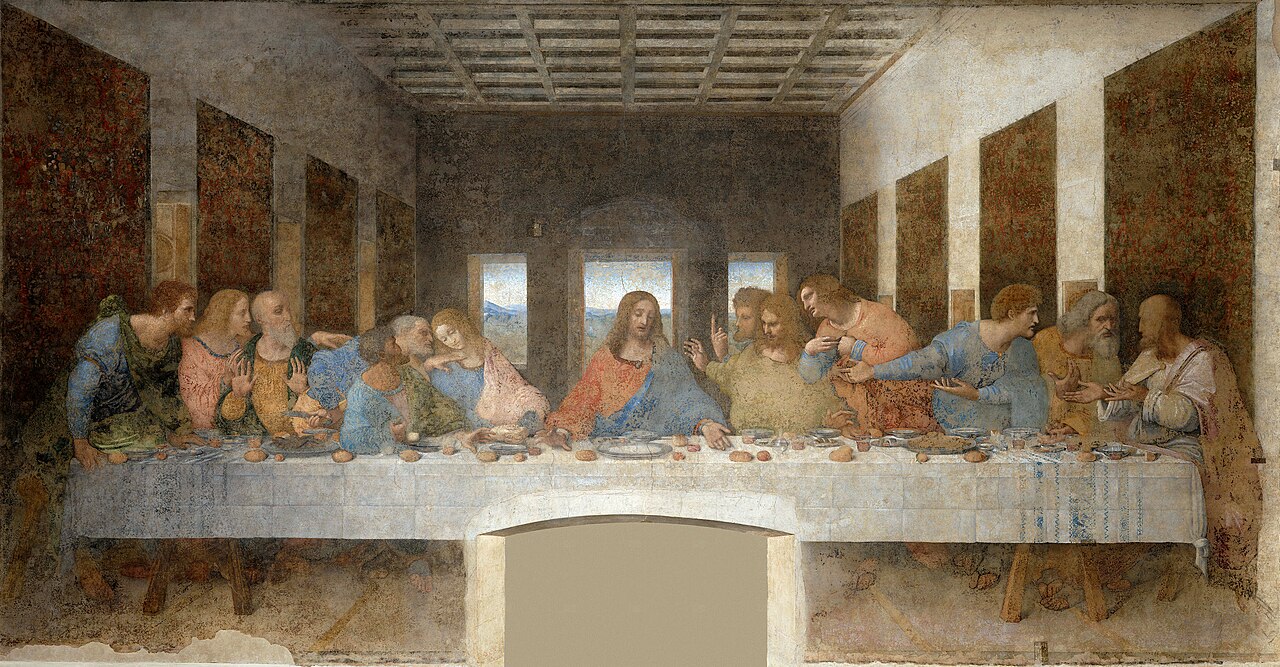
Each year Jehovah's Witnesses hold a commemoration of Christ's death, which they call the Memorial or the Lord's Evening Meal.[6] Bread and wine, treated as symbols of Christ's body and blood, are passed around among those present.[6] Witness publications call them the "emblems".[2] Only those who believe they are anointed eat the bread and drink the wine.[6][7] A historian of the movement, writing in the Worldmark Encyclopedia of Religious Practices, describes partaking as the way Witnesses who feel they have a heavenly calling make this known, and notes that the observance is held each year on Nisan 14 of the Jewish calendar.[7] The same entry says that all members of the Governing Body, the movement's central leadership, must be anointed and must partake.[7]
The Last Supper by Leonardo da Vinci, a mural in Milan showing the meal of bread and wine that Jehovah's Witnesses commemorate each year at the Memorial.
Witness publications give guidance on how others should treat a partaker. The 1 May 2007 Watchtower says that a person who begins to partake "should not be judged", because "the matter is between him and Jehovah".[4] The January 2016 issue says other members do not need to know the names of all the anointed, because no one can know whether an anointed person will receive the heavenly reward until God judges that person.[3] It says the anointed "do not expect any special honor", may avoid mentioning their experience so as not to draw attention, and that others should not ask them personal questions about their anointing.[3]
How the numbers are reported
Jehovah's Witnesses publish a yearly report for each "service year", their reporting year that runs from 1 September to 31 August.[1] Beside figures such as congregations, baptisms and the peak number of publishers (the Witnesses' term for members who share in their preaching), the report gives two Memorial figures: worldwide attendance, and the number of "Memorial Partakers Worldwide".[1] The partaker line counts those who ate and drank the emblems at that year's Memorial.
As of the 2025 service year (1 September 2024 to 31 August 2025), the report gave 24,576 Memorial partakers, against a worldwide Memorial attendance of 20,635,015 and a peak of 9,205,326 publishers.[1] The figures for earlier years, from 1935 onward, are tabled in the 144,000 entry. An encyclopedia entry written in the early 2000s, which cites attendance for 2002, put the number who partook at roughly 8,000.[7]
Witness publications have also addressed the count itself. The January 2016 Watchtower acknowledged "an increase in the number of those partaking", said this should not trouble members, and stated that "the number of partakers includes those who mistakenly think that they are anointed", including some whose belief may come from "mental or emotional problems".[3] The same article says that the Bible "does not state how many will be left" on earth when the Great tribulation begins.[3] The 144,000 entry covers the 1996 and 2016 explanations of the rising count in more detail.
The anointed and the "faithful and discreet slave"
Witness publications long taught that the "faithful and discreet slave" of Jesus' parable in Matthew 24 stood for all anointed Christians on earth as a group at any one time since 33 C.E.[5] The Watchtower of 15 July 2013 changed this: it described the slave as "a small group of anointed brothers", said that in recent decades the slave "has been closely identified with the Governing Body of Jehovah's Witnesses", and dated its appointment to 1919.[5] The article answers "No" to the question of whether all anointed ones on earth make up the slave, saying that many anointed brothers and sisters take no part in preparing and dispensing what Witnesses call "spiritual food" worldwide.[5]
Other Christian uses of "anointed"
Many other churches speak of anointing in a different sense, applying it to Christians in general or to a church rite rather than to a limited heavenly group.
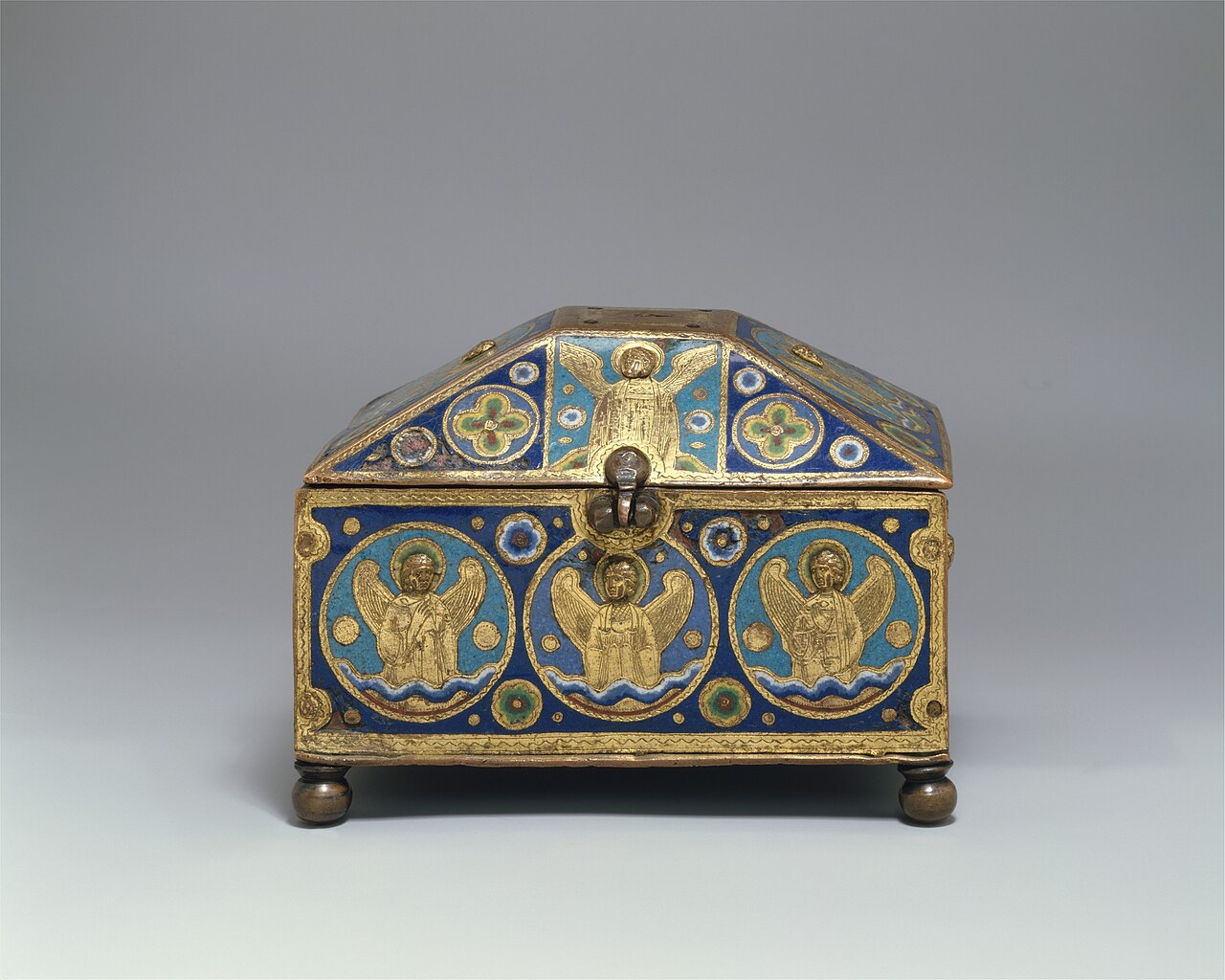
In the Catholic Church, the Catechism of the Catholic Church says that from very early times an anointing with perfumed oil, called chrism, was added to the laying on of hands in the sacrament of confirmation.[8] It says this anointing highlights the name "Christian", which "means 'anointed'" and comes from the title of Christ, and it notes that the Eastern Churches call the sacrament Chrismation.[8]
A French enamelled chrismatory of about 1200 to 1220, a box for the holy oils used in Christian anointing rites, in the Metropolitan Museum of Art.
In the Eastern Orthodox Church, chrismation is given "immediately following the sacrament of Baptism", according to an explanation published by the Greek Orthodox Archdiocese of America.[9] That explanation calls it a visible sign that the gifts of the Holy Spirit are passed on to those who are baptized, and says the holy chrism (also called holy myrrh) is consecrated by the Ecumenical Patriarch and by the patriarchates of Moscow, Belgrade and Bucharest.[9]
Some Protestant writers reject the division of believers into two groups. An evangelical writer on the Witnesses argues that the division of the redeemed "into two classes with separate hopes" is unbiblical, and that all believers in Christ have God as their Father "by virtue of the Spirit dwelling in them".[10] Witness publications, for their part, teach that only the anointed are "born again" and called to heaven.[2][10]
Sources
"2025 Service Year Report of Jehovah's Witnesses Worldwide." Watch Tower Bible and Tract Society of Pennsylvania, Watchtower Online Library. Covers 1 September 2024 to 31 August 2025; no publication date shown; accessed 25 November 2026. wol.jw.org/en/wol/d/r1/lp-e/1102025416
"We Want to Go With You." The Watchtower (Study Edition), January 2016, pp. 22–27. Watch Tower Bible and Tract Society of Pennsylvania, Watchtower Online Library. Accessed 25 November 2026. wol.jw.org/en/wol/d/r1/lp-e/2016046
"Questions From Readers" ("When does the calling of Christians to a heavenly hope cease?"). The Watchtower, 1 May 2007, pp. 30–31. Watch Tower Bible and Tract Society of Pennsylvania, Watchtower Online Library. Accessed 25 November 2026. wol.jw.org/en/wol/d/r1/lp-e/2007327
"Who Really Is the Faithful and Discreet Slave?" The Watchtower (Study Edition), 15 July 2013, pp. 20–25. Watch Tower Bible and Tract Society of Pennsylvania, Watchtower Online Library. Accessed 25 November 2026. wol.jw.org/en/wol/d/r1/lp-e/2013533
Catechism of the Catholic Church, Part Two, Section Two, Article 2, "The Sacrament of Confirmation", paragraph 1289. The Holy See (vatican.va). No date shown; accessed 25 November 2026. vatican.va/archive/ENG0015/__P3Q.HTM
Pavlos Menevisoglou. "A Brief Explanation of the Sacrament of Holy Chrismation." Greek Orthodox Archdiocese of America, as republished by the Greek Orthodox Cathedral of the Annunciation, Atlanta. No date shown; accessed 25 November 2026. atlgoc.org/explanation-of-chrismation
Robert M. Bowman Jr. "Will the Redeemed Live as Separate Classes in Heaven and Earth?" Published at wit.irr.org (publisher not named on the page). No date shown; accessed 25 November 2026. wit.irr.org/node/1810